A monthly newsletter of the Psychonomic Society |
|
|
- 2020 Annual Meeting: Registration, Award Applications, & Presenter Guides
- 2020 Special Membership Offers
- 2021 Governing Board Election (Voting closes Sept 1)
- Estes Fund Call for Proposals (Initial Proposals due Sept 1)
- Fellows Application reminder (Applications due Sept 7)
- Call for Volunteers: Task Force on Racial Discrimination (Nominations due Sept 15)
- Latest Research
- Latest Digital Content
- Call for Papers
Scroll down to read each section.
|
|
|
2020 Annual Meeting
Registration, Award Applications, & Presenter Guides
|
|
|
Register Now
All attendees must register in advance of the meeting. Registration includes unlimited online access to the keynote address and all symposia, talks, poster sessions, and networking events. Registration closes November 16, 2020.
To accommodate the new virtual format, the 2020 Annual Meeting will feature:
- Pre-recorded talks and poster presentation (released at specified times)
- Live Q&A sessions
- Poster presentations released two weeks before the conference
- Virtual networking experiences
- All content available online for six months after the meeting
Register today, and stay tuned for more information.
|
|
|
2020 Annual Meeting
Student Award Applications
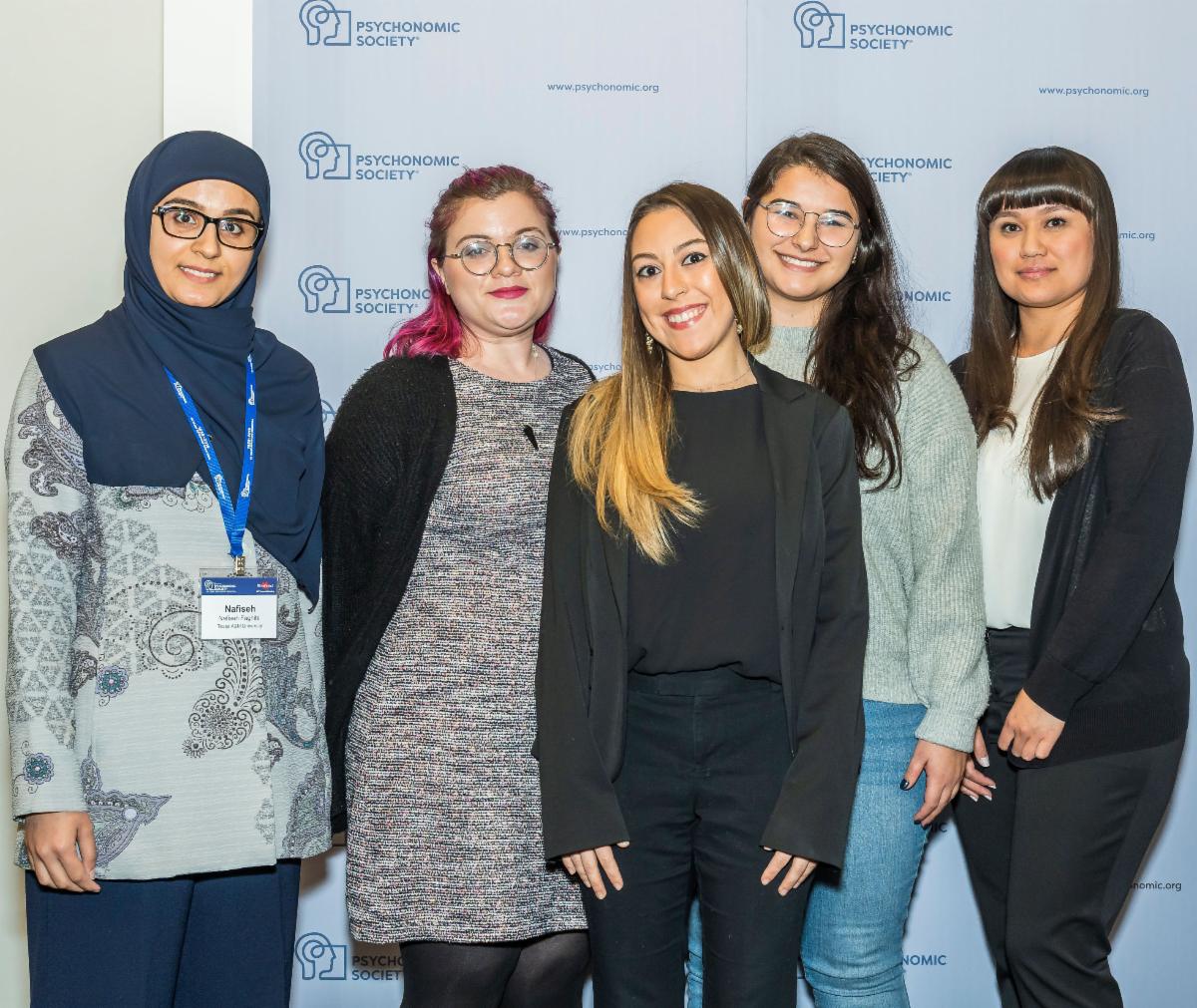
Given that this year's annual meeting will be a fully virtual conference, and in light of the significant financial and emotional burdens graduate students are facing around the world, the Psychonomic Society Governing Board has transitioned its Graduate Student awards from travel awards to cash awards, and increased each award's total available funding. The Graduate Conference Awards and J. Frank Yates Conference Awards are available exclusively to Student Members of the Society who have submitted abstracts for the 2020 Annual Meeting.
Graduate Conference Awards: $1,000 USD cash award (up to 20 available) for graduate student members of the Society. Recipients also receive a special notation in the Abstract Book and an honor that can be listed on their CV. Recipients are not eligible to receive this award two years in a row. Apply Now.
J. Frank Yates Conference Awards: $1,000 USD cash award (up to 12 available) for graduate student members of the Society who are in underrepresented populations, including those who are disadvantaged or discriminated against in some way. Recipients also receive a special notation in the Abstract Book and an honor that can be listed on their CV. Recipients are not eligible to receive this award two years in a row. Apply now.
Applications are due September 7, 2020.
|
|
|
The Psychonomic Society introduced a Family Care Grant Program designed to support attendees who incur extra family care expenses (i.e., extra daycare, babysitting services, elder care, or care of a family member with disabilities) as a result of presenting at the virtual annual meeting. The Society is offering up to twenty-five (25) $100 USD grants in 2020 to help defray those additional expenses.
The award will be available to presenters who specify the need to pay for family care expenses (childcare, elderly care, etc.) for recording their talk and being present for their live Q&A session. The award does not require the submission of receipts.
|
|
|
Presenter Guides &
Statistical Guidelines
If you are giving a talk or presenting a poster at the 2020 Annual Meeting, please consult the appropriate guide(s) for general instructions and requirements.
Acceptance emails for talks and poster abstracts will be sent no later than September 18, 2020.
|
|
|
2020 Special Membership Offers
Available through December 31, 2020
|
|
|
In recognition of the financial strain many are experiencing this year as a result of the coronavirus epidemic, the Governing Board is extending the following special membership offers to new Members and Student Members of the Society.
Complimentary 2020 Member Dues to New Members
Anyone who qualifies for membership with the Society may now join for free (2020 dues waived) and thus attend the 2020 Annual Meeting for free (separate registration required). Join Today.
Refunded 2020 Student Membership Dues or Complimentary Student Membership Extension through 2021
Student Members who have already paid their 2020 membership dues may request a refund of their 2020 dues or a complimentary year-long extension of their membership (through December 31, 2021). New student members may join for free through December 31, 2020.
Student members should contact Member Services at info@psychonomic.org to request a membership refund or extension. Please allow up to two weeks for refund processing.
|
|
2021 Governing Board Election
Voting Deadline: September 1, 2020
|
|
|
Cast your Vote!
The 2021 Governing Board election is about to close. If you haven't already cast your ballot for the three open seats, you are encouraged to do so today. Current 2020 Fellows, Members, and Emeriti may vote. This year's nominees include:
Three candidates will be elected to the 2021 Governing Board. The two candidates to receive the highest number of votes will fill the two open, full (2021-2026) GB terms. The candidate who receives the third highest number of votes will fill the one partial (2021-2022) GB term for the seat that was vacated by Marc Brysbaert when he left to become Editor of Behavior Research Methods.
If you have already voted, please disregard this message.
|
|
|
Estes Fund Call for Proposals
Initial Proposals Deadline: September 1, 2020
|
|
|
The William K. and Katherine W. Estes Fund invites proposals to fund advanced training opportunities in mathematical and computational modeling for psychological science in summer schools or focused workshops. A summer school would provide foundational training in mathematical or computational modeling to advanced trainees (PhD students and/or postdoctoral scholars), usually over a period from a few days up to two weeks. A successful summer school might be repeated. A workshop would be focused on a topic or method in an area of rapid recent progress and would serve trainees and also established researchers.
The Estes Fund is jointly overseen by the Psychonomic Society and the Association for Psychological Science.
|
|
2020 Fall Class of Fellows
Application Deadline: September 7, 2020
|
|
|
Psychonomic Society Fellows are among the field’s most distinguished researchers in cognitive psychology. They are recognized for their significant scientific contributions and methodologically rigorous research. Fellow status is one of the field’s most impressive distinctions. Applicants should have 3+ years of post-PhD experience; have published significant, peer-reviewed research beyond the doctoral dissertation; and be a member of the Psychonomic Society in good standing for a minimum of 2 years. Full Eligibility and Application Requirements.
The application deadline for the 2020 Fall Class of Fellows is September 7, 2020. Apply now.
|
|
|
Call for Volunteers
Task Force on Racial Discrimination
Nomination Deadline: September 15, 2020
|
|
|
With recent international protests for racial justice, there has been a new period of self-reflection within the academy about its lack of racial diversity. African-American, Latinx, and Indigenous scholars are missing at the faculty and graduate level, and this problem is especially acute in cognitive psychology and neuroscience.
|
|
|
|
|
By Gianni Ribeiro, Jason Tangen, & Blake McKimmie
|
|
|
Imagine being a juror and you have to make sense of the evidence presented to help you decide about the defendant's guilt. What does a likelihood ratio of 5,500 mean? Does it mean the odds the defendant is guilty is 5,500:1? No. If you thought so, then you committed a fallacy of the transposed conditional. How should triers of truth be informed of the strength the evidence, for example DNA evidence? Read this paper and find out.
|
|
|
By Xu Xu, Jiayin Li & Shulun Guo
You may think that the title of this paper says it all, but there's more. In getting the age of acquisition ratings from 1765 native Mandarin Chinese speakers, gender and cohort differences were found. These norms will therefore come in handy when researching individual differences, for example. Read the article.
|
|
|
|
|
By Ann Hsu, Yu-Hui Lo, Shi-Chiang Ke, Lin Lin & Philip Tseng
|
|
|
A memory task that detects the cost of reaction time when viewing a familiar photograph cost is the reaction time-based Concealed Information Test. This paper describes findings from manipulating angles of images to detect guilt, using the Concealed Information Test. The researchers conclude that, "for well-remembered items or pictures, the forensic team does not need to worry about reconstructing the angles (e.g., approximate the eye height and tracing the footsteps of the perpetrator) that closely match what the perpetrators saw." Read the article.
|
|
|
Authors in our journals can share their content easily and legally through Springer’s SharedIt program.
|
|
Read the Latest Research & Submit Your Papers
|
|
Don't miss an episode! Subscribe to the Psychonomics podcast. |
|
|
|
|
|
|
|