|
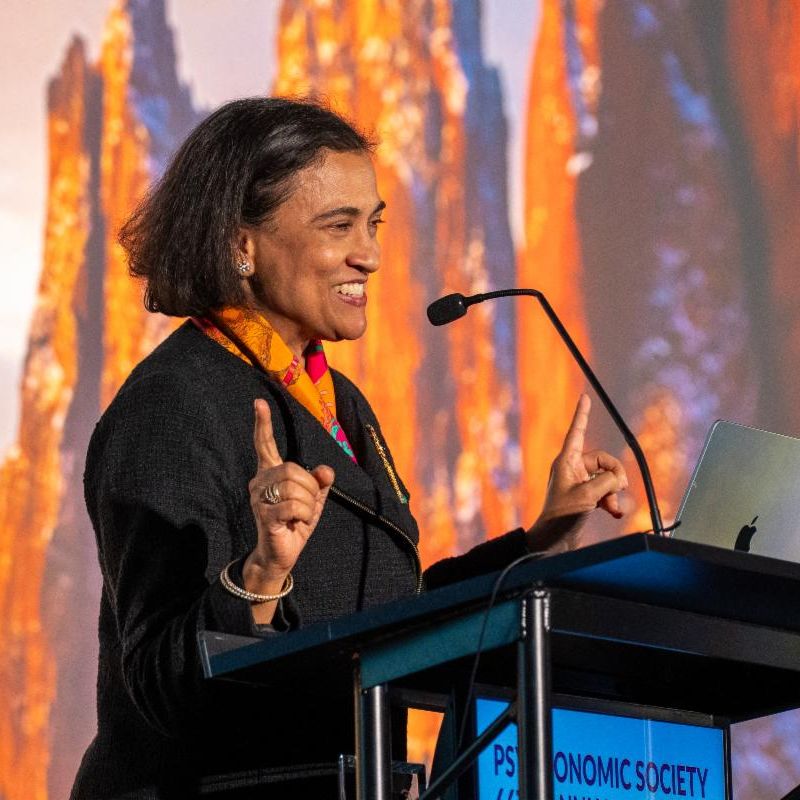
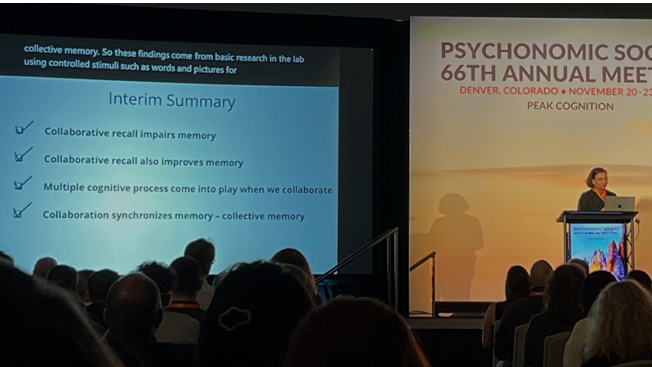
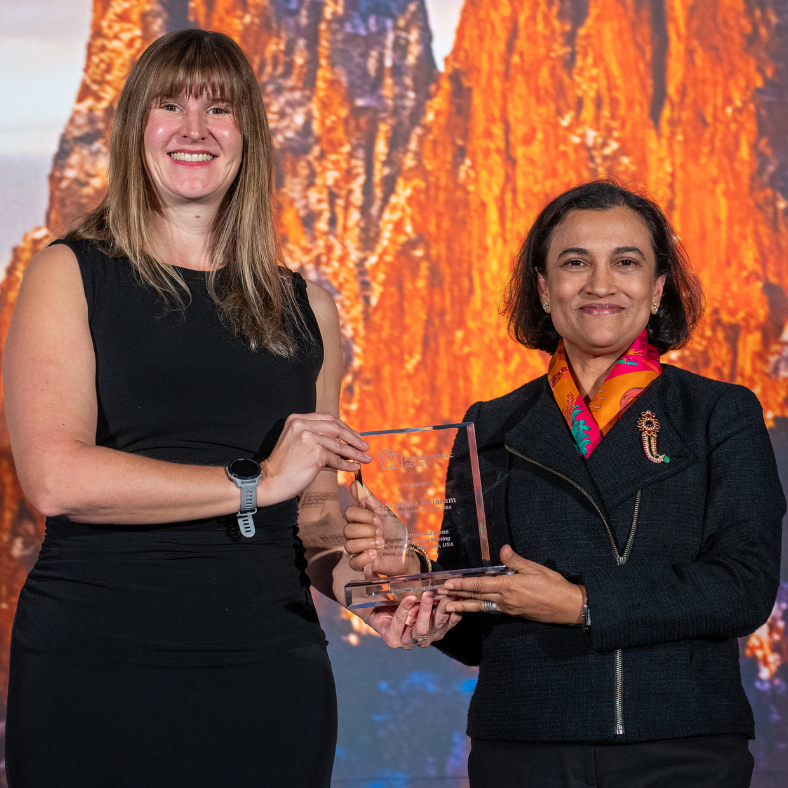
These are just a few of the descriptors that could be applied to Dr. Rajaram, Keynote Address for the opening of the 66th Annual Meeting of the Psychonomic Society.
The keynote address began with a poignant introduction by an almost life-long friend, women-in-science partner-in-crime, and long-time collaborator, Dr. Judith Kroll of the University of California, Irvine. In her opening remarks, Dr. Kroll shared the many accolades of Dr. Rajaram’s distinguished career. However, the two messages that stood out most to me in her introduction were the joy of sharing in science as part of a team and a special message to early-career scientists: always remember “to participate in every possible way.” As Dr. Kroll noted in a previous Dr. Rajaram-ism, “Science is not a spectator sport.”
Dr. Rajaram has clearly lived by these nuggets of insight. Her very successful career in cognitive science, mentorship of graduate and undergraduate students, publications, journal editing, governance, and engagement with many different types of organizations, in addition to a very productive research record, demonstrates these mantras.
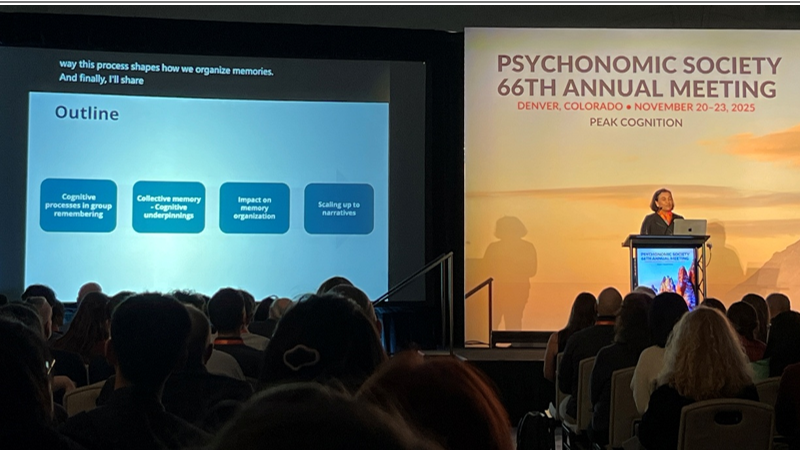
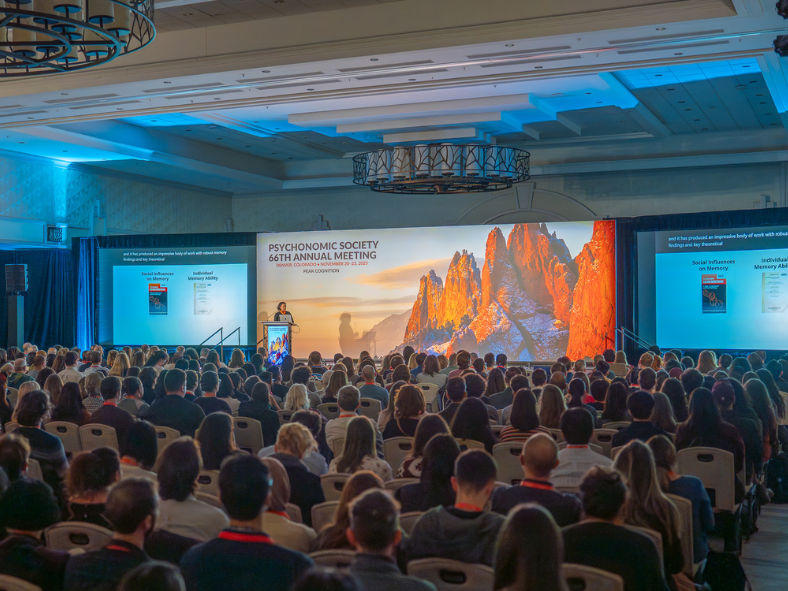
Through a very humble acknowledgment of her collaborators and mentors throughout her prestigious career, Dr. Rajaram took a standing-room-only audience on a rich journey, filled with twists and turns, as she and her teams worked to uncover the mysteries of social memory.
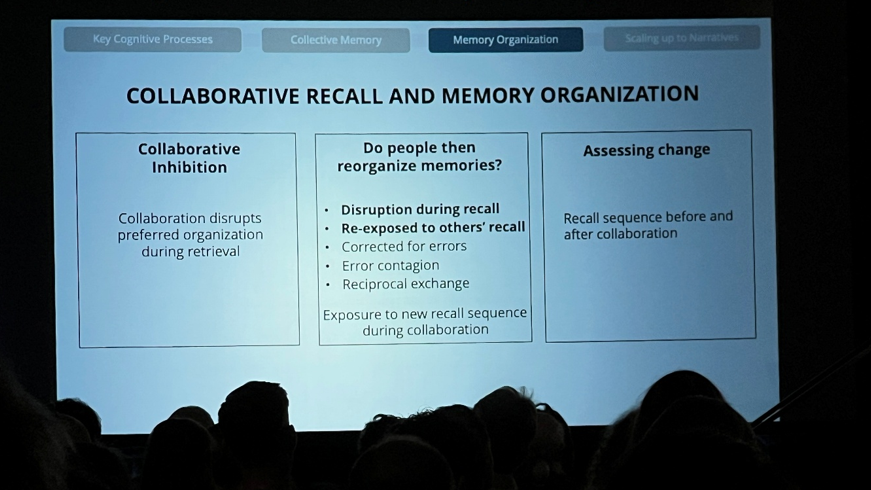
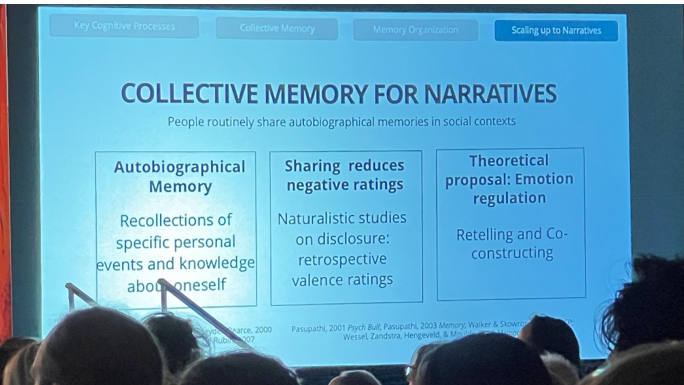
She started our journey with a walk down memory lane through some of the giants of memory research, including Ebbinghaus and Bartlett, whose foundations inspired her work on understanding memory as a social process. From this brief history lesson, Dr. Rajaram then turned to defining specific cognitive mechanisms that might influence or underlie the idea of collective memory. The emergence of shared knowledge from one’s community, culture, and small groups.
|