|
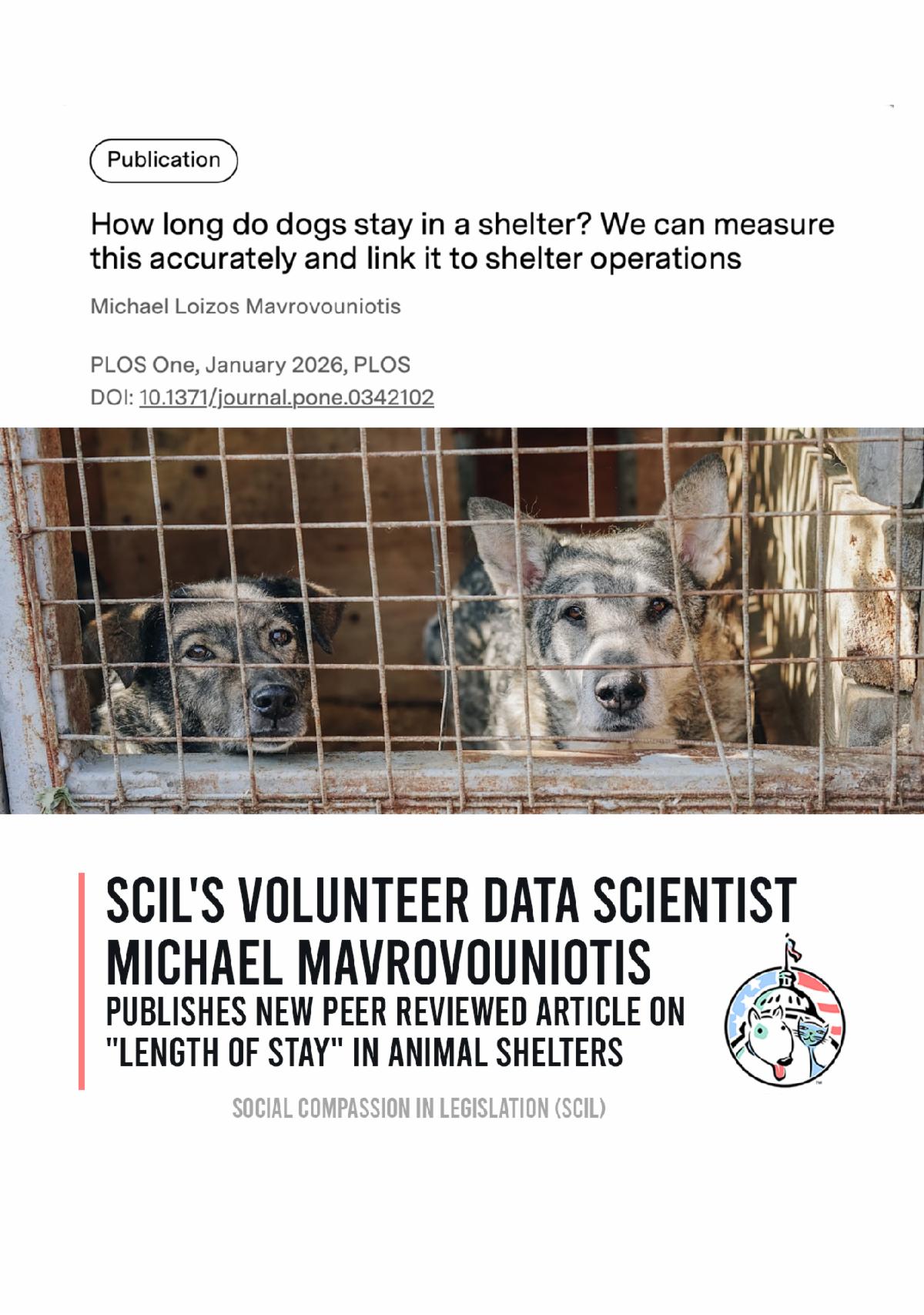
We are proud to announce that a peer-reviewed scientific journal just published a study by our volunteer data scientist, Michael Mavrovouniotis!
You can read the study HERE.
The study is about the “length of stay” in animal shelters, which affects animal welfare and shelter resources.
We all know that animals are stressed if they spend too long a period in the shelter. If a shelter doesn’t get animals adopted, or returned to the owner quickly enough, the shelter can get overcrowded, often leading to sub-standard animal care and euthanasia.
Michael's inspiration to conduct this study was because many shelters are miscalculating their length of stay data. Sometimes, shelters do calculations that are grossly misleading, because they only look at animals that already left the shelter, and ignore long residents that are still in the shelter when the calculation is being done. Michael uses statistical tools to solve this problem.
Using the study as a guide, shelters can finally do reliable, correct calculations on their length of stay, which can help shape better shelter policy and procedures. Animal shelter managers, policymakers, and researchers can benefit from a close look at this study.
Michael’s examples involve dogs in Orange County Animal Care (OCAC), a county-run shelter in California that Michael knows well from previous research studies.
In late 2019, 10% of incoming dogs stayed more than 32 days in the shelter. In 2022, that grew to 42 days. That shows an accumulation of dogs with very long stays. An increase in length of stay translates proportionally to a change in shelter resident count, which in turn increases dog housing, staffing, and veterinary care.
OCAC kept some COVID-19-era restrictions into 2022–2023, particularly in visitor access and hours. These led to fewer adoptions and longer stays. Michael also studied this and published another article we highlighted last year. His work played a role in a decision by the county Board of Supervisors to restore visitor-friendly access and adoption hours.
The new study calculates that the higher length of stay in 2022-2023 translated to 73 additional dogs being at the shelter on any given day. Those 73 additional dogs require seven additional staff members just for kennel care. If housing and staffing fail to keep up with the need, the result is overcrowding and sub-standard care and increased euthanasia.
The OCAC Strategic Plan includes length of stay targets, but OCAC has never showed any length of stay calculations. If used as a guide, the calculations in the study can assist OCAC management better plan for needed resources.
We encourage all shelter professionals and policymakers to read the study.
Additionally, Michael plans to convert his method into a ready-to-use tool for animal shelters - we will share that tool when it is available!
|