|
Putting Intercity Buses On the Map
Intercity Bus E-News, September 2026
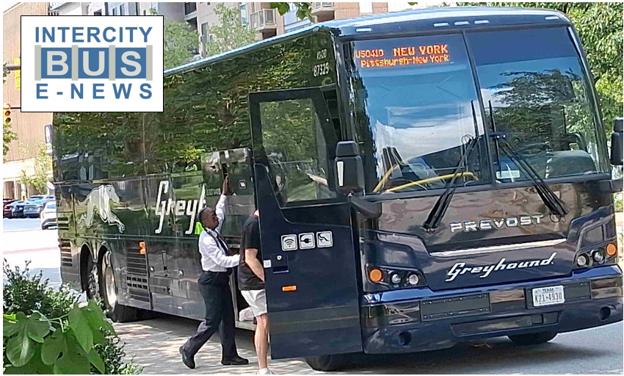
September 25, 2026 | Above: A Greyhound at downtown Cleveland on July 22, 2026. Full caption below
| |
Editor’s Perspective
Intercity Bus E-News is picking up speed—that is, growing its circulation. Our August edition garnered 1,350 “opens,” a new high for us, reflective of rising interest in scheduled long-distance bus travel. Almost everyone who learns about our network stays in our network long term. As I describe below, please help us grow our readership!
This edition features the launch of Smile Bus USA, a Texas bus line; a soon-to-open bus station in Madison, WI; and new routes by major lines. We also have good news about public agencies staying the course on critical projects, including:
| |
-The Intercity Bus Atlas relaunch with an impressively comprehensive map and easy-to-use interactive map features; this is a Bureau of Transportation Statistics initiative.
-The City of Chicago’s successful acquisition of its intercity bus (“Greyhound”) station.
- A new map showing federally supported (5311f) bus routes across the U.S. Although still in draft form, it shows the network's impressive expansiveness.
The momentum of such projects fuels our desire to expand our readership further. We recently gained many new subscribers through advertisements on urban planning websites like planetizen.com and in popular transportation magazines such as Passenger Train Journal and Trains. However, most of our growth is from old-fashioned word-of-mouth referrals.
| |
Our near-term goal is to have the number of “opens” surpass 1,600, which, symbolically, is the number of our office suite. Email us the addresses for people who should be reading Intercity Bus E-News. We send only about a dozen emails per year, and people can unsubscribe anytime with one click. We don’t share our contacts, send spam, or accept paid advertising. If you are unsure whether a colleague or friend subscribes, reply with a note to Hannah Hatfield, who manages our listserv.
This is a very promising time for the industry. There is strong interest in intercity bus travel nationwide.
| |
Joseph Schwieterman, PhD
Intercity Bus E-News Editor | Professor and Director, Chaddick Institute at DePaul University
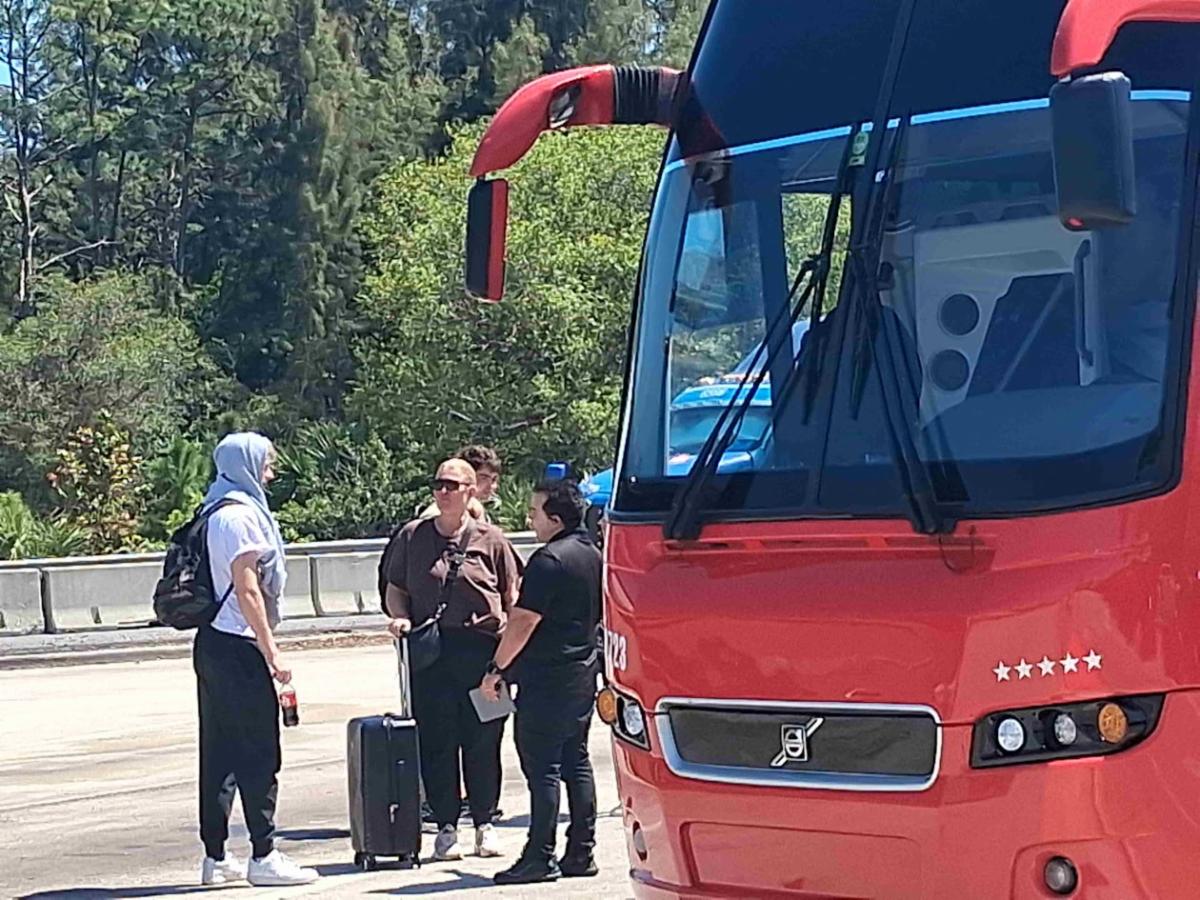
Photo: RedCoach in West Palm Beach, March 2026
| A BIG STRIDE FOR THE INTERCITY BUS ATLAS | Getting intercity bus services “on the map” and fully integrated into public policy initiatives has been an elusive goal—and a problem many have worked for years trying to resolve. Despite "big data," major advances in mapping that draw on schedule information for booking sites, and other developments, intercity bus maps always seemed obsolete or piecemeal. Even basic questions like “How many bus stops does my metro region have?” or “What are the biggest gaps in service?” couldn’t be answered without a trial-and-error investigation involving cumbersome website browsing. | |
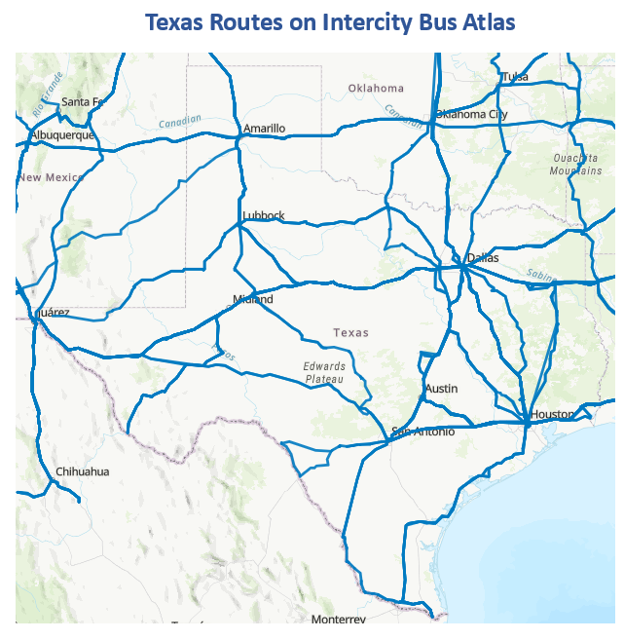
But this has changed. BTS’s latest Intercity Bus Atlas relaunch makes these and other questions easy to answer. Check out the newly released map of routes and stops across the country; you’ll be surprised at how much you learn.
The map features the largest multi-region players: FlixBus, Greyhound, Jefferson Lines, OurBus, and Peter Pan. It includes major brands sold on the megabus.com and trailways.com websites, such as Adirondack Trailways, Indian Trails, and Salt Lake Express, as well as prominent regional providers, including C&J and Coach USA lines. Most of the largest state-supported networks, including GoBus, Oregon Point, Travel Washington, and Virginia Breeze, also appear.
The difficulty of creating such an atlas became clear when I worked to encourage carriers to participate a half-decade ago. Some signed up immediately, while others hesitated because they had been burned by misuse of their data. Another challenge was creating a clutter-free map, because some bus corridors are a crazy quilt of lines. Passenger-train mapping is much easier because corridors generally involve just one route. Buses, however, deviate from highways and have unique stop patterns, adding significant complexity.
| Credit to Kyle Titlow and his USDOT team for working through these challenges. Kudos also to Stephanie Gonterman, Fred Fravel, Michael Buiting, Derald Dudley, and others who led the push to create this tool. Transcor Data Service's recent addition to the planning team adds critical technical expertise. | |
What comes next? The team is working on:
· Adding the frequency of service on each route
· Adding routes from the National Transit Map that are sufficiently lengthy to serve an intercity role
· Standardizing the names for operators and providers, as some GTFS names don’t match marketing names
“Getting the map over the finish line took much more of the summer than anticipated,” Titlow noted before adding that the team is “happy to have something available finally.”
Difficult questions still loom. How much effort should be spent adding small and ethnic-oriented carriers that tend not to share their data publicly? Or airport shuttles using mid-size passenger vans? Is there a way to present a concise summary of service on a segment when it has many overlapping routes?
| These questions can wait: it is time to spread the word that the ICBA has become a go-to resource. Click to see its panoramic view of our country’s vast system, and check out what the E-News editor learned about Chicago service below. | Multiple Routes between Metros:
An Intercity Bus Advantage | An underappreciated aspect of the intercity bus network is that it encompasses multiple routes between many metro areas. Whereas today’s Amtrak service is generally limited to a single corridor, bus lines (like railroads sixty years ago) often fan out in several directions. State government support is instrumental in operating some less-traveled routes and maintaining small-town stops.Three examples exemplify this. | #1: Chicago–Columbus, OH. This market has five peak-day buses using four different routes. It has: a) two Barons Bus routes, which diverge at Ft. Wayne, IN, one running via Lima and another via Dayton; and b) two Flix/Greyhound routes, which diverge at Indianapolis, one via Dayton and another via Cincinnati. The four routes have 28 unique intermediate stops. Amtrak does not serve Columbus. Barons' routes are state-supported. The Flix/Greyhound routes are enhanced by several state-supported Hoosier Ride routes to Indianapolis and a local Greyhound Chicago–Indianapolis service that reaches three more stops, Valparaiso, Rensselaer, and Lebanon, IN, bypassed by express buses. All have well-timed connections to Columbus. | |
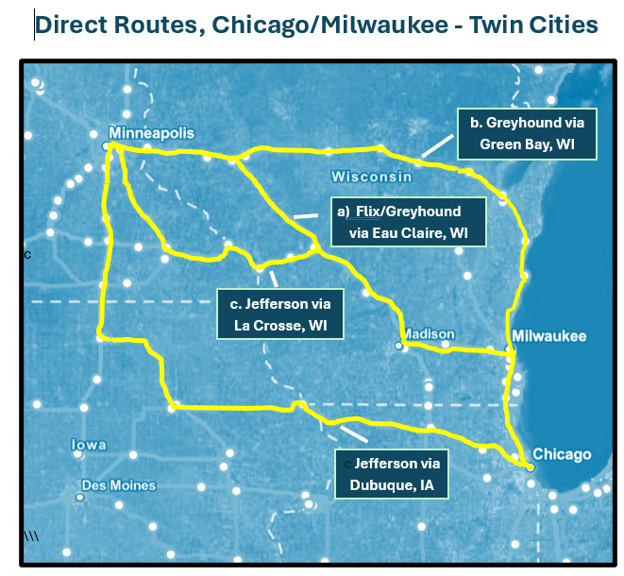
#2: Milwaukee–Minneapolis, MN. This market has six buses running each way on peak days over three different routes. a) Flix/Greyhound service running via Eau Claire, WI, which originates in Chicago and has two variants: one stops in Madison, WI, and another bypasses the city to save time; b) a Greyhound state-supported service via Green Bay, WI, which makes numerous small-town stops in northern Wisconsin and Minnesota. c) Jefferson Lines state-supported service via Madison, La Crosse, WI, and Rochester, MN. These three routes have 24 unique intermediate stops. Amtrak offers two daily trains between Milwaukee and St. Paul Union Station, with seven stops. Separately, Jefferson has a relatively new state-supported Chicago - Minneapolis route via Dubuque, Iowa.
| |
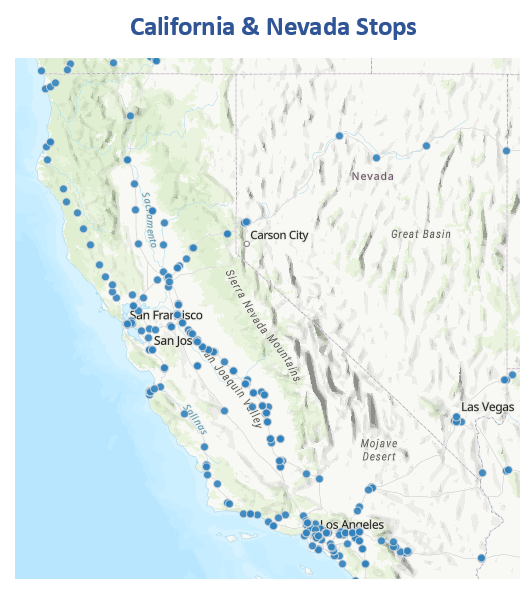
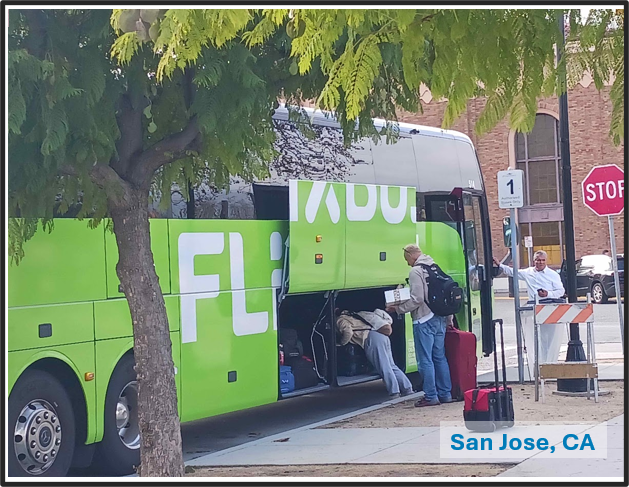
#3: San Jose – Downtown Los Angeles. This market has six peak-day buses over four different routes: a) Flix-Greyhound service via Interstate 5, which is the fastest option; b) Flix-Greyhound service via the coastal US 101 highway, c) American Star Tours service via U.S. 101, which diverges from route b in several places to reach additional stops, all offered as interline connections with Amtrak and Greyhound; and d) a Tufesa service catering to Spanish-speaking travelers via Fresno and the Central Valley. These routes have 20 unique intermediate stops. Amtrak's direct train, the Coast Starlight, has only eight, although Gold Runner bus-rail connections reach far more places.
| |
What are the takeaways? Bus lines are being creative in adding intermediate stops on secondary routes linking large metro areas. In some cases, they are differentiating their service to avoid going head-to-head with Amtrak, which can lead to disappointing ridership, particularly when public support keeps train fares low. Through experimentation, often in cooperation with state government, they are assessing what works and what doesn’t and making changes. Many secondary routes are only an hour or so longer than the most heavily-traveled corridors between cities, making them attractive to both endpoint-to-endpoint travelers and those using intermediate stops.
All of the above routes are depicted on the Intercity Bus Atlas, which was instrumental to this article's analysis. Expect to see more niche carving like that described above in the years ahead.
| Pain at the Pump, Autumn Update |
 | | The frightful rise in diesel fuel prices, averaging around $6.52 per gallon nationwide, is creating significant hardship for bus lines. Prices were $5.94/gallon on September 9th and just $3.70 in mid-September 2025. It is remarkable that, in May, we expressed great concern that "The surge in oil prices has pushed the price of fuel nationwide to around $5.07/gallon", a level that seems low in comparison. Filling a 180-gallon tank on a motorcoach, we noted, generally cost above $800 then, but now often costs well over $1,000. Favorably, the fuel-price surge is pushing many more travelers to buses, which are highly fuel-efficient. However, it is discouraging for bus lines that the diesel fuel price increases have disproportionately outpaced gasoline prices. Meanwhile, jet fuel has risen even faster than diesel, prompting airlines to announce imminent cuts. Publicly run bus systems prioritizing low fares over farebox recovery are less able to pass on the added costs than commercial lines, but all are feeling the pain. Watch for a feature on the diesel-fuel impact in the next E-News edition.
| |
Smile Bus USA has launched in the Texas Triangle, generally operating once a day from Dallas to both Austin and Houston and from Austin to Houston. The Dallas and Houston stops are at non-transportation retailers near downtown, while the Austin stop is near the University of Texas campus. This new provider caters to both English- and Spanish-speaking travelers like FlixBus, Greyhound, Red Coach, and Tornado Bus but must compete with these competitors’ more frequent services. The company has indicated that expansion is imminent.
| |
FlixBus has a new Atlanta – Tampa Bay route with stops in Valdosta, GA, and Gainesville, FL. After stopping at downtown Tampa’s transit center, coaches proceed to a St. Petersburg stop near Tropicana Field. This route previously lacked direct bus service. “The I-75 corridor between Atlanta and Tampa Bay is exactly the kind of high-demand corridor where affordable, direct intercity bus service makes a real difference,” noted Karina Frayter, head of communications for Flix North America.
FlixBus also launched a Dallas – Nashville route with just three stops: Sulfur Springs and Texarkana, TX, and Memphis, TN. The route is an hour faster than existing options and runs five days a week. In addition, Flix has a new Houston – Memphis route via New Orleans, the only direct service between these metros. This greatly expands connections for those boarding at intermediate stops such as Baton Rouge, LA, and Meridian, MS.
| |
The expansion of California’s Gold Runner system has become one of the year’s biggest stories of rail-bus integration. This newly expanded bus network connects to Amtrak’s rebranded San Joaquin route (now the Gold Runner) from Oakland to Bakersfield and the San Jose–Sacramento route (still the Capitol Corridor). A new twice-daily Redding – Sacramento bus service uses Interstate 5 and stops in Red Bluff, Williams, and other points. It is timed to support convenient Capitol Corridor train connections.
| |
Greyhound has launched a daily Twin Cities – Kansas City service, with stops in Albert Lea, MN, Des Moines and Ames, IA, and Memphis, TN. Originating at St. Paul Union Station, it runs southbound several hours later than the established Jefferson Lines service on this route, which is also a nocturnal run and paired with Jefferson's daytime run from Minneapolis Bus Station to Kansas City. Planning for rail service between these metros, last provided by Rock Island in 1969, remains in an early stage. The new bus service adds to the St. Paul station's recent buildup, giving it around 18 daily bus departures (and an equal number of arrivals) on busy days, plus two Amtrak trains, the Borealis and Empire Builder.
| |
Check out Dan Zukowski's well-written piece on Greyhound's five-year turnaround, based on his interview with Kai Boysan, CEO of Flix North America. Zukowski is known for timely coverage of an industry many journalists overlook.
| |
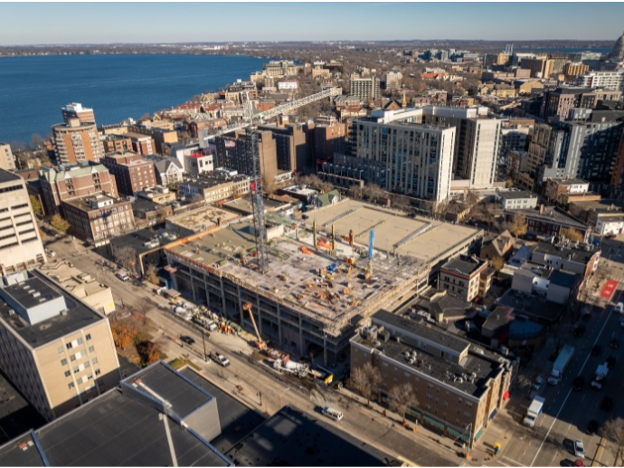
Wisconsin's capital will soon have a new regional bus station, which will likely reduce its reliance on curbside stops. Part of a major redevelopment (see photo at right) that encompasses residential units, it is expected to open later this year. Details about arrangements for intercity bus operators have yet to be publicized. Many buses currently stop outside the University of Wisconsin-Madison’s Gordon Dining Hall, about a half-mile away. Madison’s intercity service includes commercial routes by Badger Bus, FlixBus, Greyhound, and Coach USA’s Van Galder, and state-supported offerings. The State of Wisconsin has been busy expanding its publicly supported bus system.
| |
It's official! The City of Chicago has acquired the downtown intercity bus “Greyhound” station, previously owned by a private real estate holding company. The facility was at risk of being sold for non-transportation use. After a lengthy process, the municipality purchased it using tax-increment financing and will make upgrades. It has an interim lease to Flix-Greyhound in anticipation of a transition to a private property manager, possibly late next summer. Alderperson William Conway was an articulate proponent of the effort, as were leaders from Better Street Chicago and the Environmental Law & Policy Center. On a recent Saturday this month, the station had 84 bus movements (arrivals and departures combined). Much growth is expected, particularly if carriers using curbside stops move to the station. Another favorable Illinois development is the state's launch of an intercity bus study, with public input here.
| THE COUNTRY'S WIDE EXPANSE OF 5311(f) ROUTES | |
The network of routes supported by the USDOT’s Section 5311(f) program is a major part of the national network. However, advocating for the 5311(f) network has often been challenging due to the absence of a definitive list or map of these routes. Because states manage these services individually and the routes are ever-changing, it has been hard to grasp the system's full extent.
5311(f) is part of the Federal Transit Administration's Formula Grants for Rural Areas that require states to set aside a specific percentage of funds (generally 15%) for intercity bus transportation. This can cover capital, operating, and planning expenses to connect rural areas to the larger national system. Most branded, state-supported networks rely partly on this funding.
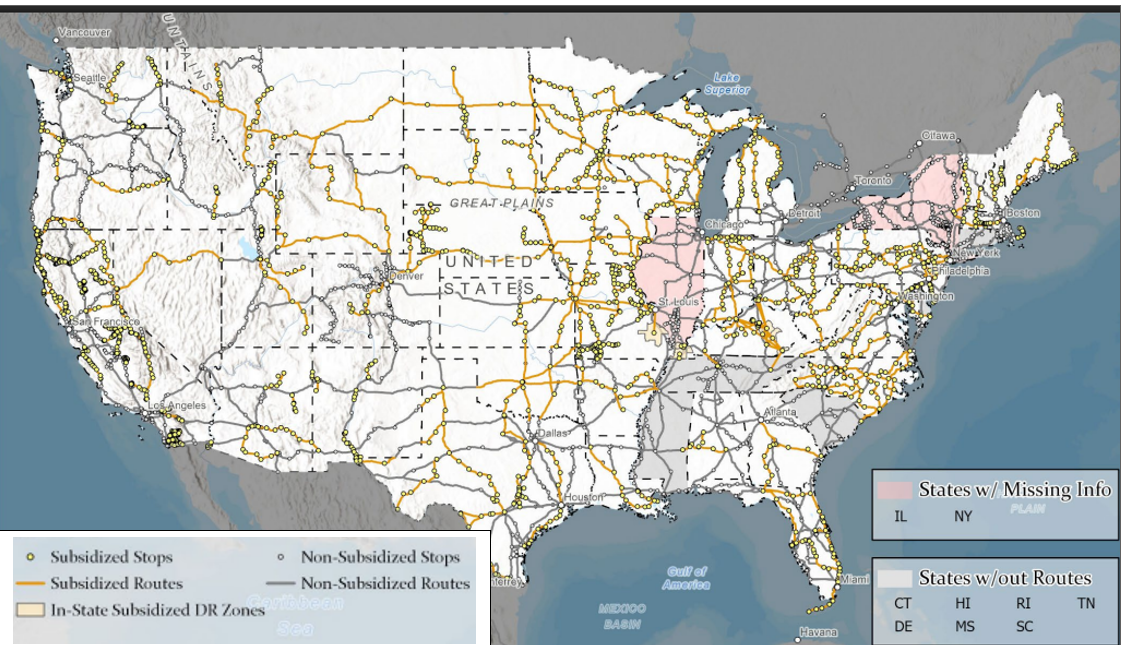
Thanks to a federally sponsored research project, a draft (and still preliminary) map of 5311(f) routes and stops in the continental U.S. is now available. The project team identified routes and then searched for GTFS data to create the map, which required overcoming numerous challenges, such as 5311(f) being only a small component of some funding arrangements, which made identification difficult.
| |
The network's enormous reach is fully evident on the map, with program-funded routes shown in yellow. Many routes have both 5311(f) and commercially provided service, with the former offering more small-town stops.
To access the National Rural Transit Assistance Program webinar slides from the presentation by Fred Fravel, Principal at KFH Group, which featured this new map, click here. We'll present the updated map when it is ready.
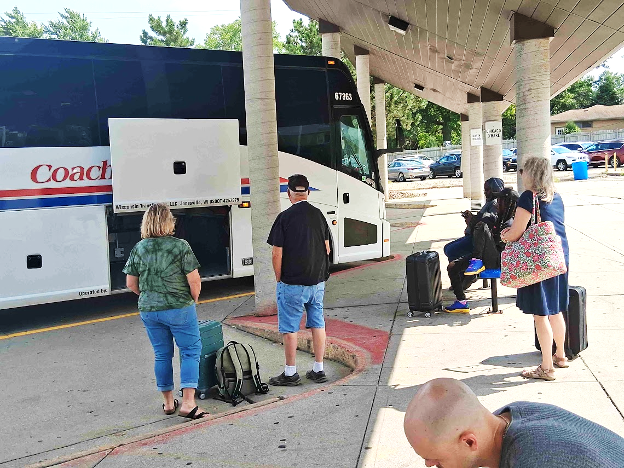
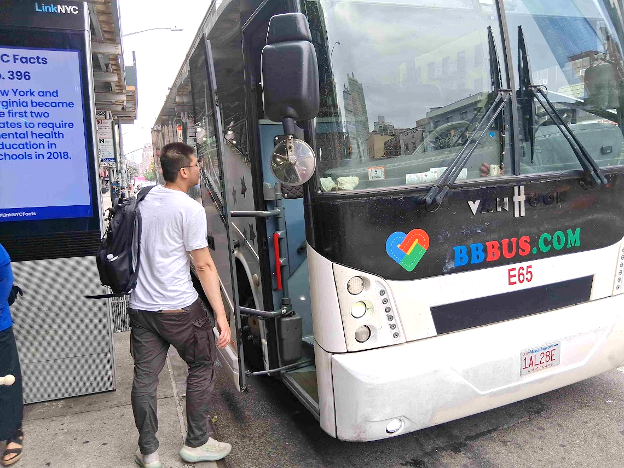
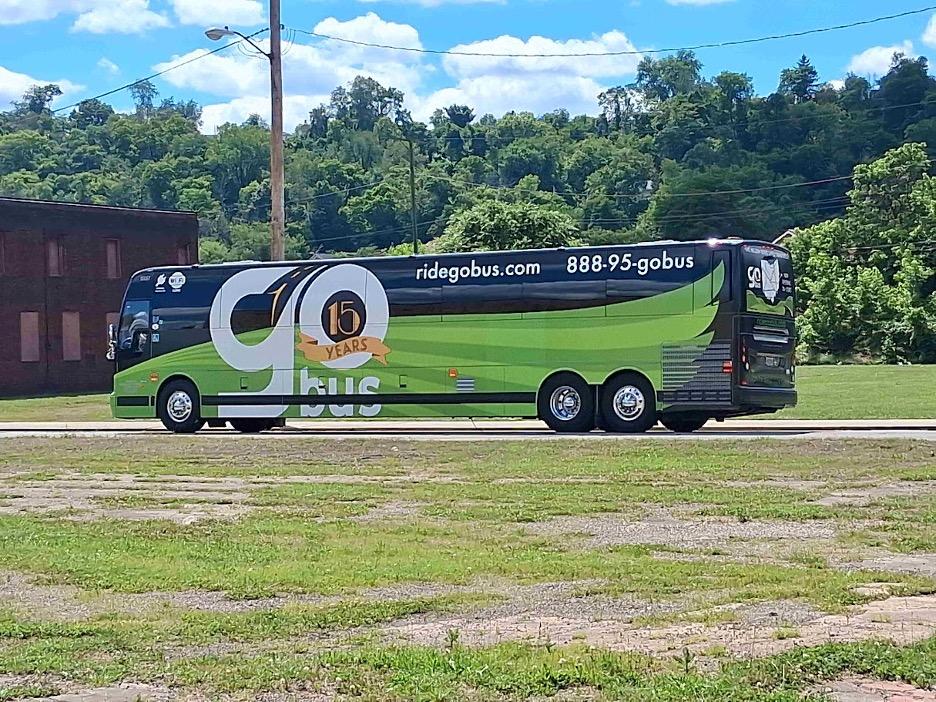
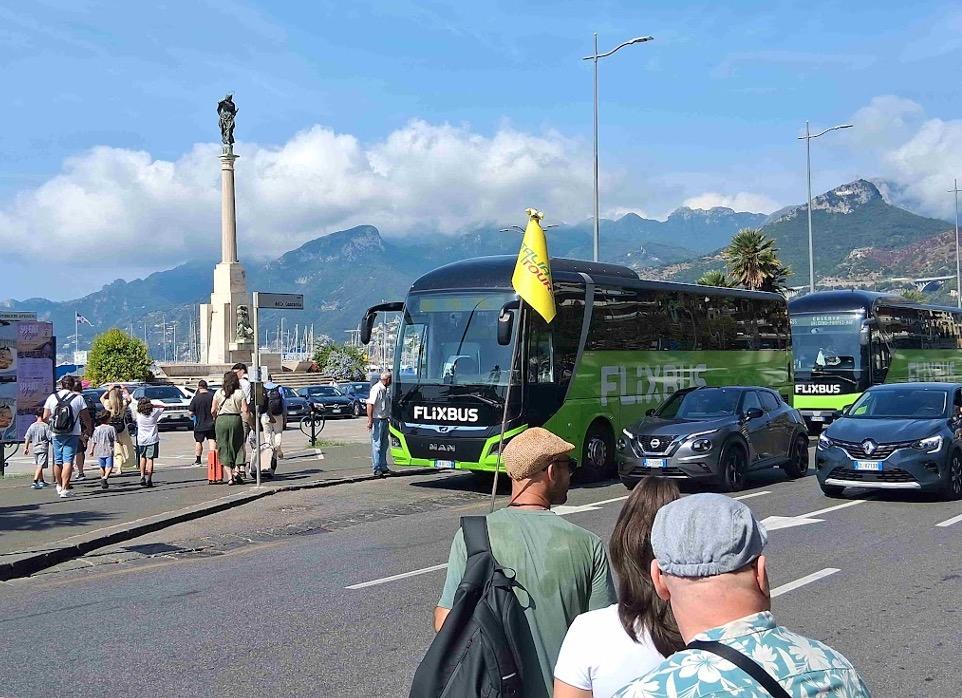
| News Photos from Around the US & Abroad | Passengers wait for Academy Lines-operated Go Buses service for Manassas, VA. The driver is inside, preparing for a departure from the assigned curbside spot near New York’s Penn Station. This route is operated three times daily, typically with intermediate stops in Tysons Corner and Vienna/Fairfax, VA. As noted in our May edition, New York-to-Metro-Washington bus service increasingly emphasizes specialty stops in outlying areas rather than nonstop runs between major downtown bus stations. | Passengers prepare to board a Madison, WI – Chicago bus at Rockford, IL’s Coach USA station in July 2026. Passengers with heavy luggage are likely headed to Chicago O’Hare, the next stop. The Coach USA/Van Galder service on the route now runs hourly, with most trips continuing past O’Hare to Chicago’s Union Station. Van Galder is an Amtrak Thruway ticketing partner. | A passenger boards a BBBus service at Eighth Avenue & W. 30th Street, which is one of its six daily departures for Albany and Schenectady, NY. BBBus, a relatively new brand sold on major booking platforms such as Busbud and Wandru, has emerged as a significant player in the New York market and also has routes to Baltimore, MD, Norfolk, VA, and Washington, DC. One of its hallmarks is multiple pick-up spots in large cities. This coach's previous stop was Chinatown. | It's almost nothing but green as a GoBus service bound for Columbus, OH rolls through Steubenville. The coach is wrapped in the service’s fifteenth anniversary logo. The recent addition of five routes, orchestrated by the State of Ohio, has made GoBus one of the country’s largest branded, state-supported networks. | Several coaches operated by FlixBus, including a morning service from Rome, bask in the sun in Salerno, Italy, at a stop in a busy tourist area near the ferry landing for the Amalfi Coast. This service is typically priced well below train service that arrives at a station several blocks farther from the coast. The guide is carrying a pole flag to keep his group together. | Masthead (top) photo caption: The driver of a Greyhound headed for New York at the downtown Cleveland stop closes the baggage compartment while the last passenger steps onboard on July 15, 2026. This coach’s previous stop was the city’s new bus station near Hopkins International Airport; it will run via Pittsburgh on its way to the Port Authority Bus Terminal. The coach is one of the newly acquired Prevost models. | | |
Invite others to join Intercity Bus Listserv
For a link to this newsletter, our past newsletters, and reports, click here
Invite your colleagues to join our Intercity Bus Listserv. To become part of our Intercity Bus Listserv and receive 8 – 10 emails per year, email Zaria by replying to this email. No spam. Free. Also, check out our recent studies, briefs, and podcasts below. The Intercity Bus E-News team is Joe Schwieterman and Hannah Hatfield.
-
For a link to our August Intercity Bus E-News, click here. Features on branding of state-run bus lines and Cleveland's new station + industry roundup.
-
Our Talking Tranportation Podcast with Kai Boysan, CEO of Flix North America; June 2026, 33 minutes. Listen on Soundcloud or Spotify.
-
Reimagining the Chicago Intercity Bus Station, policy brief, click here.
This independently produced e-newsletter brief has been shared with our Intercity Bus (IB) and Transportation listservs. The Chaddick Institute does not receive funds from transportation companies or related industries.
| | | | |