This newsletter is designed to educate the public about poisons and how to prevent poisonings in the home, school, and workplace.


This e-newsletter is published every quarter by the Georgia Poison Center. It presents a wide variety of poison-related topics that cover all ages. We encourage you to share this information with others!


Carbon Monoxide Safety


The temperature is dropping and the winter weather is setting in. Many people are utilizing home heating systems, increasing the risk for carbon monoxide (CO) poisoning, which can be deadly to humans and animals. According to the CDC, at least 420 people die in the U.S. every year from CO poisoning which is a completely preventable toxicity. CO is found in fumes of vehicles, stoves, furnaces, generators, charcoal and wood burning as well as many other sources.  


Tips to prevent CO poisoning: 

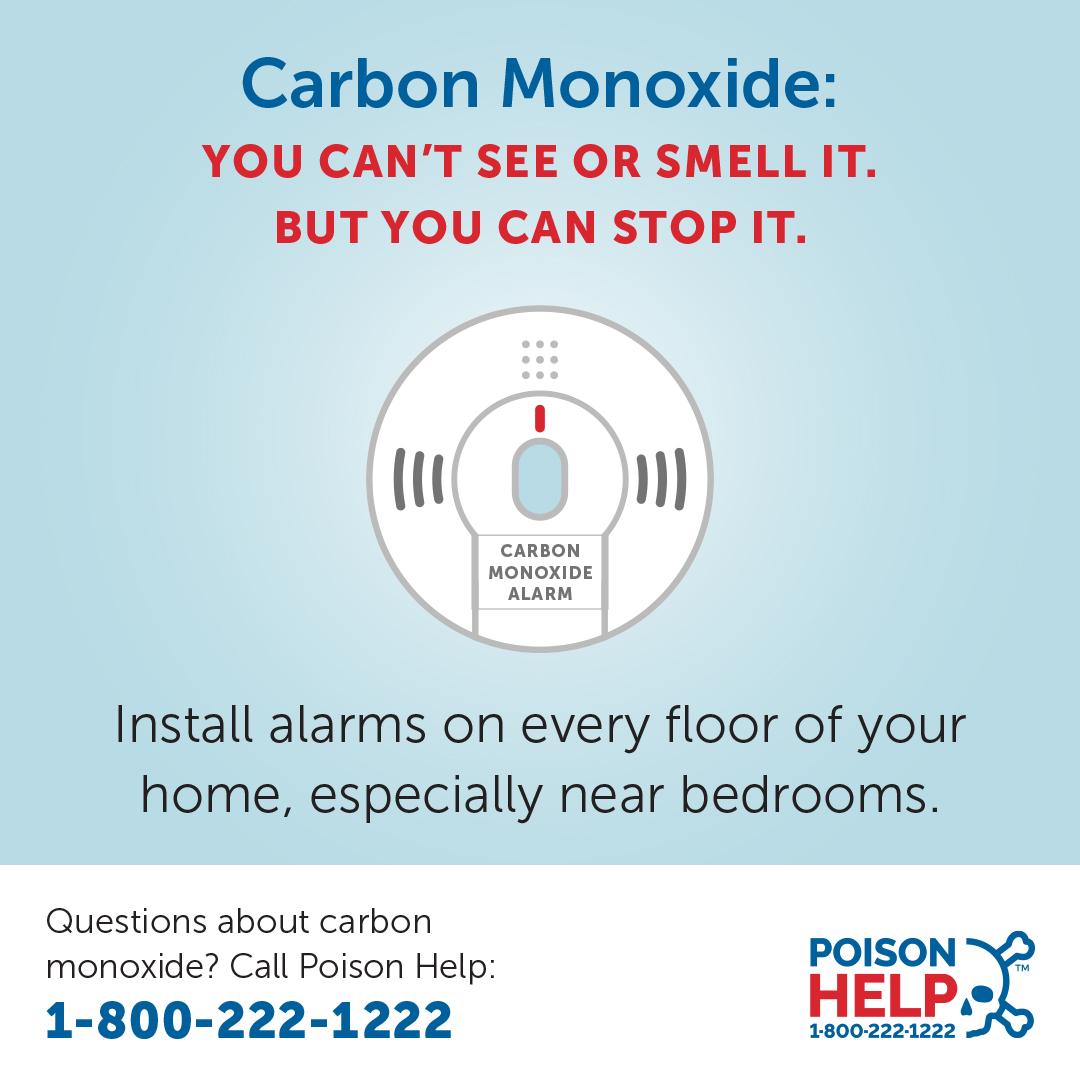
  1. Install battery operated CO detectors in every sleeping area in your home  
  2. Check CO detectors regularly to make sure they are working properly 
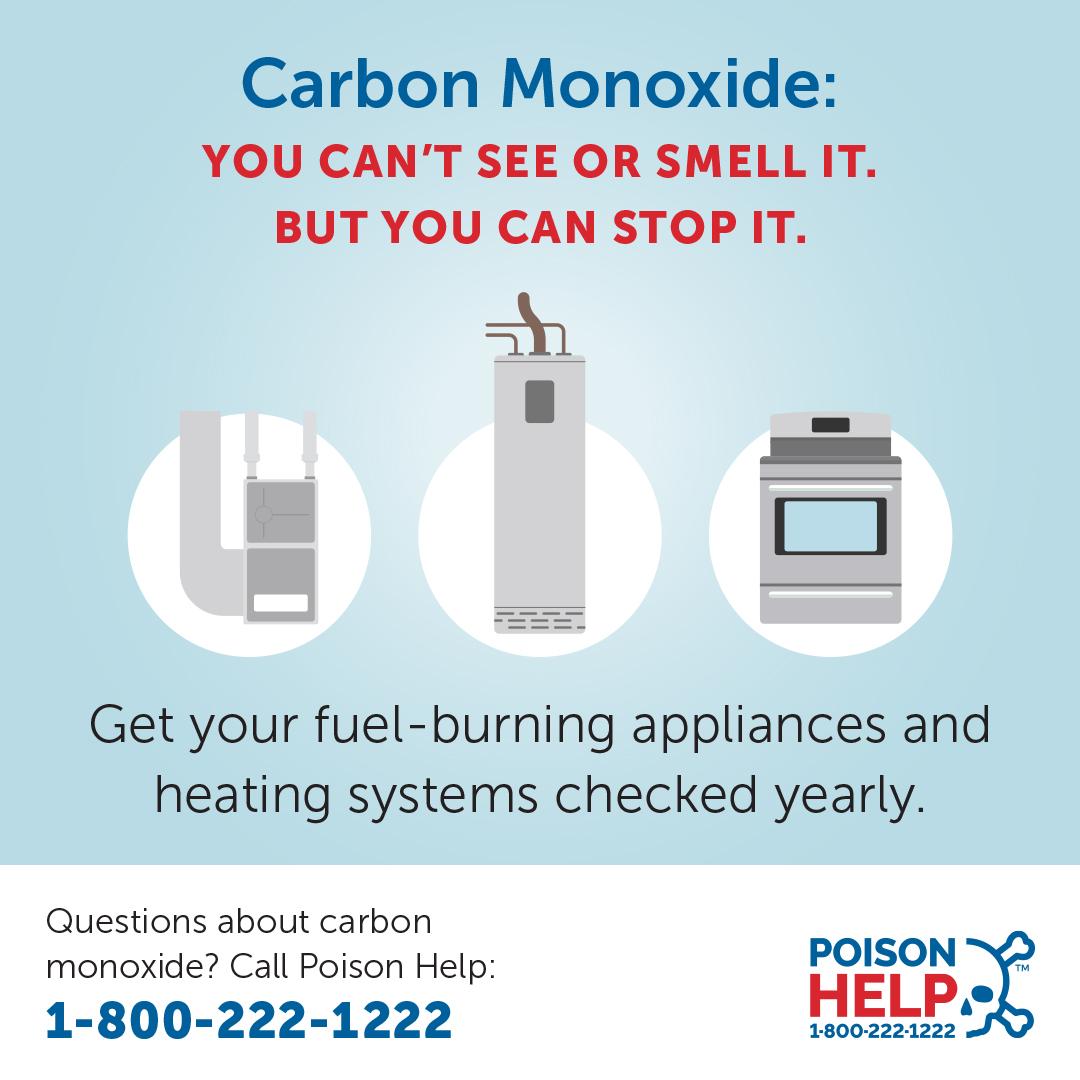
  3. Have your furnaces inspected every year 
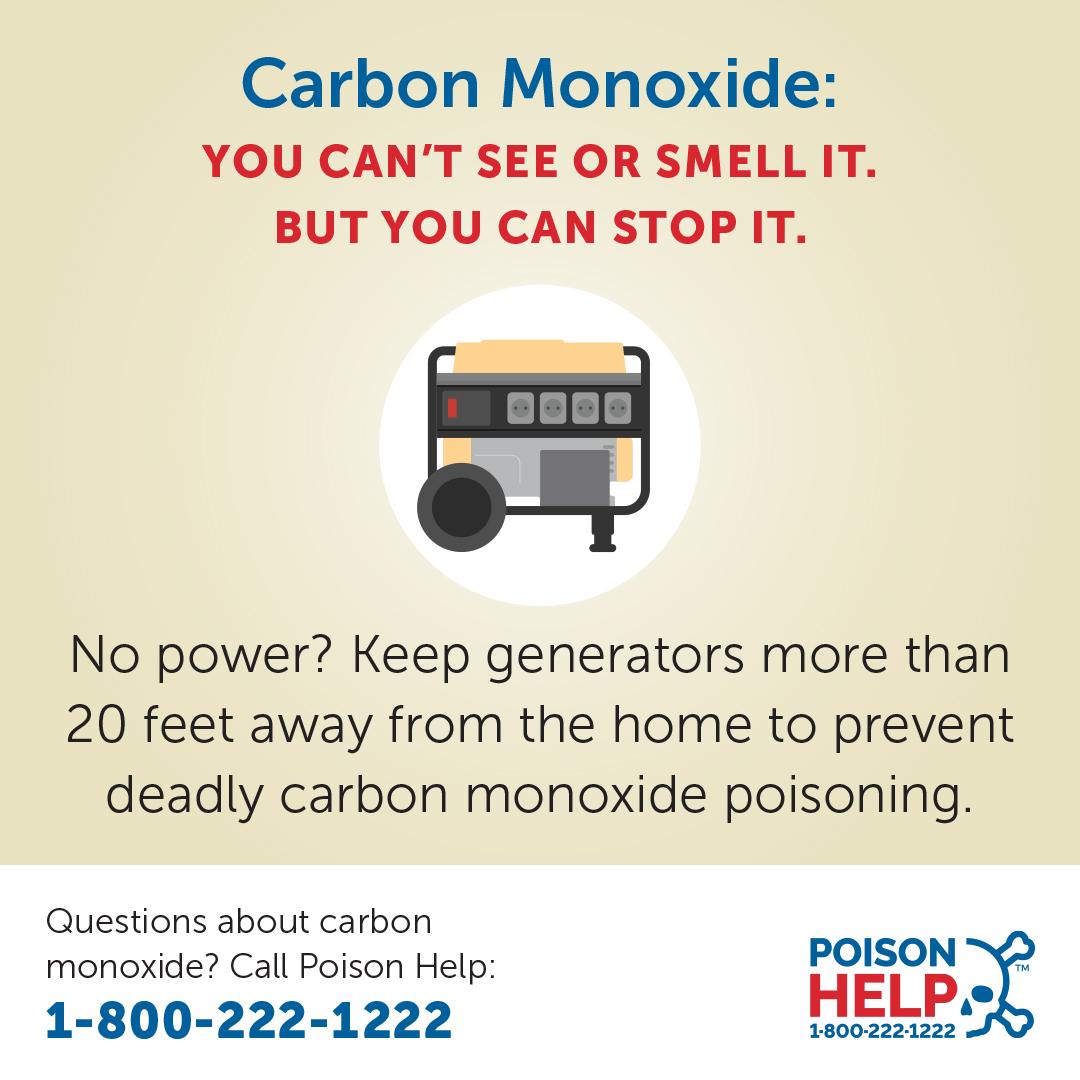
  4. Never use a generator inside your home or garage, even if doors or windows are open 
  5. Only use generators outside, more than 20 feet away from your home, doors and windows 
  6. Never grill inside your garage 
  7. Never keep your car running with the garage door closed 
  8. If you suspect CO poisoning call 911 or the Georgia Poison Center right away 


Visit our Website for more Information

Holiday Tips

The holiday season is exciting and sometimes hectic. The season is often accompanied by visitors and an assortment of food and drinks. Help protect those around you with these poison prevention tips.


Travel

Whether you are traveling or hosting, put medicines up, away, and out of sight. Provide visitors with a safe place to store all vitamins, supplements, and medications.


Food Safety

Preparing a turkey for the holidays?!

  1. Clean
  2. Cook
  3. Clear
  4. Call

*Be sure to thaw your turkey safely...Never thaw your turkey by leaving it on the counter. For more information on safe thawing methods visit: https://shorturl.at/cKLS0


Seasonal Plants

Babies & toddlers are attracted to plants, especially colorful berries and soft leaves. Poinsettias were once thought to be toxic but are now widely accepted as non-toxic. However, like any plant, they could pose a choking hazard or irritation to the mouth and throat. Holiday plants such as mistletoe, holly berries, bulbs (such as paperwhites), or Jerusalem Cherry could be toxic if swallowed.


Batteries

Holiday gifts can have flat, coin-shaped batteries. If swallowed, these can cause serious injuries to the esophagus (throat region) by causing obstruction, serious burns, and permanent damage. Keep all batteries away from babies, children, and pets.

Visit our Website for more Information

New Branding Logo


The Georgia Poison Center has changed its logo to align with the Association's brand.


The American Association of Poison Control Centers (AAPCC) is now America's Poison Centers! The name change is designed to unite the 55 poison centers across the country and bring greater awareness to the life-saving emergency services provided to every American.


While our logo and colors may have changes - we still offer free, 24/7 Poison Help at 1-800-222-12222 or by visiting us online at GeorgiaPoisonCenter.org

Online Training Platform


https://training.georgiapoisoncenter.org/

The Georgia Poison Center Education Department is happy to announce that the new online training platform is now available.


Once you create an account - users will be automatically enrolled in courses based on their profession.


The following courses are available:

  1. Poison Prevention Education (**Continuing education credits are available for childcare providers, nurses, pharmacists, firefighters, and EMS/EMT/Paramedics.)
  2. Educational Videos (5-10 minutes)
  3. Poisonous Plants & Mushrooms

SAVE THE DATE - March 17-23

NATIONAL POISON PREVENTION WEEK

The third full week of March each year is National Poison Prevention Week (NPPW), a week dedicated to raising awareness of poison prevention and safety and the Poison Help line (1-800-222-1222). 


Stay Tuned for More Information

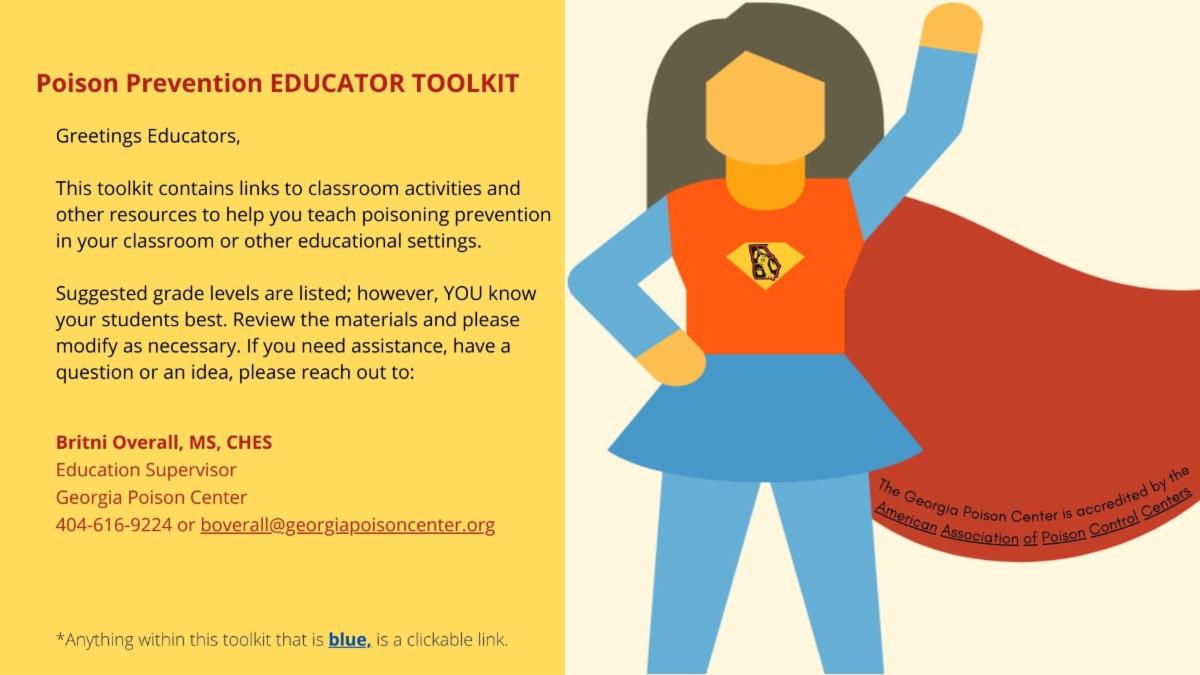
Educator Toolkit

Click Here To View/Download
EDUCATOR TOOLKIT.jpg
Facebook  Instagram  Twitter  YouTube  Web