SPRING INTO TRP WITH PINAL COUNTY! | | |
As we step into spring, thoughts of cleaning, decluttering, and home maintenance are probably on your mind – I know they’re on mine. Even here in central Arizona, where we barely have a traditional spring or fall, there is still a sense that we are stepping out of the cold of winter and preparing for the fun of summer.
Spring for us is a small stepping stone moving into that warmer weather. Following a dry winter and going into a dry summer, we need to prepare our homes and vehicles for dry, dusty weather.
What are the best ways to do that?
Get rid of all the dust, pollen, and particles that have managed to build up over the past months.
| | SOME TIPS FOR INDOOR AIR QUALITY: | | Do you have pets? Those of us who have or have had pets know that this is the time of year that our long-haired pets tend to lose their undercoats. This can result in a near constant amount of fur flying around our houses and irritating our noses. Even if you don’t have allergies, it’s enough to make anyone sneeze. One of the first things I recommend, before any massive cleaning gets done in your home, groom your pets! This can mean taking them to a groomer, one of those dog wash companies where you can groom them yourself, or convincing them to get into the tub and finding an undercoat rake to get all that extra fur out of their way. Cats are pretty good at keeping themselves clean, but even they need extra help with getting off excess fur. Try to keep up with brushing your cats at least once a week, possibly more if they are long-haired or partially outdoors. It will make your pets feel better and it will help you breathe easier. | |
 | | Next, I recommend deep cleaning your home. This can mean different levels for different people depending on the size of your home and the regular cleaning habits you already maintain. I know for me, there are few things better and more satisfying than fresh linens, clean furniture, and deep cleaned floors. Work your way from the top down. Clean light fixtures and fans, then take a duster and wipe down all of your walls. Next, vacuum your fabric furniture like couches, cat trees, and beds (sprinkle on some baking soda to get rid of any lingering odors). Also take the time to wipe down all hard surfaces and plants. If you do not own a carpet shampooer or steam mop, there are usually good deals on these items during this time of year. You can also rent these items from some grocery and home improvement stores or, if you’re able, hire a professional to clean your floors for you. Another step is to take the time to wash and then replace all of the linens in your home – including window curtains, shower curtains, rugs, and any other linens that are currently in use.
Lastly, you want to make sure you are breathing fresh air! Your indoor air filters should be changed at least every three months. If you have pets, allergies, or live in a dusty area (Hello, Arizona) you may want to consider replacing these filters every one to two months. A good rule of thumb is to keep an eye on them and if they look dirty, it’s time to replace them. If you notice you’re still having symptoms of indoor allergies, it might be time to invest in an air purifier.
| | TIPS FOR HELPING OUTDOOR AIR QUALITY WITH CAR MAINTENANCE: | | |
Growing up, it took 45 minutes for my family to get to most grocery shops and stores. This means that I’m used to pretty much living in my car and long commutes. I do what I can to help reduce my emissions by combining trips, going into coffee shops instead of sitting in those long drive through lines just idling away, and carpooling when possible. When I can’t do those things, I know there are steps I can take to make my gas-powered vehicle at least a fraction more energy efficient and reduce those emissions.
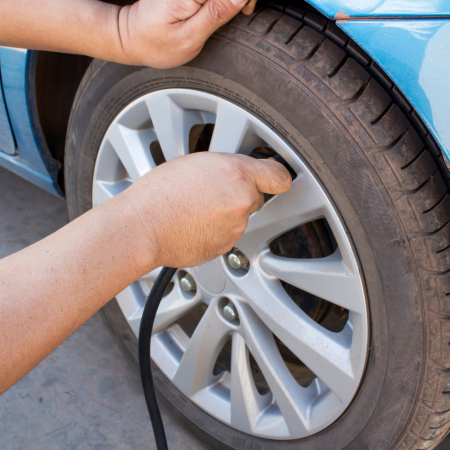
The first thing I make sure I do is keep up with regular maintenance and don’t put off unscheduled maintenance. Keeping your tires aired up to manufacturer specifications can improve your gas mileage and in turn, reduce the amount of pollutants your car releases into the air. Making sure your engine is finely tuned with regular oil changes and replacing things when they break can also increase the life of your vehicle and improve your engine efficiency which – you guessed it – decreases the amount of pollutants your car puts out.
Part of that car maintenance that improves your engine efficiency but also improves cabin air quality is replacing air filters on a regular schedule. This includes both engine and in-cabin air filters. Keeping these clean can keep things like your blower motor and compressor from breaking. It also helps remove airborne particles, such as dust, pollen, and pollutants.
Another part of car maintenance that does not do much to affect outdoor air quality but does affect in cabin air quality is regularly cleaning out your vehicle. Whether you carpool, have a family, or just have a vehicle that you spend some time in, this is the perfect opportunity to take some time to do a deep clean of everything in the vehicle. Vacuum out your carpets, your seats, and wipe down all surfaces.
These actions can help you breathe easier at home and on the road. Your visitors, passengers, and your future self will be thankful that you took some time to clean out the old dust and particulates.
Read more about air pollution inside your car here.
| | |
Please mark your calendars for our Travel Reduction Program Training on APRIL 15th for our transportation coordinators.
Where: San Tan Campus of Central Arizona College
When: 9:00 a.m. - 11:00 a.m
If you have not received a request to RSVP yet and wish to attend, please email Natasha at natasha.sichling@pinal.gov as soon as possible.
| | WHAT ARE THOSE PESKY POLLUTANTS WE'RE WORKING TO REDUCE? | | |
Clean air is critical for every person in every area of Pinal County. It improves the health of residents, decreases healthcare costs, and helps create communities that attract and retain business. Every year, Pinal County is required to report to ADEQ the amount in tons of certain pollutants that have been reduced by major employers within Area A of Pinal County – that’s you! Those pollutants are: carbon monoxide, nitrogen oxides, volatile organic compounds, and particulate matter. Over the course of this year, we will be going over what all of those pollutants are and how they affect us. At the end of discussing what the pollutants are, we will discuss how a combination of certain pollutants make up a compound with two sides – Ozone! Last time, we talked about Carbon Monoxide. This edition will be looking into: Nitrogen Oxides!
Nitrogen oxides (NOX) are a group of highly reactive gases that include nitrogen dioxide, nitrous acid, and nitric acid. Nitrogen dioxide (NO2) is the part of this group that is tracked by the EPA to indicate the group known as nitrogen oxides. NO2 is dispersed into the air by burning fuel. This forms some of the emissions from cars, trucks, buses, power plants, off-road equipment, and gas powered lawn equipment.
NO2 effects your health and the environment. Breathing in NO2 over a short period of time can aggravate respiratory diseases and can cause coughing, wheezing, difficulty breathing, and hospital stays. Longer exposures can lead to the development of asthma and increase susceptibility to respiratory illnesses. The effect on the environment is caused by few different things. The mix of NO2 and other NOX particles mixing with water to cause acid rain. Particles from NOX contributes to hazy air and helps create that brown cloud that occasionally lingers over areas in and around Phoenix. NOX that gets into the atmosphere causes nutrient pollution in our waters which can harm and disrupt aquatic environments.
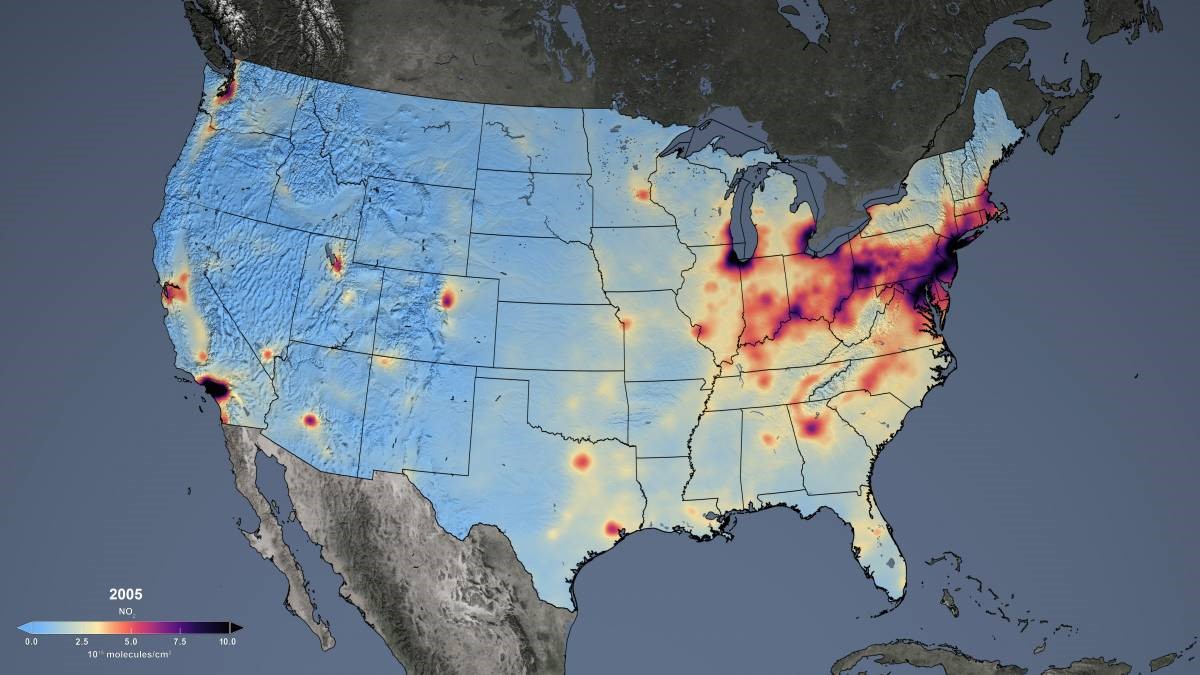
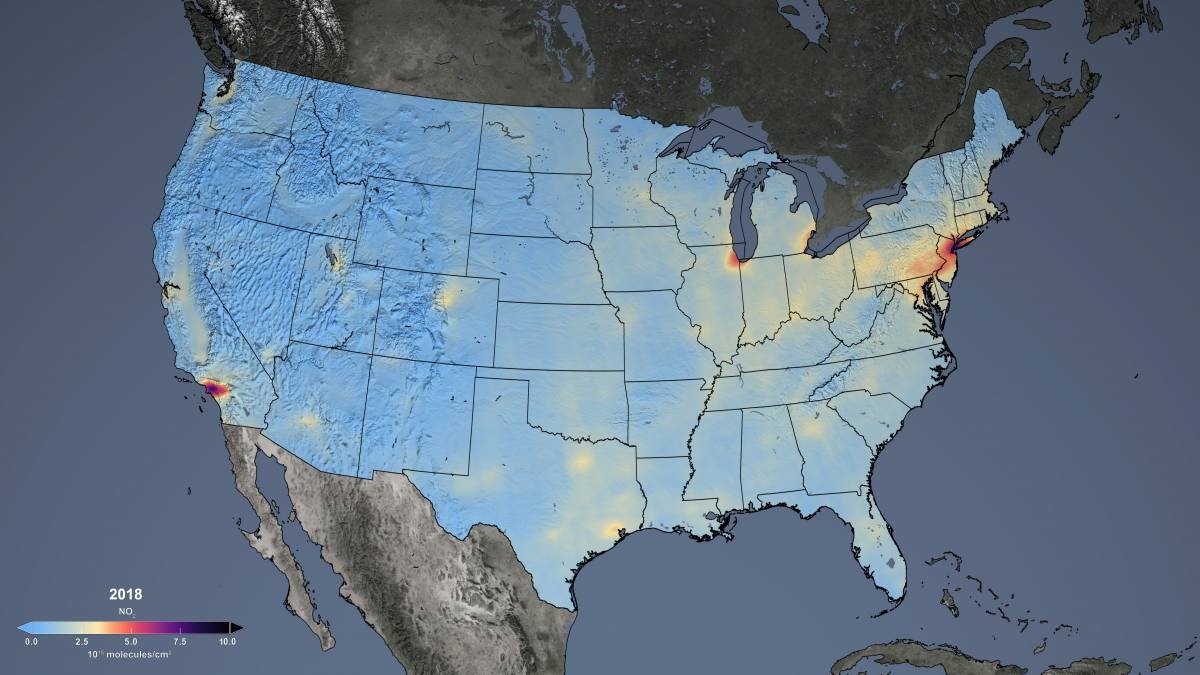
| | There have been regulations put in place to help reduce NO2 over the years. NASA has a neat animation that shows the difference in NO2 that was emitted in 2005 versus 2022. The following photos shows the difference between 2005 and 2018. Notice that the area surrounding Phoenix was red in 2005 and lessened to a pretty pale yellow in 2018. | | Figure 1 Average NO2 levels in 2005 United States | | Figure 2 Average NO2 levels in 2018 United States | | There are ways that you can help reduce nitrogen oxides! By actively participating in the Pinal County Travel Reduction Program and choosing to use alternative modes for most of your commutes, you can reduce the amount of NOX that are formed. Remember, these are formed by burning fuel. If you carpool, vanpool, walk, or bike to work – you are reducing the amount of fuel that is being burned because that is one less car that's on the road! You can also do your part on high pollution days by using human-powered tools instead of gas powered tools to do your landscaping. Know what's even better than that pretty pale yellow? A nice light blue - let's strive for that. | | Travel Reduction News Around the Country | |
How Can Buying Groceries Online Help Reduce Pollution?
Let’s travel back in time 5 years. Maybe you were at a different job, maybe you got furloughed, maybe you were being health conscious, or maybe things weren’t so different for you than they are today. For me, I was working at Target when everything got shut down and I can tell you first hand the difference it made in retail. We were a very busy superstore before March of 2020, then we became an even busier hub for online shoppers. We had Shipt shoppers who basically became team members because they were there so often and knew where everything was – even better than some on our own team. Our fulfillment team (the ones who pick and pack online orders for drive up, order pick up, and shipping to your home) grew exponentially and they could tell you where every item was on a shelf without even thinking about it. Another thing that grew was the area I worked in – drive up and order pick up. We went from having a handful of orders during the day and being able to run with a 4 person team all day to having over 500 orders a day and a 4 or 5 person team per shift. We ended up converting our café to an order holding spot because of the influx, a change that never reverted when restrictions lifted. It was hot that summer and people had the best intentions but let’s be honest, no one needed that much toilet paper.
I tell you this story to show that online ordering exploded in 2020, and it hasn’t slowed down. People love being able to order items from home, from their desk, from vacation, from wherever and they love that they can trust it will arrive on time and as ordered (most of the time). What is all of this online shopping and e-commerce doing to our air quality? It’s not like shopping online is new so it can’t have that big of an impact, right? The answer is a little more complicated than that.
| |
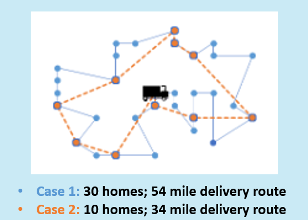
| | | Back in 2018, the EPA released an article that is even more relevant today than it was back then. It was a look at how ordering your groceries online for delivery to your house could help to reduce pollution – and how it could increase it. They talk about two different cases. In the first, you and 29 households within your neighborhood make online grocery orders for delivery. You’re not in a time crunch and maybe you live close to where you work so you choose that they can be delivered at a time that works best for the driver. This makes it possible for a route to be chosen that can deliver to all 30 households in one trip, therefore reducing emissions. Now, let’s say you and your neighbors all have strict schedules. Maybe you needed that guacamole for your kids birthday party and now you’re trying to calm down a screaming 6 year old and don’t have time to go to the store before the party starts. Obviously, you would not tell the driver to deliver it on a whim. Maybe your neighbors are dealing with similar issues and all request specific time frames too. So now the driver is only able to deliver to 10 of your houses because the time frames got way too specific and far apart. This would cause more emissions than if you had just been able to go to the store.
Something to note is that this article is seven years old now (older than that guacamole craving six year old). As we discussed above, the amount of online orders being placed has significantly changed. Another thing that has changed is that companies are trying to be more environmentally friendly and are using vehicles with improved fuel economy. What it all comes down to is when you’re shopping online for delivery to your home, for groceries or that stylish new top, if you have the ability to let the item be delivered with fewer trips, then choose it. You’ll get those groceries or that fabulous new outfit and you’ll get to help reduce emissions at the same time.
Read more here.
| | MAJOR RESEARCH INITIATIVE TO ADDRESS RISING OZONE LEVELS IN MARICOPA AND PINAL COUNTIES | | |
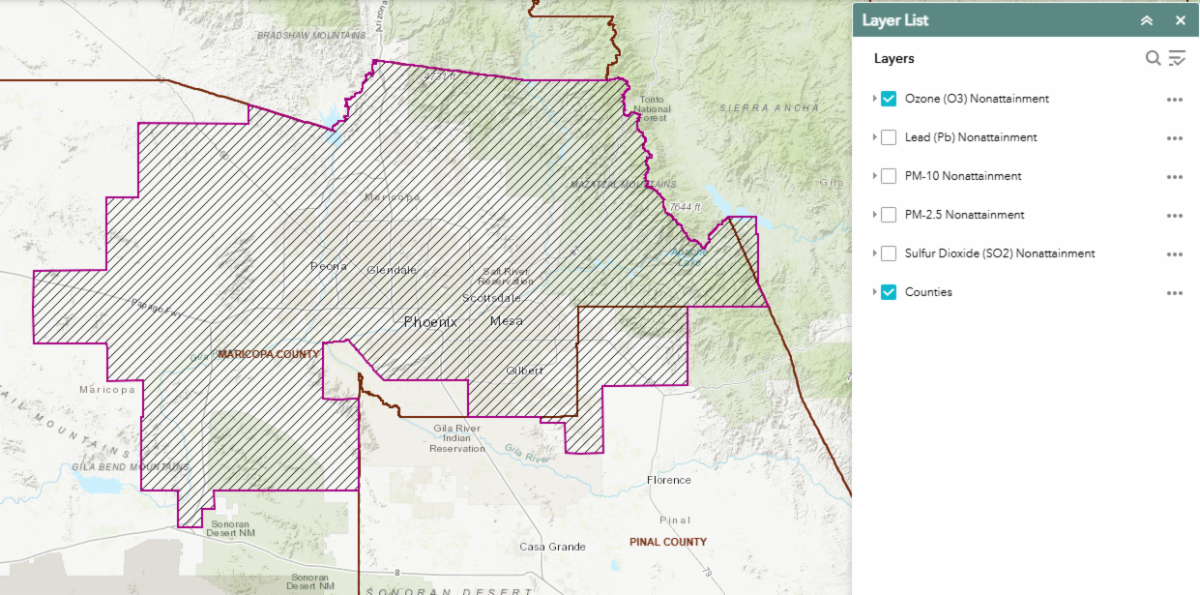
A collaboration is underway in an effort to address the rising ground-level ozone concentrations in Maricopa and Pinal Counties. These increasing concentrations pose several health risks to those with chronic conditions. They also have the potential to cause issues with regulatory compliance concerning the new EPA rules that were announced in 2024.
ADEQ will be partnering with the EPA, the National Aeronautics and Space Administration (NASA) Jet Propulsion Laboratory, Maricopa County, Maricopa Association of Governments (MAG), ASU, and the University of Arizona for the Ground Level Ozone Research (GLOR) Project. The GLOR Project will look into eight hypotheses and investigate local atmospheric transport, precursor emission rates, and chemical transformations.
| | |
The project has met its funding goals and is projected to begin work this spring. They are currently looking at a completion timeframe of one year. According to Peter Schlosser, Vice President and Vice Provost of the ASU Global Futures Laboratory, “the hope is that this project will deliver actionable, policy-relevant information … which will help the region achieve federal air quality standards and avoid greater economic impacts and sanctions”.
Read more about the project here.
| |
Travel Reduction Doesn’t Mean Don’t Travel
Carpool to These Great Locations in Pinal County
| | |
The Santa Catalina Mountains in Oracle block the light pollution from surrounding communities for goreous views of the night sky.
| | Adventure playground, a catch-and-release lake, a dog park, bocce ball, corn hole boards, ping-pong tables, and more! | | An 11.65 milr long recreational trail that travels tthrough Superior, Arizona and the Sonoran Desert. | | |
Whether you are a new or a long-time resident of Arizona, it is worth reminding everyone that Arizona gets very hot – even during the “spring”. Make sure you are always taking and drinking an adequate amount of water when you do any kind of outdoor activity, no matter the weather. If you are hiking, turn around when you get close to being halfway out of water, even if you are not close to your planned turn around or end-point. Please do not let yourself be the next “Hiker runs out of water and dies in the heat” headline.
You can view more events, activities, and locations at explore.pinal.gov
| | |
This newsletter may be shared as needed to keep your employees and driving-age students updated. Feel free to forward it to those who may have an interest.
To have Pinal County Air Quality alerts delivered directly to your email inbox, click the subscribe button.
| | | | |