A Newsletter From Meg Cox January, 2025

Dear Readers:


I need to start this new year with an apology. In my November issue, I shared a piece of information which I was told by multiple trusted sources at Quilt Festival without doing my own follow-up reporting. I wrote that retailer Missouri Star Quilt Company had bought Robert Kaufman Fabrics without contacting either company for confirmation and details. I can and will do better.


That story was published in other newsletters and social media posts and still is a rampant rumor, but isn't correct. While Missouri Star has acquired a share of the fabric company and has some control over its future, they say they haven't bought the Kaufman company outright. There is a lot of confusion about what is going on at both companies and the controversy is growing as other industry players react. Some quilt shops are refusing to buy fabric from Kaufman and some fabric companies are threatening to stop selling their fabric to Missouri Star.


There was no December issue because I decided to dig deeper into this still-emerging story rather than run what little I knew then. It's a volatile time and I definitely don't have all the answers. We don't know how this story ends. But I'm doing my best to sort fact from rumor. Below you can see what I've learned so far and what I think this may mean for the fabric industry and its customers. Let me also add that I was aided in this reporting by some of my subscribers who are quilt shop owners. I'm grateful for their help.


Quilt On,

Meg

Controversial Investment:

Missouri Star's Stake in Kaufman


****************************************************************************************

There had been rumors in the quilt trade for some months that the financial situation was getting shaky at Robert Kaufman Fabrics, a Los Angeles-based multi-generational fabric company. The company sells a variety of fabrics but is probably best known for popular quilting fabrics that include Kona Cotton Solids and Artisan Batiks. Like many fabric companies whose sales soared during the pandemic, Kaufman was trying to deal with a steep drop in sales that followed the boom times.


But when the news trickled out at Quilt Market, the fall trade show in Houston, that Missouri Star Quilt Company, the biggest quilt world retailer in the country, had acquired a substantial share of Kaufman, there was a wave of shock and even outrage. This anger seemed directed at both Missouri Star and Kaufman.


"I think there has been simmering anger toward Missouri Star in the industry for a long time," one fabric retailer told me. "Their discounting practices are extreme and make it hard for shops to compete. That has been true for a long time. But with a retailer buying a fabric resource, they become a vertical operation and wipe out competition even more." For example, Missouri Star has recently put Kona fabric on sale for $55 per bolt, making the price $5.50 a yard during a time when Kaufman had dictated that other retailers charge a much higher minimum price per yard. Missouri Star has become the biggest purveyor of fabric in the country partly through its Daily Deals, discounts on one product between 30% and 100% that drive consumers to its site.


Now, other fabric companies that compete with Kaufman fear that the biggest retailer in the business will favor and promote Kaufman products over anyone else's fabric, and not just for special discounts. As Cindy Cloward, an owner and Chief Design Officer of Riley Blake Designs told Abby Glassenberg in an article for the Craft Industry Alliance last month, "Regarding the merger of one of the biggest manufacturers with one of the largest retailers, from our perspective, this is a very concerning development for the industry. We believe this combination creates imbalances and isn't healthy for the long-term growth of our industry."


Why the anger at Kaufman? Among other things, quilt shop owners were complaining they didn't want Missouri Star, their giant competitor, to have information about their fabric buying. Mainly, they don't want their shop purchases to benefit a company that undercuts them.


Mari Vanderstelt, owner of Yankee Dutch Quilting & Dry Goods in Brownsville, Oregon told me "My first thought when I heard the news was that if I order from Kaufman, then I am helping Missouri Star make more money. We were just about to open an account with Kaufman because I wanted to buy their batiks." She bought batiks from another company instead and didn't open an account with Kaufman.


Scarlett Wells who owns the Fabric Cobbler in Forsyth, Illinois had been a regular customer of the Kaufman company for over a decade but she closed her account when she learned Missouri Star was "bailing them out." At first, she considered keeping the account, she told me, because one of the themes of her shop is what she calls "fandom." She has a whole wall of fabric that includes sports logos and was buying fabric from Kaufman that was licensed with images from Pokemon, Dr. Seuss and other iconic characters. She had long felt that Missouri Star's "predatory pricing" made quilt shops "look like we're price gougers." It gave her a bad feeling that shortly after the deal became public, "Missouri Star was selling Kona for less than wholesale prices. Other shop owners were saying, What should we do with our Kona now?" Scarlett adds, "There is literally nothing that Kaufman can do to win me back."


This wasn't an easy decision for most shop owners. They praise their Kaufman reps and say they don't want to see the company fail. Plenty of shops continue to buy from Kaufman. On a private Facebook page for quilt shop owners, I've been told that more than half of shop owners who have posted comments said they won't buy from Kaufman now and it is mostly because of this deal. Those commenting that they will still carry Kaufman say they need to stock what their customers want and so long as that is Kaufman fabric, they will sell it.


Heidi Kaisand, who owns the Hen & Chicks Studio quilt shop in Iowa and published a magazine for shop owners, is among the shop owners to comment that much of what Missouri Star has done over the years has benefited shops in general because they raised the profile of quilting in this country and created many new quilters. She doesn't happen to carry Kaufman in her shop but said she isn't worried about this new relationship between Missouri Star and Kaufman. "I am doing well in my lane, working hard to understand my own customers.That is all."


Because the transaction with Kaufman happened last spring but didn't become known until the fall, some felt it had been hidden, which fueled more anger. We need to examine this from different angles. Let's look at what some of the objections are but also hear explanations from Missouri Star and Kaufman. Since none of these entities are publicly traded companies it can be hard to verify details but I've tried to reach out to anyone who I've heard is involved and asked for comments.


The Missouri Star Quilt Company began in 2008, with a small storefront in Hamilton, Mo. at which Jenny Doan was setting herself up as a longarmer for hire and selling a bit of fabric on the side. In the intervening years, the company has transformed its picturesque small town into something between a destination and a pilgrimage, offering multiple quilt-related shops and a retreat center, among other draws. Fans flock to meet Jenny, who built a huge following with free Friday project tutorials on the Missouri Star YouTube channel. But the vast majority of its sales come through its website, which sells a wide range of fabric and notions. Pre-cut fabrics are a high point and sales of them get boosted by the company's hugely successful magazine Block. As a private company, it doesn't report revenues, but Forbes magazine estimated annual sales of $40 million when it profiled Missouri Star in a 2018 article titled "The Disneyland of Quilting."


By now, the management slate includes business talent recruited from Wall Street firms but it is still largely family run. As many as 30 Doan family members have worked for the company at one time but a lot of the growth strategy came from Jenny's son Alan Doan, who has a background in software and startups and who lives on a farm near Hamilton with his wife and 4 kids. Alan (who goes by Al) was the one who explained to his mom what YouTube was and got her started posting tutorials. I've interviewed Jenny multiple times and I've also spoken to Al in the past. At the moment, Jenny and her husband Ron are spending a 2-year stint in Africa doing Mormon mission work, so I reached out to Al to ask questions about this transaction and the industry reactions.


Al told me the animosity and anger took him by surprise because "our motivations were pure." He said the motivation was, in one sense, to repay a favor because Kaufman was helpful and encouraging when Missouri Star was an unknown entity launching 16 years ago. He added that Kaufman's leadership had come to him in dire straits and asked for help and that without help, "they would not have been able to continue."


In the Craft Industry Alliance article last month, Abby Glassenberg quoted an email sent by Missouri Star CEO Jeff Martin to industry partners saying that Kaufman needed recapitalization and Missouri Star was able to help them "secure new investment that has stabilized their business through a combination of private financing and new lines of credit."


The source of that private financing was Al Doan and his sister Sarah Galbraith, who has worked closely with their mother since Missouri Star began. How big a share of the Kaufman company is now owned by Al and Sarah? They aren't saying. Al said Abby Glassenberg's article was largely accurate but the biggest error (other than a headline stating Missouri Star bought Kaufman which has now been corrected) was stating that Missouri Star has a majority of board seats, and thus controls the company. A document filed in May with the state of California says Al and Sarah hold board seats but doesn't list the rest of the board. Both Al and Ken Kaufman, the CEO of Kaufman say that three members of the Kaufman family now also hold board seats so the Missouri contingent has 2 out of 5 seats. In addition, Nicole Strain, who works as the chief financial officer of Missouri Star now serves that role at Kaufman too.


Al told me that he invests in dozens of companies and often asks for a board seat to protect his investment. He insists that both he and Sarah aren't interested in a long-term investment but just want to help the company turn around and then sell back their shares for a profit. "Optimistically, we are happy to get bought out," he said. Al is also adamant that Missouri Star doesn't want to be in the fabric business and has no interest in setting up as a competitor against the fabric companies whose wares they sell.


"My vision for our company is that I want us to buy things and resell them and not get into the world of making our own fabric," Al said. "It's hard enough for me trying to be a good retailer. We have great channels to consumers and I want to take designers and put them in front of our audience and raise their profiles. And then sell some of their stuff."


Al believes that the best outcome is for Kaufman to continue to be an independent fabric company in the quilt world. "How would our industry be better if Robert Kaufman Fabrics was no longer around?" he asked.


Although I have emailed Ken Kaufman with questions and an interview request, he never replied. I have been shown copies of multiple emails he has sent to customers trying to correct the record on this transaction. In a message he sent to retailers on December 27, he said he was still trying to stop rumors and misrepresentations. In bullet points, he addressed several rumors directly, saying Kaufman continues to be an independent company "not owned or controlled by MSQC." And he addressed fears that Missouri Star is privy to info about the fabric company's customers. He wrote "There is no sharing of Kaufman customer information with MSQC."


At this point, some things remain murky. There are things I've been told by industry sources that I can't verify.


For example, both Moda Fabrics and Riley Blake, companies that have sold a lot of fabric to MSQC over the years, have threatened to stop supplying fabric to their biggest customer but won't say if they have followed through on that threat. When I asked Cindy Cloward at Riley Blake, if she had withdrawn her fabric, she declined to answer. She simply directed my attention to what she said to Abby Glassenberg at Craft Industry Alliance in her December 1 newsletter and said she was "quoted correctly." In that article, Cindy said "As we continue to evaluate the situation, we're making decisions that we believe are in the best interest of Riley Blake and the broader industry."


When I reached out to an executive at Moda, I got a similar reply via email. "At this point we are doing what is best for our company. We have no further comments as we do not want our decisions to influence others."


When I asked Al Doan about these companies, he expressed sadness that deep, longstanding relationships seem to be in jeopardy but said "I am very optimistic that our relationship will continue with Moda and Riley Blake" and another company that has threatened to stop selling fabric, Wilmington Prints.


There are also rumors that several companies in the industry were interested in buying Kaufman themselves, and some surmise that has created more frustration at this deal. I haven't been able to confirm the names of the companies or that actual offers were made so I won't write them here.


I asked industry execs what they believe would be the most positive and constructive resolution of this controversy and was told by one, "For the sake of the industry and perhaps for their own business, Al Doan and Sarah Galbraith should sell Robert Kaufman. Though due to the controversy, they might have to do so at a loss."


It's impossible to predict whether these ruptures in the fabric industry will grow or be resolved, but some things are clear. Like many types of retailers, the quilt business has been hit hard by online discounters, including Fabric.com after Amazon acquired it in 2008. Just as the rise of Amazon.com preceded a precipitous drop in the number of independent bookstores, the rise of online discounters like Fabric.com and Missouri Star have coincided with disastrous times for quilt shops. It can be tricky to get exact numbers of quilt shops and people in the business don't want to harp on how dire this looks, but the best estimates I've seen from industry experts show that the number of quilt shops has fallen in the past 15 years from more than 5,000 to between 2,200 and 2,800. (Amazon abruptly closed Fabric.com in 2022.)


Consumers are wary and stressed in general, the post-pandemic sewing boom has petered out and almost every aspect of the quilt world has been shrinking. This looks to be shaping up as a "musical chairs" moment, but it's not a game. Al Doan acknowledges this reality. "The industry is contracting," he told me. "We are all going to need to weather some hard times. Let's work together and grow!"


If you want to dig deeper into this story, read Abby Glassberg's article online because a great many comments have been added at the bottom and it will give you a sense of the diversity of opinions about this deal.


The latest bombshell hitting the fabric business was the announcement this week (January 15) by Joann Fabrics that they are going to file for a bankruptcy for the second time in a year. After the previous bankruptcy they were able to reorganize their heavy debt load and only ended up closing 8 stores out of hundreds. This time, management warns the situation is far more dire and they may have to sell their assets to the highest bidder, who may or may not still operate the chain.


Trying to look on the bright side, the chief of one fabric company said that "despite a lot of disruptions in the market in recent years, hopefully there is room for innovation and creativity to bubble up, inspiring new sewers to join the community and keep our industry afloat."


I'll end by saying something that has become kind of a mantra for the Quilt Journalist newsletter but I feel it very strongly: as consumers in this industry, be conscious that you support the designers and publications and fabric companies and retailers that YOU want to survive.


If there are new developments in this story I will bring them to you in future issues. Next month, I'll go deeper into the implications of the Joann bankruptcy. Stay tuned!


Quilters,This Game's for You!


Maybe I'm the last cat-owning quilter to discover the delightful and addictive board game Calico that was launched 5 years ago, but now is a particularly exciting time to discover Calico given new developments. The game has become so popular that a video game version was launched. And now the company that produced Calico has just added a cat-themed board game for knitters.


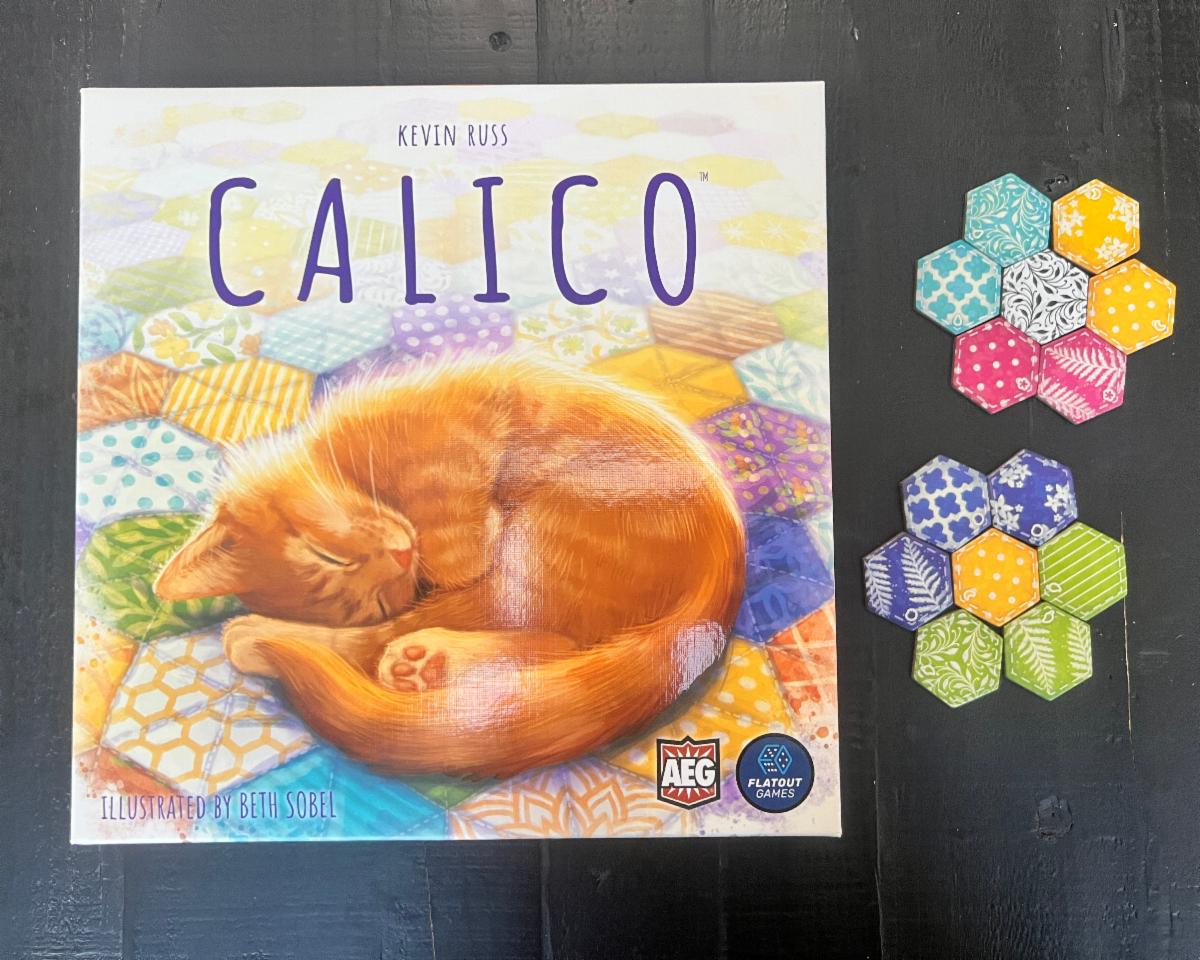
Calico was designed and developed by Kevin Russ with illustrations by Beth Sobel and launched in a successful Kickstarter campaign in 2019. The game is produced by Flatout Games, which specializes in what are known as "spatial puzzle games." The rule book describes Calico as a "competitive quilt-making, cat-collecting, tile-laying game" for between 1 and 4 players aged 10 and above. The players "compete to sew the coziest quilt as they place patch tiles of different colors and patterns onto their (individual) boards... Players are trying to create pattern groups to attract the cuddliest cats." It takes 22 turns to fill up your board with hexagonal tiles and a typical game lasts 30 to 45 minutes. Who takes the first turn? The person who most recently petted a cat.


Points are scored by laying down patterned and colored hexagon "tiles" on your board according to Design Goals. You earn extra points by luring cats onto your quilt, which happens when you place down tiles featuring their favorite patterns. The small cardboard cat tokens that come with the game are depictions of 10 actual cats, whose photos and bios are included in the rule book.


Beyond being cute, the game holds attention because it's more complex than it seems initially. I spent some time checking out websites for board game fans and discovered it has a pretty intense following. At the BoardGameGeek website, 36,000 community members say they own Calico and another 6,000 have it on their wishlists. Some of those fans must be pretty passionate because the online shop on the website sells a set of actual buttons modeled on the button tokens you can win in the game (that get placed on top of your board and earn points.) There is a suggestion that you use the actual buttons to make an actual quilt for your real life cat.


One fan on the BoardGameGeek site wrote that Calico is "Cozy for your eyes, hard work for your brain." Another fan commented on a YouTube video about the game that it is "both intellectually challenging and chill at the same time."


In the world of both board and video games, there are endless fans who both review and play games on camera and that's true with Calico. If you want to see an explanation and demo of the game, a guy with the screen name Stumpt put out this 24-minute video a year ago on YouTube. So far, 14,000 people have watched it.


Calico has also won multiple awards. I didn't realize that gaming was part of the South by Southwest conference and festival held in Austin, Texas every March. But in 2021, Calico shared the award for Tabletop Game of the Year at SXSW with 3 other board games. In 2020, the American Tabletop Association picked Calico as Game of the Year in the category Best Strategy Games.


I didn't know it until reporting this article, but apparently popular board games are frequently licensed to make video games. I wouldn't have thought this cozy game would follow that trend, but now that I've seen the trailer, it makes sense. The video game version, which is called Quilts & Cats of Calico, was released in the past year from game developer Monster Couch and is playable on Macs, PCs and the Nintendo Switch.


Part of the description of the video game says "you will be immersed in a warm, cozy world full of cuddly cats. Here the quilt bends under the weight of their paws and loud purring can be heard. It's a world of patterns and designs awaiting the master quilt maker." With the video game, you can play solo, play against AI or play against people from all over the world. There is Story Mode where you can have adventures in a city run by cats. Or maybe you want to customize your favorite cats by "painting" them colors not found in nature or dressing them up in outfits and accessories. Here is a short trailer for the video game.


Another proof of success for Calico is that recently the developer introduced a stand-alone follow up game featuring cats called Knitting Circle, also illustrated by Beth Sobel. The designer is Emily Vincent. Player reviews are just starting to come out. You can learn more by watching this Knitting Circle trailer, which shows how the game is played and then ends with people who worked on this game talking about the process.


Want to learn more about Calico? Here is a link to the game website. It's available to buy on many online retail sites. The board game version costs about $40 and the video game version about a third of that.


I bought the game for my family this year to put under the Christmas tree, and while we're just learning to play, I think it's going to be a regular at family gatherings. There is a learning curve but it isn't steep and meanwhile, the boards and tokens are beautifully crafted and feel good in your hands. I love that the hexagon tiles are fetched from a cloth drawstring bag and it's visually pleasing to watch my design emerge during a given game. I like that both luck and strategy affect the outcome and that even our first game took less than an hour. I'm looking forward to trying solo mode when I'm alone, which I hear is fun also.


Since there is such a fervent love for English Paper Piecing these days and it seems like most of the quilters I know, like me, have a little kit full of fabric and hexagon-shaped papers ready for stitching on the go, I'm guessing there are lots of quilters who would love this game as much as I do. You can enter to win the board game in this month's giveaway below.


QuiltCon 2025: What's New and Next


There are lots of things I admire about the Modern Quilt Guild and its beloved annual show QuiltCon. Right at the top of the list, I'm impressed by the values the organization espouses and the way they live those values. And what's truly exciting is that they're being rewarded for these progressive values at a time when efforts toward fairness and inclusion are under attack in many spheres.


I had never heard of the Maxwell/Hanrahan Foundation based in California and founded in 2018. Like the MacArthur Foundation, people can't apply for a grant but must be recommended by others in their field. The foundation supports scientists, teachers, conservationists and creators who promote "continuous learning, inclusion, innovation and risk-taking, flexibility, collaboration and fun."


In 2024, the foundation gave the Modern Quilt Guild a $90,000, 3-year grant that has allowed them "to double all our show prizes, with the caveat that we included an award for a newer artist," Karen Cooper, the MQG's executive director told me. Maxwell/Hanrahan "looks for organizations they believe are groundbreaking and inclusive and they heard about all the work we did to be more inclusive."


So for the first time, the 2025 QuiltCon will announce a winner of its new MQG Breakthrough Award. A prize of $3,000 will go to "an innovative, outstanding or otherwise noteworthy modern quilt from a quilter who is newer to modern quilting." Click here for a listing of all the money prizes.


As far as inclusion, this will be the second year MQG will have a sign-language interpreter for all of its lectures. A new feature in 2025 will be a Sensory Relief Space, a quiet and "darkish" room located away from convention center hubbub. There will be no cellphone use in this room and the option of borrowing a bag of "fidget items" some people find calming. Sensory accommodation measures such as these benefit autistic people and really anybody feeling overwhelm while attending a big, noisy gathering. "We can have up to 12,000 people a day at the show and it becomes loud and crowded," Karen told me, so this addition was made in response to attendee requests.


This year, there seemed to be even more social media postings of "QuiltCon rejects," quilts that didn't get into the show. I spoke with one woman who had 4 quilts juried into QuiltCon last year, whereas all three quilts she submitted this year were rejected. Karen told me the 20% acceptance rate for 2025 was similar to that of the past few years: the quantity and quality of submissions has clearly risen. Karen said the MQG accepts a maximum of 450 quilts but they also have community challenge quilts and special exhibitions, so the total quilts on view usually creeps up near 600, which is a LOT to take in.


One other thing I admire about MQG is the transparency and directness shown by the organization. One of the FAQ questions they answered about QuiltCon was this one: "I'm not willing to travel to a state with restrictive laws against women. Why won't you move Quiltcon?" You can read the whole reply be scrolling down on the FAQ page, but I love that the answer starts by saying that to bail out of a contract would bankrupt the MQG but goes on to encourage MQG members "to find ways to express their thoughts on this topic in quilts they submit for the show, as that can lead to a larger conversation and often press coverage as well to extend the conversation beyond our circle of members and makers."


I also like the comment Karen Cooper made to me about this issue: "We can't just only go to blue states. There are great humans living in all our states and we want to support everybody."


In general, the QuiltCon planners just keep trying to improve the experience of their. show. This year, for example, the show floor will open one hour earlier every day than in previous years, at 9 am.


I won't be able to attend QuiltCon next month, but I hope to get to the 2026 show which will be in Raleigh, North Carolina again from February 19-22.


After 15 years of corporate sponsorship, this newsletter is now supported by its readers. Just by reading and subscribing you support my work. For those who are able and interested in doing more, please click on the yellow bar above or the link below.


When you click on my profile at the BuyMeACoffee website, you'll see that you have an option to buy me one or more coffees at $5 each. (I really love the subscriber, an industry insider, who bought me 8 coffees - she explained it was one coffee for each year she has enjoyed reading this newsletter.) Or you can become a member. Joining my Inner Circle costs $2 a month, or $20 for the whole year. I've added a second tier for people who'd like to give more: $5 a month or $50 for a year (some of my readers asked me to add another level, which was gratifying.)


The benefits of membership include things like exclusive short videos, links to articles I've written and Zoom gatherings. I hosted a Labeling Retreat on Zoom in 2024 and also a Passion Project Show + Tell. For the Winter Solstice, I led a fun Zoom solstice ritual with members. Occasionally, we just hang out on Zoom with the beverages of our choice and share what's on our minds. Some of my members love the bennies and gatherings, and others have made clear they just want to show their support (and don't want any more Zoom in their lives.) All they want is for me to continue the work they value.


Let me be crystal clear: you will still get the same newsletter as everyone else if you don't contribute a dime. And everyone has an equal chance to win monthly giveaways. Supporters allow me to do more, give more and interact differently and I'm hugely grateful for that. But do me a favor: if you are reading this and don't subscribe, please take a moment to do that: the link for subscribing is here.) And forward this to a friend who makes, collects or simply loves quilts.


Thank you so much!!!!!!! I've loved the deeper engagement with my readers that has come with this way of funding. Yes, the money helps pay for my time and travel as well as the $1,800 a year I pay just to use this platform. In addition, while some creators and companies offer to give me merchandise for my giveaways, many months I pay for the goods and the shipping myself. But just as valuable to me are the "atta girl" notes of encouragement and the story ideas I get from readers, whether or not they buy me a coffee. The virtual gatherings with supporters have given me a deeper understanding of what research and writing I do that readers find most useful and inspiring.


January Giveaway


One lucky winner will receive the Calico game.


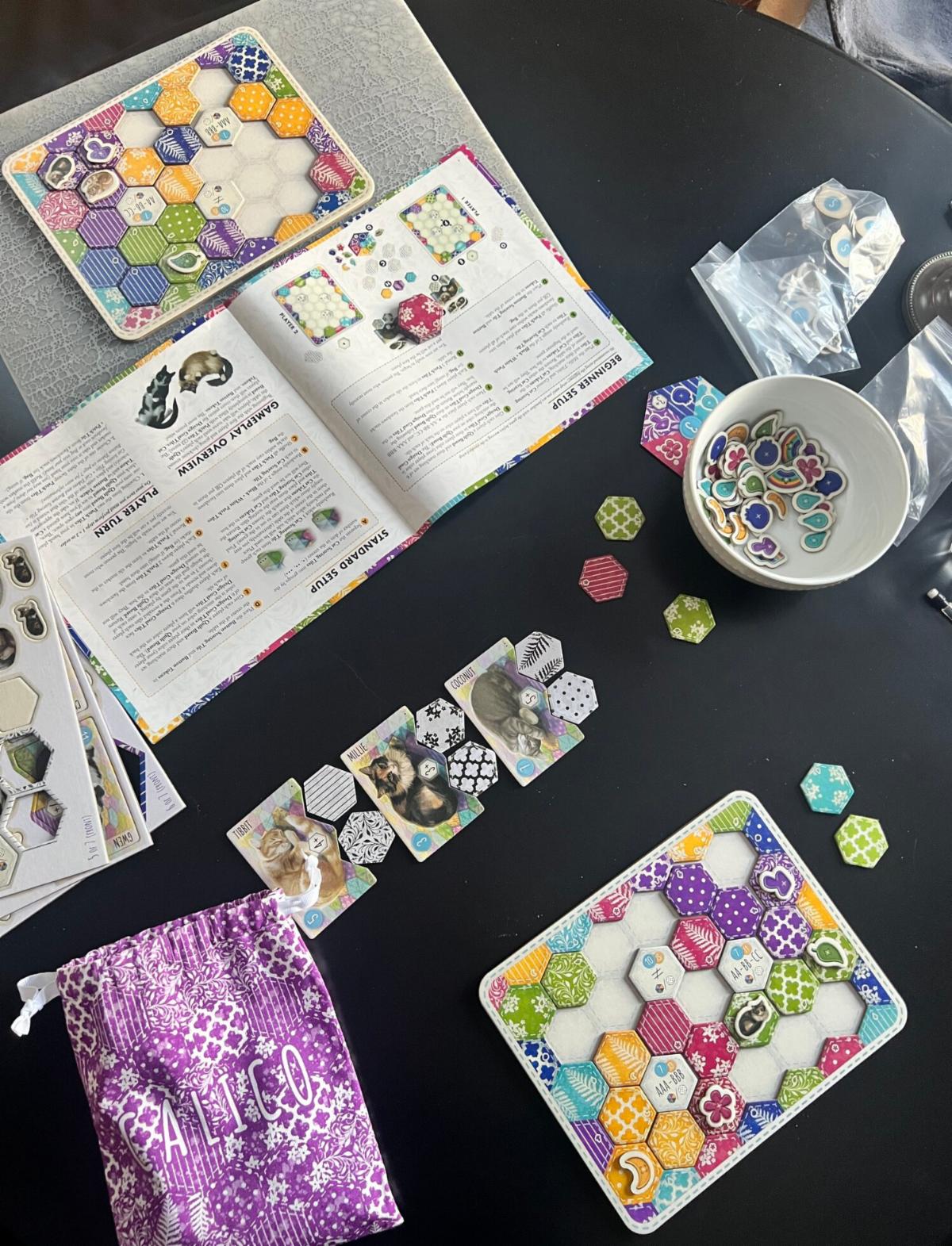
I will buy the winner a copy of this fun board game and have it shipped to your house. The photo below shows a game in progress at my house on Christmas Day: as first-timers we were playing in Beginner Mode.


How to Enter: Hit reply to this message or send a message to meg@megcox.com. If you wish to enter, please write January Giveaway in the Subject line. As always, only subscribers can win. And shipping only inside the U.S.


If you want to drop me a note with comments or questions, you can use that same address, meg@megcox.com, to say hello, suggest a story idea or comment. Thanks!!!!!

Deadline: enter by February 10.


Quilt World News + Notes


Dana Auctions To Offer Special Quilt Collections on January 25

Auctioneer Dana Balsamo is based in Princeton, New Jersey and most of her auctions can be attended in person, but she also takes bids online and really makes an effort to show and sell quilts thoroughly and honestly whether or not her bidders are in the room. Her next auction of antique and vintage quilts takes place later this month and it's especially juicy, including quilts from the estates of several significant collectors. You can go to her website and see all the quilts, download a catalog and register to bid here. On January 24, the day before the auction, she will do a live video preview of the sale on her Facebook page at 5 pm eastern. Make a note: her next auction of antique and vintage textiles will be March 22. On February 22 there will be an auction of vintage linens, but only online.


Gotham Quilts Announces It Will Close All Programs in 2025

For 10 years, Gotham Quilts has served quilters with great programs whether from their modern fabric-leaning shop in the Garment District in NYC (which closed in November 2023) or online. They continued to offer virtual classes, a BOM program, lectures and fabric for sale on their website, including bundles of cute NYC-themed fabric. But the 2 owners announced this week that Gotham Quilts is coming to an end in all its forms. They are phasing things out slowly, not just cutting off customers and subscribers and you can read the details in this blog post.


Free Download: Quilters' Year in Review + Plan for 2025

If you're someone who likes to take stock as a new year begins, you may want to use this one-sheet pdf I created to catalog the highlights of 2024 and set some quilting goals for 2025.


Quiltfolk's New Mexico Issue is Out: Use My Discount

I just got the New Mexico issue in my mailbox this week, and wow, this is one gorgeous issue. The editor scheduled travel so this issue could include the biggest balloon festival in the world, which happens every year in Albuquerque. There is a fun quilt connection, as you'll see. Go here for a peek at Issue 33. If you want to get 20% off on this issue or a subscription, use the Discount Code at checkout of MegQF33.


Meg Cox

I'm good at talking too!

meg@megcox.com

Visit My Website to Learn About My Lectures Including The Newest one: "Talking to History."


Click HERE to subscribe

Facebook  Pinterest