|
Dear Friends,
It is our pleasure to share with you the latest edition of the RA&A Lab briefing. This edition covers the key developments at COP26 so far, what bringing the Metaverse to life will entail, and why the path to electric vehicles must be green.
Designed as the content incubator for RA&A, the Lab’s mission is to track the trends shaping the global economy and to identify the key levers of action that can help you drive impact on the issues that matter most. We hope you enjoy these insights on some of today's most important topics.
Kindest regards,
| |
|
Richard Attias
Executive Chairman
Richard Attias & Associates
| |
|
Elie Chachoua
Director
RA&A Lab
| |
COP 26: JUST A FEW DAYS LEFT TO SAVE 1.5C | |
|
The conference of parties of the United Nations Framework Convention on Climate Change, commonly referred to as COP, is a challenging exercise for any government or private sector leader. Simultaneously instrumental in mobilizing global efforts against climate change and unable to meet societal or scientific expectations because of a complex negotiation process, COPs are both critical and limited in their ability to deal with the magnitude of the climate challenge.
COP26, which started in Glasgow last week and is still ongoing, is no exception.
Take for instance, the latest pledges concerning methane and the statements about phasing out coal. The first aims to reduce global methane emissions by 30% by 2030 and has been signed by more than 100 countries. The move is significant as methane is the second largest contributor to global warming after CO2, and one where more than half the 30% goal can be achieved at low or negative costs. Its limitations? The world’s three largest methane emitters are not signatories, and the ambition is insufficient to deliver 1.5C (the latter requires a reduction of 45% by 2030). As for the global coal-to-clean power transition statement (signed by some 40 countries), those still missing include US, India and China, despite the statement being revised to soften its deadlines.
There are, fortunately, some exceptions. One is the Glasgow Leaders’ Declaration on Forests and Land Use, which aims to “halt and reverse forest loss and land degradation by 2030” and has been signed by 133 countries collectively accounting for 90% of global forest cover.
Another success of this COP was the mobilization around net-zero commitments. A fringe idea just five years ago, these now cover nearly 90% of the economy, 90% of the global carbon emissions, and more than $130trn in assets under management — up from just $5trn when the UK and Italy assumed the joint presidency of COP26.
This unprecedented momentum is both historic and significant. Recent net-zero pledges by the likes of India (net-zero by 2070), Saudi Arabia (net-zero by 2060) or Nigeria (net-zero by 2060), for example, now mean that if delivered in full and on time, existing climate pledges have the potential to limit global temperature increase to 1.8C by end of the century — bringing collective action to below 2C for the first time ever.
Turning these net-zero pledges into concrete investible plans with clear milestone targets will be critical. Few governments have enshrined their pledges into law or have fleshed them out enough to be actionable. Many also have designed them to have a slow start. According to the International Energy Agency’s latest analysis, for instance, current government pledges leave out 70% of the emissions reductions needed by 2030 to keep the 1.5C goal within reach. A similar picture is found on the private sector front, with more than 2 companies in 3 intending to align with net zero starting 2030, effectively postponing effort by a decade and increasing abatement cost as a result.
The gap between the pledges and the registered actions is so large in fact that the latest draft of the COP agreement, revealed today, includes a clause for governments to submit their long-term strategies for reaching net-zero by the end of next year. China and the US also just announced the creation of a joint working group to enhance concrete climate action in this decade.
Another issue at the heart of the negotiations will be that of carbon markets, a concept captured in Article 6 of the Paris Agreement. Tensions revolve around two important dimensions: how to set up the rules for both governments and private sector actors, and whether and how to leverage any proceeds to support developing countries. On the rules front, ensuring market integrity will be key. Rules around private sector offsets are particularly important to avoid greenwashing in a market that has doubled over the past two years and is expected to reach $150bn by 2030. As for the issue of proceeds, tensions remain around whether some of the money raised from carbon trading should be used to support climate efforts in developing countries – tensions that are enhanced by the fact that the promise of providing the latter with $100bn climate finance support per year by 2020 has not been met.
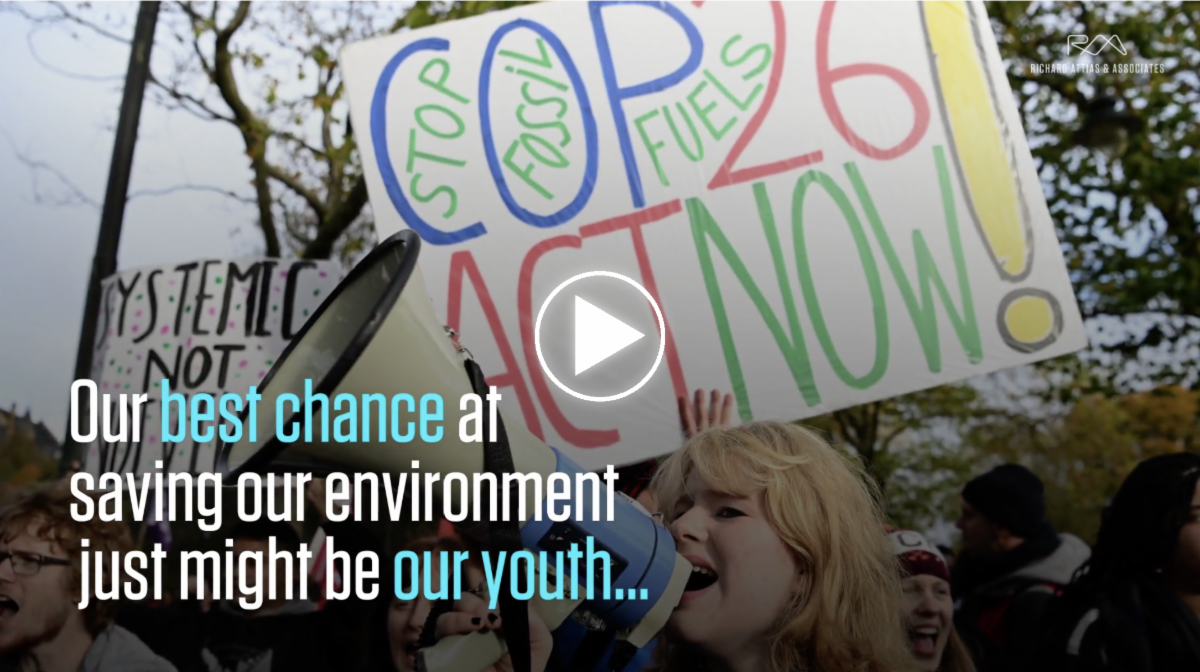
As we enter the last days of negotiations, one thing is sure: the world is watching, and the youth demands action. In fact, they have not waited for governments to propose solutions, from a Global Blue New Deal to protect the oceans to a 15 points action plan for COP. Still, policy decisions are imperative if we are to solve the climate crisis; and negotiators only have a few days left.
| |
GETTING META ABOUT THE METAVERSE | |
|
Facebook shocked many last week when it announced it was renaming itself Meta Platforms to reflect a new company focus on building the metaverse.
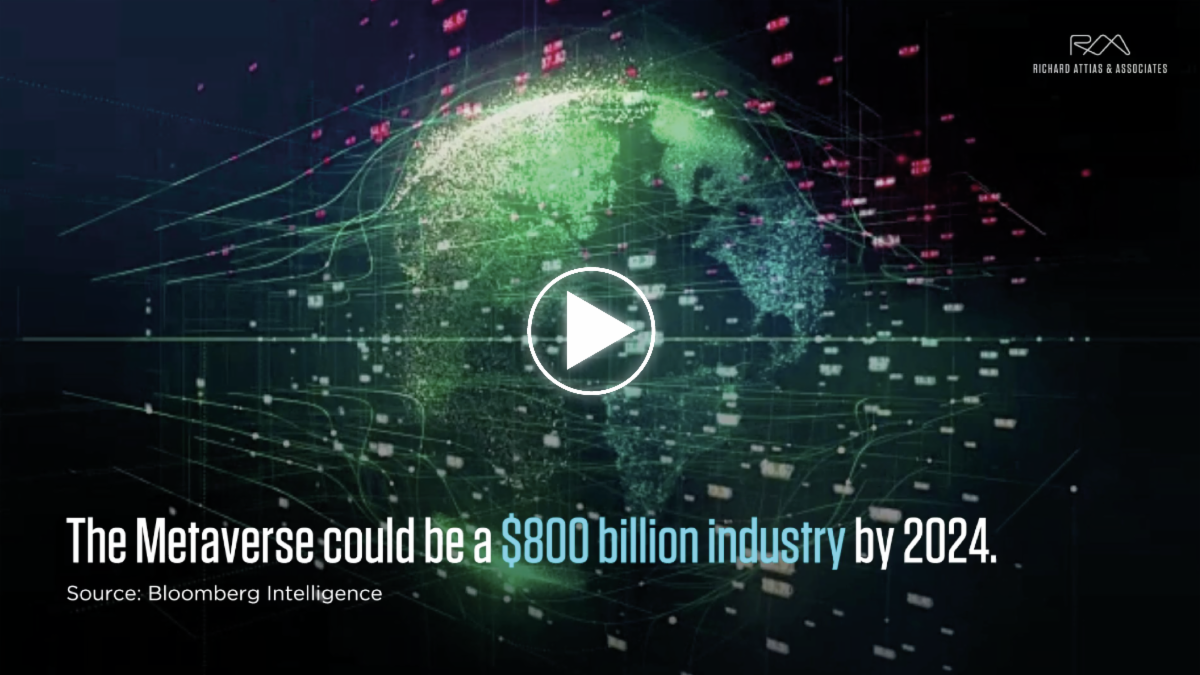
While some have dismissed Facebook’s rebrand as another attempt to distract the public from a bad press cycle, the company joins many others, including Microsoft, in an industry expected to reach $800bn by 2024, according to Bloomberg Intelligence.
Hailed as the next evolution of the mobile internet, the metaverse has so far seen the greatest roll-out in the worlds of gaming, entertainment, and the workplace, with augmented and virtual reality transforming how workplace meetings, customer service and employee trainings happen. Yet, fully realized, it could offer an interconnected virtual world in which people virtually attend concerts, collaborate in virtual work-spaces, play immersive games, gamble, and buy virtual products, such as art, clothing and even real estate, among other activities.
Needless to say, an expansive virtual world radically transforming the way we play, learn, work, and even buy, also raises myriad questions as well as risks.
Several concerns relate to the complexity of building a coherent cross-world ecosystem. Specifically, a shared interface will be needed to connect virtual spaces. This infrastructure might be developed in a centralized way by a large company, which raises risks of market dominance. Alternatively, the metaverse could be built using decentralized, open architecture — a vision Zuckerberg purportedly holds. This will require hardware and software to be interoperable, which means companies will need to share common standards and to construct end-user licenses that allow for this interoperability.
Then there is the question of currency. A fully developed metaverse will have a functioning economy where users can buy, sell and earn a living in digital or fiat currencies. Already, metaverse projects like the game platform Axie Infinity are using cryptocurrency, but this means exposing metaverse participants to the volatility inherent in these speculative tokens. It might also involve a possible exchange fee between crypto and fiat – the fintech company Revolut, charges up to 2.5% for that service, example. Alternatively, companies like Facebook may produce their own digital currency, but this raises questions of whether these companies will act as depository institutions and what that means in terms of currency liquidity.
The metaverse will also challenge traditional notions of ownership, especially when it comes to moving virtual goods across virtual ecosystems. NFTs, which are meant to represent the ownership of digital or physical assets stored on a blockchain, could provide a solution to ownership in that regard, ensuring brands protect their virtual products from counterfeit, and metaverse participants know when they’ve purchased an original Gucci jacket for their avatar.
Intellectual property law will also have to evolve to address ownership in the metaverse, including when and how to enforce copyright infringement and who is eligible to patent, though much might be decided in the courts for countries that use litigation to establish functional boundaries on behavior and to resolve disputes. A recent ruling in the U.S. for example has now established that an AI cannot be named as an inventor on a patent, which implicates a metaverse where artificially intelligent avatars construct environments alongside human ones.
Finally, the metaverse will pose great risks to the privacy of its participants, as the technology used to build it will likely collect large swaths of data—including new types of biometrics and physiological data—that existing data protection laws do not account for. Regulators may choose to extend existing ways of dealing with data protection to this brave new world, from requiring companies to obtain consent from multiverse participants, to specifying how they may collect, retain, transfer and disclose data, to limiting what data can be collected or even what it may be used for, especially in the context of advertising.
What is certain is that building the metaverse will be costly. Facebook alone is investing $10bn in 2022, with $7bn or more in projected losses, and to increase investments over the next decade. Yet a recently created metaverse-focused exchange traded fund from Roundhill Investments is comprised of 41 companies with a median market capitalization of $70.9bn, suggesting the money is there.
The pay-offs may be substantial: Nvidia’s CEO, for instance, predicts the metaverse could ultimately outpace the current global GDP of over $80trn. Ensuring this unique growth opportunity is equally shared will require connecting the 3.7bn people that are still offline. This will come at the cost of $428bn over the next decade. A hefty sum worth spending if one is to create a truly global metaverse.
| |
DRIVING DOWN THE GOLDEN EV ROAD | |
|
On Oct 25, Tesla’s market cap passed the $1trn mark, making it the first car maker to ever reach that threshold and valuing it at more than the next nine largest automakers combined. Whether its current price-to-earning ratio of nearly 400 is justified is for anyone to debate (it is less than ten for Toyota or Volkswagen). What is clear is that electric vehicles (EVs) companies are in high demand. Rivian, which only started producing EVs this year just went public today with a valuation of over $100bn, making it the largest U.S. IPO since 2014.
Behind this market fever is a surge in EV sales even as overall car sales dropped during the pandemic. European EV sales grew at annual compound rate of 60% between 2016 and 2020, with EV sales accounting for 10% of all sales in 2020. As for China, the other key market, sales are on track to reach 3 million vehicles in 2021 (nearly three times the 2020 levels and 1/4 of the global passenger EV fleet). Add to that zero-emission vehicles targets in more than 70 jurisdictions, the need to achieve net-zero economies, and $330bn of investments in electric and battery technology by car manufacturers over the next five years and it is clear why some are bullish about EVs' prospects.
With this growth comes a series of important imperatives. One will be to build the charging infrastructure. There is almost no charging infrastructure to support electric heavy-duty vehicles, for example. Yet 4 million heavy duty chargers are needed by 2040. This will be capital intensive: heavy duty chargers and fast public chargers alone account for nearly half of the $589bn of charging infrastructure investments needed over the next two decades, according to BNEF.
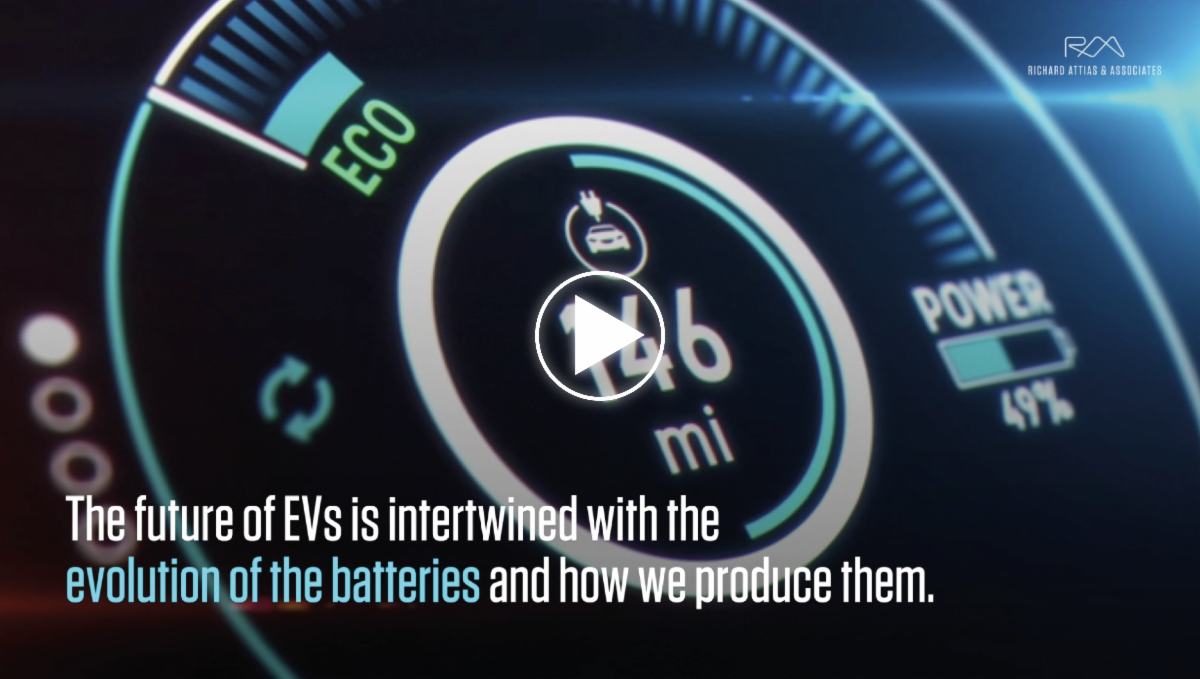
Another imperative will be to ensure a sufficient supply of materials to build up battery production. EVs and battery storage have already surpassed consumer electronics as the largest demand source for Lithium. By 2040, they will have overtaken steel as the largest consumer of nickel, according to the International Energy Agency. This is driving up prices. Cobalt, Nickel and Lithium have all surged over the past year, with the latter seeing a near 300% increase in a year in China - the world’s dominant player in the manufacturing of EV batteries.
The cost of batteries will go up in the short term as a result, reversing years of cost declines. The long-term impact is expected to be limited, however, as companies reduce their dependence on cobalt - the battery content of which is expected to drop 65% by 2035- and new Lithium production comes online. Medium term expectations are thus for a price decrease, with BNEF projecting battery cost to drop below the price parity point of $100/kWh as early as 2024, from about $137/kWh in 2020.
Efforts will also be needed to ensure battery production is done in a sustainable and responsible way. As tailpipes emissions decrease and EV production grows, emissions associated with road transport EVs will move up the supply chain. By 2040, materials alone could account for up to 60% of a vehicles’ life-cycle emissions, with the emissions coming processing rather than mining.
This will make battery recycling critical as the process can be cheaper, less energy and less carbon intensive than mining new materials. Importantly, it will help to deal with the tsunami of spent batteries that will come online over the next decades. To give a sense of scale, the volume is expected to grow from 2GWh today to 1.3TWh by 2040 – a 650 fold increase!
Dealing with that volume will require a tripling of current recycling capacity by 2030. Large EV markets will want to build this capacity at home. This will help cut costs (about 40% of EV battery recycling costs is transport related) and reduce dependence on foreign supply chains. The Union of Concerned scientists, for instance, estimates that at a 95% recovery rate, the US could meet up to 40% of its metal needs for EVs by 2035. No surprise then that in the recently adopted US infrastructure bill, more than $6bn are allocated to strengthening the US battery material processing and recycling capabilities.
Much like Tesla’s new super-fast Plaid mode, which goes from 0 to 60 in 2s, EVs are now in hyperdrive. Ensuring their future remains golden will require the path to be green.
| |
|
This Monday, the US reopened its borders to tourists and business travelers. This marked the end of the nearly 20-month COVID-19 travel ban that separated families and caused the loss of nearly $500 billion in visitor spending, according to US Travel Association. Land travel across the borders with Mexico and Canada also resumed.
For many in the tourism sector this event represents the light at the end of the tunnel. Among those to benefit most in the short-term from the return of tourists will be the twin coastal giants of Los Angeles and New York City along with the travel hubs on the borders like Niagara Falls. In addition to the obvious surge in demand for airlines and hotels, restaurants, museums, theatres, retail, and real estate will stand to benefit greatly from the uptick in international visitors.
This milestone has a profound human impact as well. These last few days have seen airports on both sides of the Atlantic packed with excited travelers reuniting with loved ones. This impact is of particular significance for the binational region of the US-Mexico Border, which had seen family gatherings and community events stalled during the travel ban even as cities away from the border gradually returned to normalcy. The gap between those experiences is now finally closing.
As the world goes back to normal, so will long lines at airports; a welcome relief after years of waiting.
| |
|
Here are some of the things on the Lab's radar over the next few weeks:
-
Nov 12: End of COP26
-
Nov 29 - Dec 3: World Water Congress
-
Nov 30 - Dec 3: 12th WTO Ministerial conference
-
Dec 1: OECD Economic Outlook
-
Dec 18: Launch of the James Webb Telescope
| |
Follow us on social media | | | | |