RAISE The Standard, December 2025, v.12 n.2 | |
Military Careers
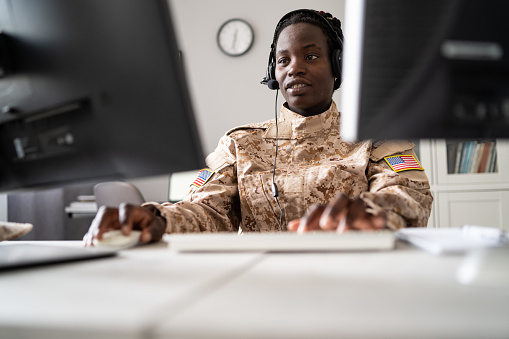
Youth with disabilities can find many meaningful careers in the military, even if active-duty combat roles don’t fit their interest or skill set. Each branch of the military offers a wide range of civilian and support positions that match different abilities and strengths. These include jobs in information technology, administration, vehicle and equipment maintenance, food services, supply and logistics, security, medical support, and customer service on military bases.
Some people work through federal civilian employment, while others join through programs that provide training and reasonable accommodations. These roles allow individuals to use their skills, support service members, and be part of a strong team while building stable, long-term careers.
In this issue of RAISE The Standard, we will explore how young people with disabilities can find their career through the military.
| | |
Determination and Duty
Sgt. Joshua Martinez was diagnosed with brain cancer and autism at an early age. The cancer was operable, though autism continues to affect his daily life. Through obstacles and opposition, Sgt. Martinez worked toward his goal of being a US Marine. Now, at 22 years old, Sgt. Martinez is training for his new role in defensive cyber operations.
Nurse Hannah Cvancara lives with an amputated leg. She has been denied from serving as a nurse in the Navy, but continues to advocate for herself by talking with Congress about reforming military standards about disability inclusion. Her perseverance paves the way for more people with disabilities– any kind of disability– to pursue a career in the military if they so choose.
“There are very few reasons in the world why anyone can’t be great or can’t do great things or represent something great.”
- Sgt. Joshua Martinez
Click here to learn more about Joshua's and Hannah’s journeys.
| |
Tips for Applicants with Disabilities on Getting Federal Jobs
There are a number of ways that people can apply for a job in the federal government. For individuals with disabilities, one of those paths is the Schedule A Hiring Authority for people with disabilities. Schedule A is a government hiring path that makes it easier for people with intellectual, psychiatric, or physical disabilities to find federal employment. Schedule A does not apply to active-duty positions, but it does apply to many non-combat and support functions in the Department of Defense, Department of Justice, Department of Veterans Affairs, Department of Homeland Security, and many civilian positions on military bases. Here are some of the basics of Schedule A:
- Schedule A allows for a non-competitive application process as long as the person meets the job requirements and has proper documentation for their disability.
- A trial period allows the individual to learn the tasks of the job with support and test whether or not the job is a good fit. After the trial period (often two years), the individual can convert to a permanent competitive position.
- Workplace accommodations are standard through Schedule A.
Click here to learn more about Schedule A.
| | | |
Beyond Active Duty
Enlisting in active duty is a noble path, but it’s not the only path to military employment. There are many career paths in every military branch– mechanics, construction, healthcare, research, and facility maintenance are just some of the areas for which the military is always hiring. Take the career quizzes for the Army and the Navy, or explore the career finder webpages for the Air Force and the Marines.
| | |
Assistive Technology
The Computer/Electronic Accommodations Program (CAP) provides assistive technologies to military and federal employees who need them. There are accommodations for cognition, communication, dexterity, hearing, and vision. Once employed, you can request a workplace needs assessment to better evaluate your specific needs.
Click here to learn more about CAP.
| | |
In this issue of RAISE The Standard, we focus on Independent Futures That Work (APEC), a collaboration between parent training centers and disability organizations in Alabama, Mississippi, Louisiana, Texas, Arkansas, and Oklahoma.
https://alabamaparentcenter.com/web/programs-services/independent-futures-that-work/
Independent Futures that Work helps individuals and families explore future options including transitioning to independent living, employment, and education. This program provides assistance through trainings and workshops, resource downloads, and through individual assistance.
| | YETI: RAISE - Youth Engagement Transition Initiative | |
Episode 3: The Impact of NOT Having Accommodations in Place
The RAISE Youth Advocates for Change (YAFC) have produced podcasts on topics important to them as youth with disabilities to amplify the youth voice and support parent centers as they continue to engage with youth and their families. In this episode, host Everette Deibler chats with guests Erin Thomson and Jennifer Siegal, as they discuss the importance of getting the accommodations needed to level the playing field.
Click here to access Episode 3: The Impact of NOT having Accommodations in Place.
| | Collaboration • Empowerment • Capacity-building | | RAISE The Standard enewsletter identifies and shares resources that the Rehabilitation Services Administration Parent Training and Information Centers (RSA-PTI) can use and share with families. | | The RAISE Technical Assistance Center is working to advance the accessibility of its digital resources, including its websites, enewsletters and various digital documents. | | RAISE, the National Resources for Access, Independence, Self-Advocacy and Employment is a user-centered technical assistance center that understands the needs and assets of the RSA-PTIs, coordinates efforts with the Technical Assistance provided by PTI centers and involves RSA-PTIs as key advisors and partners in all product and service development and delivery. | |  | |
The RAISE Center is a project of the SPAN Parent Advocacy Network and is funded by the US Department of Education's Rehabilitation Service Administration. The contents of this resource were developed under a cooperative agreement with the US Department of Education (H235G200007)). However, the contents do not necessarily represent the policy of the Department of Education and should not assume endorsement by the federal government.
| | | | |