RAISE The Standard, June 2026, v.12 n.7 | |
Chronic Illness
Many young people with disabilities also manage chronic health conditions that affect daily life, education, employment, and independence. A chronic illness is a health condition that doesn't go away quickly and may affect a person's daily life for months, years, or even a lifetime. Examples include Arthritis, Chronic Fatigue Syndrome, Celiac Disease, and Depressive Disorders. In addition to navigating disability-related supports, they may face ongoing medical appointments, treatments, medication management, fatigue, or other health challenges that can impact school, work, and social activities. Managing both a chronic illness and a disability can cause stress and make it harder to stay independent, and sometimes, figuring out which symptoms are caused by illness or disability can be difficult. Some people experience diagnostic overshadowing, when a healthcare provider assumes that a person's symptoms are caused by a known disability, mental health condition, or diagnosis, and as a result overlooks another health problem that may be causing the symptoms.
Understanding these experiences can help families, professionals, and youth work together to build effective supports and pathways to success.
In this issue of RAISE The Standard, we explore how young people with disabilities and chronic illnesses can manage their health, build independence, advocate for their needs, and reach their goals.
| | |
Navigating Exercise, Autism, and Chronic Fatigue
Rachael is a young adult living with autism and chronic fatigue syndrome. In this short essay, she reflects on the exhaustion and sensory sensitivities she experienced in childhood and early adulthood that ultimately led to her diagnoses.
"I didn’t have the full picture. I assumed I just wasn’t cut out for exercise, but later, I got a diagnosis that helped it all make more sense.”
– Rachel
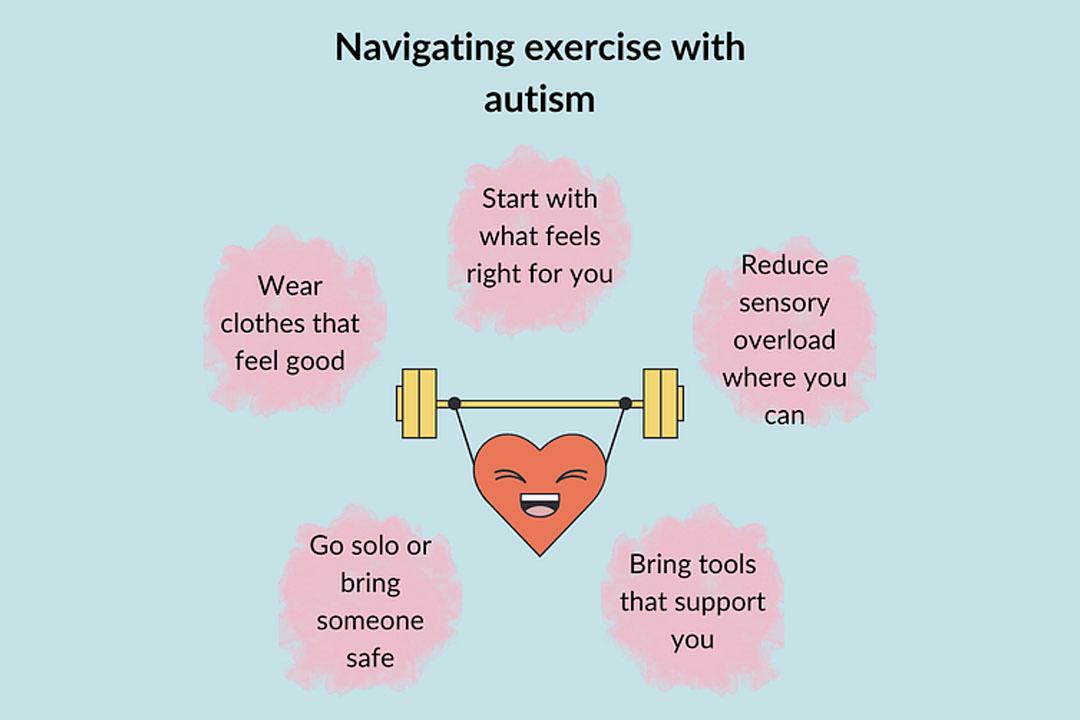
She discusses the techniques she has learned to stay active without draining her energy and offers advice to other autistic people with support needs who are working to stay active while managing their energy levels.
Read Rachael's journey to self-understanding.
| |
Co-Occurring Conditions
Autism and other forms of neurodivergence often occur alongside additional health, developmental, learning, processing, and mental health conditions. Some combinations receive more attention than others, such as autism and ADHD (sometimes referred to as AuDHD). Other co-occurring conditions, while common, receive less public attention.
For example, Ehlers-Danlos Syndrome is a group of genetic connective tissue disorders that can cause joint hypermobility, fragile tissues, and other health complications. Understanding co-occurring conditions can help individuals and families access appropriate supports and healthcare.
The Goldilocks Guide to Health Insurance
Finding health insurance coverage that meets your needs can be challenging and may feel like an endless search for the "just right" plan among options that offer too much or too little. This guide can help you understand your coverage options, stay organized after selecting a plan, and get the most out of your insurance benefits.
Learn more about choosing the insurance plan that is right for you.
| |
A Digital Assistant for Chronic Illness Management
Technology can be a powerful tool for increasing independence. A recent study published by the National Institutes of Health found that health apps can help people manage chronic health conditions by improving motivation and supporting health management.
Today, many apps offer comprehensive health-tracking features that help users manage chronic conditions, mental health, and wellness goals. These tools can be used to track symptoms, medications, appointments, health records, and daily habits in one place. Some apps offer personalized reminders, prepare summaries for medical appointments, and generate charts that reveal patterns between symptoms and daily activities.
These features can be especially helpful for people who experience brain fog, fatigue, executive functioning challenges, or memory difficulties. Health apps can support self-advocacy and help users feel more prepared for medical appointments and treatment decisions.
Here are a few to check out:
For iPhone users:
https://apps.apple.com/us/app/human-health-chronic-illness/id1628460004
https://apps.apple.com/us/app/bearable-symptom-tracker/id1482581097
https://apps.apple.com/us/app/tracker-reminder-careclinic/id1455648231
Available on multiple platforms:
https://careclinic.io
https://www.makevisible.com/
https://guavahealth.com/
| | |
When You Feel Your Symptoms Are Not Being Heard
Many healthcare providers rely heavily on test results when evaluating symptoms. However, chronic illness and chronic pain do not always show up clearly in laboratory tests or imaging studies.
According to a survey by HealthCentral, 94% of respondents reported having their chronic pain symptoms dismissed or ignored, and 61% reported feeling blamed for their symptoms.
Advocating for your medical needs can be difficult, especially when speaking with healthcare professionals. Remember that you are the expert on your own experiences. Trusting your understanding of your symptoms can help you feel more confident when communicating with providers.
Being able to describe symptoms in specific, concrete terms and explain how they affect daily life can help healthcare professionals better understand your needs. This medical self-advocacy guide from Pain Care Rights offers practical strategies for describing symptoms clearly, correcting documentation errors, addressing insurance delays, and navigating other common barriers to care.
Access the guide to medical self-advocacy.
| | THE RSA PARENT CENTER REGIONS | | There are eight (8) Rehabilitation Services Administration (RSA) Parent Center Regions throughout the United States that provide training and programming to youth and young adults with disabilities, their families, professionals, and other Parent Centers. The focus is on issues surrounding youth transition. | | |
In this issue of RAISE The Standard, we highlight REAL Transition Partners, a collaboration among Parent Centers in Connecticut, Massachusetts, Maine, New Hampshire, Rhode Island, and Vermont:
https://spanadvocacy.org/programs/real/
Providing services that support independent living, education, healthcare navigation, employment planning, and self-advocacy, REAL Transition Partners helps young people with disabilities and their families successfully transition to adulthood. Their services are designed with diverse communities and continue to evolve as needs and circumstances change.
| | Collaboration • Empowerment • Capacity-building | | RAISE The Standard enewsletter identifies and shares resources that the Rehabilitation Services Administration Parent Training and Information Centers (RSA-PTI) can use and share with families. | | The RAISE Technical Assistance Center is working to advance the accessibility of its digital resources, including its websites, enewsletters and various digital documents. | | RAISE, the National Resources for Access, Independence, Self-Advocacy and Employment is a user-centered technical assistance center that understands the needs and assets of the RSA-PTIs, coordinates efforts with the Technical Assistance provided by PTI centers and involves RSA-PTIs as key advisors and partners in all product and service development and delivery. | |  | |
The RAISE Center is a project of the SPAN Parent Advocacy Network and is funded by the US Department of Education's Rehabilitation Service Administration. The contents of this resource were developed under a cooperative agreement with the US Department of Education (H235G200007)). However, the contents do not necessarily represent the policy of the Department of Education and should not assume endorsement by the federal government.
| | | | |