RBGWA - Logo - Full Color.png
 

RBG Wealth Weekly

April 28, 2023


Ladies and gentlemen, the weekend! In this space each week, Greg and I share some of our favorite articles, notes, and graphics from the past week along with our commentary. Please feel free to provide feedback and forward along to others if you enjoy. We appreciate you taking the time to read. 


If you are a client, we truly appreciate your business. If you are not a client, please click below to learn more about our firm and contact us.

Visit our Website
 

Articles of the Week

Russian Pranksters Dupe Fed Chair Jerome Powell into Recorded Call

“Pranksters posing as Ukrainian President Volodymyr Zelensky duped Federal Reserve Chair Jerome Powell into speaking with them. Clips of the video conversation were posted online Thursday by a pair of Russian comedians who have done the same thing to other world leaders.


The clips show Mr. Powell politely answering basic questions about U.S. monetary policy and the economic outlook. His answers were broadly similar to other statements he made publicly around the same time.”


Apparently, prank calls are not just for bored teenagers. The call happened in January of this year and was reported to authorities when they figured it out. However, clips of the recording were just released publicly.


While I’m sure it’s embarrassing for Fed Chair Powell, there are no major revelations on policy. However, it is interesting to hear some of the candid talk.


“We’ve already raised rates quite a lot, and the market is already pricing in two more 0.25% rate hikes. We’ll look around after we make those two [hikes] and we’ll say ‘Should we do any more?’ And, then the question will be ‘How long do we keep rates at this level?’ And, I think we will keep them there for some time.”


“A recession is almost as likely as very slow growth. So, that’s a fact. And, I think that’s partly because of us having raised rates quite a bit. But, this is what it takes to get inflation down.”


The language is consistent with most of his statements earlier this year, but more blunt. The Fed Chair is clearly paying close attention to market expectations and thought a recession was a coin flip based on their policy decisions.

So You're Worried About an Earnings Recession 🙋🏻‍♂️


“Stocks barely budged last week, with the S&P 500 shedding 0.1%. The index is now up 7.6% year to date, up 15.5% from its October 12 closing low of 3,577.03, and down 13.8% from its January 3, 2022 closing high of 4,796.56.


One of the biggest concerns in the stock market right now is the expectation that earnings growth will have been negative in Q1 for the second quarter in a row.


This outlook for weak earnings is why numerous stock market forecasters have been warning of another market pullback in the first half of this year. (A pull back that has yet to materialize.)


It’s a legitimate concern given that earnings are the most important long-term driver of stock prices.


But in the short-term, the relationship between earnings growth and stock prices is less clear. It certainly isn’t intuitive.


From [BMO chief investment strategist, Brian] Belski’s note:


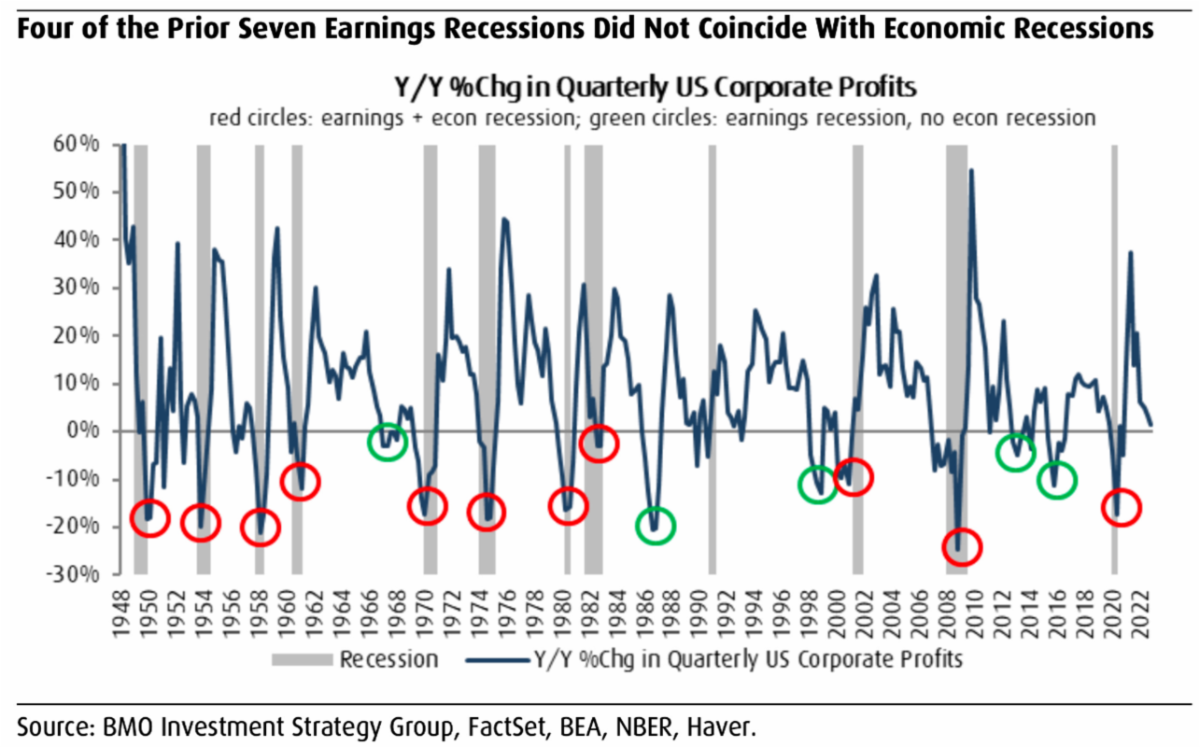
‘…during the 16 profit recessions since 1948, the S&P 500 rose 5.9%, on average, in the six months after the second consecutive y/y earnings decline with gains occurring 75% of the time...


Based on our analysis, four of the last seven profit recessions did not coincide or immediately precede economic recessions,’ he noted.

This is hopeful as economic recessions are generally bad for earnings and stocks in the short-run.


The point of this discussion is not to suggest stocks are likely to go up in the near-term.


Rather, the point is that just because we get an earnings recession or an economic recession doesn’t guarantee that you’ll get an opportunity to buy stocks at cheaper levels than where they are right now.


By the way…


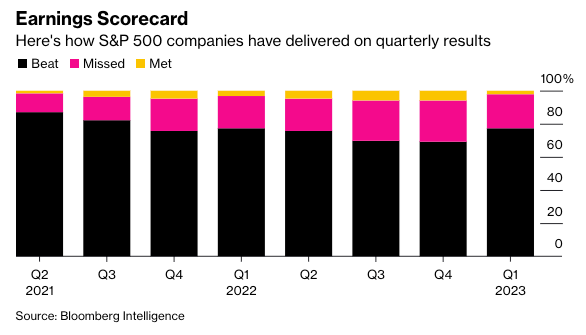
Bloomberg (via Notes) has a story this weekend about how most companies so far have reported Q1 earnings that have beat expectations.”

First Republic Bank Faces a Critical Weekend. What to Expect.


“First Republic had appeared to have overcome the turmoil in March after JPMorgan and other large lenders stepped in with $30 billion in deposits. The calm lasted until the bank reported just how extensive the flight by depositors was.

Shares have dropped almost 60% this week. One thing seems clear—time is running out for First Republic to save itself. So far promises to cut jobs, shrink its balance sheet, and shore up deposits haven’t done the trick. Limping on may be possible, but it doesn’t look like a viable choice.


So what are the other options ahead? The Federal Reserve, Federal Deposit Insurance Corporation, and Treasury Department are trying to orchestrate a deal, Reuters reported early Friday.


Another lifeline like the additional deposits that happened in March seems unlikely. It was enough then, but doesn’t look like enough now.


Alternatively, the FDIC could simply shut down First Republic and sell off the parts. Or the bank could be bought by others more immediately. State officials can make this easier by offering guarantees against losses. That’s what happened when UBS bought Credit Suisse in a regulator-brokered deal.”


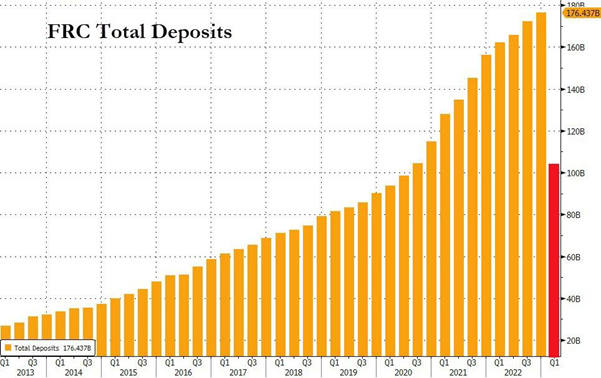
First Republic Bank (FRC) reported quarterly earnings and financials this week, which resulted in a fresh round of fears that the bank would collapse. Bank deposits fell to $100 billion, of which nearly 30% came from a rescue line from large banks.


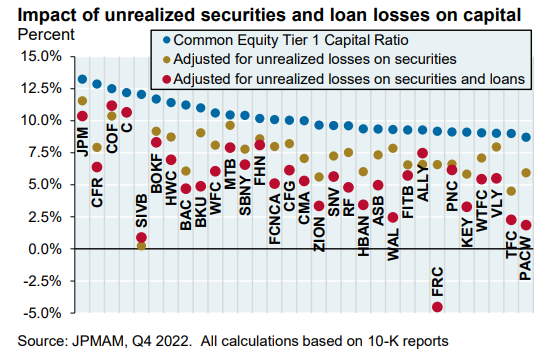
There’s another reason for concern at First Republic – residential mortgages and other loans underwritten at reasonable loan to value and debt to income / cash flow, but at very low coupon rates. Now that loan rates have doubled from 3% to 6-7%, you have to consider unrealized loan losses due to higher rates (in addition to unrealized losses on securities portfolios).  First Republic looks like the worst of the lot when examining this metric.

Read More
 

Graph of the Week

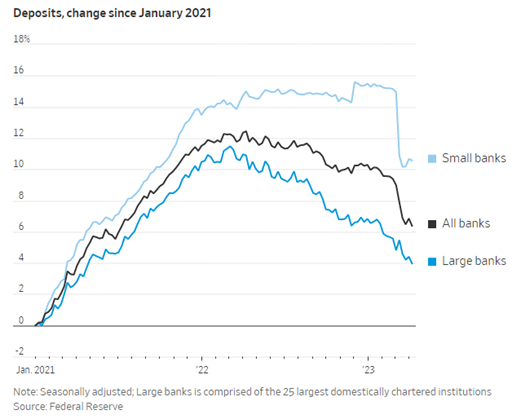
Bank deposits started to reverse trend in 2022. There are a couple of macro explanations for that dynamic. 1) Tighter Fed policy caused a decrease in the U.S. money supply. 2) Higher interest rates throughout the year caused people to shift cash to higher-yielding money market funds and U.S. Treasuries.


The bank failures of Silicon Valley, Signature, and now potentially First Republic accelerated deposits erosion, particularly at small banks (defined as outside the largest 25 banks in the chart above). This trend may likely restrict lending through the rest of the year.  

Tweet of the Week

Thanks for reading. Have a great weekend!


Guidance for today. Growth for tomorrow.


RBGWA - Logo - Full Color.jpg

Tim Ellis, CPA/PFS, CFP®

CIO and Wealth Advisor

RBG Wealth Advisors

M: 901.682.2431 | C: 662.444.1415

E:  tellis@rbgwa.com

A:  5100 Wheelis Dr., Ste. 300, Memphis, TN 38117

W: rbgwa.com

LinkedIn  Twitter  Facebook

RBG Wealth Advisors LLC is a registered investment adviser. Information presented is for educational purposes only and does not intend to make an offer or solicitation for the sale or purchase of any specific securities, investments, or investment strategies. Investments involve risk and, unless otherwise stated, are not guaranteed. Be sure to first consult with a qualified financial adviser and/or tax professional before implementing any strategy discussed herein. Past performance is not indicative of future performance.