|
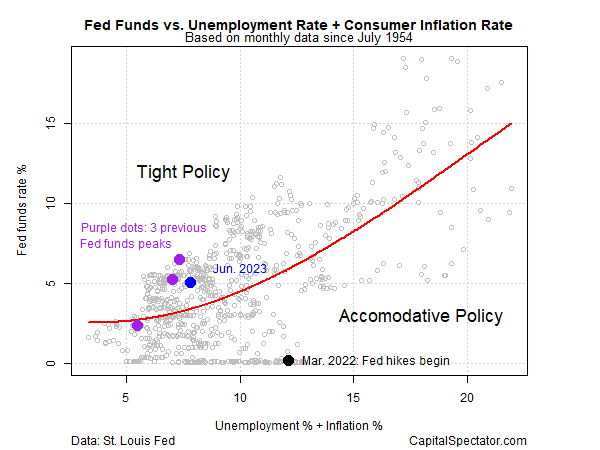
“For investors a 'higher for longer' peak (or 'terminal rate') for the federal funds rate in this cycle has several implications:
1. The downside potential in intermediate- to long-term yields for this year is likely higher than we previously expected. Intermediate- to long-term rates reflect expectations for the path of the fed funds rate plus a risk premium. Continued Fed tightening will likely pull rates higher across the yield curve. Rather than the 3.0% to 3.25% year-end target we had previously expected for 10-year Treasuries, a lower bound of about 3.5% is more likely and a re-test of the 2022 peak of 4.25%-4.35% is possible.
We expect the yield curve to remain inverted, but it is already near historically low levels last seen in the early 1980s. At a spread of about -100 basis points between two- and 10-year yields, more rate hikes are likelier to pull up yields across the curve than to deepen the inversion to new lows.
2. Volatility is likely to rise. In the bond market, volatility reflects uncertainty about the path of interest rates. With the Fed signaling the potential for more rate hikes and the market discounting the potential for rate cuts early next year, the tug-of-war between the market and the Fed will likely mean volatility stays elevated. It has retreated from the peak level reached in March but is well above the long-term average….
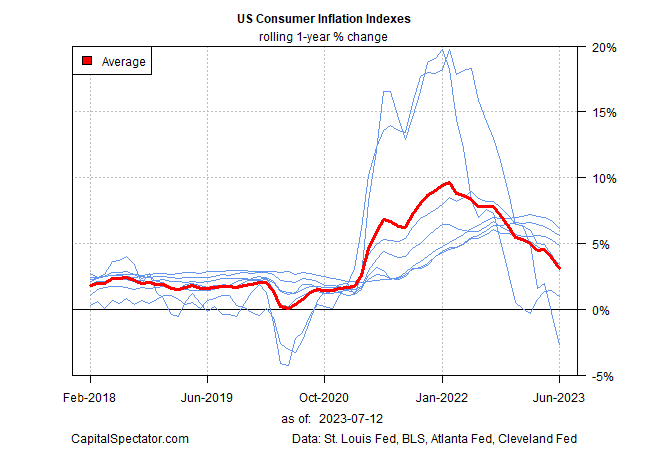
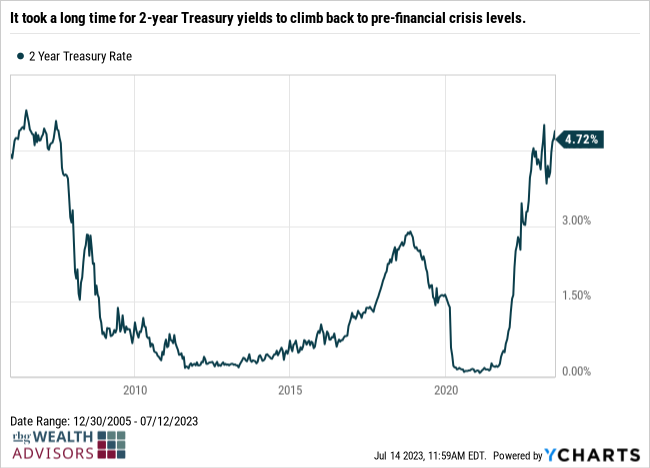
Now that short-term Treasury yields have reached 5%, further upside is likely to be limited. Although the economy has remained resilient in the face of the most rapid pace of rate increases since the late 1970s, inflation is cooling. Moreover, the Fed is likely near the end of its rate-hiking cycle, which would allow intermediate- to long-term yields to move lower over the next year. Ten-year Treasury yields have tended to peak within about six months of the peak in the fed funds rate in past cycles. If that pattern holds, then current yields may be near their highs.
For investors, current yields present an opportunity to extend the average duration in portfolios and lock in the highest yields in a decade for long-term cash flows. However, given the risk that the Fed overdoes its tightening and tips the economy into recession, higher-credit-quality bonds—like investment-grade corporate and municipal bonds—look more attractive than lower-rated bonds. In addition, Treasury Inflation Protected Securities (TIPS) provide an opportunity to lock in positive real yields and mitigate the impact of inflation.
Heightened volatility is likely to continue to be a feature of the higher-interest-rate environment. A laddered portfolio of high quality, diversified bonds that helps take some of the risk out of market timing can be a good way to manage through the rest of this interest-rate cycle.”
Charles Schwab updated and released their outlook for U.S. Treasury rates as well as some other fixed income sectors. It’s been a long road to get back to 5% in short-term government bonds after the Great Financial Crisis, but they will likely not stay there for too long.
The outlook is for intermediate to long-term yields to fall over the next year with short-term rates to follow. That dynamic may steepen the yield curve inversion in the near term before it unwinds.
|