|
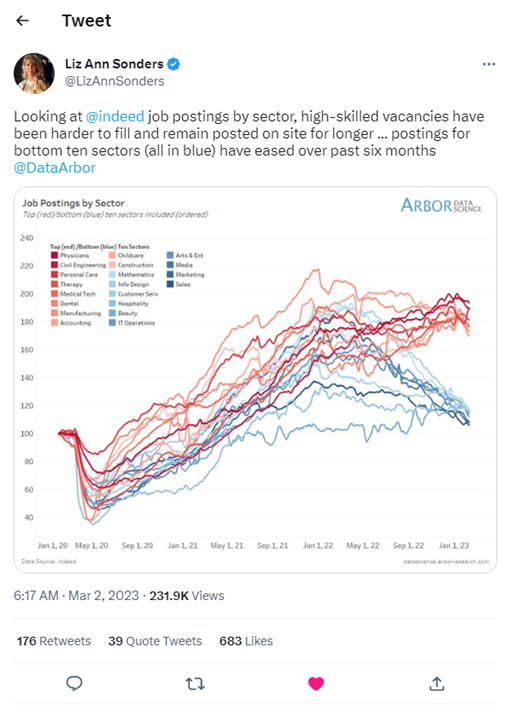
“The poster boy for growth and thinking positively is the labor market, which continues to post strong gains – far stronger than suggested by other indicators that in previous decades offered relatively reliable business-cycle signals.
The debate is whether the surprisingly robust gains in payrolls of late are due to extraordinary one-time factors linked to the ongoing effects of the pandemic. So-called labor-hoarding is one theory. If there’s something different this time, can it reverse suddenly? Or is it persistent?
Regardless of the explanation (and the staying power, or lack thereof), there’s no denying the numbers. US unemployment remains low and payrolls are rising at a strong pace: payrolls rose 517,000 in January, the highest monthly gain since July. Meanwhile, the jobless rate ticked down to 3.4%, the lowest since the 1950s.
Other key areas of the economy are strong as well. Notably, consumer spending, although wobbly in recent months, shows a strong ability to bounce back. Personal consumption expenditures surged 1.8% in January, the most in nearly two years.
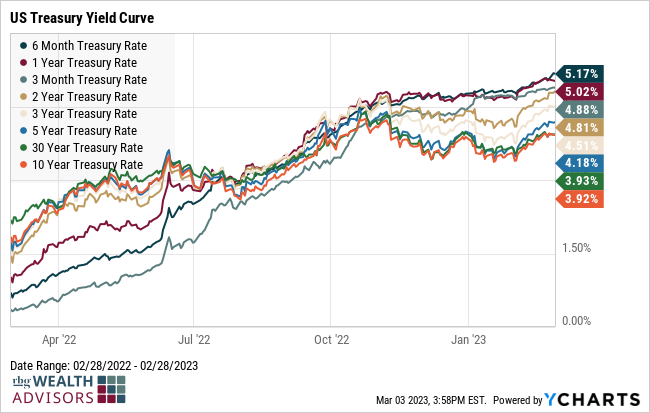
Definitions of recession vary, but it’s a safe assumption that the economy will almost certainly avoid contraction if payrolls and consumer spending are robust. That doesn’t change the fact that key indicators otherwise continue to flash warnings. The inverted Treasury yield curve, for example. Rising interest rates and unusually steep declines in money supply are other portents.
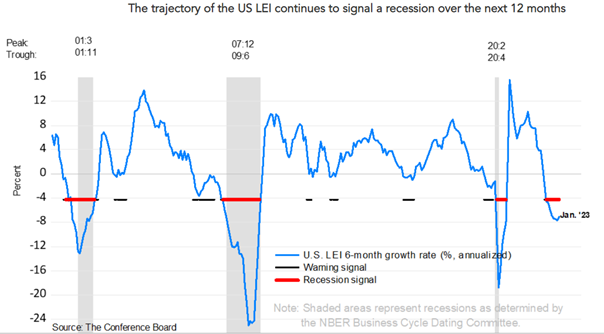
In fact, several broad-minded measures of the business-cycle look downright ominous. The Conference Board’s Leading Economic Index in January, for instance, paints a dark profile.”
|