|
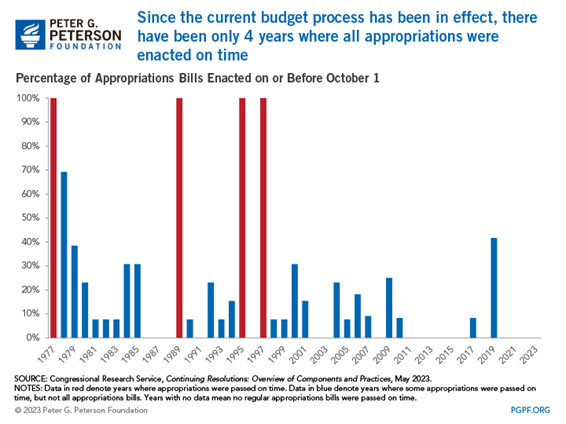
That produces an annual end-of-September drama on Capitol Hill as Congress scrambles to pass a ‘continuing resolution,’ a temporary extension of funding for a specific amount of time that keeps the government open and operating…
Without a continuing resolution, the government shuts down. The last shutdown lasted 35 days from late December 2018 to late January 2019—the longest shutdown ever…
Key economic data releases are likely to be delayed in a shutdown. The Bureau of Labor Statistics indicated earlier this week that it would "suspend data collection, processing and dissemination" if the government closes. That would likely impact the Job Openings and Labor Turnover Survey (JOLTS), due to be released on October 3, as well as the October 6 nonfarm payrolls report. A longer shutdown could impact the release of producer price index (PPI) and consumer price index (CPI) data, scheduled for release on October 11 and 12, respectively. All of this data will be critical for the Federal Reserve as it assesses the state of the economy in advance of its next monetary policy meeting on October 31 and November 1.
The Internal Revenue Service would continue to operate because last year's Inflation Reduction Act made additional funding available for the agency.
Non-essential government functions would stop during a shutdown…
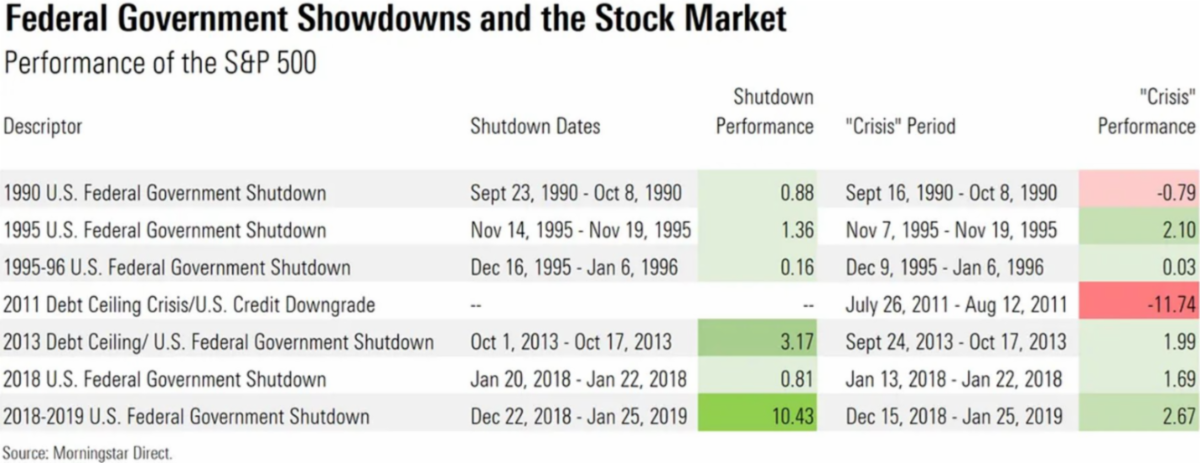
Historically, government shutdowns have not caused a major reaction in the markets. In fact, the S&P 500® has risen during the last five government shutdowns.
But shutdowns can increase market volatility. In the 2018-2019 shutdown, the S&P 500 dropped by 2.7% on the first trading day after the shutdown, rebounded nearly 5% on the next trading day and was up more than 10% by the end of the 35-day shutdown.”
|