November 19, 2026 • ט׳ כסלו תשפ״ז

Dear Chaverim,


Since the tragedy at Bondi Beach, we have grown much closer to our fellow rabbis in Australia. Rav Ulman’s presence and inspiring words at our convention this past May strengthened that bond even further.


Many of those rabbanim, including Rav Ulman, are part of Chabad. So our President, R. Etan Tokayer, and I were invited to sit at the “Australian” table at this year's dinner for the International Kinus HaShluchim. It is quite an event. This year there were about 6,500 attendees, including more than 4,000 shluchim from around the world.


As you know, many shluchim are the only rabbi for hundreds of miles, and for most of the year they and their families carry their communities largely on their own. For a few days in New York, though, they were surrounded by thousands of colleagues who know exactly what their lives look like, and it showed.


For many of us, the RCA is where that kind of support comes from, and we are proud to provide it. Whether you serve in a shul, a school, a hospital or somewhere else, you know the rabbinate can be lonely. Our programs were created to give you what you need professionally and to make sure that no rabbi has to face that alone.


Do you know everything the RCA has to offer? If you haven’t checked in a few weeks, you’ve already fallen behind! Please read our emails carefully (yes, I know I’m preaching to the choir here) and visit our website at www.rabbis.org.


I also have a small request for this week. Pick up the phone and call a chaver. You don’t need a reason. Just call to remind each other that none of us has to do this alone.

With warm regards and best wishes for a wonderful Shabbos,

R. Menachem Penner

Executive Vice President & CEO

Chomer Lidrush

A spark to start your drasha heading into Parshas Vayeitzei

1) Bread to Eat, Health to Enjoy It


"V'nasan li lechem le'echol u'veged lilbosh" (28:20). Why does Yaakov need to say what bread and clothing are for? The Sifsei Kohen on the Torah, by R. Mordechai HaKohen of sixteenth-century Tzfat, answers that Yaakov was also asking for the health to enjoy them, since a sick man has no appetite for bread and his finest clothes stay folded in a box.


This week's derasha, built on a chapter by our chaver R' Reuven (Ruby) Spolter in the memorial volume for R' Steven M. Dworken z"l, sets this beside Ben Zoma in Berachos 58a, who uses the same words, "pas le'echol" and "beged lilbosh."


Click Here to Read More

2) Uprooting with an Embrace


A guest contribution from our chaver R. Moshe Stavsky


At the Seder we say that "Lavan bikesh la'akor es hakol," and Rashi (Devarim 26:5) identifies that attempt in Lavan's pursuit of Yaakov.


Writing in a guest post for us, R. Moshe Stavsky brings an alternative he heard from his rebbe, R. Yosef Adler z"l, in the name of R. Zvi Kanotopsky z"l: Lavan's real threat was not the chase but the covenant at the end of the parsha. Lavan, who still sees Yaakov's wives and children as partly his own, wants a treaty that keeps the families together, while Yaakov recasts it as a treaty of separation.


Click Here to Read More

3) Parperet: Back to His Place


"Vayashav Lavan limkomo. V'Yaakov halach l'darko, vayifge'u vo malachei Elokim" (32:1-2). The Meshech Chochmah reads Lavan's quiet exit as a verdict on his whole life. A man who had a holy person like Yaakov living in his home for twenty years should have absorbed something of his ways and wisdom, as "holech es chachamim yechkam" (Mishlei 13:20). Instead, the moment Yaakov left, Lavan "returned to his place," to the same deceit and love of money as before.


Click Here to Read More

4) Parperet: Yesterday's Early Sunset


"Hen od hayom gadol, lo es he'asef hamikneh" (29:7). Yaakov has just arrived in Charan, a stranger at the well, and moments after greeting the local shepherds he tells them they are quitting too early. R. Chaim Shaul Kaufman zt"l, in Mishchas Shemen, asks how a guest could presume to lecture them, and whether he could have expected them to listen. He brings the Sforno, that a tzaddik cannot bear wrongdoing even when it is done to others, "to'avas tzaddikim ish avel" (Mishlei 29:27), and the Ponevezher Rav, who said that this is why Yaakov first opened gently with "achai, me'ayin atem" (29:4), so that a stranger's warmth and respect would soften them to hear him.


Click Here to Read More

Manning the Media

“A Multinational Megastudy of the Effects of Gratitude Practices on Subjective Well-being,” by Nicholas Coles, et al, PNAS (May 2026)


A team of thirty-six researchers coordinated from the University of Florida tested six brief gratitude exercises on more than 10,000 people in 34 countries, and each one raised mood and optimism and lowered envy compared with control tasks. The most popular practice, listing five things you are grateful for, had the weakest effect, while writing and actually sending a message of thanks to a specific person had the strongest. The effects also varied more from country to country than from one exercise to another, strongest in Mexico and nearly absent in Norway.


Ben Zoma's good guest in entry 1 above was not counting blessings in the abstract but counting what his host had done for him, and the study points the same way: gratitude does the most good when it is aimed at a person and said out loud, a message worth giving the Shabbos before Thanksgiving.


RCA Nachas


Spero1 image

At age 103, RCA member R. Shubert Spero just published a 624-page book: WINDOWS TO THE WORD: Studies in Torah Judaism and the Moral Imperative

Our chaver R. Marc Angel recently published this article: Israel Can Shift the Global Narrative: Offer a Peace Plan in the Institute for Jewish Ideas and Ideals

Windows Spero 3D image
 
 
IdealsLogo3 image

Do you have some nachas to share about yourself or another RCA member? Let us know!


Partnered Content


Rabbis Can Run


Shalom RCA Rabbanim,


RabbisCanRun is a three-month health and leadership program helping Rabbanim build lasting exercise habits through personalized coaching, accountability, and a meaningful physical challenge—all as part of Avodas Hashem.


Registration closes in just 3 days!


Maybe something is holding you back:


“I don’t have time.”

Investing a little time in your health can give you more energy, strength and, b’ezras Hashem, more healthy years.


“I’m not a runner.”

You don’t need to be! We meet you at your level and help you progress from there.


“Maybe next year.”

Why give up an entire year of better health? Im lo achshav, eimasai?


Three months from now, our Rabbanim will cross the finish line in Florida. I can assure you—you will not regret the time you invested in taking better care of your health.


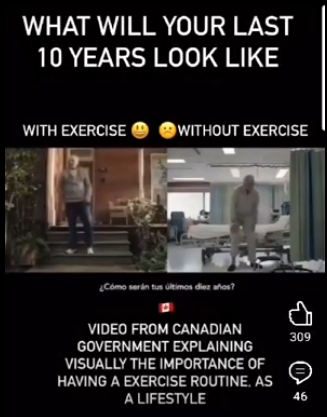
Still want to do more but struggling with motivation? Watch this powerful short video—it may change how you think about your health.

Click Here for more Information


L'maan Tzion: Advocacy for Israel

President Herzog meets with delegation of U.N. Ambassadors


President Herzog: “The issue of Iran is looming over us, threatening the entire region. There are also issues to resolve here through dialogue with Lebanon, dialogue with Syria, and of course the implementation of U.N. Security Council Resolution 2803 on Gaza.”


Click here to continue