October 7, 2026 • כ״ו תשרי תשפ״ז | | |
Dear Chaverim,
Although most of us marked the massacre's third anniversary over Shemini Atzeres and Simchas Torah, I cannot begin an email dated October 7th without noting the wound that remains open. In many ways, Israel and the Jewish People are safer than they have been in decades. At the same time, the war and its toll continue in Israel, and the Diaspora faces an antisemitism it had naively believed was a relic of the past. May Hashem be meir eyneinu to see the good that can yet grow out of the suffering of these past few years. And may He guide all of us as we try to lead our kehillos through these perilous, yet historically meaningful, times.
Sukkos and the Yamim Noraim are now behind us. All the work you put in (derashos, shiurim, hosting, davening, dancing, inspiring, and so much more) will set the tone for your kehillah for the year ahead. As I mentioned recently, you are Hashem's shluchim. But shluchim need to rest too. The same care you gave your kehillah throughout Yom Tov, you now owe yourself: a real break, not just a lighter week. I urge you to take the time. Step away from the phone, let the calls wait a day, and give your family (and yourself!) the attention you've been giving everyone else these past few weeks. As always, we hope the RCA's resources and programs help refill your cup and renew your energy and passion for the year ahead.
| Wishing you a meaningful and uplifting Shabbos Bereshis, | Rabbi Menachem Penner, CEO & EVP | | | | |
In Our RCA Family
Mazel Tov to our chaverim Shaul and Sarah Robinson and Jonathan and Yael Muskat on the birth of a granddaughter, born to their children Elisheva and Daniel Gottesman. See this moving post about the baby naming.
Mazel Tov to our chaver and the RCA's Director of Rebbetzin Leadership and Engagement Yechiel and Adina Morris on the marriage of their son Ezra to Atara Gherman.
| | | |
RCA Nachas
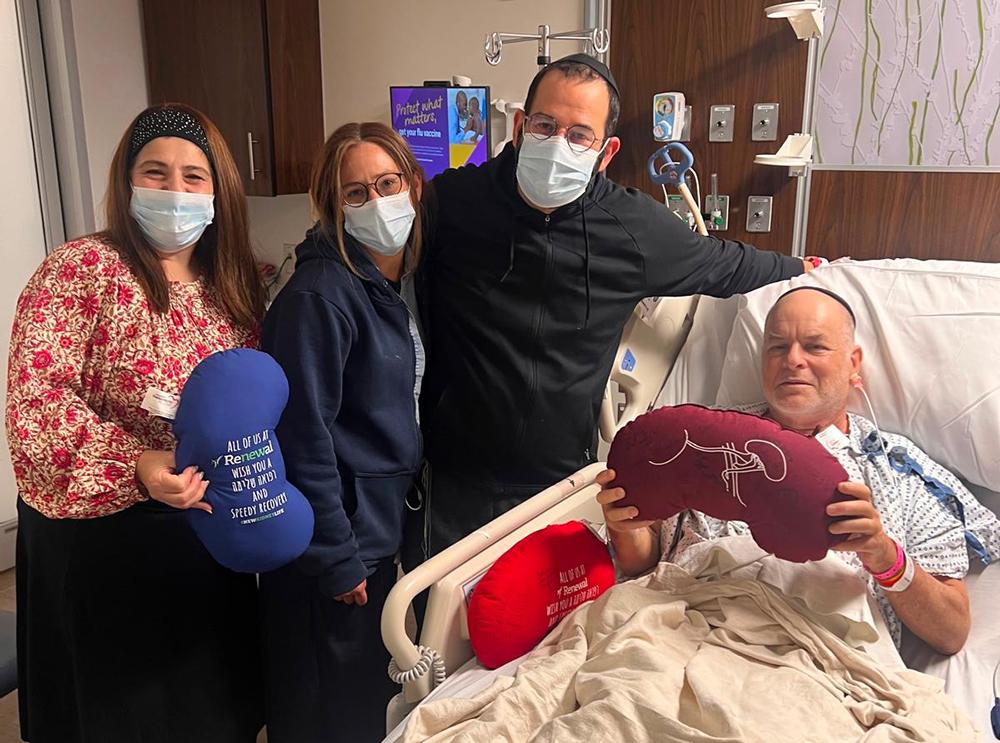
A little over a month ago, our chaver, Andrew Markowitz donated his kidney through Renewal. He began researching this issue after his student at Naaleh High School for Girls, asked him, “Am I mechuyevet (obligated) to donate my kidney?” See the story in a Jewish Link article.
Do you have some nachas to share about yourself or another RCA member? Let us know!
| |
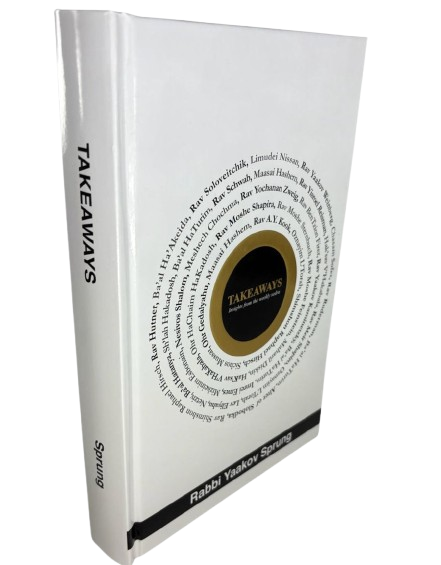
Our chaver, Yaakov Sprung, recently published a new book:
Takeaways: Insights From the Weekly Parsha
Takeaways is available from most major Jewish bookstores, and online at JudaicaPlace.com
Do you have some nachas to share about yourself or another RCA member? Let us know!
| |
| | | | |
|
The Harvard University Center for Jewish Studies invites applications for the 2027-2028 Daniel Jeremy Silver Fellowship
Applicants must be active members of the clergy who have demonstrated serious intellectual and academic ability, interest, and energy in the pursuit of scholarship in Jewish studies. Find out more.
| |
250 Days for 250 Years
250 Days for 250 Years is a year-long educational journey celebrating America's semisquicentennial. America's support for Israel grew from a specific civic inheritance, built on religious liberty and biblical literacy, which is no longer being taught. 250 Days for 250 Years is a national civic education initiative built to restore this inheritance in the next generation. Find out more.
| |
Complimentary Jewish Driving Resources for RCA Member
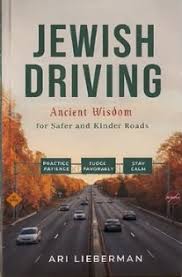
Jewish Driving: Ancient Wisdom for Safer and Kinder Roads is a 180-page paperback that brings together Torah sources, real-life stories, driving psychology, and practical guidance to encourage safer, more responsible, and more considerate driving. Find out more.
| | | | |
|
Chomer Lidrush
A spark to start your drasha.
| | |
1) The Path to the Etz HaChaim
A guest contribution from our Chaver Rabbi Judah Dardik. Read his original piece here.
When Adam and Chavah are sent out of Gan Eden, a keruv with a "lahat hacherev hamis'hapeches" guards the path to the Eitz HaChaim (Bereishis 3:24). Why keep us from the Eitz HaChaim, when we call the Torah itself "Eitz chaim hi"?
The answer may start with the sin itself. The nachash suggests to Chavah that Hashem's command is not for her good. Hashem, kiv'yachol, is holding out on her and looking out for Himself, so she had better look out for herself. She eats, Adam eats, and when they are caught, Adam blames Chavah and Chavah blames the nachash.
Click Here to Read More
| | |
2) Tov is What Works
R. Yehuda Herzl Henkin, in his Chibah Yeseira, argues that the word “tov” in our parshah implies a certain judgment, but it is not a moral one. When Yisro watches Moshe judging alone from morning until evening and says "lo tov hadavar hazeh asher atah oseh" (Shemos 18:17), he is not faulting Moshe's character; Moshe's intent was pure and his aim praiseworthy. Yisro faults the method, which is why he finishes, "navol tibol, gam atah gam ha'am hazeh asher imach." You will not last this way. So too when David taunts Avner, "lo tov hadavar hazeh asher asisa" (Shmuel I 26:16), he means that Avner failed at his post, "al asher lo sh'martem al adoneichem." Tov is what works, what functions, what succeeds.
Click Here to Read More
| | |
3) The Garden of Eating
R. Nathan Lopes Cardozo, in Judaism on Trial, takes from the Yerushalmi in Kiddushin that a man will be called to account for the permitted pleasures of this world he did not enjoy in exactly the way he is called to account for what the Torah forbade him. He tells the story of R. Samson Raphael Hirsch, who, as an old man, announced he was traveling to Switzerland, to the astonishment of a community that had never known him to take a vacation. He answered that he feared standing before the Heavenly Court and being asked, "Shimshon Rephael, did you see My beautiful mountains in Switzerland?" and having nothing to say.
Click Here to Read More
| | |
4) Eating Fish on Shabbos (Shiur Outline)
A full shiur outline on fish on Shabbos is attached, built for Shabbos Bereishis off four sources: R. Moshe Meir Weiss, Passionate Judaism; R. Asher Meir's Meaning in Mitzvot column; R. Ari Enkin on Torah Musings; and a Chabad.org entry.
The spine is the one Shabbos Bereishis supplies for free, namely that the Shabbos menu runs in the order of the creation, fish from day five before meat from day six, because Shabbos is zecher l'maaseh Bereishis. From there it moves through the threefold berachah of days five, six, and seven coming together on the plate, the halachic status of fish as oneg rather than chiyuv, and then the heart of it: why the one creature that needs no shechitah is the one we open the Shabbos meal with. It closes where the parsha closes the circle, with the taninim hagedolim of day five and the livyasan waiting for the seudah l'asid lavo.
Click Here to Read More
| |
Manning the Media
It’s a classic New York Times article, but "The Stories That Bind Us," by writer Bruce Feiler, highlights the modern science behind why stories are so important. Psychologists found that the number one predictor of a child’s emotional health was their knowledge of their family history, specifically the "oscillating narrative" of how the family faced a crisis, stuck together, and came out stronger. Click Here
| | | | |
Upcoming Executive Committee Meeting | |
October 14, 2026
New Member Applicants
If you have any feedback about any of these candidates, please contact mpenner@rabbis.org
| | |
Rabbi Binyamin Fiederer
Semicha: RIETS
La Jolla, CA
| | |
Rabbi Benjamin Kramer
Semicha: RIETS
Edison, NY
| | |
Rabbi Avi Rosalimsky
Semicha: RIETS
Fair Lawn, NJ
| | | | |
L'maan Tzion: Advocacy for Israel
| |
The 170 "Journalists" Exposed as Terrorists
Following extensive research, the IDF revealed that 170 Gazans who were presented as innocent journalists and media personnel were in fact military operatives in the military wings of various terrorist organizations, primarily Hamas and Islamic Jihad.
| | | | |
| How did you like this email? | | | | | | |