June 4, 2026 • י״ט סיון תשפ״ו

From the Desk of the Executive Vice President

IN THIS WEEK'S EMAIL

Likrat Shabbat

RCA Updates

Partnered Content

In Our RCA Family

Chomer Lidrush

Manning the Media

Likrat Shabbat


A Halachic Note for this Week’s Kriyas haTorah:


Where does shishi begin this week? Rav Schachter asked that we publicize that the common minhag to begin shishi with the misonenim (after “vayehi binsoa”) seems to be incorrect. The Shaarie Rachamim (R. Shabtai Ish Lifshitz) commentary printed in some editions of the Shaarei Ephraim records that shishi should begin earlier – before the story of Moshe and Chovev / Yisro. Click here to see the piece. Rav Schachter recommends that we follow this custom.

RCA Updates


1) Shabbos in Hilcrest


I had the pleasure of joining our chaver Etan Schnall this week at the Young Israel of Hillcrest and learning with many Queens families I have known for decades. Mazal tov to Etan on his move this summer to become the rabbi of Cong. Beth Aaron in Teaneck, NJ!


2) Upcoming Weekend in Toronto


This Shabbos, I will, iy”H, be by our chaver Zev Spitz in Clanton Park (Toronto). R. Zev and Liora Spitz served in my old shul in Holliswood for many years, and my wife and I are looking forward to spending time with them and their family.


I look forward to meeting with RCA members on Sunday morning before the Toronto Walk for Israel.


Many thanks to Zev for his ongoing help with the American Friends of Canada!


3) Meeting with the City heads of Yerushalayim


A delegation from the RCA met last Thursday with city planners from Israel for an informational meeting about Jerusalem's extensive building plans and the coming Light Rail lines. They are looking to educate RCA rabbis as to the opportunities for US families to make their aliyah dream a reality in the Holy City.


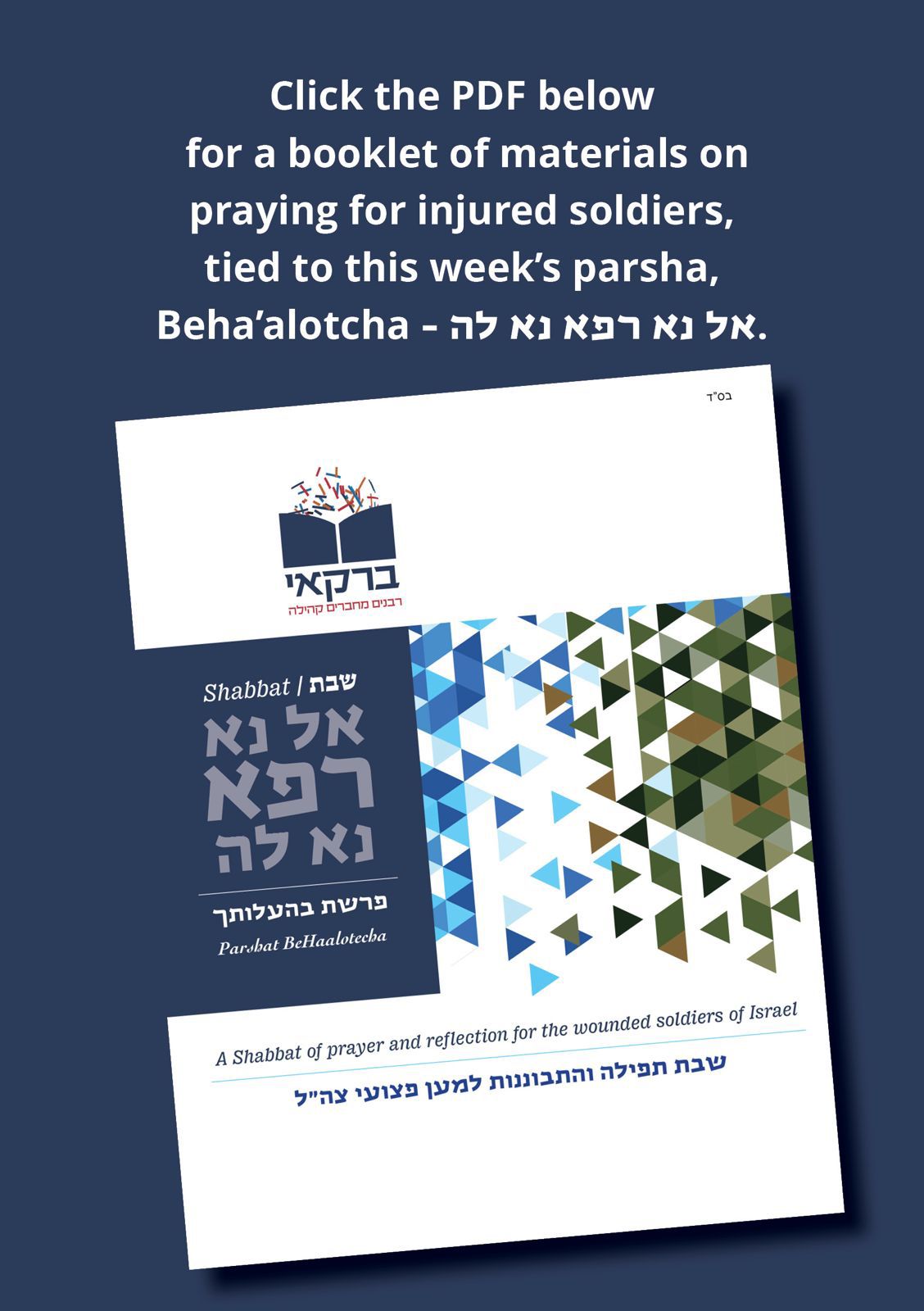
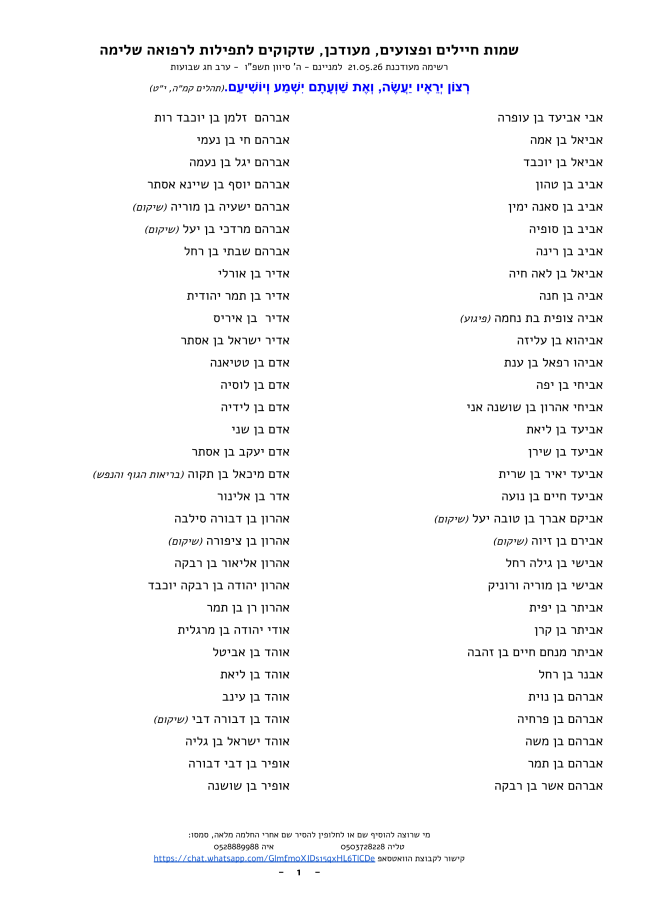
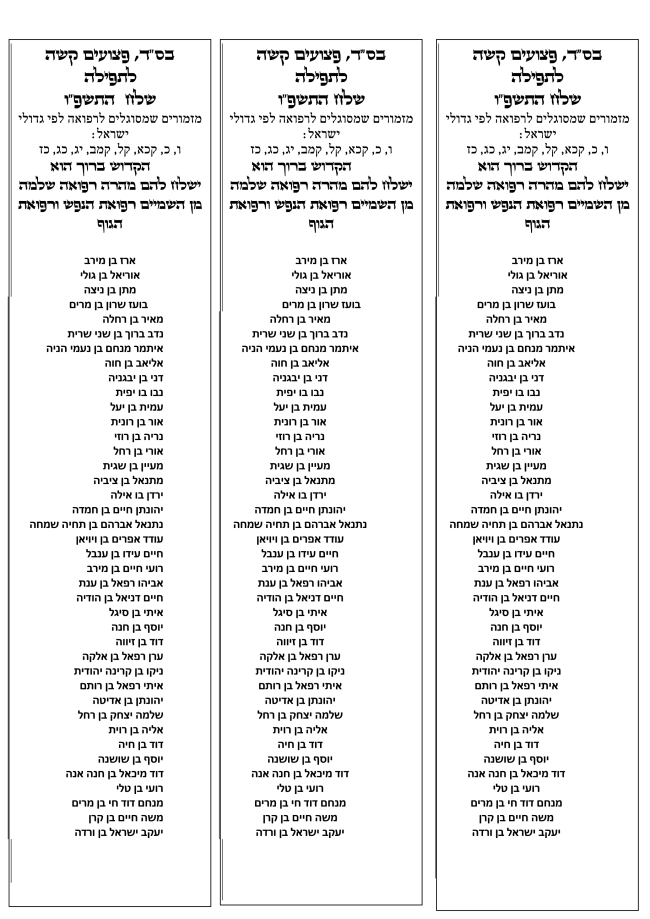
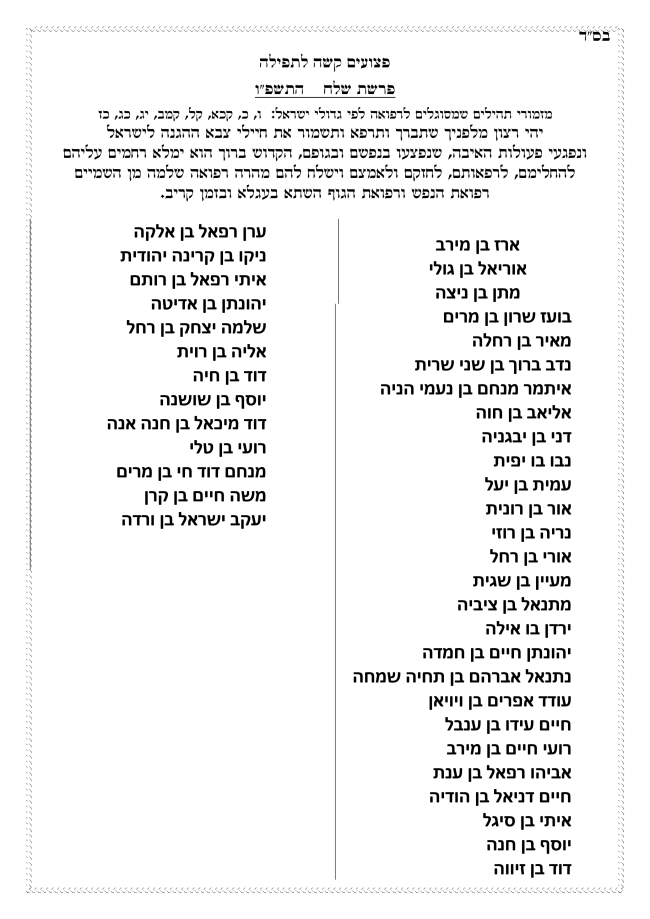
4) Shabbos Beha’alosecha for Our Wounded Soldiers


Rabbanei Barkai call on Rabbanim everywhere to designate this Shabbat as שבת אל נא רפא נא לה — a day of tefillah for our wounded soldiers. See below for information about a booklet of resources for Rabbanim, including material for drashot, a shiur, and family activities.


We urge you to use these materials to daven for and raise awareness of the more than 20,000 wounded soldiers.


5) RCA Rabbinic Rolodex


The RCA is creating a member-generated referral directory to help rabbis identify professionals and service providers who have been positively recommended by fellow RCA members. This Rabbinic Rolodex is intended solely as a convenience resource. Listings reflect the personal recommendations of submitting rabbis. Inclusion does not constitute RCA endorsement, certification, vetting, or guarantee of any provider or service.


Please submit professionals you would genuinely feel comfortable recommending to another rabbi or congregant. 


6) America at 250


I) RCA America at 250 Chomer Resource Page


Click Here for Special Chomer Lidrush for America's 250th Anniversary. We are also seeking to grow this resource list through RCA chaver contributions to this project! Please email any Chomer Lidrush and/or Shiur Mekorot you wish to share to Rabbi Benjamin J. Samuels at ravbensam@shaarei.org


II) Join 250 for 250, for a year-long educational journey celebrating America's 250th anniversary. Click Here to sign up. Contact Rabbi Andrew Shaw for more information.


7) Upcoming Executive Committee Meeting


June 10, 2026 1:30pm EDT


See below for the names of another large group of rabbis who have applied for RCA membership.

Partnered Content


A special message from our convention sponsor, Sha’ar 

Dear Rabbis, 


It was a pleasure meeting so many of you at the RCA conference. I'm reaching out because I believe what Sha'ar offers is genuinely unlike anything available in Eretz Yisrael today — and a rare opportunity for your kehillah, both spiritually and financially. 


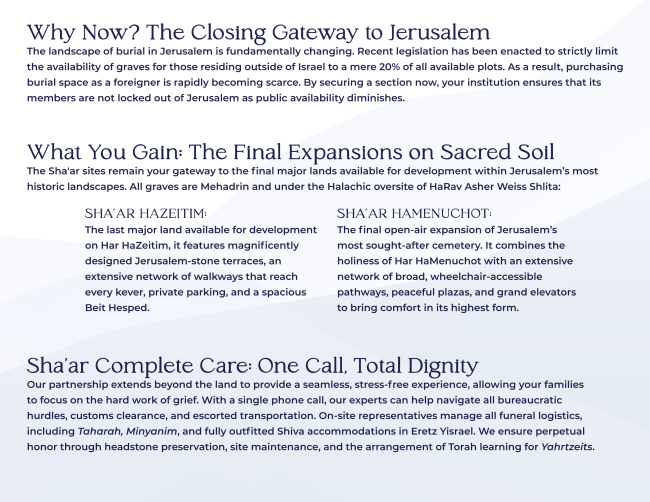
Sha'ar has developed two boutique, private cemeteries built to a standard and aesthetic never before seen in Israel — Jerusalem-stone terraces, digital grave directories, full wheelchair accessibility, dedicated parking, grand elevators, and beautifully designed pathways to every Kever. These are not just burial sites; they are sacred spaces designed with the dignity your families deserve. 


  • Sha'ar HaZeitim — The last major land available for development on Har HaZeitim. 
  • Sha'ar HaMenuchot — The final open-air expansion of Jerusalem's most sought-after cemetery. 


All graves are Mehadrin, Kivrei BaSadeh, under the Halachic oversight of HaRav Asher Weiss Shlita. 


Why act now? Recent Israeli legislation limits grave availability for those outside Israel to just 20% of all plots. Access is closing — securing a Chelka today protects your members before the window shuts entirely. 


Sha'ar handles everything: customs clearance, transportation, Taharah, Minyanim, Shiva accommodations in Eretz Yisrael, headstone preservation, and Torah learning arranged for Yahrzeit's. One call. Total dignity. 

The financial opportunity: 


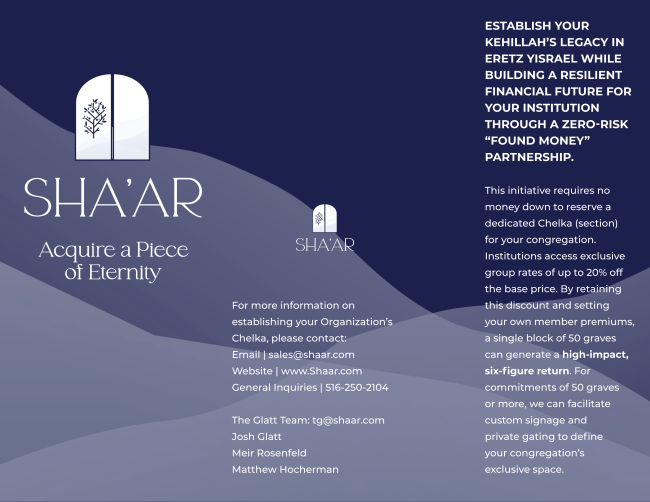
  • No money down to reserve a dedicated Chelka for your congregation. 
  • Exclusive group rates of up to 20% off the base price. 
  • By setting your own member pricing, a single block of 50 graves can generate $250,000–$350,000 for your shul. 
  • This is not a fundraiser — it's a service your families are already seeking. Your shul simply becomes the trusted gateway. 
  •  
  • I'd love 30 minutes at your convenience to walk through how this works. Our full brochure can be found here, and the shul/organizational trifold is attached as well. 


 Looking forward to connecting. 


B'Kavod, 


Josh Glatt 

Josh@shaar.com | 516-250-2104 

www.Shaar.com 

In Our RCA Family


  • Mazel Tov to our chaver Shmuel and Leora Lesher on the birth of a son. Mazel Tov as well to grandparents, our chaver Hanan and Barbara Balk
  • Mazel Tov to our chaver and RCA Israel Representative Reuven and Joyce Tradburks on the birth of a granddaughter, born to their children Yosef and Gila Tradburks

Chomer Lidrush

Some ideas to turn your gears heading into Shabbos

1) "Holy Misfires"


Yehoshua wants Eldad and Meidad silenced. They are prophesying without authorization, and according to one shitah in Sanhedrin (17a), the content of their prophecy is explosive, saying there’s no way Moshe will lead the nation into Eretz Yisrael. This is a direct assault on Moshe's leadership, delivered publicly, and Yehoshua's instinct to shut it down is not petty protectiveness – It is correct! 


And yet Moshe refuses. "Mi yiten v'kol am Hashem nevi'im" – would that all of Hashem's people were prophets. 


Why? R. Moshe Taragin (Reclaiming Redemption) tells us to look at the context. The nation is in freefall, grumbling, craving meat, drowning in ingratitude. Klal Yisrael doesn't have a prophecy problem; they have a spiritual void! Against that backdrop, Moshe asks Yehoshua an implicit question: is the greatest danger really that religious passion is being expressed imperfectly? Yes, their fire is misdirected, but fire itself is the dream. The Midrash reads Moshe's wish as pointing toward Yoel's prophecy – v'haya acharei chen eshpoch es ruchi al kol basar – a future where nevuah belongs to the entire nation. 


The dream isn't to extinguish the flame, but to build people who can carry it properly. We must be careful before we negate religious passion – even if it is misdirected. See this fascinating piece that can extend into many different messages for your kehillah. 


2) Rav Soloveitchik zt"l on the Many Mentions of "Asifa" in the Parasha


Another thought about misdirection – this one is a warning.  


The word asifah appears no fewer than nine times in Behaaloscha. The Rav zt"l noticed this was no coincidence. (Quoted by our distinguished chaver, R. Menachem Genack). Asifah — gathering — is the Torah's signature motif for this parshah, and it cuts two ways. 


At its best, asifah is the mechanism of Klal Yisrael: the zekeinim gathered around the Ohel Moed, the people gathered to receive direction, a nation cohering around shared purpose and leadership. The asifah of the seventy elders is the fulfillment of Har Sinai — nevuah distributed, leadership broadened, the nation assembled properly. 


But asifah can curdle. The same word describes how the people gathered against Moshe, assembling not toward something but actually against. It was gathering as grievance. The meraglim, soon to come in the story, catalyze precisely this: an asifah that fragments rather than unites. What defines a community is not that it gathers, but around what. The same instinct that builds a tzibur can, misdirected, destroy one. 


The Rav identifies a more particular danger embedded within asifah: the indiscriminate broadening of who shapes the direction of Klal Yisrael. As the nation moves through the desert, the Erev Rav follows, carrying its distorted values wherever the people go. The concern is not gathering as such, but who gets gathered in. When asifah expands to include those who never fully committed to the covenant, Torah sensibility is gradually diluted from within. The same dynamic plays out in the extension of leadership to seventy elders; however, sanctioned from above, the broadening of the council introduces voices of unequal clarity alongside Moshe Rabbeinu's singular vision. 


The question this raises is one that every generation of Jewish leadership must answer: How does a community remain genuinely open, honest before challenge, humble about what it does not know, while still holding to the conviction that not every opinion is created equal, and not every passing tendency of the surrounding culture deserves to become Torah policy? Openness is a value. But it is not the same as neutrality. The Erev Rav is a standing warning embedded in the asifah narrative itself: that a tent which never stops expanding its walls may eventually cease to be a tent at all. 


3) Why Did Miriam Speak Lashon Hara?


Miriam is afflicted with tzaraas — the Torah's most pointed statement about lashon hara. She is shut outside the camp, a metzora like any other. And yet the entire nation freezes. The Aron, the Shechinah, the whole machaneh — nothing moves. Ve-ha’am lo nasa ad hei'asef Miriam. Not a single step until she returns! 


Is this how we treat a sin? 


R. Steinsaltz (Biblical Images) explains it beautifully, and I found it helpful for a bat mitzvah Shabbos years ago (for a girl named Miriam!). Miriam's entire life was animated by one force: achrayus for those around her. At seven years old, she stood at the Nile watching her baby brother. She convinced her parents to reunite, facilitating Moshe's birth. She led the women in shirah at the Yam. A miraculous well followed the nation in her merit. When she spoke against Moshe, she was not acting from jealousy or malice; she was being the big sister! She was being that baalas achrayus she always had been. The word ken in the pasuk, Rashi notes, signals this: whatever she said, she said without intent to harm. 


The punishment then becomes a vehicle for kavod. The Sifri observes: she once waited by the Nile for her baby brother — now the entire nation waits for her. Midah kneged midah, but inverted. The very devotion that led her astray is precisely what the Torah memorializes. (Great write-up of this idea in an old Rabbi Frand print-out, too.)  

Partnered Content

Manning the Media


1) Read Joseph Epstein’s brief profile on Sandy Koufax, “Mensch on the Mound”, as part of The Free Press’ highlighting great Americans ahead of the country’s 250th next month. (PDF)


2) Writer Sean Trende’s reflection on his son Judson’s graduating high school, and what it’s like to raise a child with profound Autism: “Judson’s Last Ride”, at RealClear Politics

• • •


Read something that made you think? We’d love to read it, too – and then feature it! Drop us a line. 


Did our chomer help you over Shabbos? Want to see more or less of an idea? Let us know!

EMATAI PRESENTS: UNDERSTANDING THE HALACHIC ESTATE SHTAR

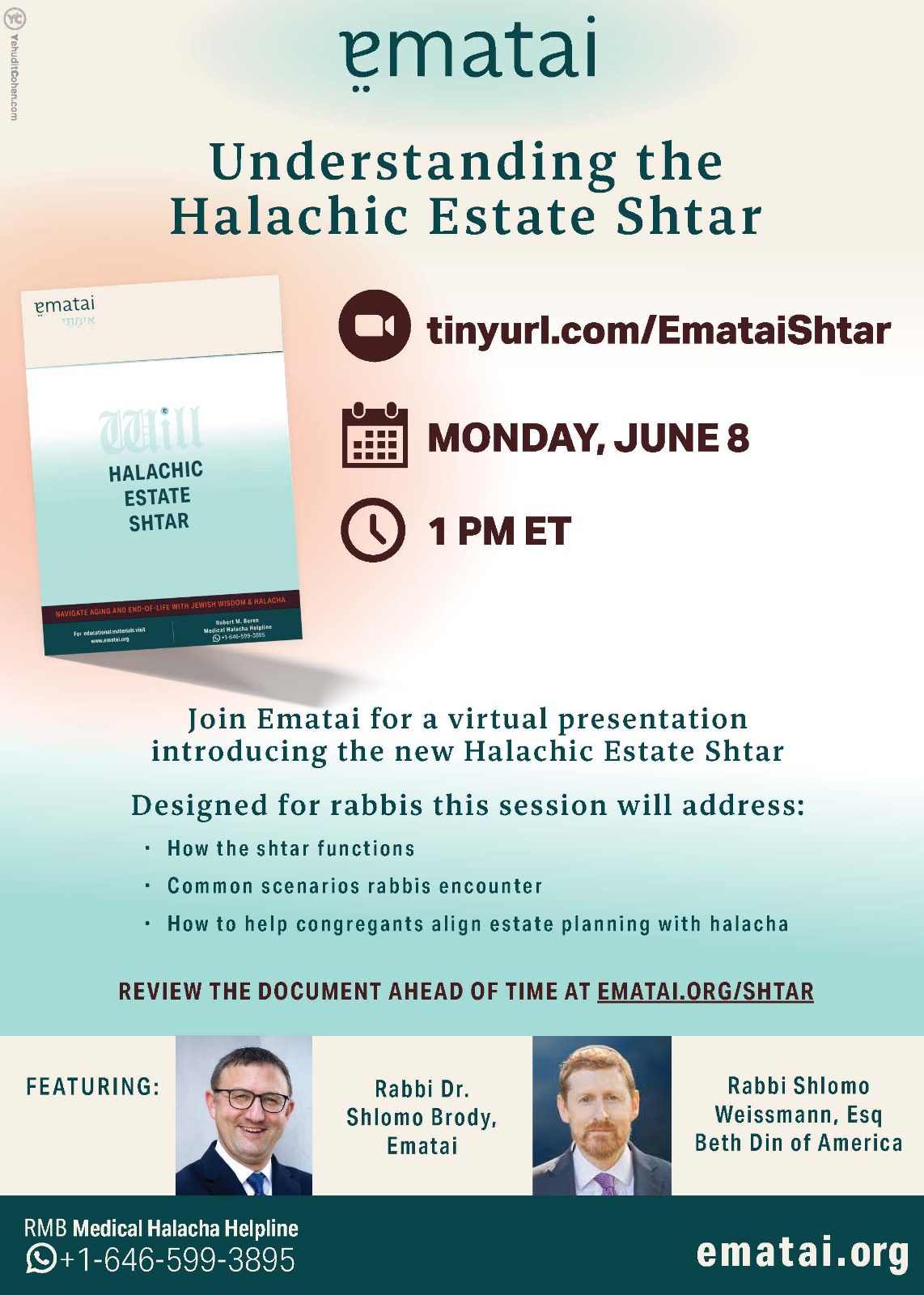
On Monday, June 8, 1 PM EST / 10 AM PST, Ematai will be hosting a webinar for rabbis to understand its new halachic estate shtar with Rabbi Shlomo Weissmann, Esq of the Beth Din of America and Rabbi Shlomo Brody. This is an opportunity to learn about a 'shtar zachar shalem' and understand how you can help your congregants complete this user-friendly form, which has received the approval of Rabbi Mordechai Willig. Register at tinyurl.com/EmataiShtar. To view the document, please visit ematai.org/shtar.

BARKAI PROCLAIMS THIS SHABBOS AS:

שבת אל נא רפא נא לה

NEW MEMBER CANDIDATES


If you have any comments, or concerns about any of these candidates, please contact mpenner@rabbis.org

oar2 image

Rabbi Mattias Amster


The Jerusalem Kollel

Stockholm, Sweden

Rabbi Yonatan Gilbert


Chief Rabbinate of Israel

University Heights, OH

Rabbi Shmuel Goldstein


RIETS

Paramus, NJ


Rabbi Yoni Laub


RIETS

Bronx, NJ

Rabbi-Avi-Okin-400 image

Rabbi Avi Okin


RIETS

Buffalo, NY

Rabbi Alex Ozar


RIETS

New Haven, CT

Rabbi-Doron-Podlashuk-scaled-e1677088156175 image

Rabbi Doron Podlashuk


Chief Rabbinate of Israel

Yad Binyamin, Israel

Rabbi Simcha Shabtai


RIETS

Boca Raton, FL

NEW BOOK

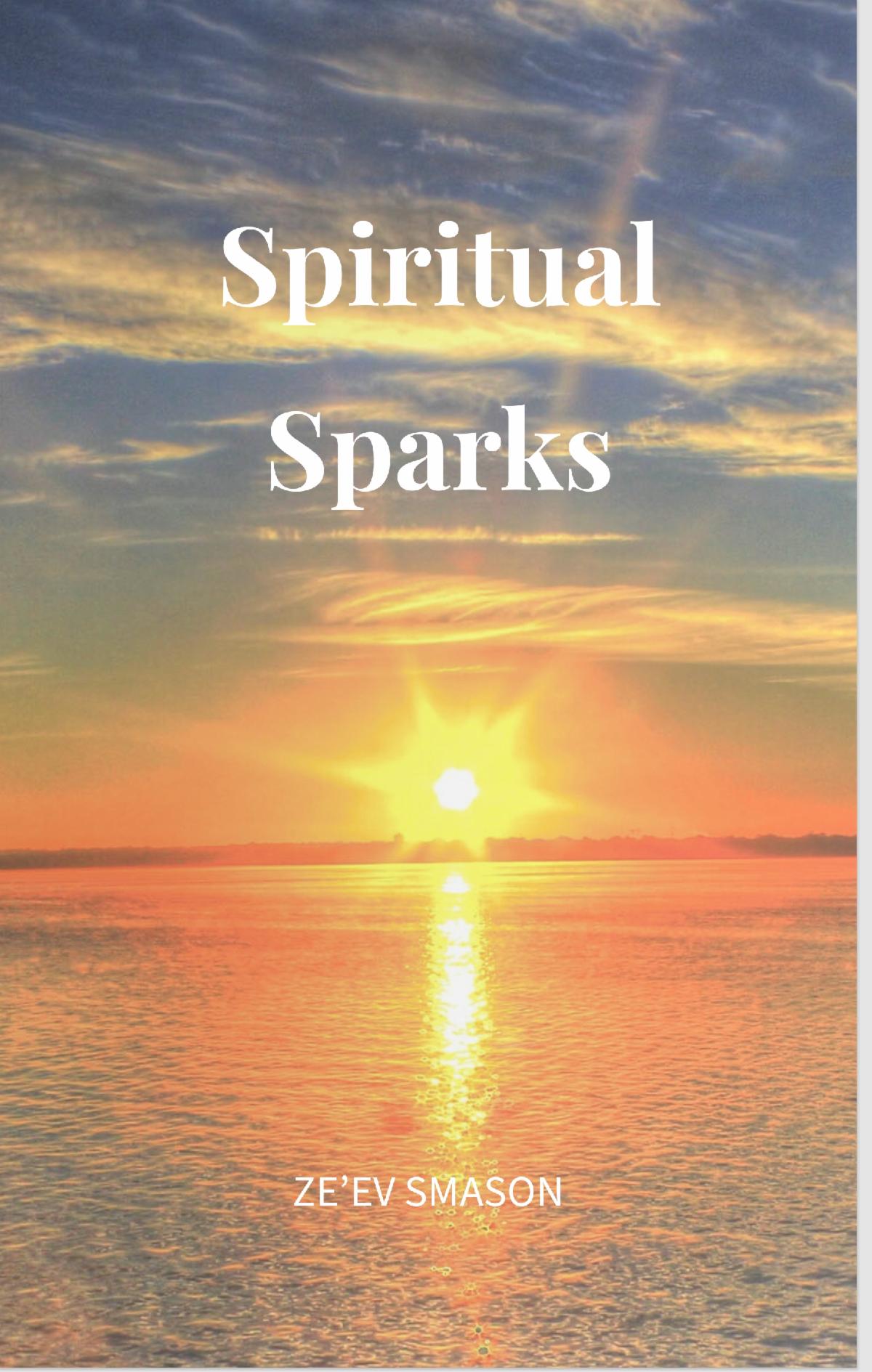
Spiritual Sparks: A Reader


by our chaver R. Ze'ev Smason, now available on from Amazon.com

TRADITIONONLINE

The New Assimilation and the Future of American Jewry 

by President, Etan Tokayer, Click Here


REVIEW: Darwin and the Jews

by Jeremy Brown, Click Here


Jewish Debate and the American Civic Project

by Josh Joseph, Click Here

SERIOUSLY INJURED SOLDIERS AND CIVILIANS

With thanks to Rav Dovid Fine

••••••••••••••••••••••••••••••••••••••••

  • Who We Are
  • Click here to order the RCA Madrikh
  • RCA - Assistance in Contract Negotiations, Apply Here
  • Exclusive 20% Kodesh Press Discount Code for RCA Members (certain exclusions apply): RCA20
  • Exclusive 15% Koren Publishers Discount Code for RCA Members (certain exclusions apply): RabbiRCA
  • The RCA Siddur Avodat Halev is available from Koren Publications at a discount by contacting shlomop@korenpub.com
  • Interest free loans of up to $5000 are available to RCA chaverim through the Rabbi Myron and Sarah Rakowitz Fund. Please contact Menachem Penner for more information.
  • Burial plots are available in the RCA section of Eretz haChaim Cemetery in Bet Shemesh. Contact Dovy Grunbaum, 1-866-437-2210, for details.
  • RCA Guidelines and Protocols on Child Safety and Sexual Abuse in a Congregational Setting
  • To sign up for the RCA Health Insurance Plan contact Jay Wildstein at the Grober-Imbey Insurance Agency, 516-872-9500 x3027
  • RCA Retirement Plan Resources Click Here.
  • For information about the RCA Retirement Plan contact Dov Levine by e-mail or at the Retirement Plan Help Desk at 845-533-2633.