July 31, 2025 • ו׳ אב תשפ״ה

IN THIS WEEK'S EMAIL

RCA Updates

In Our RCA Family

Partnered Content

Chomer Lidrush

Manning the Media

•••••••••••••••••••••••••••••••••••••


RCA Updates


1) Tisha b'Av & Kinnos


We wish all of our members a tzom kal and much hatzlachah and siyatah dishmaya in inspiring Klal Yisrael over this Tisha b’Av.


See here for the 2025 RCA Kinnos Companion with updated links.


See here for a guide to Tisha b’Av on Motzei Shabbos and Sunday. You can edit and distribute this guide to your shuls. Thank you to our chaver Mordechai Torczyner for his help with this effort.

I'll add here some thoughts on the second Kinnah from Tisha b'Av night. It is a special Kinnah that is only said on Motzei Shabbos. See here.


2) Officers' Summit 2025: Many thanks to our new group of Officers who met in Brooklyn this week at the Kingsway Jewish Center. Pages and pages of great ideas were logged as we began to plan for 5786. It will, IY"H, be a very exciting and productive year for the RCA. Thanks to our host, incoming President Etan Tokayer.


3) Many exciting announcements of the coming weeks - the launch of our Mental health Consultation Line, our new Mentorship Program, and our videos for potential geirus candidates. Stay tuned.


•••••••••••••••••••••••••••••••••••••


In Our RCA Family


  • Condolences to our chaver Benjamin Goldschmidt on the loss of his congregant, Wesley LePatner in Tuesday shooting attack in Manhattan. She was a founding member of his shul, the Altneu Synagogue in Manhattan.

•••••••••••••••••••••••••••••••••••••


Partnered Content

Executive Coaching for Today's Rabbinic Leadership

With Dr. Elly Lassson, PhD

The demands of modern Rabbanus go far beyond the pulpit. Today’s Rabbanim are called to lead with emotional intelligence, strategic clarity, and authentic presence. Dr. Elly Lasson, a licensed Organizational Psychologist with over 35 years of experience, offers executive coaching tailored specifically for spiritual leaders.


Drawing from a career across the corporate, nonprofit, and communal worlds, and grounded in Torah values, Dr. Lasson blends analytical precision with deep empathy. His coaching helps Rabbanim build leadership presence, navigate transitions, and respond to the complex human dynamics of their kehillah with confidence.


Using the trusted Hogan Assessment tools, Elly provides clear insights into leadership styles, blind spots, and areas for growth. Clients appreciate the honest and supportive space he creates - where vulnerabilities are respected, and feedback is both candid and constructive.


Whether you're preparing for a new role, managing internal tensions, or simply striving to lead with greater impact, Dr. Lasson brings seasoned, discreet, and mission-driven support.


Endorsed by Rabbanim and professionals across sectors.

To learn more or schedule an exploratory consult, reach out to Dr. Lasson today!

•••••••••••••••••••••••••••••••••••••


Chomer Lidrush


Some ideas to turn your gears heading into the parsha

1) Don't Bear it Alone


The Vilna Gaon famously noticed that Moshe’s cry in our parshah, "How can I alone bear your troubles and burdens?" (1:12) shares the same root (in Hebrew) as the opening of Eichah: "How the city sits solitary." Rav Yaacov Haber notes that Moshe wasn't simply complaining about workload, needing to handle everything alone - he was also prophesying! When people refuse to share each other's burdens, the inevitable result is devastating isolation.


The solo hero who bears everything alone is often glorified, but even Moshe knew better. The destruction of the Beis Hamikdash came from sinas chinam that left people isolated from one another. The antidote, the fix, isn't grand solutions, but rather simple burden-sharing: showing up, listening, carrying a piece of someone's weight.


See Dr. Erica Brown’s article on Eichah and Loneliness from Tradition. (Yerushalayim’s loneliness in Eikha is both physical and existential, echoing a long Jewish history of isolation. While some, like Rav Soloveitchik, saw creative strength in sacred solitude, today’s loneliness risks becoming corrosive and self-fulfilling. Our task is not to embrace loneliness, but to fight it—by building community, deepening faith, and reshaping the narrative.)


2) Why Blame the People for His Own Sin?


We’re told repeatedly that God was angry with Moshe "because of you" - because of Bnei Yisrael. But wasn't Moshe responsible for hitting the rock instead of speaking to it? Why blame the nation?


Rav Soloveitchik offers a profound answer (Masores HaRav Chumash, based on Vision and Leadership): Moshe was indeed responsible for his action, but the people were responsible for creating the conditions that made his failure inevitable.


Moshe was "too great for his generation" – the Rav explains that his vision was too penetrating, his standards too high, his spiritual depth too vast for them to follow. When they complained using "the language of liberated slaves who had just parted from the fleshpots," Moshe broke down and cried. These weren't the disciples he had hoped for. The tragedy was the unbridgeable gap between teacher and student, between a leader's soaring expectations and his followers' earthbound reality.


The halachah is that "If the student was sentenced to be exiled to a city of refuge, his teacher goes with him." When we fail to rise to our teachers' level, when we close our minds to their influence and resist their transformative power, we drag them down with us. Moshe suffered the consequences not just of his own actions, but of a generation that refused to become worthy disciples.


3) One more from the Rav:


Rav Soloveitchik noticed a striking pattern in tefillah: after davening for geulah in Teka Beshofar, we don't immediately ask for the Beis HaMikdash’s rebuilding or for Messianic rule. Instead, we first pray for the establishment of perfect justice - "to defeat those who oppose it and request the triumph of those who are righteous in justice." Only then do we ask for the Bayis and Moshiach.


This sequence, the Rav taught (Yarchei Kallah, 1978), mirrors exactly what Moshe did before entering Eretz Yisrael. He interrupted his narrative about the march toward the Land to establish the Jewish judicial system first. This wasn't a tangent, but a prerequisite. As Rav Soloveitchik explains: "as soon as we mention the ingathering of the exiles, we cannot make these additional requests until a system of perfect justice is established."


Justice isn't simply a nice ideal. We cannot meaningfully pray for ultimate geulah until we've first created a society where righteousness prevails. The Beis HaMikdash and Mashiach can only come to a world that has established justice first.

•••••••••••••••••••••••••••••••••••••


Manning the Media

1) Is Gaza Starving? Searching for Truth in the Information War


If every source is really lying, how do you find truth? In his piece for The Free Press, veteran journalist Matti Friedman reports on Gaza hunger when Hamas controls health statistics, international organizations are compromised, and even Israel's government regularly misleads the public. When he asked a senior Israeli official if people are starving in Gaza, the answer was honest: "I don't know."


The crisis is real - there are pockets of malnutrition and desperate scenes at food distribution sites. But Hamas deliberately exploits Palestinian suffering as propaganda, even killing aid workers to maintain control. They know misery fuels international pressure on Israel, which is why they've hardened ceasefire positions.


2) The Gichon Spring, Chezkiah HaMelech, and Relying on the Mesorah of our Holiest City


The Engines of Our Ingenuity is a radio program founded by Professor John Lienhard, of the University of Houston, in 1988. It tells how human creativity forms our culture, using radio and podcasts – and it’s covered, to date, 3,322 random topics of human ingenuity and accomplishment.


One such entry was Yerushalayim – or, more specifically, the Gichon Spring in Yerushalayim. Why did Chezkiah cut through rock to bring up the city’s water source in such a strange way?


“Israeli geologist Dan Gill looks at the tunnel in its geological context. He sees what others missed. This is terrain where you find Karst formations. It's a limestone deposit, shot through with water-carved caves. Suddenly it all comes clear. David got into the city through a series of limestone caves. Long afterward, Hezekiah straightened out those caves. He did some tunneling to connect with the Spring, But he also used what was already there. So we learn again not to underestimate our forbears.”

• • •


Read something that made you think? We’d love to read it, too – and then feature it! Drop us a line and let us know how we’re doing. 


Did our chomer help you over Shabbos? Want to see more of less of an idea? Let us know!

•••••••••••••••••••••••••••••••••••••


Partnered Content

Executive Coaching for Today’s Rabbinic Leadership

With Dr. Elly Lasson, Ph.D.


Dr. Lasson's approach to executive coaching is uniquely tailored to the complex demands of rabbinic leadership, skillfully facilitating self-awareness through empathic listening while focusing on both the whole job of a Rabbi and the whole person. From mock interviews that prepared clients for career advancement to sensitive feedback delivered with discretion and professionalism, Dr. Lasson has supported rabbis at every stage—from interns to seasoned Rabbanim. I recommend Dr, Lasson to any Rabbi seeking to grow in his leadership and navigate the complexities of modern rabbinical life with greater clarity and confidence.


To learn more or schedule an exploratory consult, reach out to Dr. Lasson today!

TRADITIONONLINE

Eikha’s Lonely City

by Erica Brown, Click Here


The Return of Israel’s Silver Platter

by Moshe Weinstock, Click Here


Alt+SHIFT: Tribute to R. Yoel Bin-Nun

by Yitzchak Blau, Click Here

OU DAF HAKASHRUS

Included in this issue:


  • OU and Scroll K Inspire Denver with Citywide Kashrus Programming
  • The Ingredient Panel: Fetal Bovine Serum
  • Lo Basi: Duchka d'Sakina on a Davar Charif
  • From Surplus to Support: Turning Excess Into Kindness
  • OU KOsher Staff Visits Empire Kosher for In-Depth Tour and Learning

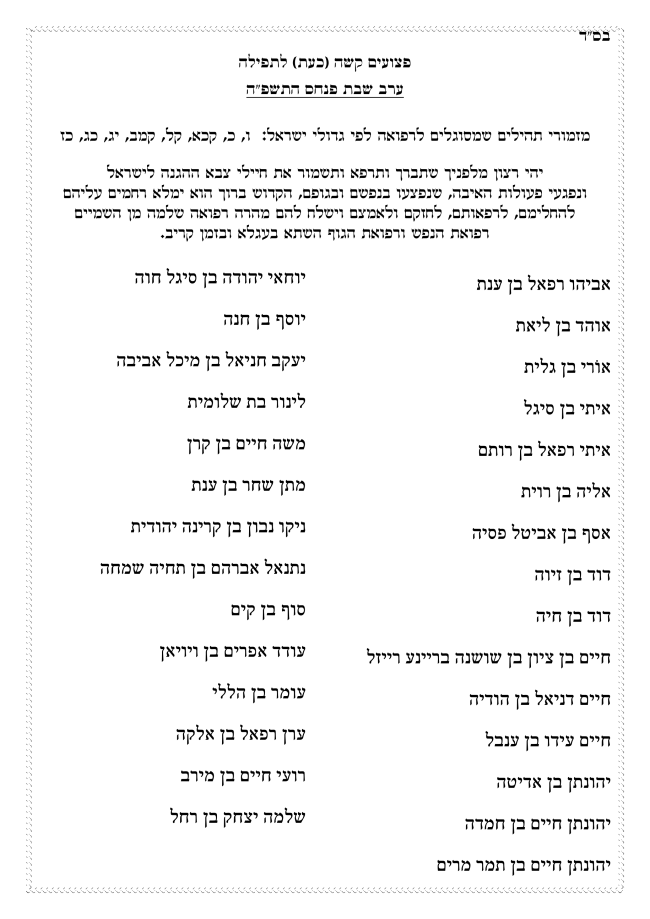
חללי ופצועי צה"ל במלחמה

c7a1745c-f681-460c-89a5-2ed9d869ab65 image

SERIOUSLY INJURED SOLDIERS AND CIVILIANS

(As of July 18, 2025)

With thanks to Rav Dovid Fine

••••••••••••••••••••••••••••••••••••••••


  • Who We Are
  • Click here to order the RCA Madrikh
  • RCA - Assistance in Contract Negotiations, Apply Here
  • The RCA Siddur Avodat Halev is available from Koren Publications at a discount by contacting shlomop@korenpub.com
  • Interest free loans of up to $5000 are available to RCA chaverim through the Rabbi Myron and Sarah Rakowitz Fund. Please contact Menachem Penner for more information.
  • Burial plots are available in the RCA section of Eretz haChaim Cemetery in Bet Shemesh. Contact Dovy Grunbaum, 1-866-437-2210, for details.
  • To sign up for the RCA Health Insurance Plan contact Jay Wildstein at the Grober-Imbey Insurance Agency, 516-872-9500 x3027
  • RCA Retirement Plan Resources Click Here. For information about the RCA Retirement Plan contact Steven Greenbaum, Altigro Pension Services, at 973-439-0200, ext. 224.