Insights From The Alliance | | |
Washington Is Moving—Are Community Colleges Ready?
If there is one message coming out of Washington right now, it’s this: things are moving quickly, and community colleges need to be paying attention. The recent ACCT policy update highlights a mix of risk and opportunity, but four areas stand out: the growing Pell Grant shortfall, the rollout of Workforce Pell, the proposed federal budget, and a new round of grant opportunities. None of this is abstract. These are the levers that will directly shape access, affordability, and workforce training in our communities over the next several years.
The Pell Grant situation is probably the most urgent. Increased FAFSA completion and expanded eligibility, both good things, have led to a projected funding gap that could require significant new investment from Congress as soon as FY27. The encouraging news is that there appears to be bipartisan support for protecting the program. The challenge is that a gap of this size doesn’t solve itself, and until Congress acts, uncertainty will remain. For rural colleges, where Pell is often the difference between a student enrolling or not, this is something we need to stay engaged on from an advocacy standpoint.
At the same time, Workforce Pell is starting to take shape in ways that could be a real opportunity. The proposed rules would allow Pell to support short-term programs, but with clear expectations around completion rates, job placement, and earnings outcomes. That means this isn’t just about launching new programs; it’s about designing programs that truly work. Colleges that can align with local workforce needs and demonstrate results will be in a strong position, particularly if they are coordinating across academic, workforce, and financial aid teams from the start.
Layer on top of that a federal budget proposal that includes both support for Pell and significant cuts or eliminations to programs like TRIO, Work-Study, and others, and it becomes clear that we’re entering a period of real transition. But there are also immediate opportunities, including new rounds of workforce-focused grants like the Strengthening Community Colleges Training Grants. My takeaway is simple: this is a moment to stay engaged and be proactive. Advocate where it matters, but also prepare internally so your institution is ready to move when these opportunities become real.
| | From the RCCA Board: Hope and Opportunity | | |
It seems that every week we read about another higher education institution closing, merging, cutting programs, laying off faculty and staff, experiencing declining enrollment, and/or slashing their budgets. We are experiencing a time of demographic cliffs, dwindling public support, and political headwinds. Whether higher education is experiencing a true reckoning or not will be left up to history.
During this time of concern and unrest, hope springs eternal. At Miles Community College (MCC), the institution that I have the honor of leading, we remain focused on our students and why they are here. In simplest terms, they enroll for two reasons: Hope and Opportunity. The Hope for a better life and the Opportunity to make that hope a reality!
At MCC, we wholeheartedly embrace our open access mission. Regardless of whether our student desires to transfer or go straight into the workforce, we honor their desire and focus on making it a reality. This work not only benefits our student but it also has positive ripples within their families, communities, our state, and our nation. We are the economic engine that allows our students and communities to thrive.
Five years ago, we set a very ambitious goal of doubling our annualized student headcount. We did this not to grow our infrastructure. We did this to grow our impact! We did this to fully live out our college mission. I am happy to share that five years later we have done it! During the 20/21 academic year, MCC’s annualized student headcount was 943. This year we are at 1,927.
All of this growth occurred without adding one single square foot of facilities. We embraced our open access mission and focused on the non-degree seeking students who are traditionally first-generation, scared of leaving home, and worried about the cost. We created a new program called Opportunity Realized which allows these students to experience a college course designed to prepare them for the workforce regardless of whether they want to go further or not. This Career Development & Interpersonal Skills class is at the core of this program. It allows them to do some career exploration while at the same time learning the soft skills that employers want. One of the most exciting developments from the Opportunity Realized Program is that the vast majority of these students choose to continue on and take a second and sometimes third course.
At MCC, we are meeting our students where they are and I am thrilled to say they are thriving because of it. We are helping them turn their Hope and Opportunity into a reality. At rural community colleges like ours, hope truly springs eternal.
| | |
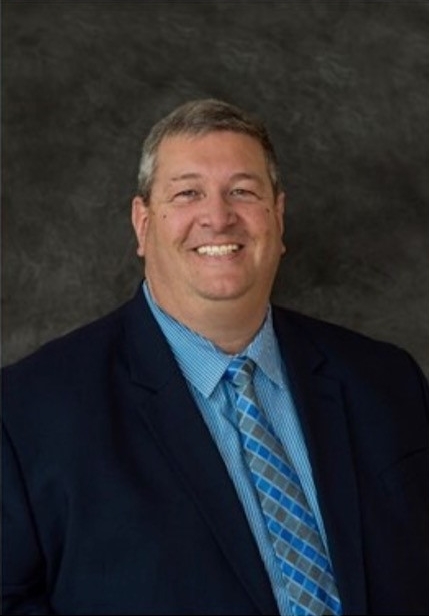
Dr. Ron Slinger
President
Miles Community College
| |
College Spotlight: Eastern Maine Community College
| |
At Eastern Maine Community College, workforce training is designed with one goal in mind, strengthening Maine’s workforce by building skills that matter right now.
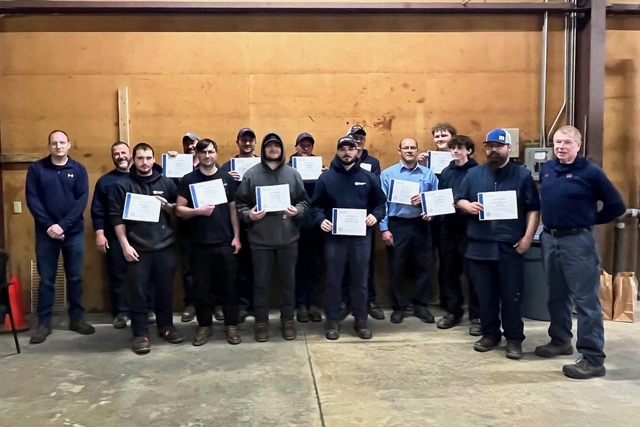
This spring, 20 students in EMCC’s 200-hour Oil Burner Technician training took a major step forward. Offered in partnership with Dead River Company and supported by the Harold Alfond Center for the Advancement of Maine’s Workforce, the program provided hands-on experience in a real-world training environment. These participants were already working in the field. This training allowed them to deepen their expertise, expand their certifications, and increase their value to their employers. Upon completion, graduates earned industry-recognized credentials that allow them to take on more advanced work immediately.
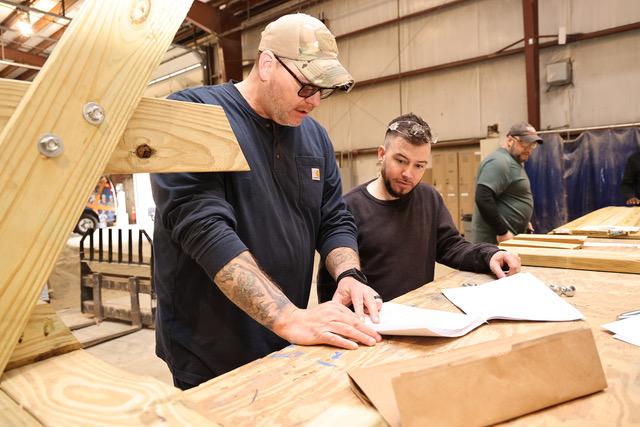
Programs like this are built around the needs of Maine employers. From day one, students are developing skills they can apply on the job right away, using the same equipment and standards they encounter in the field. Employers gain more highly trained workers, businesses can take on more work, and communities see improved service and reliability in essential industries.
For rural communities, where access to skilled workers is critical to economic stability, this kind of upskilling makes a meaningful difference. Workers are able to grow in their careers without leaving their communities, and employers are better equipped to meet demand. The result is stronger local economies and a more resilient workforce across the state.
Learn more about Easter Maine Community College at https://www.emcc.edu/.
| | College Spotlight: Community College of Rhode Island | | |
CCRI Lands $1M Lowe's Foundation Grant for Skilled Trades
The Community College of Rhode Island was awarded a $1 million Gable Grant from the Lowe's Foundation to expand its Electrical Apprenticeship and Ready to Build programs. The funds will support two new lab spaces and a credit-bearing pathway leading to a construction management certificate and degree. The Lowe's Foundation has now awarded $43 million in Gable Grants to 60 community and technical colleges across 28 states as part of a five-year, $50 million commitment to skilled trades training.
Read the full article.
| | |
RCCA Alliance Learning Series
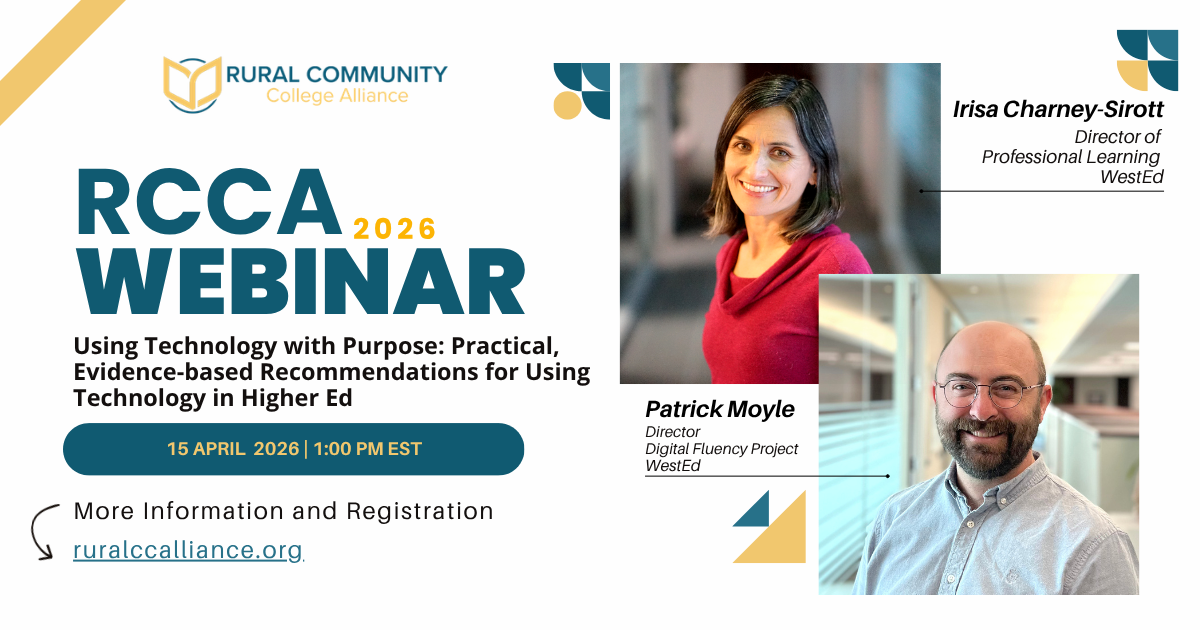
Using Technology with Purpose: Practical, Evidence-based Recommendations for Using Technology in Higher Ed
Join us on April 15 at 1:00 p.m. EST for an interactive session on using technology to strengthen student learning outcomes. Facilitators from WestEd will walk through a research-based practice guide and toolkit, explore how AI fits into the picture, and share concrete steps for implementation. Participants leave with toolkit materials and actionable classroom ideas.
| | |
Secretary McMahon Visits Community College on Nationwide Tour
U.S. Secretary of Education Linda McMahon stopped at Southeast Community College in Nebraska as part of her Returning Education to the States Tour, which is taking her to all 50 states to gather best practices from teachers, parents, and community leaders.
The visit also coincided with National Community College Month, with the Secretary observing firsthand how the college is preparing students for workforce success.
Read the full press release.
| | | Resources and Opportunities | |
Opportunity Alert: Work-Based Learning Capacity-Building Cohort
New America and ACCT are inviting community colleges to apply for a Work-Based Learning (WBL) Capacity-Building Cohort. Six selected colleges will each receive $20,000, technical assistance, peer learning opportunities, and access to subject matter experts to strengthen their institutional approach to work-based learning.
The application deadline is May 8, 2026, with project participation running from June 2026 through December 2027.
Learn more and apply.
| | | | | |
April is Community College Month, and that presents a great opportunity to get the word out about why community colleges matter, how your college is serving your community's needs today, and why public support for our colleges is more important than ever.
The 2026 #CCMonth theme is "The Smartest First Step, the Strongest Next Step."
Use ACCT's toolkit to advocate all of April!
| | |
Grant Opportunity: Food Recovery Network Community College Program
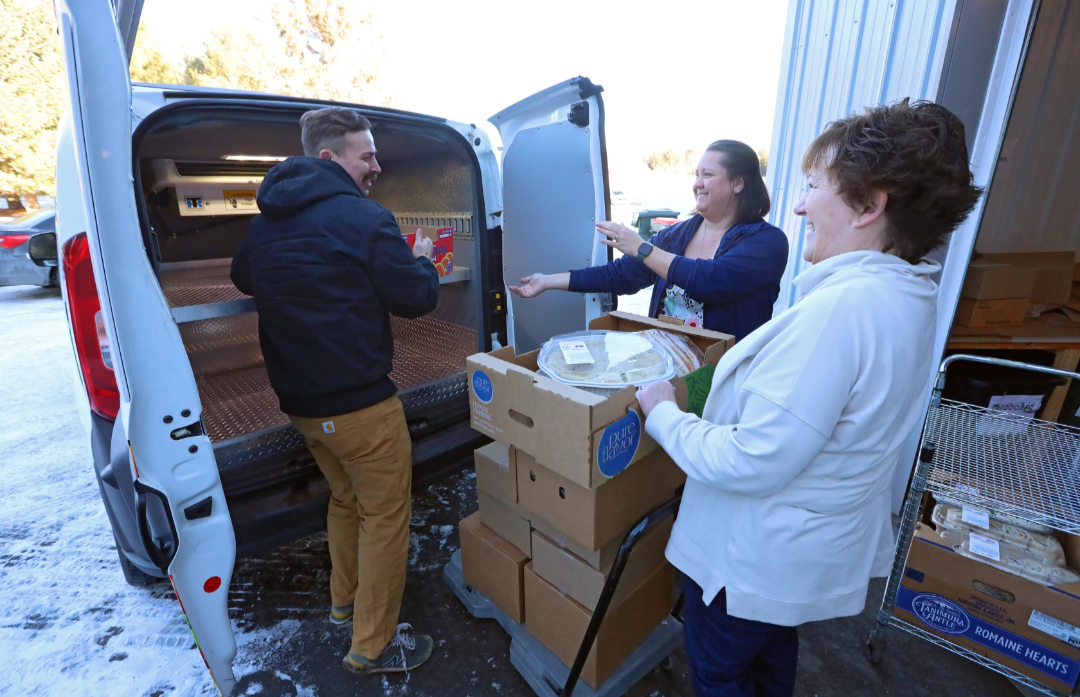
The Food Recovery Network (FRN) is accepting applications for its third year of Community College Food Recovery Grants. Five community colleges will be selected to receive one year of technical and financial assistance to build or strengthen food recovery programs on their campuses, with programs launching in Summer/Fall 2026. Previous grant recipients have collectively recovered more than 311,000 pounds of food, much of it redirected to students experiencing hunger.
The application deadline is May 15, 2026, with recipients notified by June 15.
Learn more and apply.
| | |
Important Dates from ACCT
-
April 28, 1 PM ET Webinar: Preparing for Workforce Pell - What Community College Leaders Need to Know Now
-
May 1, 1-2 PM ET LAW Live
-
May 20, 11:59 PM ET. Strengthening Community College Training Grant Closes
-
June 5, 1-2 PM ET LAW Live
-
July 10, 1-2 PM ET LAW Live
-
August 7, 1-2 PM ET LAW Live
-
September 4, 1-2 PM ET LAW Live
-
October 2, 1-2 PM ET LAW Live
-
October 21-24 ACCT Leadership Congress
-
November 6, 1-2 PM ET LAW Live
-
December 4, 1-2 PM ET LAW Live
| |
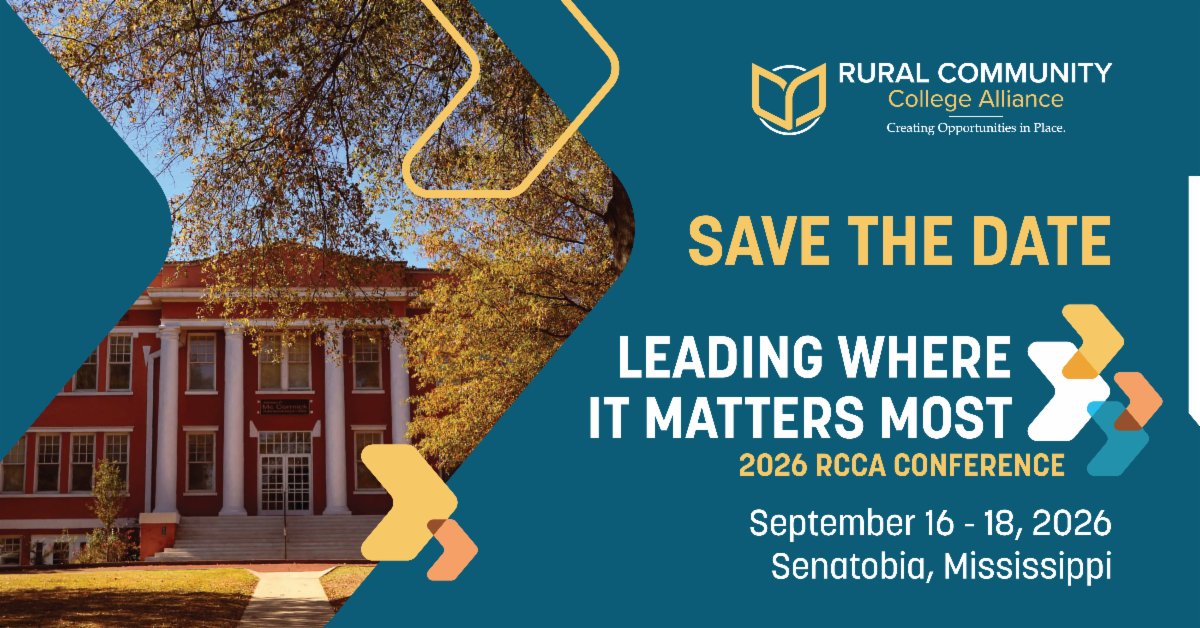
Meet your 2026 RCCA National Conference host!
Watch Northwest Mississippi Community College's welcome video and get excited for the 2026 RCCA National Conference.
| | Follow the RCCA Facebook Page | | | | |