August 2026

In the News

Will making ‘replication studies’ easier to find help science self-correct?


Nature

July 16, 2026

Dalmeet Singh Chawla


"The replication of experimental results is important for building credible science, but replication studies are often difficult to find. A team of researchers wants to change that. They have started putting replication studies on the post-publication peer-review platform PubPeer, together with links to the original studies.


There have been numerous attempts to replicate scientific experiments over the past decade or so, and many of these have not been able to reproduce the original results. But the inability to find these replication studies easily wastes research time and resources. If scientists aren't aware of a replication study, particularly one that was unsuccessful, they might cite the original research without knowing it has issues..."


AI in scientific publishing: Slower, worse, and more expensive?


Science

July 16, 2026

H. Holden Thorp


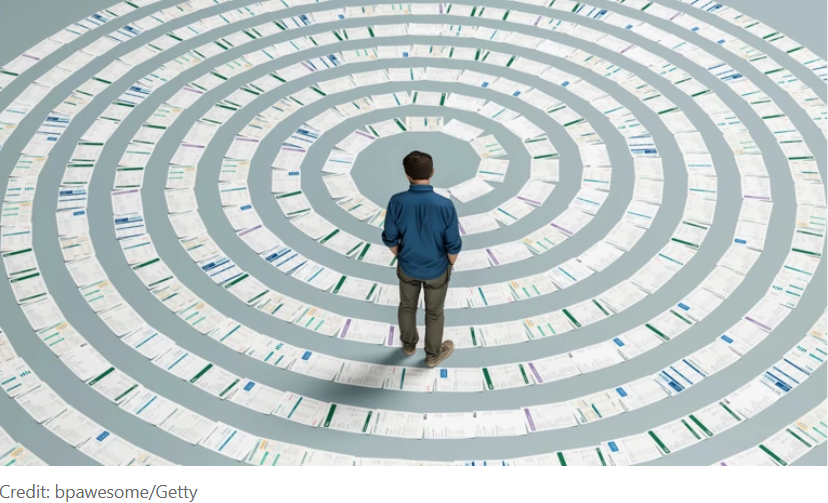
"There’s a saying in the management world, popularized by NASA administrator Daniel Goldin in the 1990s, that the goal of technological improvements is to make products faster, better, and cheaper. Although this strategy had some success in the aerospace industry, the zealots of artificial intelligence (AI) have been making the same argument regarding how it will transform work, claiming that so little human effort will be required that humanity will enter an era of radical abundance, free from disease, drudgery, and danger, among other benefits, leaving society with more time for creative pursuits. But history tells a different story. When machines began to increase productivity during the second industrial revolution, American engineer Frederick Winslow Taylor’s The Principles of Scientific Management encouraged corporations to use surveillance to get employees to work harder and longer, an approach that exhausted and discouraged workers and led to the transfer of knowledge and any decision-making from workers to management, while enriching the profits for only those at the top. Yet, it remains foundational to the American economic enterprise. Indeed, scientific publishing is starting to experience some Taylorism with the insertion of AI. Rigorous human checking of AI-generated research papers is creating bottlenecks as publishers strive to maintain the integrity of the scientific record. The challenge is requiring even more human effort, making the whole endeavor slower and more expensive.


Recently, the ability of large language models (LLMs) to predict protein structures and to accelerate the discovery of new materials has revolutionized both fields. New AI agents can now carry out many aspects of research design and analysis. But there is a dark side..."


U.S. Department Health and Human Services (HHS)
The Office of Research Integrity (ORI)
Research Misconduct Case Summaries
 

Compliance for the Online RCR Course through CITI by College

As of July 16, 2026, we have 92% compliance with the Online RCR Course through CITI across all colleges.


We greatly appreciate your willingness to perform the vast array of outstanding research and scholarly activity taking place at the University in an ethical and responsible manner.

College

% Compliance

Total Required

Agriculture, Food, and Environment

88%

1,326

Arts and Sciences

83%

1,362

Business and Economics

80%

169

Communication and Information

83%

178

Dentistry

95%

111

Design

55%

121

Education

73%

896

Engineering

87%

711

Fine Arts

89%

281

Health Sciences

89%

573

Law

95%

40

Medicine

93%

2,859

Nursing

86%

362

Pharmacy

91%

171

Public Health

92%

275

Social Work

92%

857

Graduate School

57%

181

Lewis Honors College

93%

14

Libraries

100%

51

Other Units

93%

1,806

OTHER RESEARCH RESOURCES

iThenticate (plagiarism-checking software)

iThenticate (plagiarism-checking software) is now available for RCR-compliant researchers and graduate students.


Click the button below to request your account today!

Electronic Research Notebook

Need a safe and secure place to store your research data? Need to collaborate with your colleagues easily and efficiently?


LabArchives isn't just for labs, and it's free to all UK researchers!   


Click the button below to learn more about Electronic Research Notebooks

 
RCR Team
Watch this short video to learn more about RCR and why it is important!
 
RCR Contacts:

Jenny Smith

(859) 257-7903


Emily Matuszak

(859) 562-3562


RCR@uky.edu