"Education is the great Engine for development." ― Nelson Mandela.
|
|
Our RELI Africa external website is LIVE!!! |
|
Remember to sign up via reliafrica.org and showcase the work you are doing as a member of the RELI network.
|
|
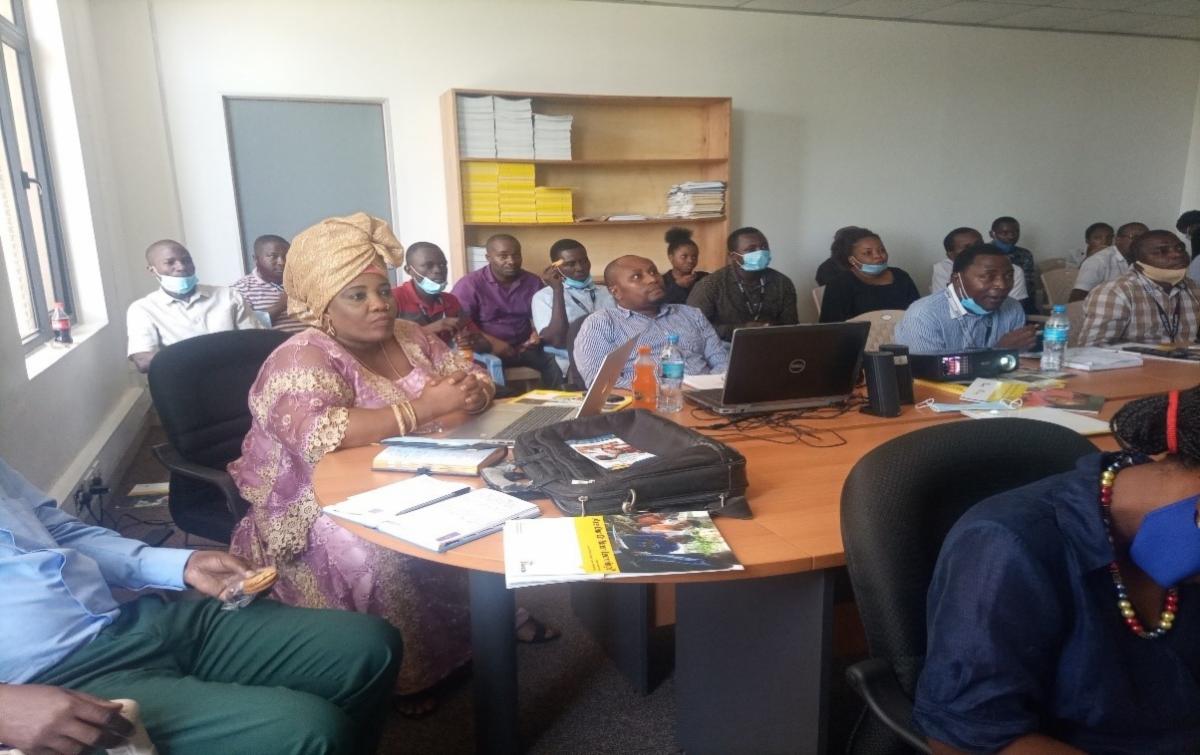
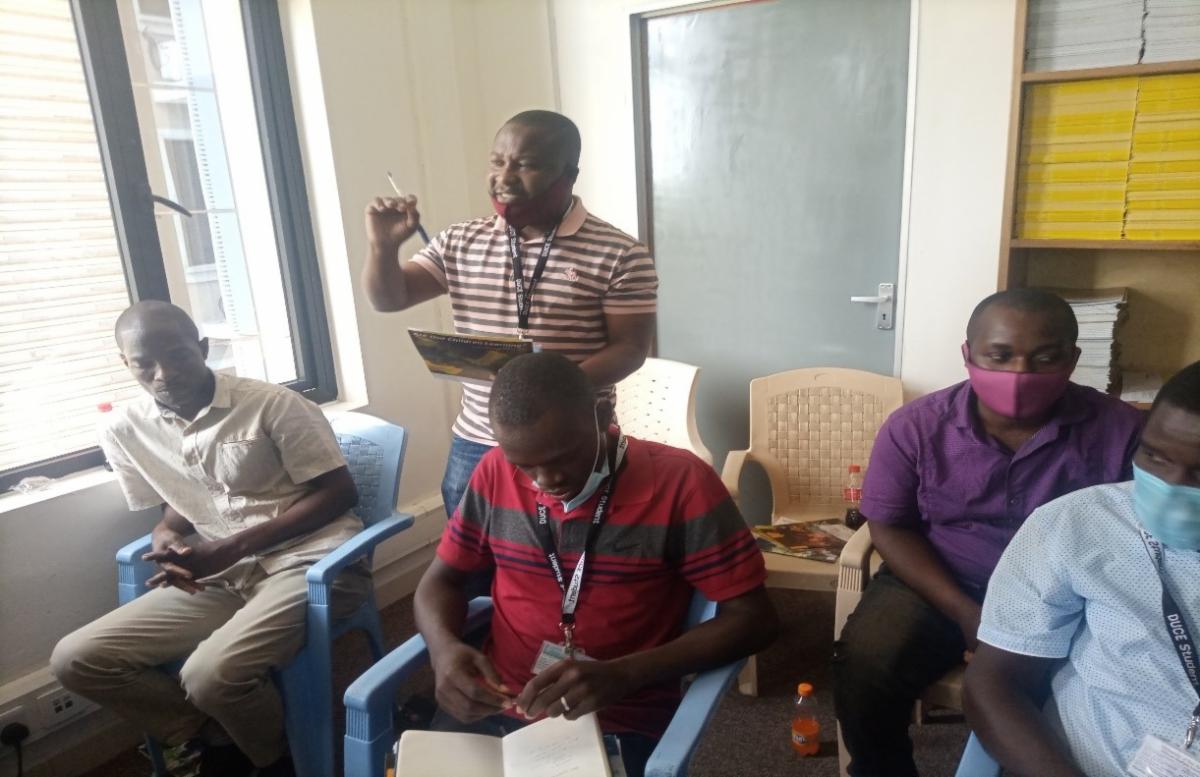
On March 2, Uwezo Tanzania in collaboration with Dar-es-salaam University College of Education (DUCE) conducted an education seminar to share experience on evidence-based policy analysis and influence to improve the performance of the education sector. Uwezo had the opportunity to share learning assessment data generated by citizen volunteers to measure literacy and numeracy competencies of children aged 6-16 years, as well as the experience on education interventions such as Jifunze/Teaching at The Right Level (TaRL) and community extended feedback.
Speaking during the seminar, one of the students stated that this was one of the best education seminars she had ever attended. Uwezo data are very insightful especially in analyzing the impact of education policy and teaching practice. We are all encouraged to allow students to use Uwezo data for their academic writings. Another student urged the government to adopt the Uwezo Jifunze Initiative and fund the scaling up of the intervention countrywide to ensure no child completes primary school without obtaining reading and numeracy skills. The government could emulate the Uwezo face-to-face approach of assessing actual ability of children in literacy and numeracy as opposed to relying on multiple choice exams where sometimes children apply try and error techniques to get the correct answer.
Dr. Joeli Kayombo, one of the lecturers who accompanied students to visit Uwezo Tanzania, said that he has been following up on Uwezo activities and has been using Uwezo assessment findings in his teaching at the college and encouraging his students to use Uwezo data on their academic writings. "I remember in one of my papers when I was pursuing my Ph.D., I used Uwezo Assessment findings". He commended Uwezo Tanzania as one of the trusted sources of useful data that is relevant to our academic work.
In responding to students’ questions, Uwezo Tanzania Executive Director, Zaida Mgalla confirmed that the students are free to use Uwezo data, and in case there's a need for more data or information, the student should contact Uwezo Tanzania for immediate support.
|
|
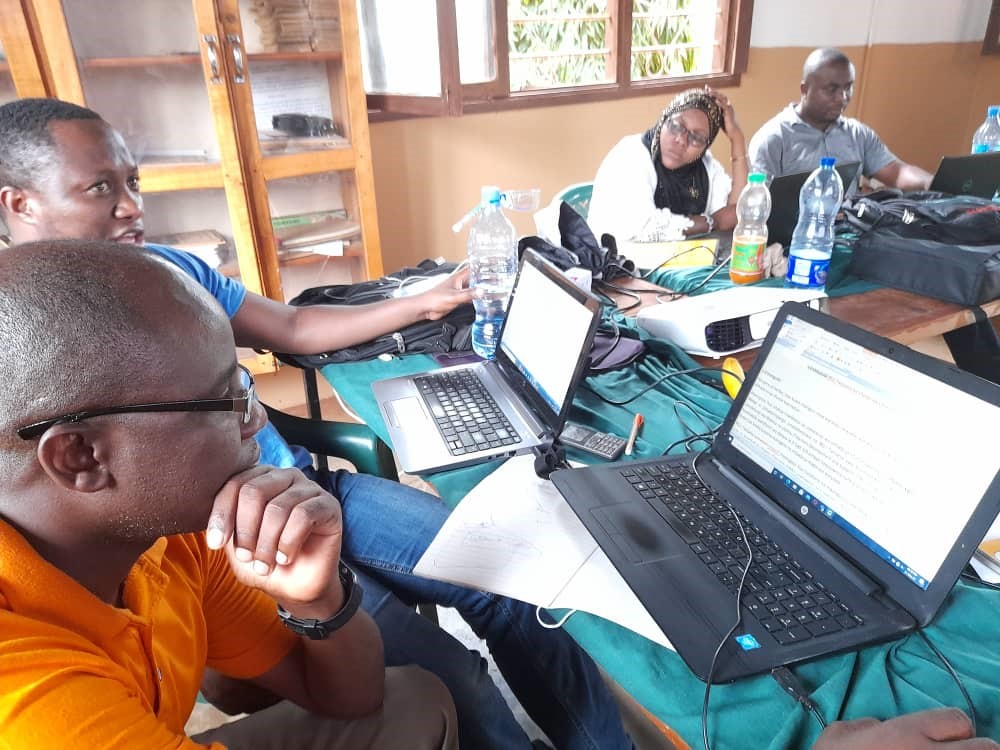
The Teacher Development and Support Cluster (TDS) task force met in Morogoro at SAWA offices (RELI Tanzania member organization) from March 30 to April 4 to review and amend the Teaching at the Right Level (TaRL) teacher’s reading and numeracy guidebooks. The objective of TDS is to target the core of the learning crisis and strengthen foundational skills to accelerate learning in Tanzania. TaRL is implemented by RELI Tanzania and functionally coordinated by Teacher Development and Support (TDS). TaRL has been extremely useful to children who failed to acquire basic literacy and numeracy skills. The TaRL approach works by dividing children (generally in grades 3 to 5) into groups based on learning needs rather than age or grade; dedicating time to basic skills rather than focusing on the curriculum; and regularly assessing student performance, rather than relying only on end-of-year examinations. Based on the experience of Uwezo Tanzania, who have implemented TaRL in 30 schools, TDS learned that the TaRL intervention results revealed that many children have improved their reading skills within 15-30 days. TaRL initiatives have improved children's school attendance and performance in standard IV national examinations contrary to teachers’ perceptions. For the purpose of improving, standardizing, and updating TaRL program adopted by TDS, four members (Shadidu, Benjamin, Mahmoud, and Safia) representing TDS met in Morogoro for a final review. The revised version will be uploaded online for wider use and where necessary will be printed to give access to teachers who have limited technology. TDS highly appreciates UWEZO Tanzania for introducing TaRL in RELI Tanzania and built TDS members' capacity to be TaRL experts. |
|
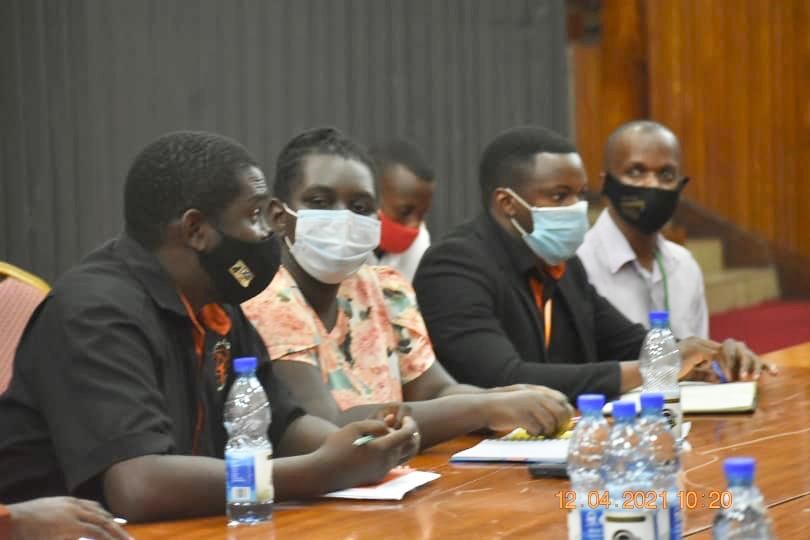
From Left; Patrick Rubangakene, CSBAG Budget Policy Specialist, Brenda Akite from STiR Education, Mitchel Ainebyoona, CSBAG Budget Policy Specialist, and Martin Sebalu from Uganda Society for Disabled Children (USDC) during the CSO meeting with the Parliamentary Committee on Education and Sports. |
|
On Monday, April 12, the Equity and Inclusion cluster, led by the Civil Society Budget Advocacy Group (CSBAG), presented their position paper to the Parliamentary Committee on Education. Among the issues highlighted were the inadequate funding for school inspection and monitoring, school feeding programs as well as staffing gaps in public universities and institutions of higher learning. The Civil Society Organisations recommended that government adequately funds the inspection function for schools and institutions. "This amount should be increased to a minimum of Ugx. 152,292 (One hundred fifty-two thousand two hundred ninety-two shillings) as proposed by National Planning," Said Akitte from Uganda Society of Disabled Children (USDC). In regards to understaffing, it was recommended that government provides an adequate wage bill for the recruitment of academic staff and non-academic staff in public universities. In response to their position paper, the committee, chaired by Pallisa county MP Jacob Opolot, commended CSBAG for the presentation saying it will inform their discussion with the Ministry of Education and Sports.
Initiative for Social and Economic Rights (ISER), STIR (Education), Uganda Society of Disabled Children (USDC), Uganda Debt Network-UDN, and Uwezo Uganda are some of the CSOs that participated in the development of the position paper.
|
|
Equity and Inclusion (E & I): On April 14, the group held a two-hour learning session with Andiwo Obondoh (MEL mentor) mainly to: deliberate on their challenges and successes with regard to monitoring, evaluation, and learning (MEL) of their ongoing policy work; and foster capacity-strengthening of members through their interaction, and leveraging of Andiwo’s expertise and availability as a resource.
Consequently, the group achieved enhanced clarity and understanding of the group’s combined capabilities in regard to policy work. The many ways in which members’ efforts cohere and touch on a range of evidence-based methodologies for policy tracking, influencing, and implementation. It explored the challenges that members confront in moving their work from research/programs to policy and the possible solutions to these. The group will soon plan for another equity and inclusion webinar that will focus on a step-by-step approach to successful policy influence with evidence.
Synthesis of Engagement and Empowerment (PEE) approaches among RELI members: Through their consultant, the group has been interviewing members to generate data on their PEE work with a view to find out the approaches they used during the Covid-19 closure. Eleven Organizations had been scheduled. Going forward, data will be collated and analyzed to determine approaches they used during the Covid-19 closure, the emerging opportunities, and appropriate recommendations for replication.
On the other hand, equity and inclusion have also been conducting a research study on PEE in collaboration with the Kenya Institute of Curriculum Development (KICD) and UNICEF. They managed to complete the first draft of the report that members are currently reviewing. A launch has been scheduled for the month of May.
Tracking of bills in Parliament in partnership with Mzalendo: Having completed the study, Mzalendo Trust shared the final reports. Thematic leads spent time reviewing the reports to ensure the deliverables were all met. They are also exploring how they can take the lessons learned beyond RELI.
At the Regional level, the group has made progress in preparation for an 'Exploratory study to deepen the understanding of the inclusive education policies and their implementation for the most marginalized.' A draft protocol has been achieved and research tools developed. As required by AMREF, these have been submitted for approval by the Ethics & Scientific Review Committee (ESRC). E&I group will await the approval of the documents by ESCR before research can commence.
|
|
Values and Lifeskills (VaLi): The group spent the last 2 weeks supporting ALiVE to develop its communication and advocacy strategy. Facilitated by Well Made Strategy (WMS), the process involved three online meetings of two-and-a-half hours each and take-away tasks whose outcome was submitted in plenary. As a result, members were able to interrogate the target audience, design strategies to reach the identified audience, and craft messages for each. Going forward, ALiVE will pick up the strategy and actualize its implementation.
|
|
ALiVE: Besides the development of communication and advocacy strategy reported under VaLi above, the program hosted induction of its national technical team to the ALiVE project on April 7 including teams from Uganda and Tanzania. The national technical team comprises people equipped with skills in the development of assessment tests and psychometricians. Their role is to develop assessment tools for values and life skills. From this induction session, the teams agreed to host a workshop on 'the development of the assessment tool' from April 19 - 22. Working teams were formed aligning with the four competencies; self-awareness, problem-solving, collaboration, and respect. After the meeting, the project shared the draft reports for members to read ahead of the workshop.
|
|
The learner-centered teaching thematic group (LCT) held its monthly meeting on April 13. The forum sought to catch up with the progress of ongoing activities. Following the erection of murals, members are preparing for orientation of school communities into the concept of community learning and tracking the usage of the same. Logistics of erection of more murals in Laikipia, Migori, and Kajiado Counties are being put in place.
|
|
Teacher professional development: An advert to guide the identification of a consultant to develop a teacher coaching and mentorship manual has been circulated. Once applications are received, a consultant will be identified through shortlisting and interviews. The task is expected to kick off in the 3rd week of April.
On behalf of the team, the group leaders held a meeting with KICD Deputy Director where the collaboration was discussed. The forum re-affirmed commitment to the partnership and updated the Deputy Director on the progress of the coaching community of learning. KICD is keen to complete a final draft of the coaching resources by July 2021, so that the pilot can be done during the start of the new academic year.
The meeting also discussed the Teacher Training Community of Learning which had been established through a shared KICD-LCT workshop in February 2020. The officer requested Dignitas, under the umbrella of RELI, to do 3 months of training for the KICD team. The team agreed and is gearing up to achieve this in the period of May to July 2021. Anticipated to be largely virtual, the forum will heavily engage RELI members. The first date of training was proposed for May 12. The next steps involve firming up planning and mobilizing participation to actualize these two tasks.
|
|
Cross- cutting Activity: In preparation for the new RELI year, all thematic groups have been requested to review their work plans to determine the progress of activities. They have also been tasked to identify the objectives, learning questions, activities, outputs, and expected outcomes of the year 2021- 2022 work plan. A draft narrative and budget are expected by April 30.
|
|
The country leadership team and thematic leads held a planning meeting on April 14 to deliberate on the 2021 country convening. Invites have been circulated for June 22, 24, 29, and July 1 under the proposed convening theme, ‘RELI in & post Covid-19 adaptations in changing landscape’, three sub-themes were identified as follows:
- June 22: Changing targets in equity and inclusion- to be hosted by E&I.
- June 24: Technology and teaching for learning recovery- to be hosted by LCT.
- June 29: Re-focusing competencies for resilience building- to be hosted by VaLi.
- July 1: The session's intent is to look inwards for an in-depth discussion on the future of RELI. Hosted by country leads, the session will focus on key themes such as strategic collaborations, advocacy, and fundraising.
From the draft work plan, the meeting sharpened the structure of the program and assigned leadership of every day’s session. Going forward, every pair assigned to lead daily sessions will hold meetings to fine-tune their program of the day and submit their final plan by April 30.
It was agreed that members will participate in the upcoming review of the year 2018 - 2022 National Education Sector Strategic plan (NESSP) which will take place at the end of June. The country leadership will determine strategies for RELI’s participation hence influence the policy.
|
|
What we're reading this week;
|
|
Join the conversation on Twitter by following @ReliAfrica and using the hashtags #RELIAfrica #RELILearning to keep the conversation going. A social media toolkit is available here.
Are you a member of the RELI online platform? Click here for more details.
|
|
|
|
|
|
|