“A vision on its own is not enough. Hard work and dedication is required to make the vision a reality.” – Strive Masiyiwa |
|
Our RELI Africa external website is LIVE!!! |
|
Remember to sign up via reliafrica.org and showcase the work you are doing as a member or the RELI network.
|
|
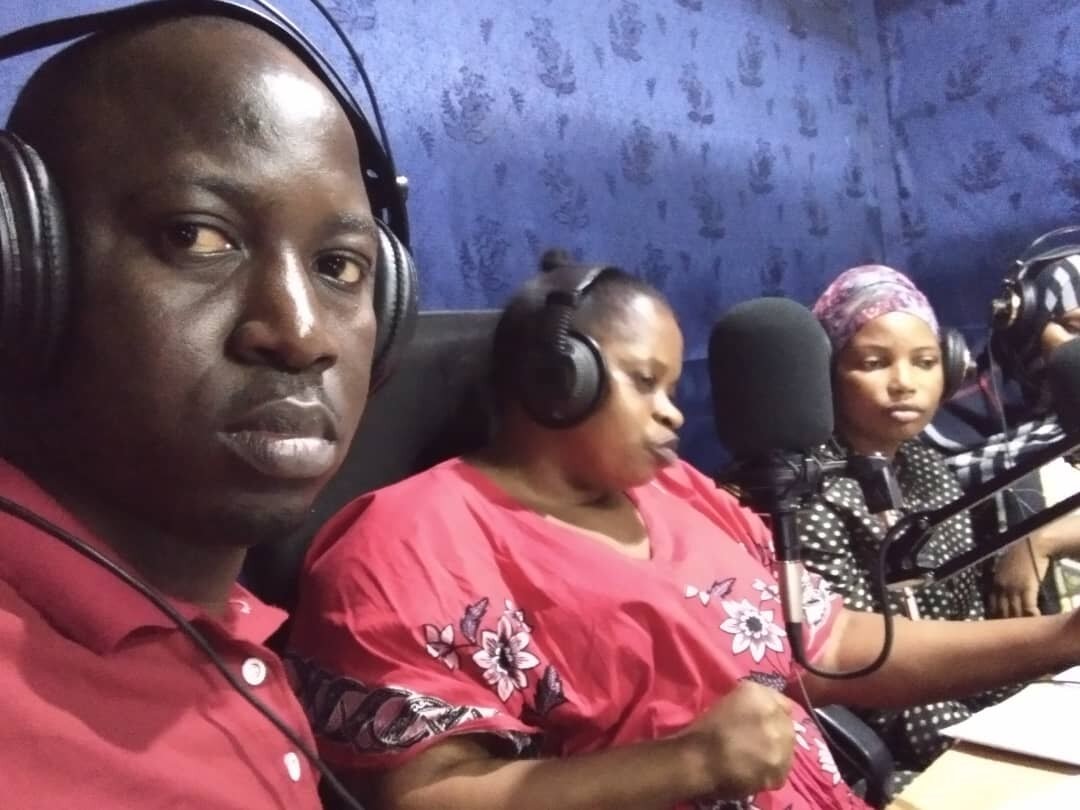
MTWANGONET in-studio conducting one of the radio programs |
|
Mtwara Non-Governmental Organization Network (MTWANGONET) conducted a Public Expenditure Tracking Survey (PETS) on School infrastructures in 8 wards of Mtwara district council in July 2020 and a feedback meeting to the council executives at the end of August 2020. During the feedback meetings, many of the gaps identified were addressed and highlighted in a bid to reduce challenges facing children while learning. The most difficult challenge to address was community involvement in the management of building projects. The community radio awareness program was the cheapest approach to reach the communities and advocate for their responsibility to the initiated building projects in their schools. MTWANGONET conducted five community radio sessions to advocate the importance of the community in contributing resources and efforts towards the school infrastructures so as to ensure a proper and conducive learning environment for the children. MTWANGONET used the recent information gathered from the site visit conducted to verify the promises made by the council during the feedback meeting to provoke the discussions in the live radio sessions. The parents, guardians, village leaders, and local politician's challenges to delay the completion of the school infrastructures i.e special toilets for children with disabilities, classrooms, and other policy requirements in building projects were addressed. From this report, many responses were made during the program. The radio programs were conducted in the last week of January 2021 and the first week of February 2021, which intended to reach more than 16,000 community radio listeners of Jamii FM in Mtwara region. The live call and short message contributions, questions, and answers during the radio programs revealed that effective advocacy was made. For example, since the radio program started there are now 2 teachers' houses, three classrooms, and several toilets funded by local government authorities and development partners. All buildings are now completed and some are in use; for example, Minyembe Primary teachers’ house and Nakada primary school toilets. |
|
In March 2020, when the COVID-19 pandemic hit, causing school closure and leaving students with no choice but to study from home, Shule Direct explored ways of supporting continuity of learning by providing access to learning material and content online. Shule Direct reached out to Vodacom Tanzania and proposed to have a zero rating on their internet platform. After a long discussion, Vodacom agreed to allow accessibility of Shule Direct sites without internet. So far, Shule Direct users are able to access the platforms without the internet as long as they are using Vodacom Network. Shule Direct is grateful that its users especially students and teachers can access the platforms. |
|
Why Accountability Thematic Group in Tanzania? |
|
RELI Tanzania has four thematic groups namely Equity and Inclusion, Values and Life Skills, Teacher Development and Support, and Accountability thematic group which only exists in Tanzania.
Why did RELI Tanzania think it was extremely important to have such a cluster?
RELI Africa being a member of more than 70 eminent organizations working to influence educational policies, practices, and norms in East Africa, it is very important to set a yardstick in which all people involved in education will be able to hold each other and one another accountable for every action, small or big, that affects the education of our children and their learning process.
Accountability in education is the answerability to one’s actions in the educational system. It is the state of being accountable to the stakeholders in education and accountable for the resources used in education.
Accountability Thematic Group (AcT TG) in RELI Tanzania, which is formed by five organizations, is sorely dedicated to ensuring that it strategically engages with policymakers and important stakeholders in the efforts of influencing policy change to reflect the actual needs of children as far as education is involved.
AcT TG, therefore, completes the full function engine that takes agendas from other thematic groups to the policymakers in an aggressive but more strategic way for further actions.
AcT TG works to ensure that duty bearers are answerable to the right holders, and likewise, right holders, justly, claim their rights in legitimate ways while working on protecting the rights of others, as part of helping them regain confidence in their ability to equally and fully participate in the decision-making process.
Act TG members have been engaged in education Social Accountability Monitoring (SAM) exercise within their respective areas with the aim to promote active citizenship in narrating education policies and practices. Through SAM exercises conducted by AcT TG, using the evidence documented, members will use it as the roadmap for further strategic engagement in policy influencing.
AcT TG believes that it is the right time for RELI Members outside Tanzania to learn from this thematic group which brings together the community and CSOs, hence widens the field of evidence policy influencing.
|
|
On January 29, the Uganda Leadership team held its first meeting of the year, chaired by Dr. Mary Goretti Mary Nakabugo, RELI Uganda Country co-lead. Updates from the Hub host (Luigi Giussani Institute of Higher Education) and thematic clusters were shared.
Modern Karema, co-lead of the Teacher Development and Support cluster reported on the Continuous Professional Development (CPD) provision, a key component of the National Teacher Policy (2019) that requires all Civil Society Organisations (CSO) to be licensed by Uganda National Institute of Teacher Education (UNITE) so as to legally provide CPDs to teachers. A step to ensure that all RELI member organizations are registered will be taken into account including an orientation training on what these CPDs ought to entail for the benefit of the teacher. The Lifeskills cluster co-lead, Emmy Zoomlamai, shared progress on the cluster’s initiative to implement a gap analysis study focused on teacher preparedness in implementation of the new lower secondary school curriculum whereas George Katumba of Equity and Inclusion updated members on the progress made at the regional level on the Inclusive Education Mapping exercise that will see the Uganda team collaborate with Gulu University.
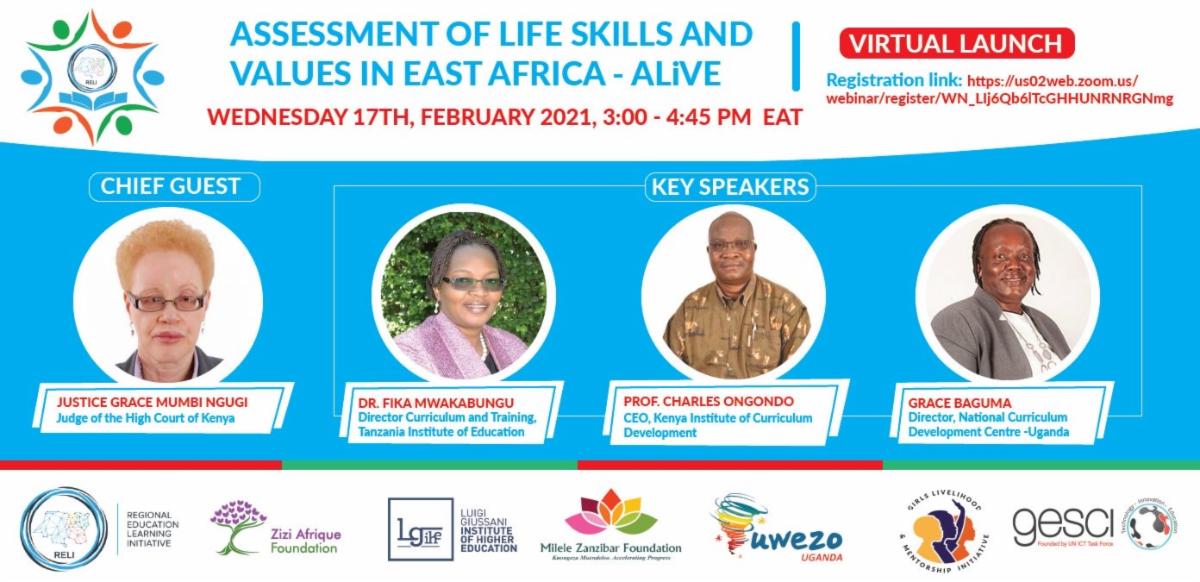
Mauro Giacomazzi, the ALiVE Country Coordinator reminded members to register for the ALiVE launch set for February 17, 2021, aimed at spreading awareness on the assessment of life skills in East Africa. He also reported on the process of contextualization and report analysis among others.
Lastly, all cluster leaders shared their enthusiasm in participating in the upcoming CIES 2021 conference dubbed Social Responsibility Within Changing Contexts due on April 5, to May 2, 2021. The majority of the panel presentations and abstracts submitted were accepted.
|
|
On Friday, February 5, the Lifeskills cluster convened virtually to review some of the activities highlighted in their annual work plan. Emmy Zoomlamai, the cluster co-lead focused the meeting mainly on the Teachers’ Preparedness to Implement the Competency-Based Lower Secondary Curriculum, a research design plan that the cluster seeks to embark upon in the upcoming two months. Dr. Patrick Ojok author of the research design plan and RELI Uganda Country Learning Facilitator updated members on the research approach and equally sought their input. The study will be implemented in 4 districts selected from each of the regions of Uganda, giving consideration to rural and urban locations. Although multiple factors affect curriculum implementation, this study will only focus on the factors related to schools and teachers and will employ a mixed-methods research approach comprising quantitative and qualitative methods.
|
|
RELI’S Contribution to the Basic Education Working Group (MoES)
On Tuesday, February 2, some RELI members had the opportunity to participate in the 2nd quarter Basic Education Working Group meeting of the Ministry of Education and Sports. Notably, the Group shared highlights on its strategies for recovery of learning losses for basic education. These include: partnering with different education stakeholders including political leadership to conduct "go back to school" campaigns and community mobilization for learners to return to school when education institutions reopen; retooling headteachers, teachers, learners on psychosocial support to reduce stigma and stress among others. Some participants expressed concern about the availability of teachers on the ground following the pandemic that triggered a shift in professions (mainly the teaching profession) and the closure of some schools.
Uwezo Uganda lead and RELI Uganda Country co-lead, Dr. Goretti Mary Nakabugo, shared findings on the International Common Assessment of Numeracy (ICAN) tool to Hearing Impaired (HI) learners in a refugee context. The study, piloted in Yumbe (refugee context) and Mukono (non-refugee context) districts reveals that learners with hearing difficulty were more affected in foundational learning than their counterparts without hearing defect within refugee and non-refugee settlement context. Members were called upon to make use of the ICAN tool that is open source and readily available in English and equally suitable for use at household and school setting levels including children with special needs.
|
|
Mark your calendars! Assessment of Lifeskills and Values in East Africa project are holding their virtual launch on Wednesday, February 17, 2021, from 3:00 - 4:45 pm. Register for the event today!
|
|
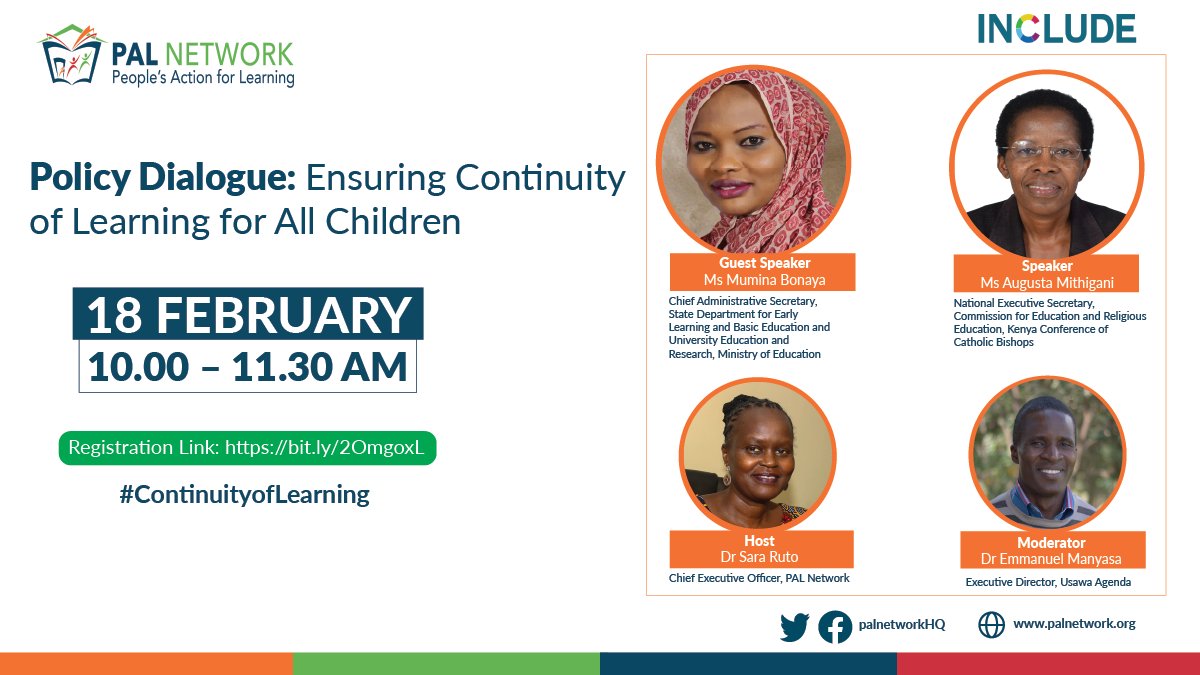
The PAL Network Policy Dialogue webinar series is back!
Join in this Thursday, February 18, from 10.00 to 11.30 am as they highlight the plight of girls and boys adversely affected by socio-cultural factors.
|
|
What we're reading this week;
|
|
Join the conversation on Twitter by following @ReliAfrica and using the hashtags #RELIAfrica #RELILearning to keep the conversation going. A social media toolkit is available here.
Are you a member of the RELI online platform? Click here for more details.
|
|
|
|
|
|
|