“Everyone holds his fortune in his own hands, like a sculptor the raw material he will fashion into a figure. . . . The skill to mold the material into what we want must be learned and attentively cultivated.” —Johann Wolfgang von Goethe |
|
Our RELI Africa external website is LIVE!!! |
|
Remember to sign up via reliafrica.org and showcase the work you are doing as a member of the RELI network.
|
|
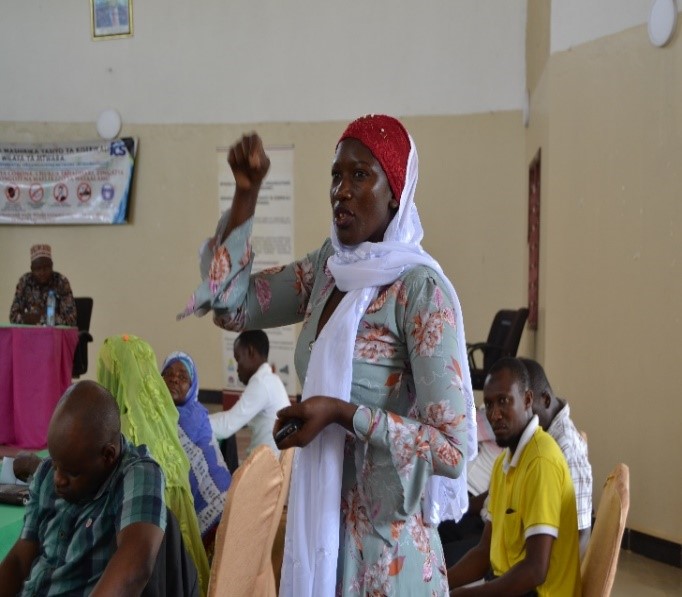
Left; one of the Public Expenditure Tracking Survey (PETS) committee member from Naumbu ward voicing shortage of girls’ dormitories in secondary schools.
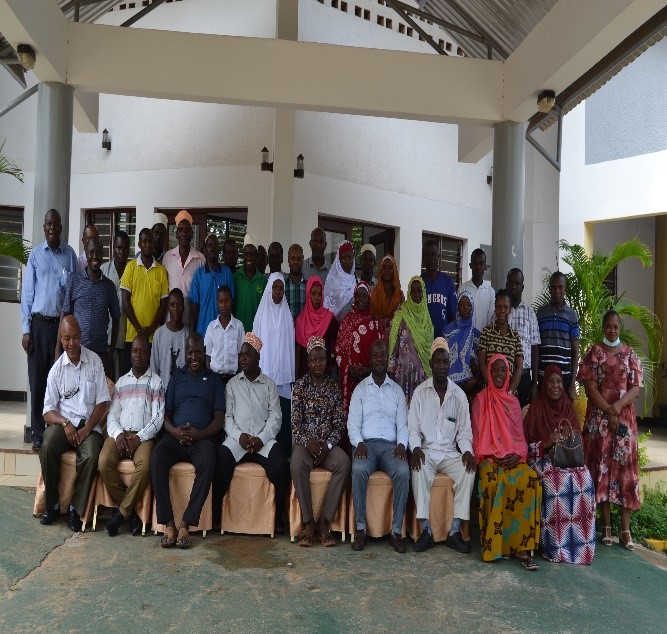
Right; participants who attended the stakeholders debate meeting
|
|
On February 13, MTWANGONET through its Public Expenditure Tracking System (PETS) project funded by Foundation for Civil Society Tanzania conducted an education stakeholders’ debate to address policy gaps identified through PETS in Mtwara. PETS feedback identified challenges facing the education sector in Mtwara and highlighted that some of the challenges can be resolved within the district by involving different stakeholders to deliberate on possible solutions. Notable challenges included; low level of awareness on the importance of education among the communities, a shortage of classrooms, laboratories, dormitories, a lack of inclusive learning facilities, a lack of professional teachers for children with special needs, and a lack of a daily day meal for secondary school students. The session attracted the participation of the village chairpersons, school board members, ward PETS committee members, ward education officers, district education officers, teachers, head of schools, students, parents, guardians, and councilors. The discussions on the challenges related to school infrastructure led to the solution that communities need to be involved and the government will join efforts to build classrooms. The district government appointed one school to be an inclusive learning center as part of efforts to address access to education for children with disabilities. Other stakeholders agreed and committed to continue creating community awareness and mobilization to initiate the building of school infrastructures with the support of the government by allocating resources to accomplish those projects. The district government also reiterated that they will conduct a survey to identify children with special needs in and out of school. The stakeholders agreed that all the issues raised in this workshop should be included in the council strategy for developing the education sector. |
|
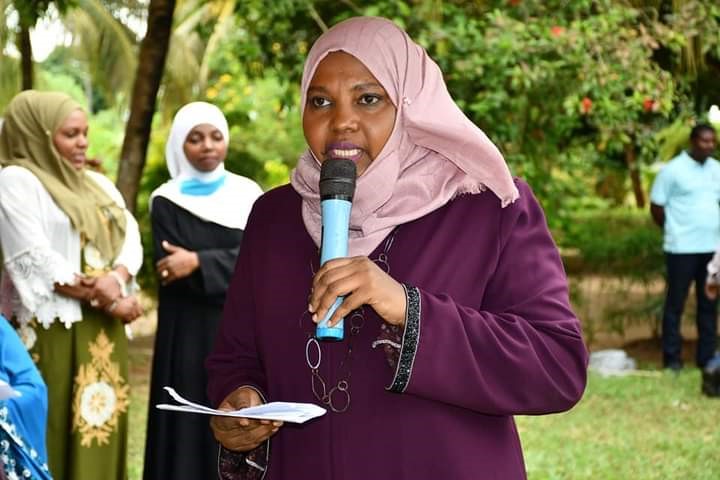
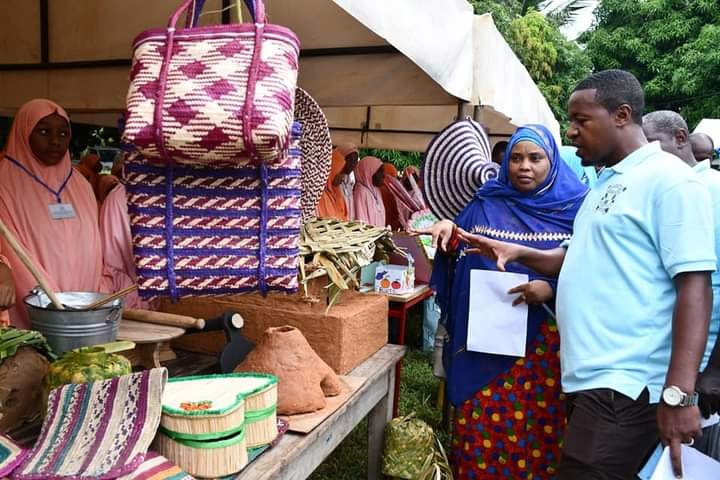
Left; RELI TZ country lead Dr. Maryam Ismail speaks about the project.
Right; Mr. Shamir Kombo from Zanzibar Muslim Collage explaining to the Guest of Honour Mrs. Asya Iddi the process involved in the improvisation of teaching and learning materials.
|
|
On February 11, RELI Tanzania partners; Milele Zanzibar Foundation (MZF), SAZANI Associates, and State University of Zanzibar (SUZA) joined Zanzibar Muslim Academy famously known as CCK in their 3rd exhibition of improvisation and effective utilization of teaching and learning materials at Mazizini grounds. The event featured RELI Country lead Dr. Maryam Jaffar Ismail, student teachers, teachers, parents, and other key education stakeholders including Zanzibar Teachers Union (ZATU). It was officiated by the Acting Director of pre-primary and primary education Mrs. Asya Iddi who urged the student teachers to design teaching tools, but also make sure that they use them effectively in class. The theme of the exhibition was "mwalimu tengeneza zana kujenga dhana kwa mwanafunzi", which literally means “(teacher) design teaching tools to build concepts for the student". The prime goal is to motivate student teachers to improvise teaching and learning materials using low-cost or no-cost materials.
|
|
The RELI Kenya team held a 3-hour country meeting on February 25 which was attended by 43 members. In attendance were also representatives from WPF, Kenya Institute of Curriculum Development (KICD), Research Triangle Institute (RTI), and a school leader from Laikipia North.
The meeting sought to find out what efforts have been made or are being made by institutions to normalize after the prolonged school closure. KICD, Educate!, and Population Council shared presentations with pointers on some of the efforts that have been made so far towards this cause. The school leader from Laikipia North explained the reality and struggles the schools are going through to achieve sustainable learning during the pandemic.
Thematic groups presented the progress made during the first quarter. Since January, the Equity and Inclusion group has been partnering with Mzalendo to track policy with the aim of assessing Kenyan Parliament’s 10-Year Legacy on the actualization of the Right to Education. Progress reports on proceedings and bills on education are shared on a monthly basis.
To influence policy, Population Council, EACH Rights, and Strathmore University are collaborating with the MOE to develop the Guidance & Counselling policy.
KICD is partnering with RELI member Organizations (Kakenya's dream; Basic Needs; Lwala; APHRC, and Zizi) and UNICEF on parental engagement through a research study. Data has been analyzed and report writing is underway. The National launch of the report is expected in March 2021.
|
|
The Values and Lifeskills (VaLi) thematic group held its first monthly webinar on February 25. The purpose of this forum was to share findings of the synthesis report of ‘values and lifeskills in East Africa’. The final report will be shared by March 9, 2021.
|
|
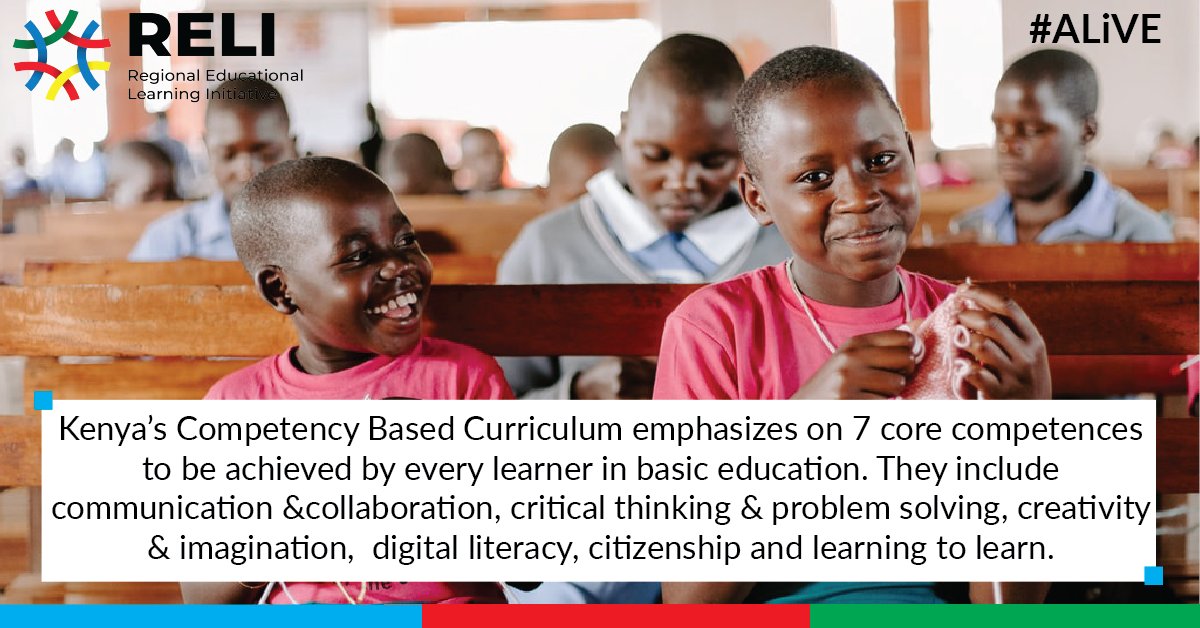
Assessment of Life Skills and Values in East Africa (ALiVE) was officially launched virtually on February 17 in an event attended by 454 guests from 34 countries. ALiVE responds to the growing recognition of the values and lifeskills transference as an educational outcome against inadequate system attention to these competencies. The project is going to run for 3 years in Kenya, Tanzania, and Uganda. In the three years, ALiVE will work to: develop context-relevant, open-source tools for assessing life skills in East Africa; undertake a household assessment targeting adolescents aged 13 to 17 years, both in and out of school; use the evidence to amplify the worth of these competencies among stakeholders; sustain a regional community of practice on replicable and sustainable life skill transference methods; enhance peer learning and feedback among over 40 organizations working on improving learning outcomes in East Africa. The outcome of the ALiVE contextualization study that was done in 5 counties was shared in a learn shop on March 3, 2021. In addition, VaLi has circulated an invitation to RELI members to learn through more active participation in the ongoing ALiVE activities. |
|
The Learner Centred Teaching (LCT) thematic group updates:
- Members of LCT from PAL Network made a presentation at KICD on what should be considered in measuring the impact of remote learning.
- On February 11, the team presented a TARL group paper at the ‘Africa Knows’ conference. This conference is organized with many partners from Africa and Europe and addresses the following key issues: There are great changes in the African knowledge landscape: is Africa preparing itself for leapfrogging to innovations?
- LCT is partnering with Keep Kenya Learning (KKL) to enhance learning at home. Dignitas, GRIC, and Lwala are participating as implementing partners. Interactive community murals from which children can learn literacy and numeracy have been designed. Six community partners/organizations will be tracking the usage of the murals. The outcome of a research study with KKL will be shared in April including thematic learning papers and podcasts.
- LCT has developed home learning resources for lower and mid primary school learners. They include literacy and numeracy activities as well as general learning areas for supporting parents and caregivers to increase learning at home. They will soon be uploaded to the website.
|
|
The leadership team is working on formally registering RELI as a legal entity. On the other hand, the country leadership term for Deborah Kimathi has expired. Through a google form, members were requested to nominate another potential member to take up this role. The RELI team appreciates Deborah for her exemplary leadership throughout her tenure.
|
|
On February 19, the Values and Lifeskills cluster held its second meeting of the month. Discussions continued on the research design plan of the Lower Secondary Curriculum aimed to ascertain teacher preparedness with regard to implementation. The research aims at generating evidence on the status of teacher’s preparedness to implement the new curriculum for the lower cycle of secondary school education. This study shall be used by RELI members to address the gaps in their project schools and as a tool for advocating the government for more attention and funding on critical issues that might jeopardize the success of the reform.
|
|
The Equity and Inclusion Cluster held its first meeting of the month on February 19 led by Martin Sebalu of Uganda Society of Disabled Children (USDC). The conversation revolved around the regional cluster initiative on Policy Mapping on Equity and Inclusive education in East Africa. Attention was drawn to the interview guidelines with Policymakers - a key step of action for the coming days. Members reflected upon activities of their annual work plan such as the training on Accelerated Education Programme and Budget Analysis on Inclusive education among others.
|
|
What we're reading this week;
-
Great expectations of the ALiVE Learning Community by John Mugo, Mauro Giacomazzi, Devotha Festo, and Samuel Otieno
-
Justice Mumbi Ngugi’s Speech at the Launch of the Assessment of Lifeskills and Values in East Africa Project posted by Njuhi Chege
-
School leaders uncovered by John Mary Vianney Mitana (Ph.D.), Jean Mary Wendo, Jude Edward Matovu
-
Becoming comfortable with being uncomfortable by Girls Livelihood and Mentoring Initiatives
-
Re-opening in the time of COVID-19 in Kenya by Ann Gachoya, Truphena Kirongo, Fredrick Kiiru, George Odwe, Chi-Chi Undie
-
Parental engagement: the magic bullet that countered school dropouts by Alex Kimiri, Africa Educational Trust
-
Keep calm and carry on by Kennedy Oulu
|
|
Join the conversation on Twitter by following @ReliAfrica and using the hashtags #RELIAfrica #RELILearning to keep the conversation going. A social media toolkit is available here.
Are you a member of the RELI online platform? Click here for more details.
|
|
|
|
|
|
|