"A reliable way to make people believe in falsehoods is frequent repetition because familiarity is not easily distinguished from truth..."- Daniel Kahneman.
|
|
Our RELI Africa external website is LIVE!!! |
|
Remember to sign up via reliafrica.org and showcase the work you are doing as a member of the RELI network.
|
|
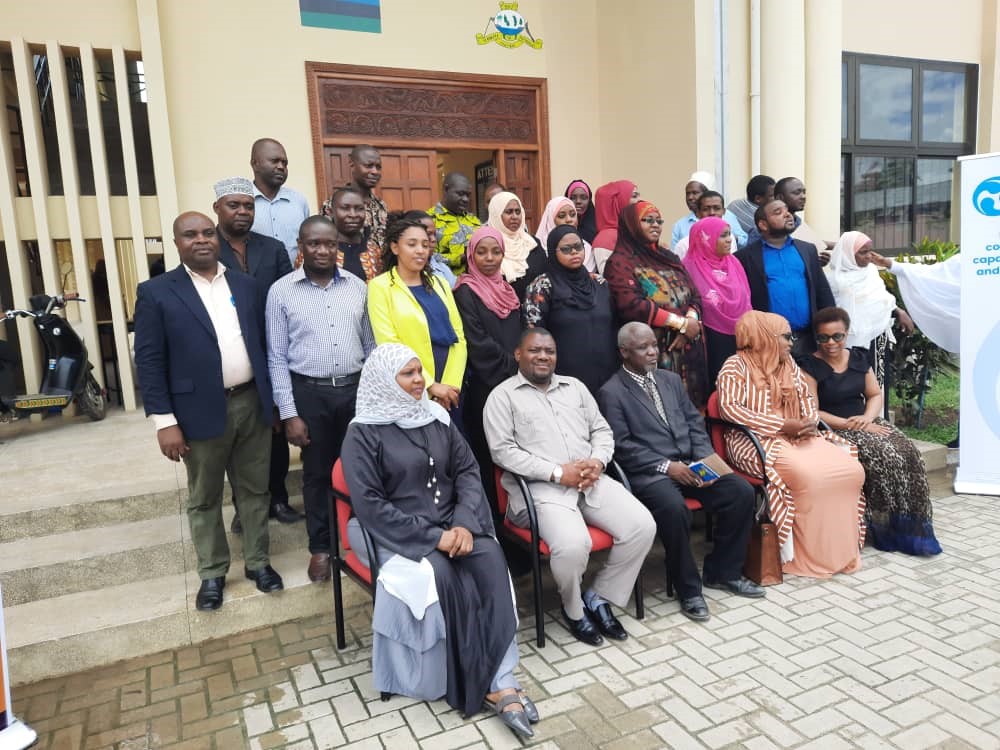
On April 10, RELI Tanzania partner, Sazani Trust, held an exhibition to commemorate the successful end of their five-year projects: The Attitude, Behaviour, and Competence (ABC) projects and Healthy and Sustainable School Project (HSSP). Ten RELI Tanzania members joined Sazani at Hon. Ali Hassan Mwinyi Secondary School Hall at Bububu, Zanzibar as part of a peer-learning opportunity as well as to show support to one of its own in celebrating the milestones. The commemoration was attended by Mr. Hashim Abdalla (Secondary Education Officer) who was the guest of honor, Mr. Abdalla Mussa (Curriculum Manager from Zanzibar Institute of Education), Dr. Maryam Jaffar Ismail (RELI Tanzania Country lead), and other 10 RELI members from Tanzania (Zanzibar and Mainland). In this exhibition, the guests had an opportunity to learn about the projects' achievements for the past five years (2016-2020) which were demonstrated by students and community members involved in the implementation of the activities. Some of the remarkable achievements in these projects include:
- Improved teaching methods for teachers and performance of the schools involved in the projects.
- Increased confidence, promotion of global learning and critical thinking, self-reflection, and the independent choices of the learner as a result of successful implementation of ABC model and HSSP.
- Increase in self-awareness and life skills among students and teachers.
- Out of 51 schools involved in the project, 10 schools had the best performance award at the end of the project.
RELI delegates appreciated the opportunity to participate in this event and acknowledged it as a learning opportunity. Lessons learned will be documented and shared with the rest of the members. These include the importance of actively involving beneficiaries in the project activities which was a success factor in the Sazani project where communities and schools took ownership of the project and demonstrated the best results, and it ultimately improved the performance of students. Secondly, members learned that sharing feedback with stakeholders is important as it was demonstrated by the willingness of the Ministry of Education and Vocational Training (MOEVT) Zanzibar to replicate the ABC model to other schools.
Learn more about the projects here.
|
|
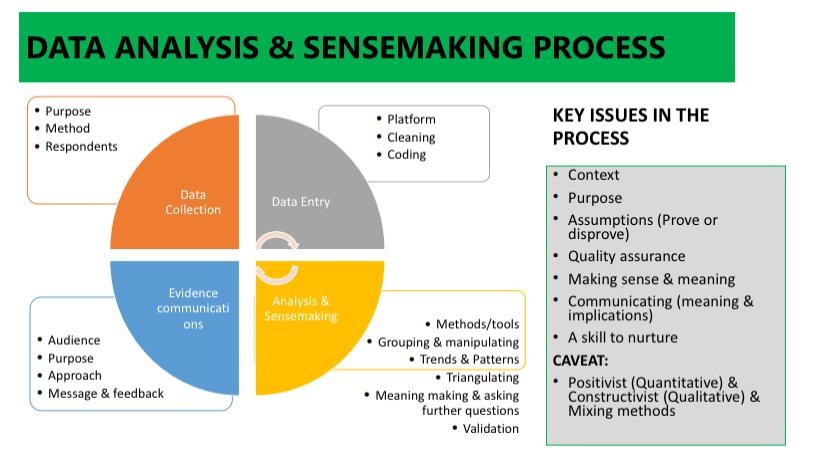
RELI Tanzania members participated in a two-day (April 14 - 15) online learning session that focused on “making sense of data and communicating evidence” facilitated by the MEL Mentor, Kennedy Oulu with the support of Tanzania Country facilitator, Gaudence Kapinga. A total of 27 members from 15 member organizations participated in the session. The learning session focused on drawing meaning from program/project data and making sense out of it and how to communicate the evidence to different stakeholders like policy makers, donors/development partners, and community/beneficiaries of the projects. Key lessons learned from the two-day session include the importance of:
- Triangulation of data to ensure data quality and connecting different variables that affect the quality of data.
- Understanding the context from which data was collected. For example the influence of external factors in the quality of data.
- Understanding the way policymakers think and how to unpack the message that needs to be communicated to align with the thinking of policymakers.
- Sharing with development partners/donors, the progress of the work being done to the beneficiaries instead of waiting for the annual reporting periods.
At the end of the session, members appreciated the learning and applauded the MEL mentor for conducting a fruitful session. The delivery approach was impressive with group work in zoom breakout sessions. The participants expressed the need to have more sessions like this in the future.
|
|
Facilitating Teacher Preparedness in the Implementation of the new competency-based Lower Secondary Curriculum
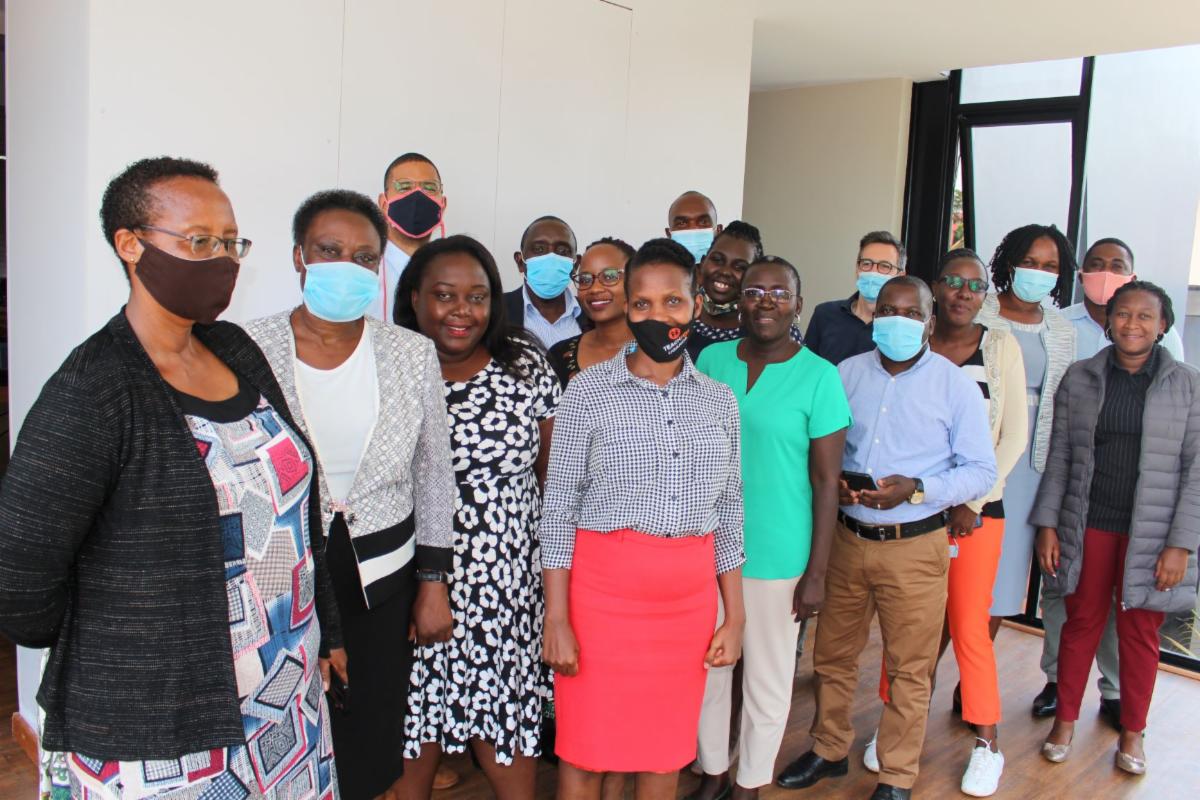
Members of the Lifeskills cluster held their monthly meeting on April 23. Discussions on the new Lower Secondary Curriculum protocol took center stage among other issues: the geographical study scope and methodology were elaborated upon. The research study will engage 588 teachers within 12 districts spread across four regions (Northern, Central, Western and Eastern) nationwide. The aim of the study is to identify gaps and challenges teachers are grappling with as far as the implementation of the new lower secondary curriculum is concerned.
|
|
A four-day workshop tailored for the Uganda Technical Panel of the Assessment of Lifeskills and Values in East Africa (ALiVE) project was held at Fairway Hotel & Spa, Kampala from April 19 - 22. The aim of this workshop was to enable panelists to identify means of developing test items for the four competencies: self-awareness, collaboration, problem-solving, and respect.
“It was a deep learning experience where ideas were exchanged and conceded upon across different contexts [Kenya, Tanzania, Uganda] an opportunity for learning…”, noted Francis Ndagize, Life skills cluster support lead. The session was facilitated by Prof. Esther Care, a renowned scholar in the field of educational assessment from the University of Melbourne, Australia. ALIVE is preparing to host her sixth learn shop on May 5 which will focus on ‘Let's dirty our hands: Contextualizing the Assessment of Life Skills and Values in East Africa’, a paper presented at the CIES 2021.
|
|
On April 29, RELI members participated in the Uganda National Institute for Teacher Education (UNITE) Workshop. Together with officials from the Teacher/Tutor Instructor Education and Training (TIET) department of Ministry of Education and Sports (Ms. Caroline Kavuma, Coordinator-UNITE Task Force and workshop facilitator, Ms. Annet Mugisha, Assistant Commissioner-TIET), members deliberated upon fair pathways for Continuous Professional Development (CPD) implementation aimed to professionalize the Ugandan Teacher. Among the recommendations put forth was the need to accord teachers the opportunity to identify CPDs of their choice and to equally recognize the contribution of Civil Society Organisations (CSOs) in CPD provision. UNITE has also put in place an open-source site where best practices on teacher capacity building provision can be shared. VVOB education for development, STiR Education, Teach For Uganda, Fundi Bots, Norwegian Refugee Council, War Child Canada, Teach for Uganda, Uganda Society for Disabled Children, Building Tomorrow, Kimanya Ngeyo Foundation, and Street Child Uganda were among the RELI organizations represented at the workshop.
|
|
The Values and Lifeskills thematic group held a one-hour monthly catch-up meeting on April 29 which delved into the details of the year 2021 – 2022 work plan. The meeting achieved consensus on the objectives, learning questions, activities, outputs, and expected outcomes. Currently, members are working on developing the draft narrative and budget in readiness for submission. A template is also being developed to guide succinct documentation of the learning webinars. It shall be circulated for members to review.
|
|
The Equity and Inclusion thematic group (E&I) spent time working on the Synthesis of Parental Engagement and Empowerment (PEE) approaches among RELI members: They managed to generate data through online interviews with eleven organizations. The data was collated and analyzed. The first draft of the report is out and currently under review. The team has also been exploring the learning products that could be generated from the study. A documentary showcasing unique effective parental empowerment and engagement practices and strategies during the COVID 19 pandemic in identified organizations is of key interest. PEE models have been identified from three organizations across urban, rural, and ASAL contexts. From these, the group is exploring the feasibility of conducting in-depth interviews with a view to documenting the overall concept and scenario culminating in a documentary. The group leaders and the activity leader will meet on May 4 to firm up and cost this concept.
PEE research study in collaboration with KICD and UNICEF: After a review of the first draft of the report, thematic group leaders recommended that the report should be re-organized to align more accurately with the objectives. Thereafter, an editor will be contracted to help fine-tune and sharpen the report. TORs were developed to guide the identification of a suitable candidate.
A launch has been scheduled for the month of May. Preparations for the dissemination conference have kicked off in earnest with KICD and RELI putting together a 15-member dissemination committee. The first meeting was held on Monday, May 3. Through this work, E&I aims to develop an operational handbook on “how to go about effective PEE in Kenya" with a particular focus on the period when learning institutions were closed and parents were expected to support children’s learning.
At the regional level, the group has made progress in preparation for an 'Exploratory study to deepen the understanding of the inclusive education policies and their implementation for the most marginalized.' The draft protocol and research tools were reviewed by the Ethics & Scientific Review Committee (ESRC), and the feedback was circulated. E&I worked on the revisions as advised and submitted them for approval before research can commence.
|
|
Learner Centred Teaching thematic group (LCT):
Teacher professional development: Collaboration with Keep Kenya Learning (KKL)
In collaboration with EdTech hub; METIS and KICD, the LCT group has been implementing the third research sprint which involves training caregivers in digital literacy and engaging children in purposeful talk - otherwise known as ‘Bright Talk.’ Now in the final stages of the concluding research sprint, GRIC, Dignitas and Lwala are conducting end-line data collection through phone surveys. Going forward, the data will be collated and analyzed by KKL MEL partner, Busara Center for Behavioral Economics. A series of learning dissemination events is scheduled for June and July.
|
|
The year 2021- 2022 work plan: Both E&I and LCT thematic groups have made tremendous progress with this task. The current work plan was reviewed hence determining the general objectives for the coming year. Based on these, they identified the activities; outputs, and outcomes. Having prepared the budget, the groups are now developing the accompanying narratives in readiness for submission in the coming week.
|
|
The country leadership team held their weekly meet-up on April 20 to touch base on the ongoing tasks. With regard to the anticipated review of the year 2018 - 2022 National Education Sector Strategic plan (NESSP), the meeting determined that RELI had registered interest in participation particularly under ‘Basic Education.’ An inception meeting was held on April 23 with Innovations for Poverty Action (IPA) where standards and expectations of the members’ input were agreed on. Based on these agreements, members are drafting their input to the review in readiness for submission to MOE by May 15.
|
|
Join the conversation on Twitter by following @ReliAfrica and using the hashtags #RELIAfrica #RELILearning to keep the conversation going. A social media toolkit is available here.
Are you a member of the RELI online platform? Click here for more details.
|
|
|
|
|
|
|