EXPLORE RELIC: APRIL 2026 | | |
The Foundation of Independence: The Virginia Company of London
Written by: Mary Kitiyakara, Senior Librarian, RELIC
| | |
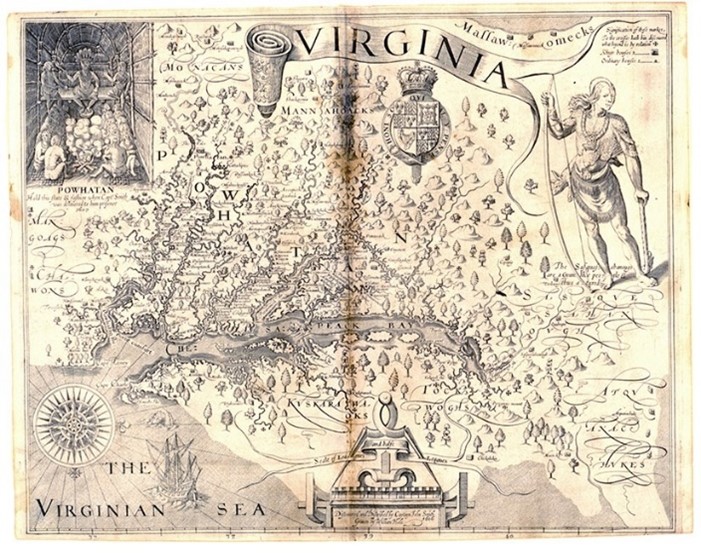
To understand why the British American colonies declared independence from Great Britain, one must look at how the colonies were established in the very beginning, starting with the Virginia Company of London during the reign of King James I, 1566-1625, and the unofficial policy of Salutary Neglect established by Great Britain that defined the relationship between the colonies and the Crown.
| | |
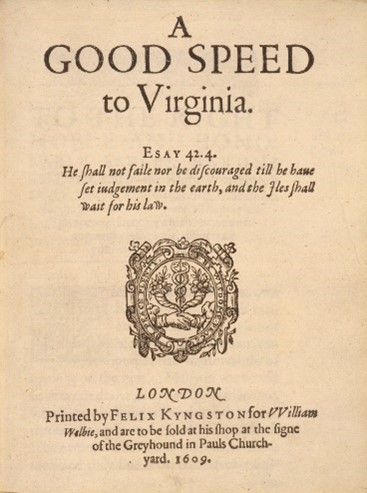
The purpose of The First Royal Charter, April 10, 1606, was a business venture for businessmen and settlers called the Virginia Company of London, a joint-stock company, “to make habitation, plantation, and to deduce a colony of sundry of our people into that part of America commonly called Virginia.”1
It consisted of two groups of investors, the Virginia Company of Plymouth which was ordered to establish a colony in the North, current Maine, and the other the Virginia Company of London to establish a colony called Jamestown.
| | |
The financial reason for this venture was the shared profits amongst investors and the Crown. The investors would benefit from the joint venture because the more businessmen that invested, the less the loss if it failed. Further, King James I granted them autonomy as long as they remained loyal to the Crown, meaning they could expand the British territory and reap the benefits of land and wealth from resources that King James I desperately needed for Great Britain and himself.
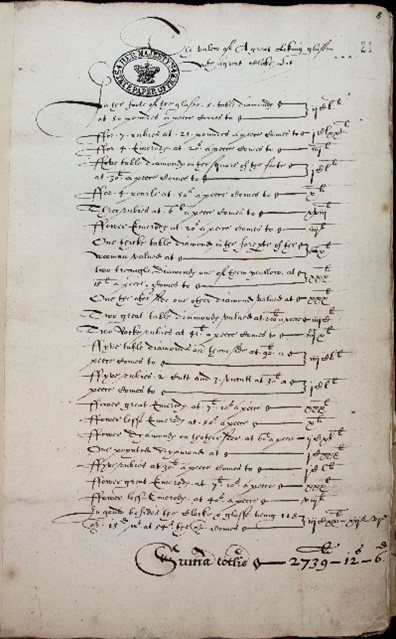
According to primary documents from the National Archives in the UK, King James I, who was in significant debt from poor management of assets and extravagant spending, could not afford to invest in the venture but instead, granted investors land, wealth, and autonomy for themselves and their heirs. However, to ensure the interest of Crown and Country is respected, any members of a governing body within the settlements would be appointed by the Crown, and that council would report to the British Privy Council in London.
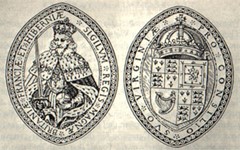
Each council had a seal that bore the king’s arms engraved on one side and a portrait of the king on the other, as shown in the first picture. The seal for the first colony has the words Sigillum Regis Magnae Britanniae, Franciae, et Hiberniae; on the other side, Pro Concilia primae Coloniae Virginiae. This reads, Seal of the King of Great Britain, France, and Ireland on one side; Council of the first colony, Virginia, on the other.
| | |
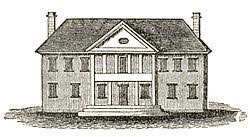
The Virginia Company of London established the settlement of Jamestown on May 14, 1607. This began the first example of the Salutary Neglect policy in colonial America; the colonies settled by the Company could maintain autonomy from the Crown if there were representatives enforcing loyalty to Great Britain present.
| | |
With the initial success of the Company, King James I granted the investors a second royal charter on May 23, 1609, giving them approval to encourage people in Great Britain to come to British colonial America and expand the territory, and it granted them permission to establish a governor for the colony, Lord Delaware.
However, as we will see, the colony’s way of life begins to change dramatically with the establishment of the House of Burgesses in 1619 and the dissolution of the Company in 1624. We will continue with the second and third royal charters and the new British colonial government in the next newsletter.
| | | | US Newsstream provides a searchable database of more than 1,000 newspapers from around the USA. | | Perspectives of a Revolution VA250 Lecture Series: Central | | |
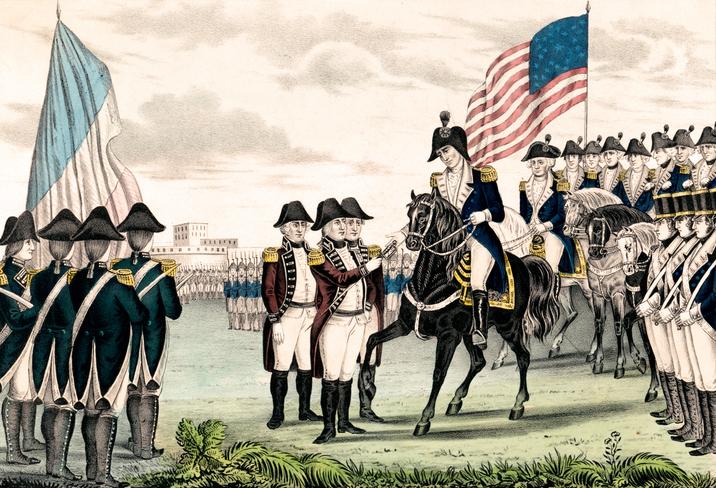
The Critical Role of Spain in the American Revolution
Adults
Saturday, April 11, 1:00–2:30 p.m.
Join Dr. Larrie D. Ferreiro as he discusses the American Revolutionary War as a global partnership between the United States, France, and Spain against their common adversary, Great Britain. Registration required.
| | | |
Tips and Tricks to Deciphering Colonial Handwriting Workshop
Grades 11 and Up
Saturday, April 18, 1:00–2:30 p.m.
Learn how to read several types of colonial handwriting in addition to creating cheat sheets, analyzing documents, and creating transcriptions for future use. Registration required.
Finding Your Rev War Ancestor for the DAR, SAR, or CAR
Grades 11 and Up
Friday, May 1, 1:00–2:30 p.m.
Join DAR member Shannon Combs-Bennett and local chapters to learn what is needed for an application to one of the Revolutionary War societies. Registration required.
Revolutionary War Home Front: Civilian Ancestor Research
Grades 11 and Up
Saturday, May 2, 1:00 p.m.
Explore how to research ancestors who lived through the war period but weren't directly involved in fighting. Registration required.
| | | |
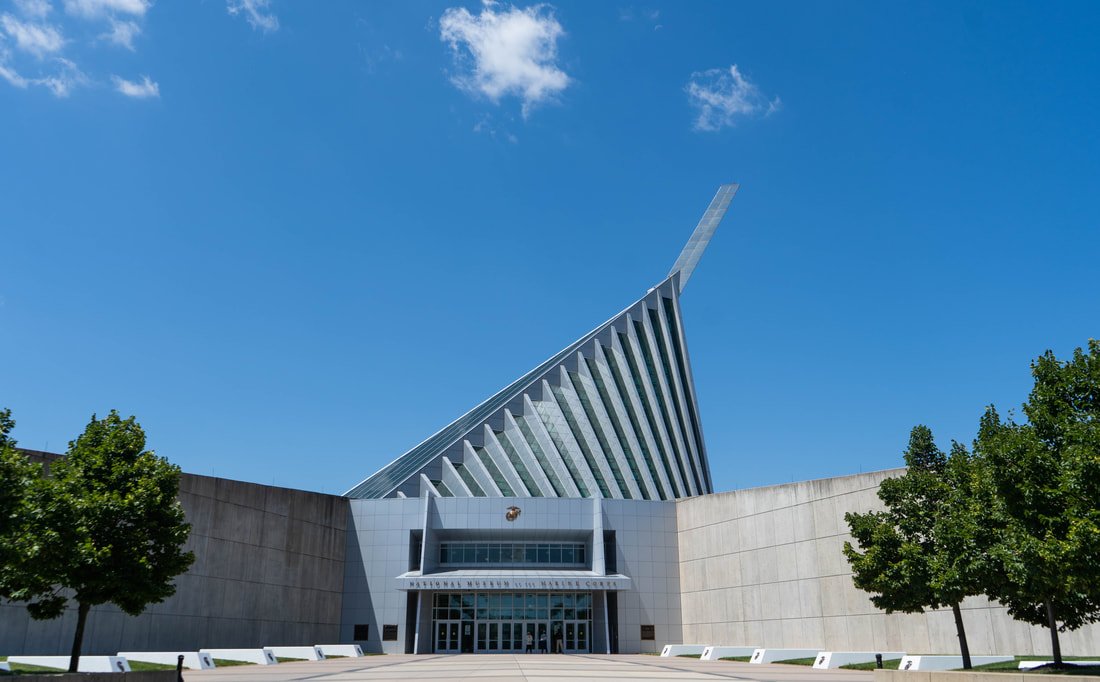
Local History Walking Group @ The National Museum of the Marine Corps
Grades 11 and Up
Friday, April 17, 11:00 a.m.
Join us for a walking tour at The National Museum of the Marine Corps (1775 Semper Fidelis Way, Triangle, VA 22172). Registration required.
| | | |
History and a Book Group: Central and Virtual
Grades 11 and Up
Tuesday, April 21, 6:00 p.m.
Join us as we discuss "The Ship of Dreams: The Sinking of the Titanic and the End of the Edwardian Era" by Gareth Russell. Registration required. For those who would like to join virtually, please register and you will receive a link.
| | |
|
Start your historical journey here. RELIC's email newsletter highlights upcoming free events and happenings. Genealogy and local Virginia history are our specialties as a service provided by Prince William Public Libraries (PWPL). You can always find more about us on RELIC's webpage.
RELIC service is available in-person at Central Library (8601 Mathis Avenue, Manassas, VA 20110), by email at librelic@pwcgov.org, and by phone at 703–792–8380.
Hours of Operation
Monday–Wednesday: 10:00 a.m.–8:00 p.m.
Thursday–Friday: 10:00 a.m.–5:00 p.m.
First and Third Saturdays: 10:00 a.m.–5:00 p.m.
Closed Sunday
Due to a staff shortage, RELIC is not always staffed during the above hours. However, the room is available, and service desk staff or substitutes can often help. Please call ahead for staffed hours if you need RELIC staff to be present.
Ask the Tree Hunter
If you wish to make an appointment with Darlene Hunter, RELIC Tree Hunter, please email librelic@pwcgov.org or call 703–792–8380.
| | | |
Questions and comments are always welcome.
| | | | |