|
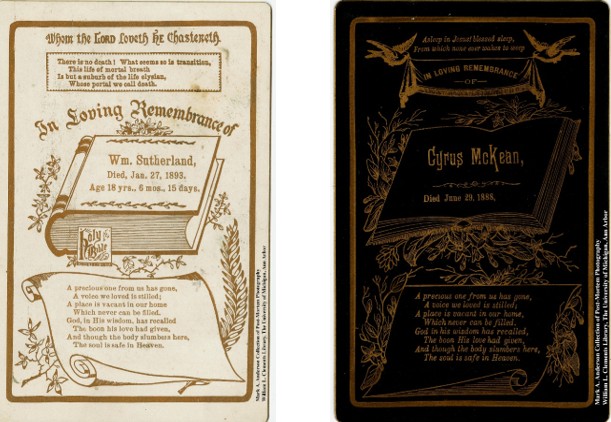
These cards, from the Mark A. Anderson Collection of Post-Mortem Photography, date from the late 19th century and have similar designs and wording due to the invention of lithography.
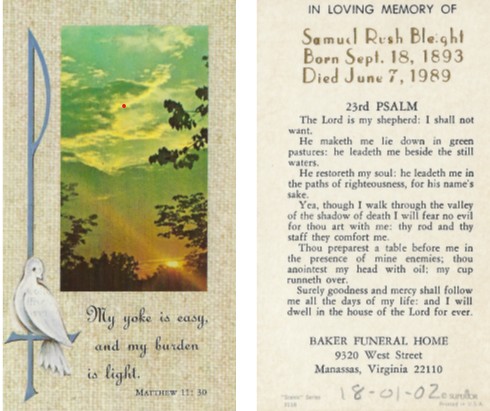
The similarities between the cards of the 19th century and modern times can be seen in the example at left from RELIC's funerary ephemera collection. These cards, dating back to the late 20th to early 21st century, have similarities that varied depending on the cost of the card, as was the case in centuries past.
The size is approximately 4 to 5 inches in height and 3 to 4 inches in width, designed with religious icons and symbolism on the front, ornate writing style, or small works of art on the back. Most had the name, birth date, and death date, as well as the location of the funeral.
Modern-day funeral cards are printed on lighter material such as cardstock and can be shaped into mini booklets. Modern cards are brighter with imagery that invokes peace, memory, and condolence. It can even be fashioned to suit the personality of the loved one, and, as in centuries past, the design and presentation often reflect the technology of the day, so in the 21st century, funerary cards can be digital.
These cards are often an overlooked source for genealogical information, so if you have such cards and an interest in genealogy, you may want to take a look and see what information is available from your own family’s funerary ephemera.
To learn more about American funerary customs, visit the University of Michigan’s William L. Clements Library 2012 Online Exhibit: “So Once Were We”: Death in Early America. This exhibit explores American practices and traditions for coping with death.
To learn more about RELIC’s funerary collection of funerary cards, cemeteries, and gravestones, please visit our online Photo Collection Index.
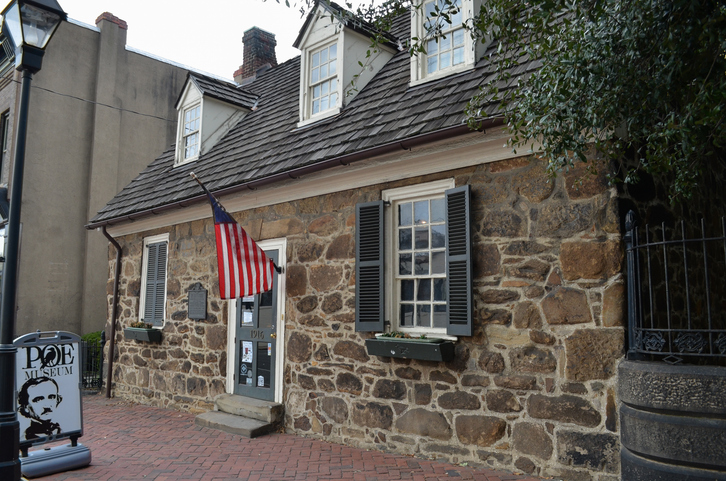
To learn more about Victorian traditions and beliefs, sign up for The Poe Museum’s virtual lecture series on October 10 and October 31. More details about the program are found further down in this edition of the newsletter.
|