|
FinCEN Real Estate Reporting Deadline is Near
FinCEN news and reminders are everywhere! We recently notified Advocus agents that the U.S. Department of the Treasury’s Financial Crimes Enforcement Network (FinCEN) new Residential Real Estate Rule (RRE Rule) will become effective March 1, 2026. (See our FinCEN communications and other web content, here.)
The RRE Rule specifies reporting of non-financed residential real estate transfers to protect the U.S. financial system from money laundering, terrorist financing, and other serious illicit finance threats. It requires, on a nationwide basis, certain persons involved in real estate closings and settlements to report information to FinCEN about specified transfers of residential real estate that have been flagged as high risk.
Transactions closing on or after March 1, 2026, are subject to the new RRE Rule per FinCEN. The settlement agent listed on the Settlement Statement is first in the FinCEN reporting cascade. Please note, if that is your office, you are responsible for reporting applicable transactions to FinCEN.
Add Schedule B Exception to Commitments
In preparation for the March deadline, Advocus has been requiring the addition of a specific Schedule B Exception to all Commitments starting January 1, 2026. View Schedule B language, here.
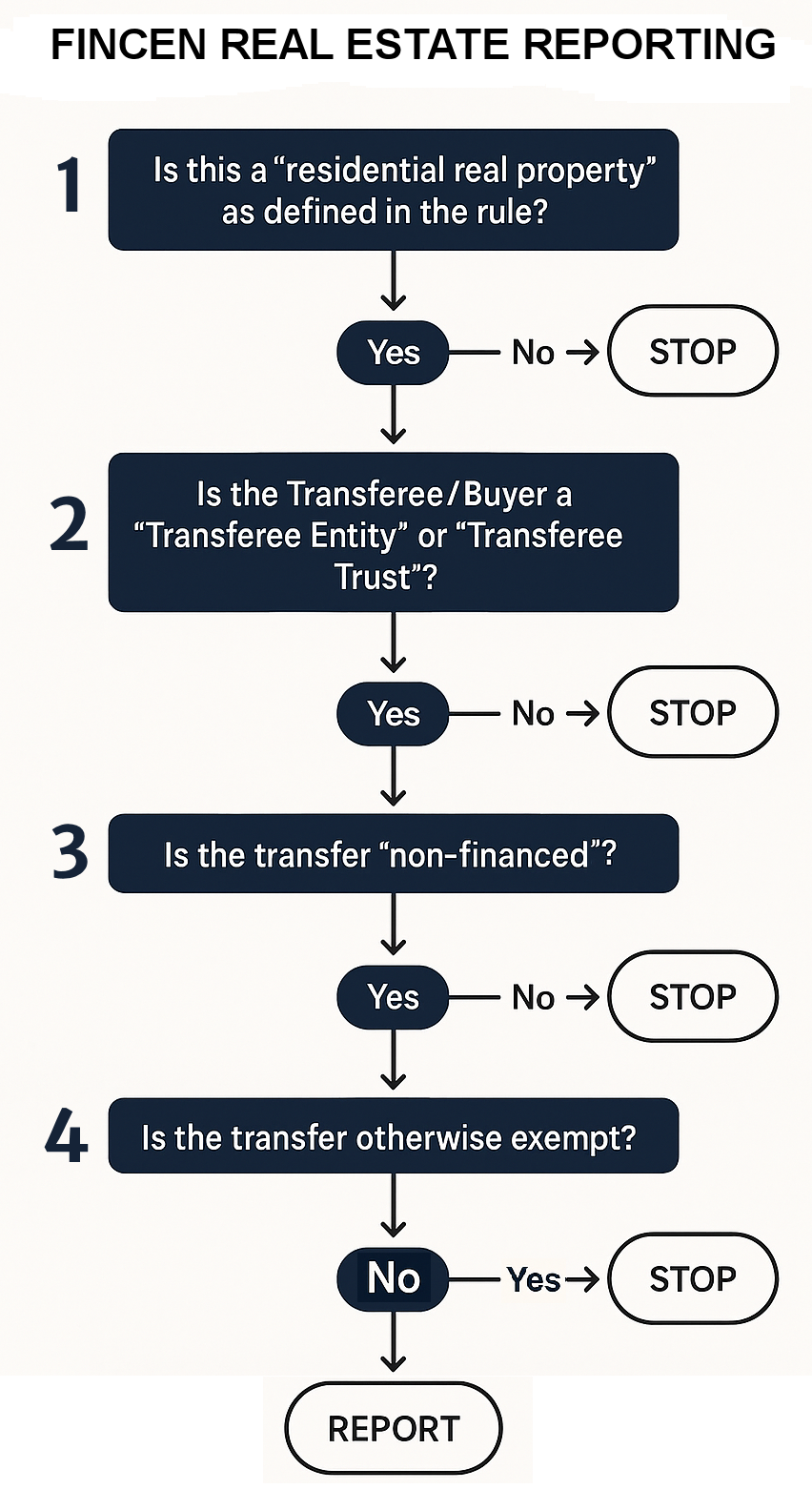
Which Transactions Qualify? Use Our FinCEN Decision Guide
The illustration below will help determine if your transaction is eligible for mandatory reporting, but this depiction does not encompass the entire Rule.
IMPORTANT NOTE: Severe fines and criminal penalties may apply for non-reported transactions. Detailed information on which transactions are required to be reported, and the penalties for not reporting, are in the Advocus Overview: FinCEN Final Residential Real Estate Rule (Form 4272). The Overview is packed with useful information, as is the rest of our FinCEN webpage:
The RRE Rule concerns reporting of non-financed residential real estate transfers to combat and deter money laundering. The Rule requires, on a nationwide basis, certain persons involved in real estate closings and settlements to report information to FinCEN about specified transfers of residential real estate that are a high risk for illicit finance. Transactions should not be closed and disbursed without ensuring that the requirements of the RRE Rule have been satisfied.
As always, we appreciate your business and welcome your questions and feedback. If you have any questions about FinCEN reporting, please contact underwriting attorney Nathan Smith or our Underwriting Team. Thank you.
|