Your Monthly News & Updates | |
|
Reimagining Our Society Building | |
|
It is hard to believe that another month has gone by.
I continue to be amazed at the incredible team of dedicated volunteers who are helping to reimagine our society building and how we leverage the space to better serve our community. Each Monday night from 4-7 pm, we get together to coordinate our efforts and make our way through the collection. If you are interested in helping out, stop by any Monday! We would love to meet you in person.
A big project this year is to weed through the mountain of books that fill nearly every shelf, reinvigorating a process started 10 years ago by David Temple. At this point, most of the shelves upstairs in the public rooms have been emptied and we have started on the basement. We continue to see that more than 80% of the books are candidates for "deaccession" or permanent removal from our archive.
Several folks have asked me why this is the case. How did we end up with all of these books in the first place?
When the Medfield Historical Society was first established in 1891, the Selectmen (as they were called at the time) voted to house the Historical Society in the library. So, it was quite natural that many books were collected during the early days of the Society's formation. This tradition continued in 1917 when Granville Dailey donated the Medfield Memorial Public Library in memory of his wife and daughter stipulating that the library continue to house the Historical Society. More recently, we have become a place where people bring older items including books that they are not quite sure what to do with.
As we transform our space into more of a museum, one of my favorite things to do is a "backstage tour." This is when we open up the museum to a single family and poke around in every nook and cranny. Last month, I spent a few hours with the Sedimbi family. Indira graduated from Medfield High School and is now raising her family here with her husband Kiran. Satya (10) and Arnav (6) had a lot of fun helping me look around in hidden drawers and to think about whether or not we should include certain artifacts in our new exhibit on Native Americans. Here they are shown with the Pilgrim Musket!
| 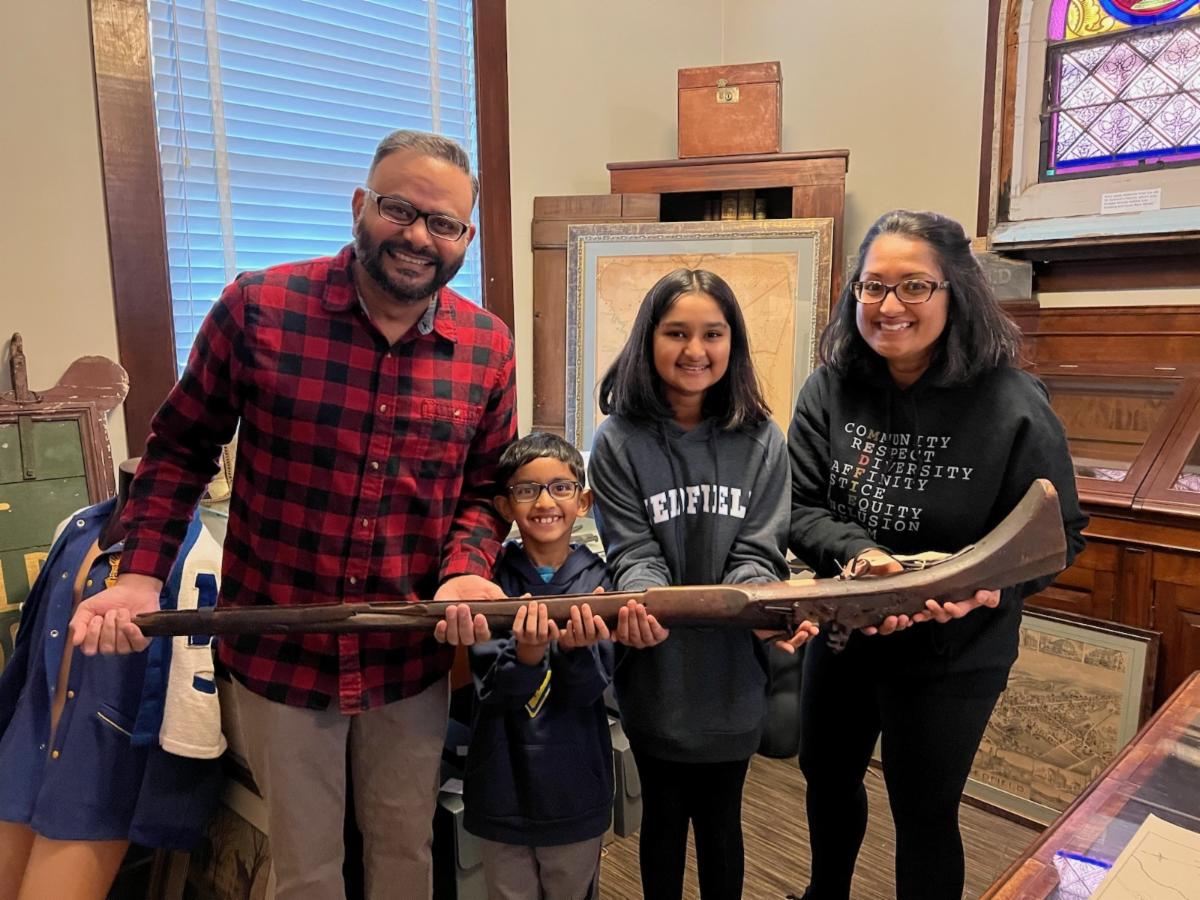 | The Sedimbi family with the Pilgrim Musket. | |
One question that Indira asked was how her family could become part of Medfield History. I love this! We are all making history today! I absolutely welcome any member to share their story. The best format for this is in the form of a typed story along with a few photos – we will add these a manilla file folder and place them in our museum archives.
And, if you are interested in a back stage tour for your family, please let me know!
| |
|
PeggySue Werthessen
President
| |
|
Monday, Feb 5
7:30 pm
First Parish Unitarian Universalist Church
26 North Street, Medfield
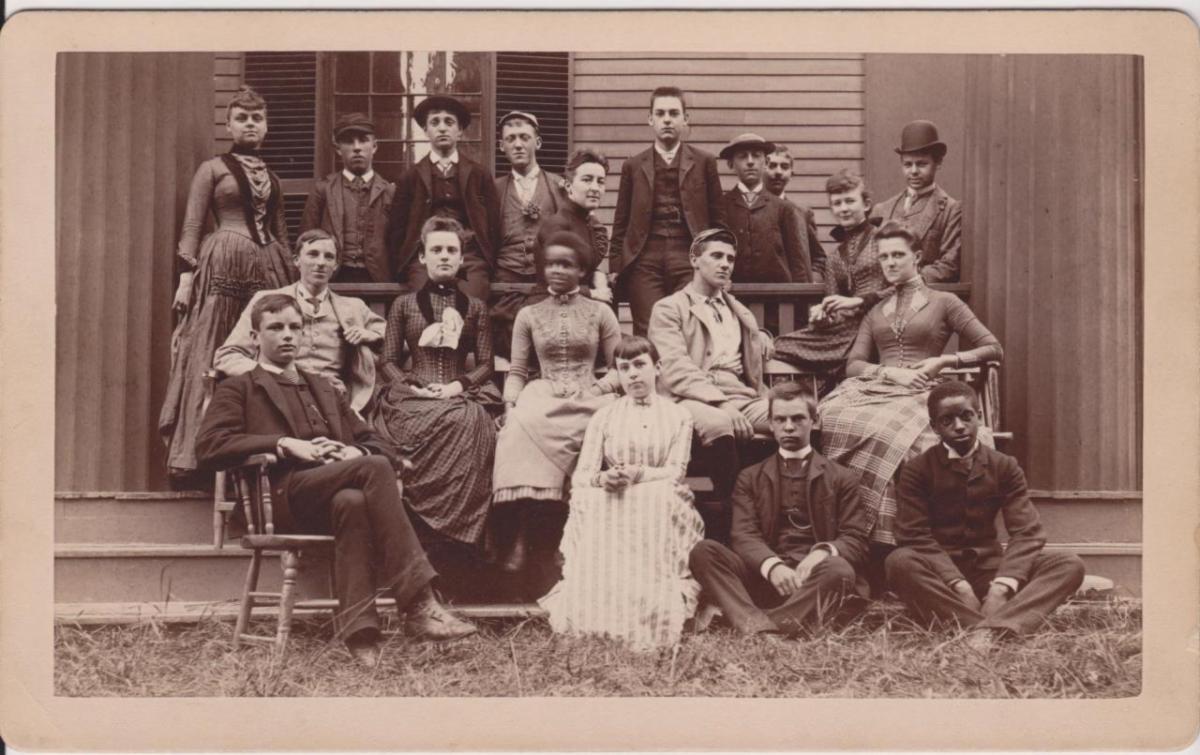
At our February program we will be showing a 40-minute documentary film, “An Uncommon Education” about The Allen School in Newton. The school was founded in 1854 and led by Nathaniel T. Allen who was born, raised, and is buried in Medfield.
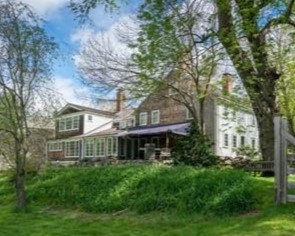
His home, known as the Allen Homestead, at 260 North Street (pictured here), is shown in the documentary. It was a stop on the Underground Railroad and was visited often by Frederick Douglass and William Lloyd Garrison.
| |
The Allen School advanced a radical new vision of social and educational equality in the United States in the last half of the 19th century.
At a time when slavery was still the law of the land and women’s suffrage yet a distant goal, the Allen School admitted Black students, foreign students, and women to a forward-looking program of study, empowering them to develop their talents, while moving society decisively toward gender and racial equality.
This is a story that has not been told before in film and not fully told in the written histories. As such, it will restore a forgotten piece of history in Massachusetts – a state that values education and was an early pioneer in fostering inclusion.
“An Uncommon Education” will help current generations make connections that point us toward a more just society.
This presentation is free and open to the public. We look forward to seeing you there.
| |
The History of Audio Recording & Playback | |
|
Monday, Mar 4
7:30 pm
UCC Medfield, Great Room
496 Main Street, Medfield
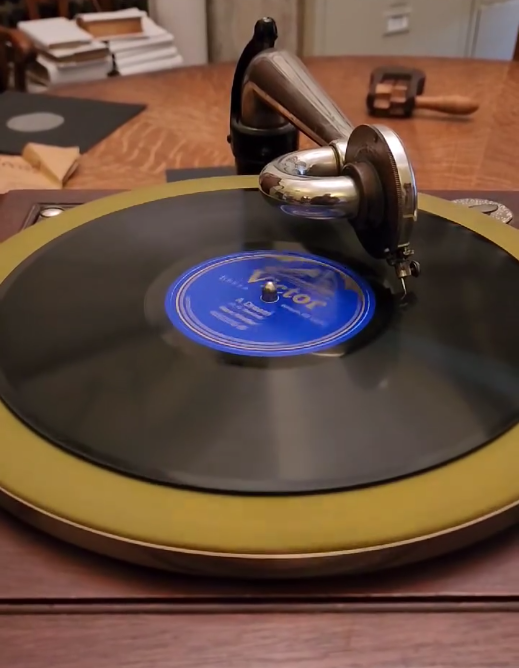
The Historical Society will sponsor a presentation on the history of audio recording and playback by Johnny Dalton, an award-winning audio engineer and musician, on Monday March 4th at 7:30 at the UCC Medfield in the “Great Room” of the building located at 496 Main St, Medfield.
A resident of Medfield and graduate of Medfield High School, Dalton will discuss how early machines and mediums brought the wonder of recorded music into the home. There will be a demonstration of some early and more recent devices for music playback. The presentation will survey the history of how technological developments over more than a century allowed for continued refinements in the quality and sophistication of recorded voices and music.
Dalton is the owner of Kung-Pow! Recording and Mastering Studio in Medfield and works with local musicians to develop high-quality and innovative recordings. He is also the sound engineer at the new Bellforge Arts Center.
This event is free and open to the public.
| |
|
Medfield History Weekend 2024
Friday, Apr 26 thru Sunday, Apr 28
| |
|
Medfield Historical Society is excited to be spearheading efforts to have a repeat performance of the highly successful Medfield History Weekend to celebrate local history, and engage residents in events led by all of the historic groups in town.
Similar to last year, History Weekend 2024 will future:
- Old Town Trolley tours showcasing historic locations and stories;
- Walking tours and steeple/clock tours; and
- Open houses/information tables featuring event partners such as Dwight-Derby House, Lowell Mason House, Kingsbury Grist Mill, Hannah Adams Woman’s Club, and of course, the Society.
Look for ticketing details soon on the MHS website.
| |
Former Lord’s Department Store co-owner Tom Kelly made a special trip back to Medfield for History Weekend to greet guests visiting the museum, and to catch up with old friends. Beyond the return of the special museum opening for History Weekend 2024, anyone can stop in from 10 am to 12 pm on the first and third Saturday each month to conduct research, view collections and talk with board members. | |
Taking a Deeper Look at Unique Medfield Stories | |
|
by Chris McCue Potts
In the spirit of Black History Month and tapping into Medfield Historical Society and Vine Lake Cemetery records, Rob Gregg, president of Peak House Heritage Center, has updated his previous research about former Medfield residents, Lucy Bran and Peter Warren/Caesar Hunt, as well as his article about Medfield slaveholders and slaves. Adding a fourth story to the mix, we point readers to a piece about Samuel Greene and his family by Marian Pierre-Louis.
| |
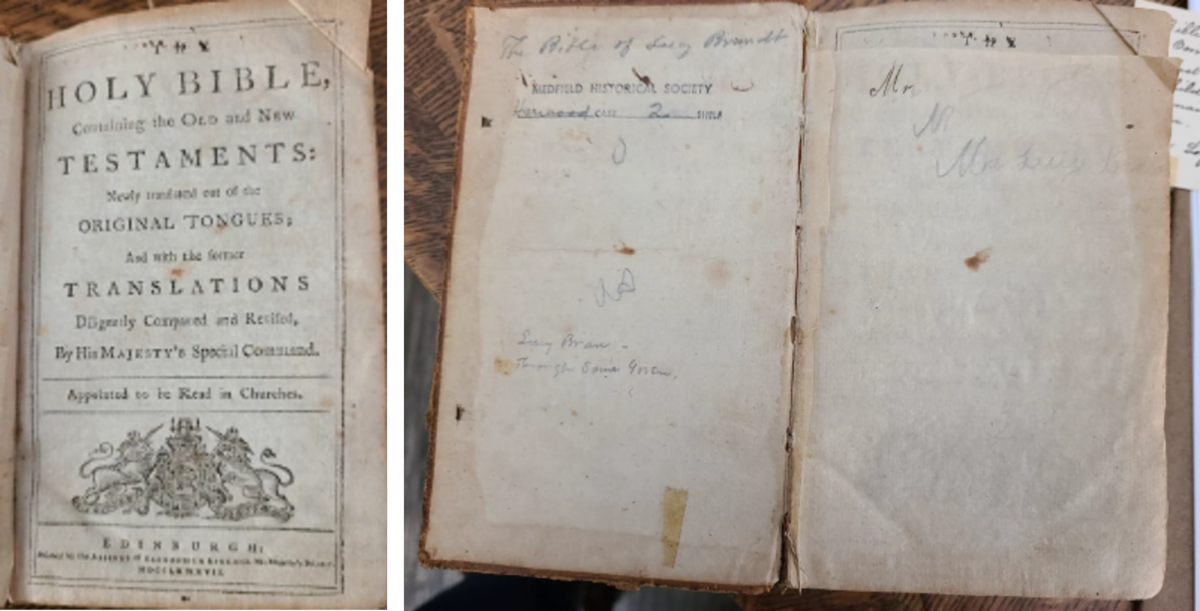
Lucy Bran, who died in 1837 at the age of 85, was said to be the last Native American resident of Medfield. Her house at 661 Main St. was depicted in a famous painting, “Roadside Cottage,” by artist Dennis Miller Bunker. Lucy Bran’s Bible is currently on display at the Society museum, and her house is on the market. Read about Lucy Bran>> | Inside cover page and flyleaf of Lucy Bran's bible. | |
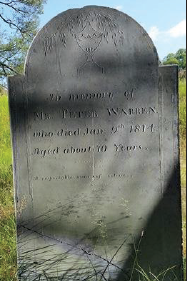
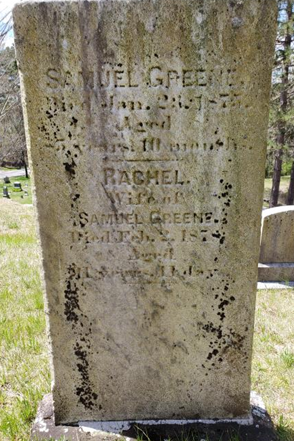
As for Peter Warren and Samuel Greene, Warren was a former slave who was known as Cesar Hunt by the Medway family that had originally kept him as a slave during his young adulthood (after he paid for his freedom, he changed his name), while Green was raised by a surrogate parent/Wrentham innkeeper. As an adult, Greene settled in Medfield on Frairy Street. Read about Peter Warren>> Read about Samuel Greene>> | | |
|
Samuel Greene gravestone. | |
|
Providing a helpful overview, is documentation by Gregg of 18th century Medfield slaveholders and slaves. Named among the list of slaveholders are prominent clergymen, physicians and town leaders buried in Vine Lake Cemetery – a stark contrast to the former slaves who were buried in unmarked or unknown graves, or relegated to “Guinea,” a private cemetery off Green Street. Guinea was also known as “The Graves.” Read about Medfield slaveholders and slaves>>
Take a moment to learn about these unique Medfield stories that helped to shape the community we know today.
| |
|
by David Temple
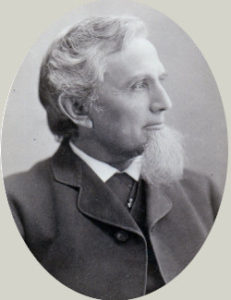
William S. Tilden was one of Medfield’s two most important and prolific historians.
(The other is, of course, Richard DeSorgher, who grew up here, taught history and social studies here for over thirty years, published four books on Medfield history, and is still Medfield’s official town historian, though he has lived in Mashpee for almost ten years.)
Tilden (1830-1912) was a lifelong resident, music teacher, music director and organist at the Baptist church, and, in 1891, co-founder and first president of the Medfield Historical Society. He researched and wrote the 556-page History of Medfield 1651-1886, the society’s bible.
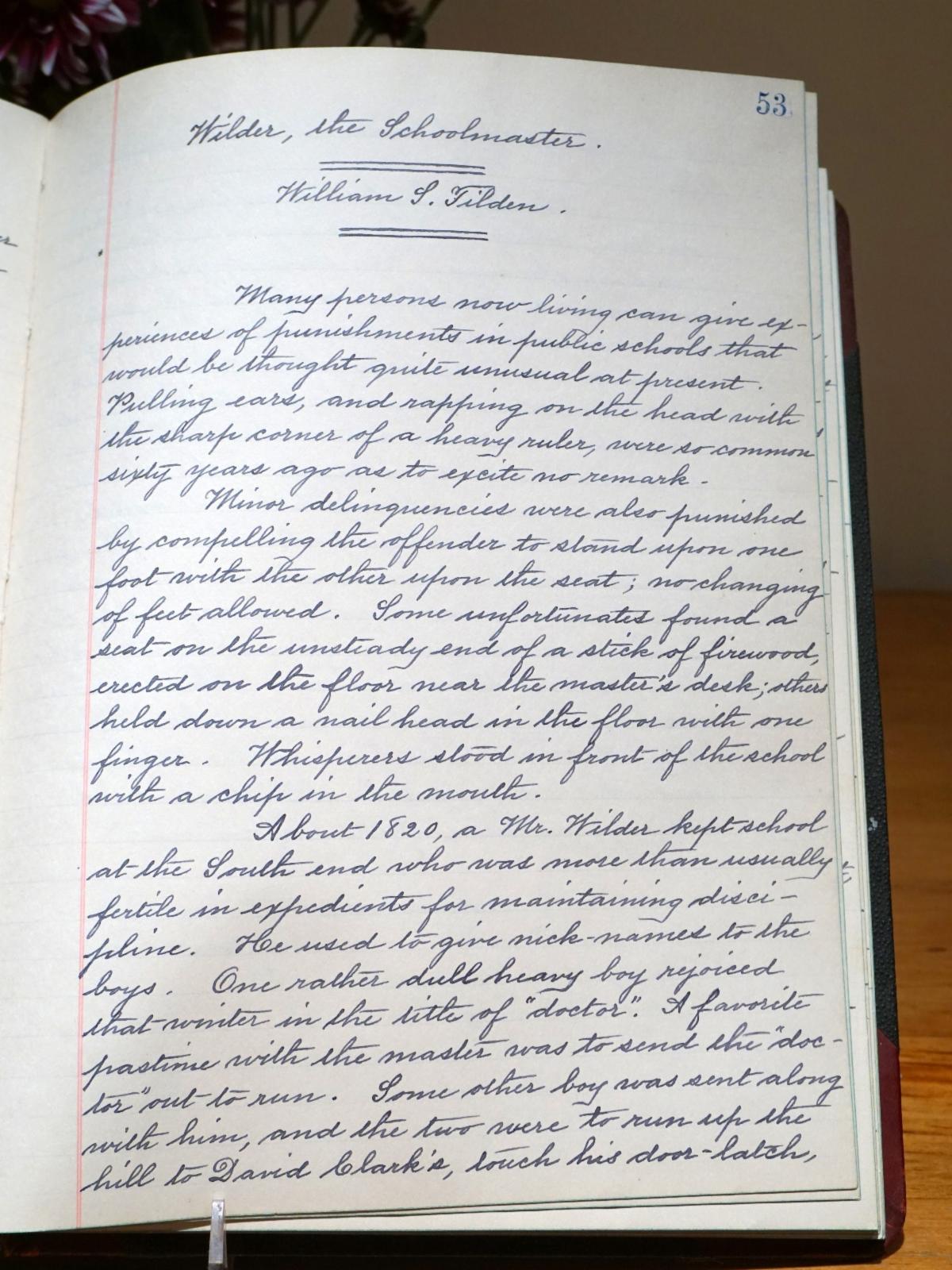
Tilden was a first-hand witness to many goings on in Medfield in the 19th century, and he wrote many short pieces as well as his magnum opus. Fortunately, Tilden had very neat and legible handwriting, and many of these pieces have been collected and transcribed and are in a loose-leaf binder at the society. It gives an often light-hearted picture of characters and events of the 19th century of our little farming village, in which the population grew from 745 in 1800…to 966 in 1850…to 1583 in 1900, not counting the 1,343 at the state hospital.
Here's a sample, written about 1880.
| |
|
Wilder, the Schoolmaster
Many persons now living can give experiences of punishments in public schools that would be thought quite unusual at present. Pulling ears, and rapping on the head with the sharp corner of a heavy ruler, were so common sixty years ago as to excite no remark.
Minor delinquencies were also punished by compelling the offender to stand upon one foot with the other upon the seat; no changing of feet allowed. Some unfortunates found a seat on the unsteady end of a stick of firewood, erected on the floor near the master's desk; others held down a nail head in the floor with one finger. Whisperers stood in front of the school with a chip in the mouth.
About 1820, a Mr. Wilder kept school at the South end who was more than usually fertile in expedients for maintaining discipline. He used to give nick-names to the boys. One rather dull heavy boy rejoiced that winter in the title of "doctor." A favorite pastime with the master was to send the "doctor" out to run. Some other boy was sent along with him, and the two were to run up the hill to David Clark's, touch his door-latch, and then see which could get back to the school first.
The climax of these performances came one day, when one small boy was ordered to crawl up chimney. In those days the school-room was heated by a wood fire, in an old fashioned wide fire-place at one end -of the building, which consisted of but that one room. The little culprit obeyed orders to the best of his ability, but was not making the required speed in his ascent; whereupon the master borrowed a pin, with which he vigorously prodded the little chap posteriorly.
When he completed his penance, and emerged into the schoolroom, as may be imagined, his clothing was not such as fond parents wish their darlings to appear in. This incident of school-life, thought seeming like a fish story, the writer had from at least two persons who were pupils in the school, and were eye-witnesses of the performance.
| |
What is "Deaccessioning?" | |
|
by Jo Ellen Heck
Deaccessioning is the formal process by which a work of art or other object is permanently removed from a museum’s collection.
Removing items from a museum or historical organization’s collection is necessary for maintaining a strong, healthy, and relevant collection.
Our policy states that “the Medfield Historical Society will not deaccession any donated item within two years of its acquisition. When considering the disposition of deaccessioned items, the Society will endeavor to respect the intentions of the donor while meeting its obligation to the integrity of the collections.” The historical significance of the object is also weighed before deaccessioning.
Why Remove Something From the Collections?
There are several reasons why museums and historical organizations remove items from their collections. Some materials may be outside the scope or irrelevant to the society's mission, as the mission has shifted or narrowed over time. Many museums and historical societies collected broadly early in their early years, and accepted objects with little or no history that directly pertained to their missions. A chair from the 1890s with no additional provenance might have at one time served a purpose, but it takes up valuable storage space and resources. Another object that tells multifaceted and compelling Medfield stories beyond just being a chair would better serve our mission.
Sometimes items are removed from the collection because they are hazardous or in poor condition. This could include old medicines, pesticide containers, and celluloid combs that have disintegrated into dust.
Duplication is another reason that items are deaccessioned. How many spinning wheels does a museum need? How many copies of the same poster? Digital management of collections has made it much easier for museums to survey the thousands of items they care for, and weed out the duplicates that are lacking compelling histories.
Sometimes an item may be relevant, but it may be more relevant to another repository.
If an item has unethical or illegal provenance or must be removed to comply with national or state legislation, it also goes through the deaccessioning process.
An item may also be deaccessioned if the historical evidence that led the society to accept an object has been proven false, it has been lost or stolen for five or more years, or if the Medfield Historical Society is unable to preserve it properly.
How are Deaccessions Approved?
Deaccession candidates are reviewed by the Librarian and then presented to the society board, which votes on all acquisitions and deaccessions.
What Happens after Items are Removed from the Collections?
Medfield Historical Society’s deaccession policy allows for various disposal methods. One option is to transfer items that are in good condition to another historical organization in Medfield, unless the history of the object directly pertains to another town or state.
If no other historical institutions are interested and/or the intrinsic or monetary value is low, objects may be offered to local theater groups or charitable organizations. Public sale and auctions are other disposition methods that are permissible. In accordance with museum ethics guidelines, these must be a public sale, and proceeds can only be used for the acquisition of new collections, conservation, or preservation of collections.
A final option is to destroy the materials. This is primarily done if something is hazardous or severely deteriorated, or all other options have been attempted.
Deaccessioning is a necessary part of a museum or historical organization’s collecting plan. It enables institutions to refine their collections and use precious space and resources for materials that best serve their mission and the needs of their audiences. It enables artifacts that have little relevant history or are duplicate to serve new lives as education pieces, which allows museum audiences to learn about history in an engaging way.
Deaccessioning also allows organizations to share collections with other museums, and transfer materials to more appropriate repositories and new audiences.
| |
People and Places of the Past | |
|
Let’s take a moment to step back in time and watch Warwick at work. With iron bars fresh from the slitting mill a few days earlier, Warwick Green of Medfield grabs the unheated end of the nearly white glowing rod, now malleable, from the fire and places it on his anvil. He soon works its end to a thin point and forms a “shoulder" on it to define the length of the nail, followed by a partial cutting by pounding it on his chisel and breaking it off with his header tool. He grabs his hammer and bears down on the top, creating the telltale rosebud-like nail head (How).
Believe it or not, both Warwick and Newport would have likely made one about every thirty seconds, typical for the times, thus the largely forgotten expression, “Busy as a nailer.” Their services were in high demand as exemplified by this Boston Gazette Medfield help ad placed in the fall of 1775:
| 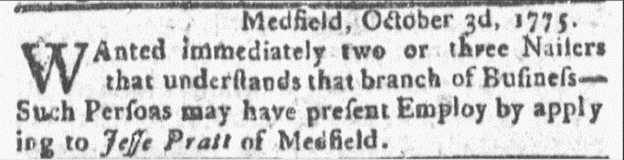 | Medfield, October 3d, 1775. Wanted immediately two or three Nailers that understands that branch of Business ⸻Such Persons may have present Employ by applying to Jesse Pratt of Medfield” (Advertisement Boston). | |
Award-Winning Author Discusses Jane Bosfield Story | |
|
A little over a year ago, Globe Magazine featured an in-depth article by award-winning author Dick Lehr about Jane Bosfield, a Black woman sporadically employed between 1915 to 1917 at the former Medfield State Hospital, and the media storm that resulted from her discrimination case. Lehr took some time to discuss his work on the piece.
A synopsis of the Jane Bosfield case
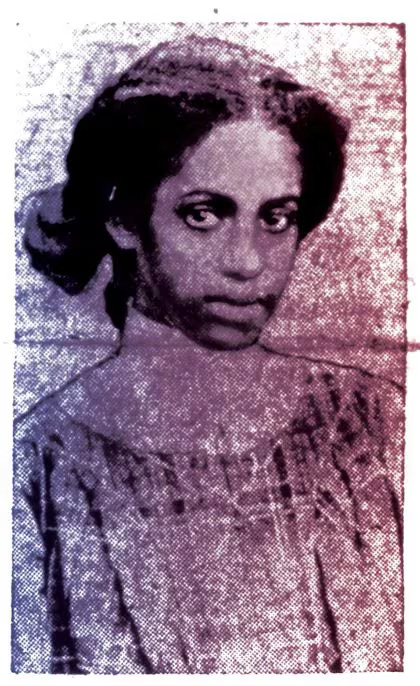
As described in Dick Lehr’s article, in 1915, Boston resident Jane R. Bosfield traveled to Medfield to interview for a job as a stenographer at Medfield State Hospital. Through his research, Lehr learned that she was a graduate of Cambridge Latin and High School, had scored high on civil service exams, and excelled in bookkeeping, stenography and typewriting. However, despite her credentials, Lehr also learned through various media accounts, that soon upon her arrival at MSH, Bosfield was allegedly told by the superintendent, “I couldn’t possibly employ you…I didn’t know you were colored.”
| |
Jane R. Bosfield in a Boston Post photograph from 1916.THE BOSTON POST. | |
|
In his extensive January 2023 Globe Magazine piece, Lehr recounts how Bosfield rallied support from Boston government officials and Black activists and was ultimately hired, but was fired not long after. Bosfield ultimately pursued legal action that lasted about 1-2 years, got her MSH stenographer job back, but later resigned and pursued higher-level positions elsewhere, including government and university jobs in Washington, D.C., according to Lehr’s research.
Click here to read more>>
| | | | |