Memoirs: Jack Belkin
Rubinstein's Shoes
Pittsburgh Hebrew School
"Perpetual Light #1"
Calendar
Community News
|
|
|
Memoirs:
"One Man's Family"
|
|
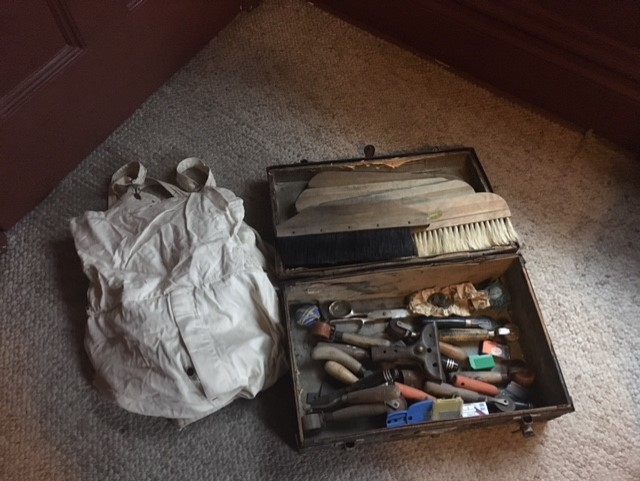
Morris Belkin paperhanging tools and apron.
—photograph by Ann Harris
|
|
Where do we get our sympathies?
Jack Belkin once attended an orientation session held by a group of Humanists who promoted a vision of moral goodness not limited by dogma or sect. “Alone among them, I viewed myself as a second-generation Humanist,” he wrote in his 1997 memoir. “I had learned all they could teach by observing and listening to a short, gray-haired uneducated immigrant, with a Yiddish accent.”
He was referring to his father, Morris Belkin, who came to Pittsburgh from Europe and spent his entire life pulling double shifts at hard jobs to provide for his family. He had a big heart and strong opinions. He saw the world as a struggle between "the powerful and the weak." He always sided with the weak.
“The most remarkable feature of Dad’s character was that he was non-judgmental about people’s decisions and behavior, within the parameters of his strongly held sense of right and wrong… He would say that no one can live another person’s life; that is, no one can impose their value system as a template for measuring someone else’s decisions," Belkin wrote.
Belkin also admired his mother, Rebecca. She oversaw a mutli-generational house—11 people crammed into a few rooms. He never saw her seated. “In today’s terms, she was an enable, a facilitator, who stayed in the background but made it possible for everyone else to do whatever each of us had to do.”
The Belkins followed an atypical path for a Jewish family in Pittsburgh. They settled in Homewood and then on Mt. Washington. The former had a small Jewish population at that time, the latter hardly any Jewish families at all. Only after his mother died of cancer did the family relocate to the East End, at her wishes, in order to allow this kids to participate in a large Jewish community.
Being a Jew in a non-Jewish milieu gave Belkin a deep appreciation for the experiences of people who were different—different from everyone else in some essential way. He alone befriended a gay classmate in the 1940s, and he gravitated toward the Intercultural Youth Council as a teenager. The IYC brought together kids from different backgrounds: boys and girls; Catholics, Protestants, and Jews; Black students and White students. Belkin even grew in his sympathies. Looking back on those years, he found many areas where the seemingly progressive attitudes of that era now, in retrospect, fall short.
"If my parents were alive today, I would rush to their sides as often as I could, and I always regret when my visits with my siblings come to an end," he wrote at the end of the memoir. "I am convinced that this is my parents' legacy.
|
|
Next week: Albuquerque
All year, the Rauh Jewish Archives is highlighting memoirs of Jewish life in Western Pennsylvania. If you would like to donate a memoir, or just chat about the stories you've read, contact the archive or call 412-454-6406.
|
|
New Collection:
Rubinstein’s and Richard’s Shoes Records [MSS 1193]
|
|
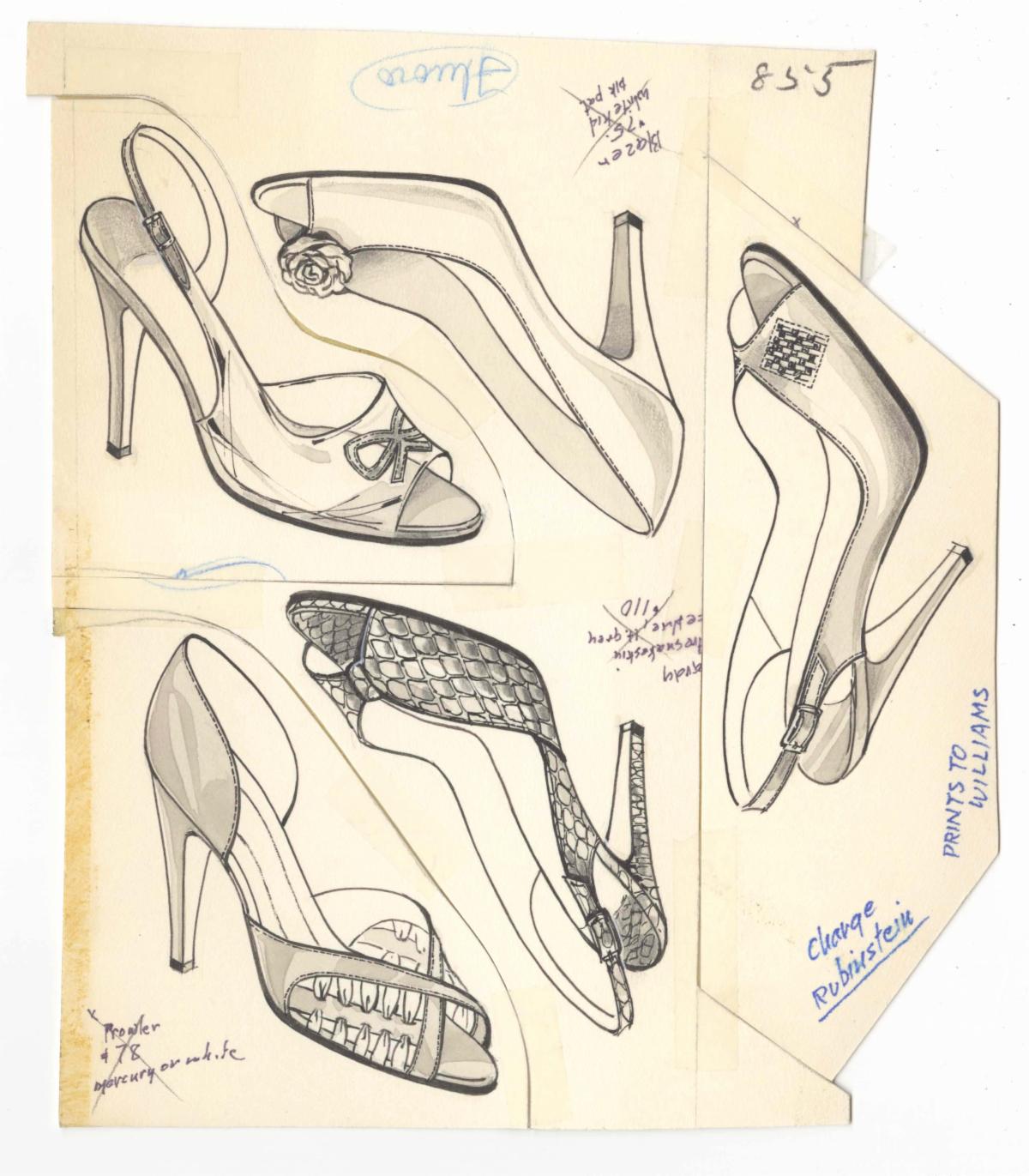
Hand-drawn shoe illustrations, undated.
—Rubinstein’s and Richard’s Shoes Records [MSS 1193]
|
|
David Rubinstein opened Rubinstein’s Shoes in downtown McKeesport, Pa. in 1933. It served the McKeesport area for 68 years before closing in 2001.
Rubinstein’s son Richard Rubinstein initially worked for his father before opening Richard’s Shoes, which eventually had branches in the Greengate and Eastland malls. Richard Rubinstein also started the shoe store Footloose, opening a location in Shadyside in 1987 and in Mt. Lebanon in 1992.
|
|
Interior pages of Abraham Goldstein haggadah
—Abraham Goldstein haggadah [MFF 4993]
|
|
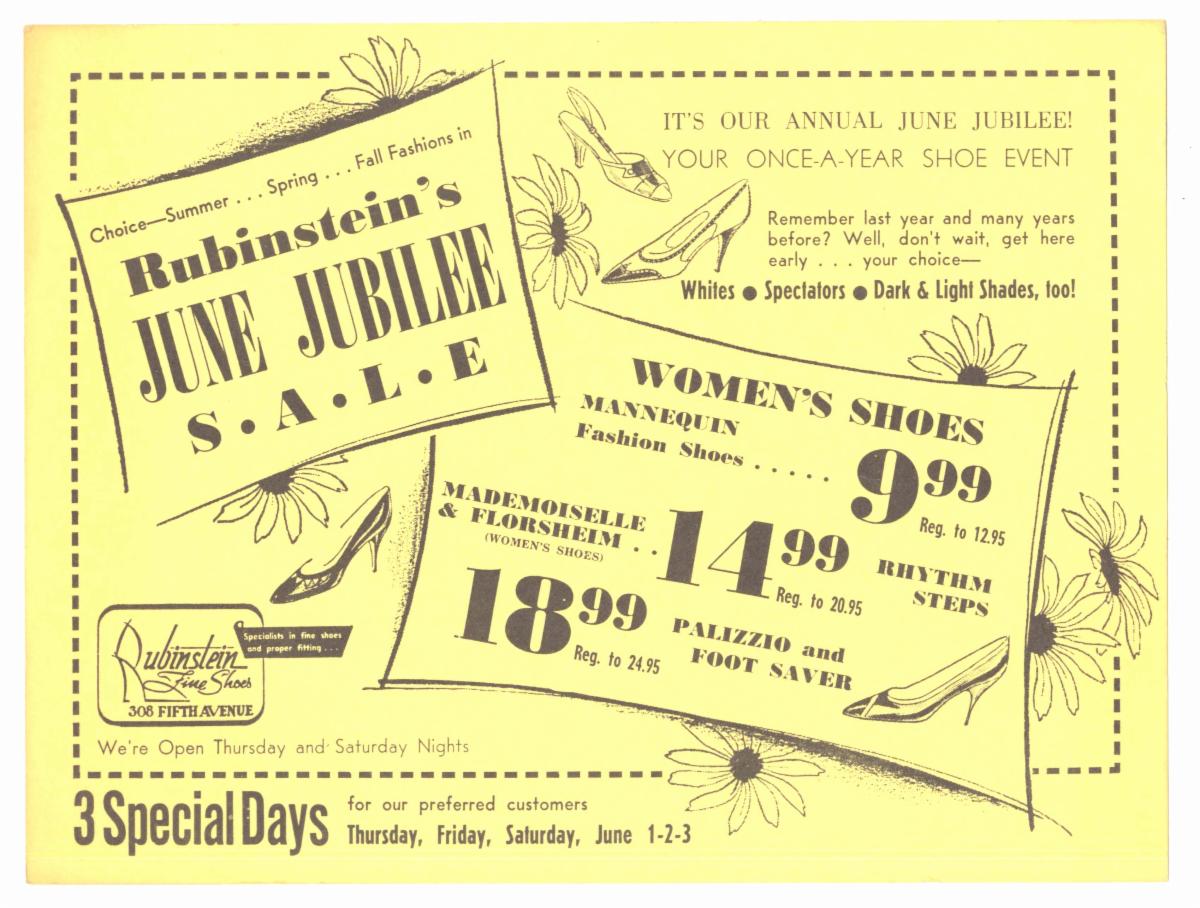
The Rubinstein’s and Richard’s Shoes Records [MSS 1193] documents these two businesses through seven scrapbooks of advertisements and promotional materials from the mid-20th century. In addition to the scrapbooks, the collection has dozens of original pen-and-ink illustrations of shoes used in these advertisements.
The collection also includes a register from McKeesport High School's class of 1924 and a program from the class of 1952's ten-year high school reunion—both useful for genealogists.
|
|
Jewish Encyclopedia of Western Pennsylvania:
Pittsburgh Hebrew School
|
|
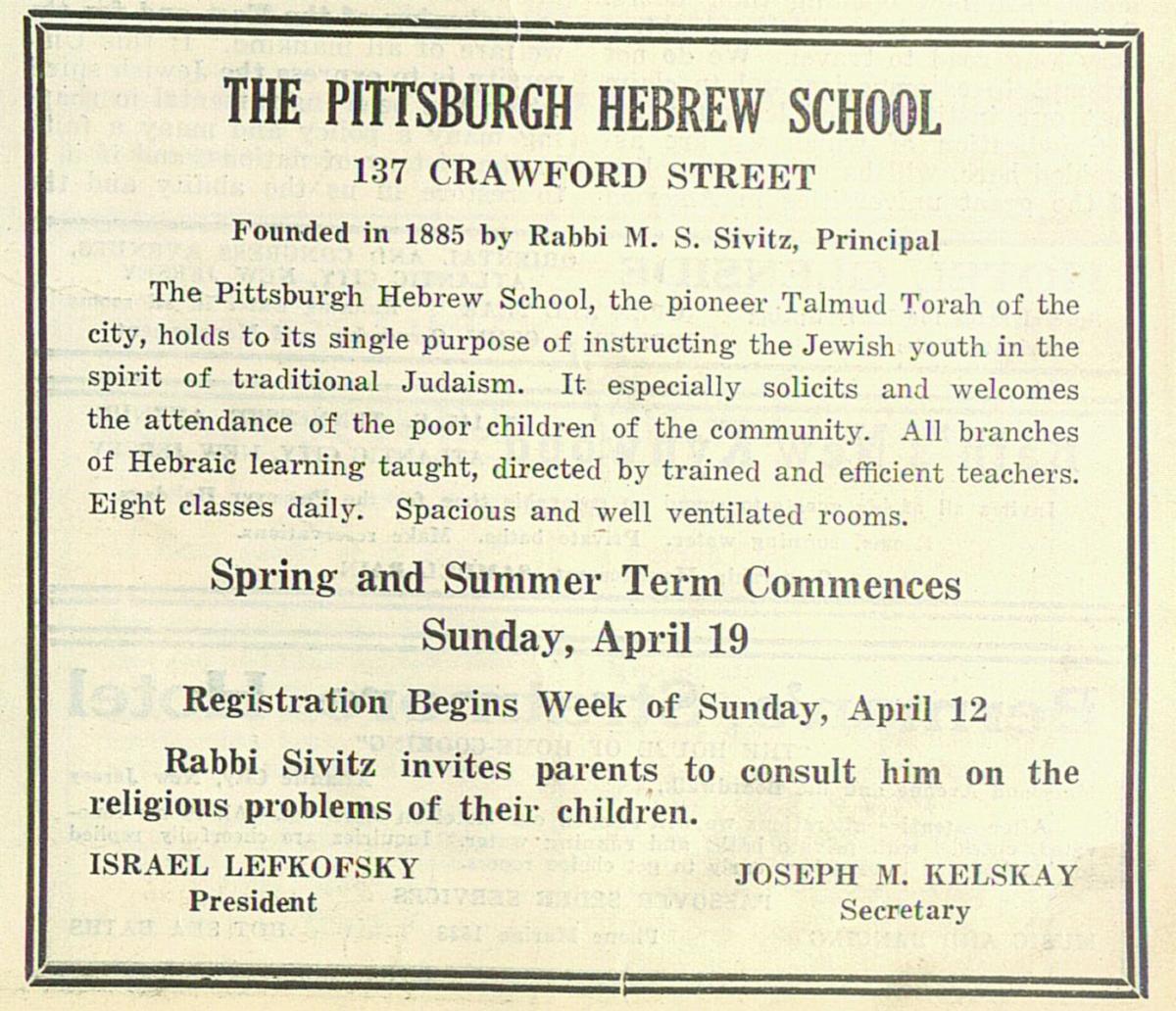
Pittsburgh Hebrew School advertisement.
—Jewish Criterion, April 10, 1925
|
|
The Pittsburgh Hebrew School, also known as the Talmud Torah, was a Jewish educational institution for boys in the Hill District created by Rabbi Moshe Shimon Sivitz. Around the time of its incorporation in 1899, the Pittsburgh Hebrew School launched a building fund campaign. It eventually purchased a three-story building at 137 Crawford Street, where it remained for decades.
Once installed in the new building, the school operated two units: a cheder for younger boys and a yeshiva for older boys. By the mid-1920s, student enrollment at the Pittsburgh Hebrew School was approaching 500.
|
|
Last week, we accidentally included the wrong link for our new entry on the Pittsburgh Platform. You can find the correct link to that entry here.
|
|
The Jewish Encyclopedia of Western Pennsylvania brings together numerous online resources into a clearinghouse for conducting research about Jewish history in this region. As we migrate information to this new website, we’ll be announcing new entries and resources in this section of the newsletter. |
|
On Display:
Perpetual Light #1
|
|
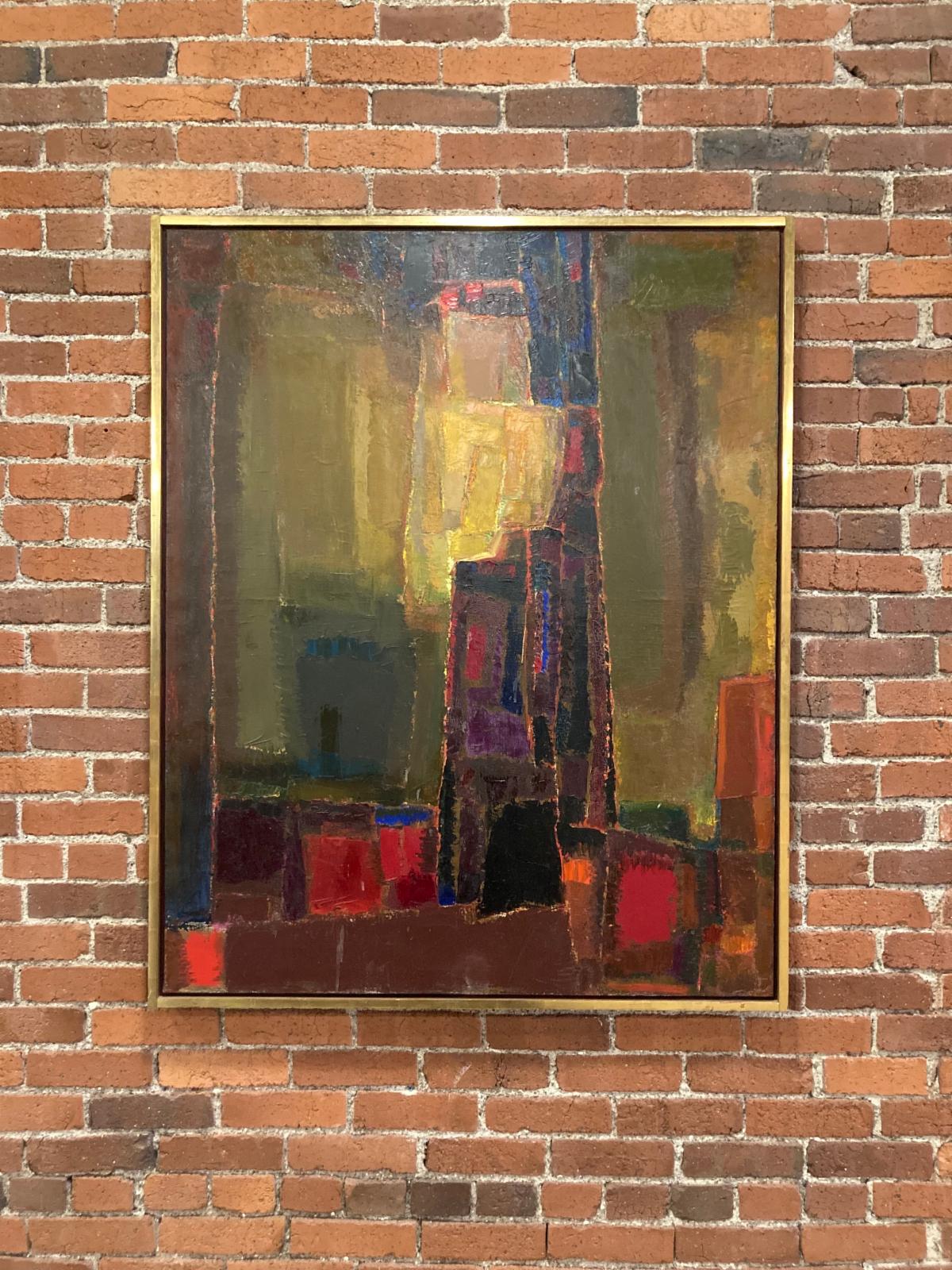
"Perpetual Light #1"
—gift of James Rich
|
|
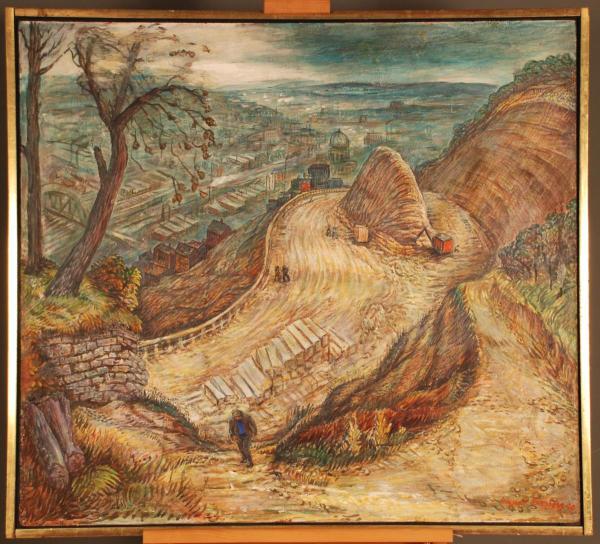
If you’ve visited our reading room in the past decade, you may have admired Samuel Rosenberg’s 1940 painting, “Construction on Bigelow Boulevard.” It's a classic Pittsburgh scene, showing a Works Progress Administration crew repairing the famous local roadway against the backdrop of Polish Hill and the epic sweep of the Allegheny River.
The painting temporarily left the reading room this week and will soon re-appear in an upcoming exhibit at the Heinz History Center. In it’s place, we’ve hung a very different Rosenberg: his rarely exhibited abstract work “Perpetual Light #1.”
Rosenberg painted “Perpetual Light #1” in 1959. It debuted at the Associated Artists of Pittsburgh's (AAP) annual exhibit in March 1960. He showed it again in early 1962, as part of a one-man Associated Artists' show at the Carnegie Institute.
|
|
Maurice and Thelma Davis acquired the painting in July 1960. Their estate later sold it to Concept Art Gallery. James Rich acquired it from the gallery in September 2018 and bequeathed it to the Rauh Jewish Archives in 2019.
Samuel Rosenberg (1896-1972) first gained local prominence as a portrait and scene painter in the 1920s and 1930s. Throughout the 1940s, he became one of the leading local advocates for abstract art. “Perpetual Light #1” is a great example of the luminous abstractions he was painting by the 1950s, using color theory and technique he had been perfecting for half a century.
Reviewing the one-man show in 1962, Pittsburgh Post-Gazette art critic Jeanette Jena connected abstract pieces like “Perpetual Light #1” to earlier figurative works like “Construction on Bigelow Boulevard.” She wrote: “As a mature man is the sum of his experiences, so do these recent works (not really non-objective because they are inspired by outside stimuli) become a kind of microcosm of all of Rosenberg’s past paintings, epitomizing those various worlds of social realism (the Soho and Hill District period), the Biblical patriarchs, the gala fruit markets, the series on the tragedies of war.”
|
|
Here, the “outside stimulus” is a ner tamid—the “perpetual light” that hangs over the ark in every synagogue, representing the menorah in the ancient Temple in Jerusalem.
“Perpetual Light #1” will remain on display for much of this year. If you find yourself downtown in the next few months, swing up to the sixth floor to see this beautiful painting.
|
(Right) "Construction on Bigelow Blvd."
—gift of Arline Rosenberg
|
|
|
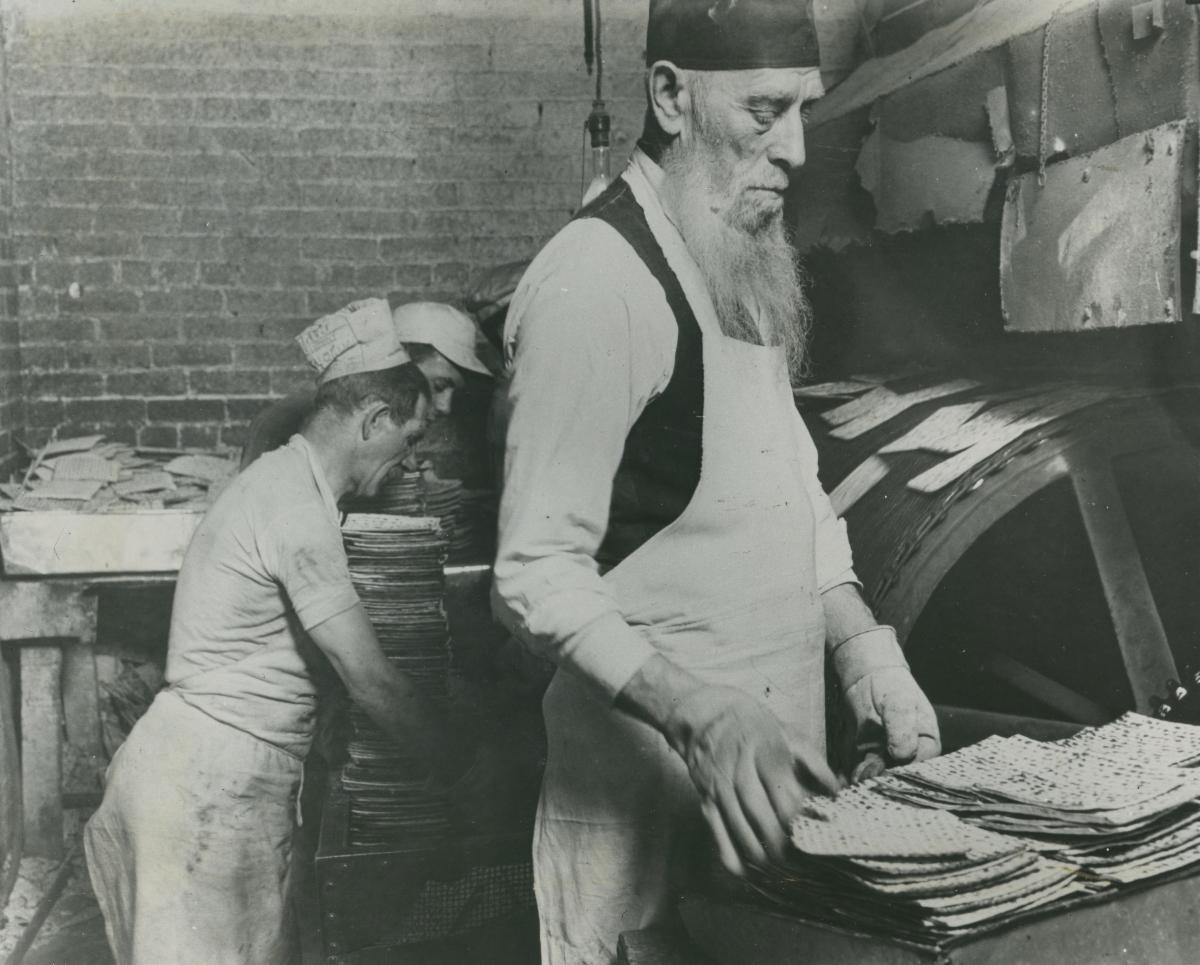
Jacob Radbord supervising matzah baking at Caplan's Bakery, 1934.
—Caplan Baking Company Photograph, OFP 1
|
|
As part of National Volunteer Week 2022, JFCS Pittsburgh is inviting its volunteers and friends to learn about "Passovers Past: How Pittsburgh celebrated a century ago." Rauh Jewish Archives Director Eric Lidji will showcase historic materials from local Passovers in the 1910s and 1920s.
|
|
April 24
JGS Pittsburgh Presents: Kirsten Fermaglich
|
|
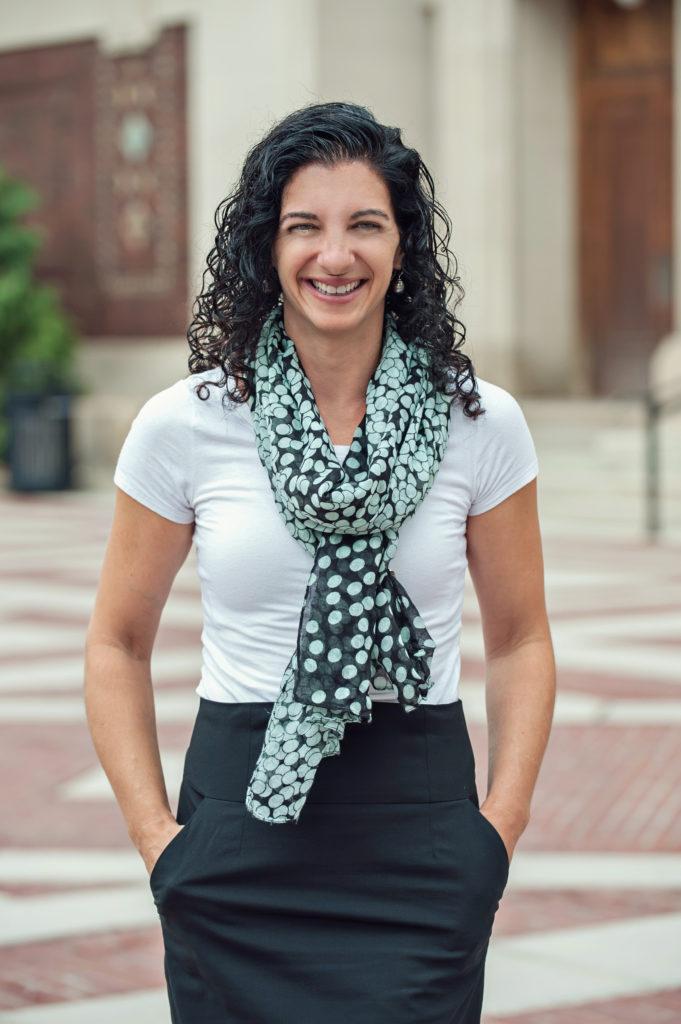
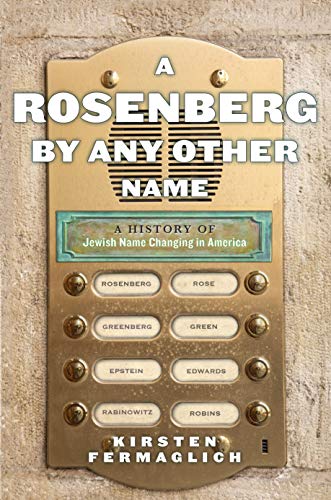
(Left) Kirsten Fermaglich, (Right) "A Rosenberg By Any Other Name" |
|
Our thinking about Jewish name changing tends to focus on clichés: ambitious movie stars who adopted glamorous new names or insensitive Ellis Island officials who changed immigrants’ names for them.
Scratching below the surface, Fermaglich examines previously unexplored name change petitions to upend the clichés, revealing that in twentieth-century New York City, Jewish name changing was actually a broad-based and voluntary behavior: thousands of ordinary Jewish men, women, and children legally changed their names in order to respond to an upsurge of antisemitism.
Rather than trying to escape their heritage or “pass” as non-Jewish, most name-changers remained active members of the Jewish community. While name changing allowed Jewish families to avoid antisemitism and achieve white middle-class status, the practice also created pain within families and became a stigmatized, forgotten aspect of American Jewish culture.
Using court documents, oral histories, archival records, and contemporary literature, Fermaglich argues that name changing had a lasting impact on American Jewish culture. Ordinary Jews were forced to consider changing their names as they saw their friends, family, classmates, co-workers, and neighbors do so. Jewish communal leaders and civil rights activists needed to consider name changers as part of the Jewish community, making name changing a pivotal part of early civil rights legislation. And Jewish artists created critical portraits of name changers that lasted for decades in American Jewish culture. The talk ends with the disturbing realization that the prosperity Jews found by changing their names is not as accessible for the Chinese, Latino, and Muslim immigrants who wish to exercise that right today.
This is a virtual program. It will be recorded, and the recording will be made available for JGS-Pittsburgh members who are current on their dues.
This program is possible through the support of the William M. Lowenstein Genealogical Research Endowment Fund of the Jewish Community Foundation.
|
|
Kirsten Fermaglich is Professor of History and Jewish Studies at Michigan State University. Her most recent book, A Rosenberg By Any Other Name: A History of Jewish Name Changing in America (NYU, 2018) was awarded the Saul Viener Book Prize by the American Jewish Historical Society in June 2019. Fermaglich is also the author of American Dreams and Nazi Nightmares: Early Holocaust Consciousness and Liberal America, 1957-1965 (Brandeis University Press, 2006) and the co-editor of the Norton Critical Edition of Betty Friedan, The Feminine Mystique (2013), with Lisa Fine.
|
|
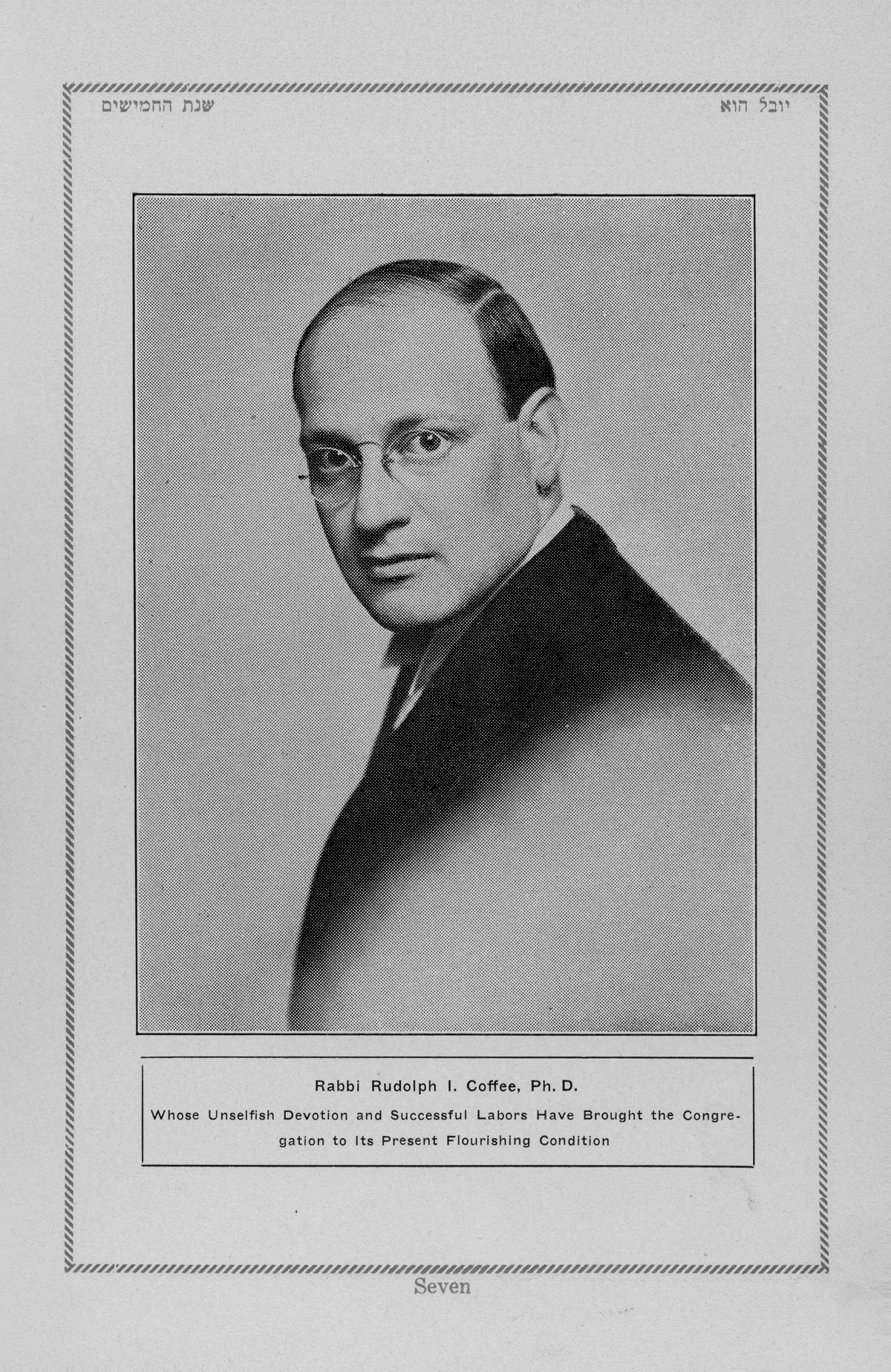
Rabbi Rudolph Coffee came to Pittsburgh in 1906 to lead Tree of Life Congregation. He earned a doctorate from the University of Pittsburgh in 1908 and remained in this city until 1915, when he took a job with the social services arm of the International Order of B’nai B’rith.
He eventually went west to his native Oakland, Ca. and became a one of the first American advocates for Jewish prisoners. In addition to his congregational duties, he was chaplain of Alcatraz, San Quentin and Folsom prisons. He arranged holiday services and kosher food, services that were exceptionally rare in correctional facilities at that time.
The online Jewish magazine Tablet recently published an article by Rachel R. Román about Rabbi Coffee’s work in the California prison system titled “Changing Life Behind Bars.”
|
|
|
Passover and the 1950 Census |
|
|
|
The 1950 Census came between the end of World War II and the beginning of the Korean War. It was a time of unusually high mobility, with many Americans living overseas.
To accommodate, the census included a system for counting people who were living at a temporary address when the census taker came along.
These people filled out a P2 form and mailed it to the census office in Washington D.C. It was transcribed into the pages of the enumeration district where the person lived.
|
|
The census began that year on April 1, 1950, which happened to be the first day of Passover. If the census taker came to your town on that first day, and your family was away for the holiday, there's a chance they may have used the P2 form. If so, you can find them after Sheet 71 in their home district.
You can access the census data using the link below. As additional research tools become the coming weeks and months, we'll share them here.
If you would like help using these records, please contact the Archive.
|
|
Pittsburgh Jewish Newspaper Project |
|
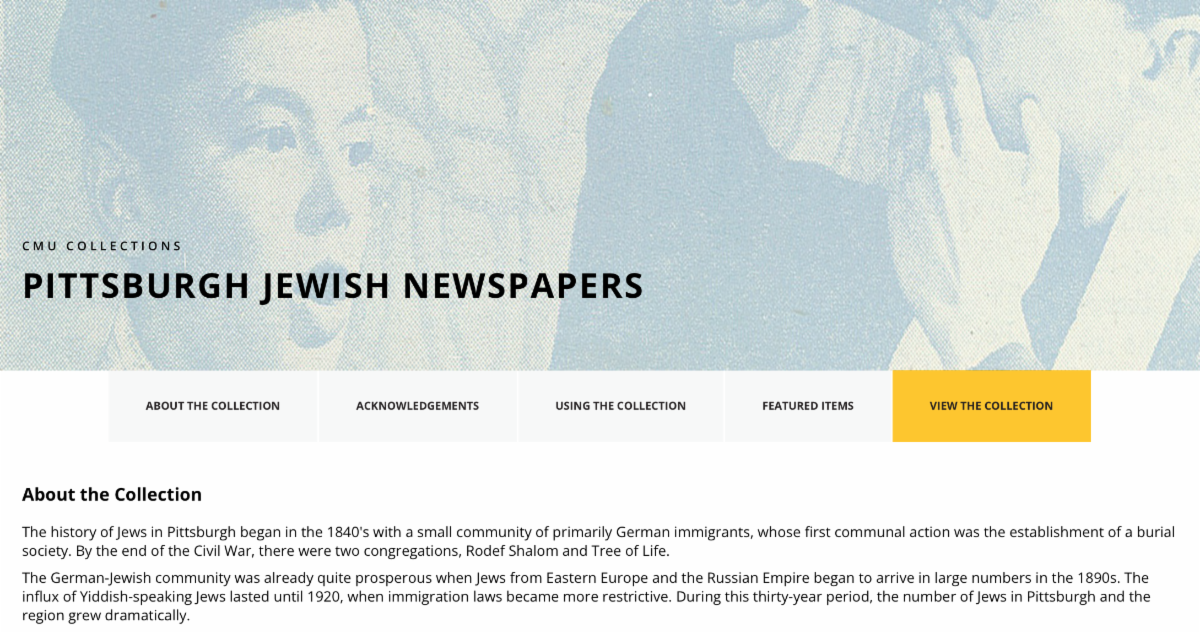
The home page of the new Pittsburgh Jewish Newspaper Project website, hosted by Carnegie Mellon University Libraries. The redesigned website is launching this month. |
|
By now, you're probably expertly zipping around the new Pittsburgh Jewish Newspaper Project platform. But if you still need a little help navigating the features and tools of the website, the Rauh Jewish Archives recently contributed a brief explanatory article to the Jewish Chronicle. It provides some basic tips and techniques for conducting research using the new site.
We plan to provide a live virtual training workshop in the near future to review the website and its functionalities. Until then, we are here to help you troubleshoot problems. You can contact the archive or call 412-454-6406.
|
|
[IMAGE: Marian Schreiber and employees at the Schreiber Trucking Company, c.1943—from Schreiber Family Papers and Photographs, MSS 846.]
If you like this newsletter, why not forward it to a friend? We want to share the story of Western Pennsylvania Jewish history with as many people as possible.
If you've received this newsletter from a friend or neighbor, and you want to read more, just click on the link below to start receiving future editions.
|
|
The Rauh Jewish Archives was founded on November 1, 1988 to collect, preserve, and make accessible the documentary history of Jews and Jewish communities of Western Pennsylvania. You can help the RJHPA continue its work by making a donation that will directly support the work being done in Western Pa. |
|
|
|
|
|
|