REAL WELLNESS REPORT # 895

January 1, 2026


Black Holes, the Large Hadron Collider, Conspiracies and REAL Wellness

INTRODUCTION: EARTH, HUMANS AND THE GREAT BEYOND 


Earth is my favorite planet. I’m biased—it’s the only one I’ve experienced first hand, and I’ve enjoyed it for nearly a century. (Any number within twelve years is “nearly,” IMHO.) 


Based on calculations by the Population Reference Bureau (PRB) and other demographers, the current living population of Earth is over 8 billion. The living comprise only 7% of the 117 billion who ever lived here. This figure comes from PBR’s estimate of population sizes and birth rates throughout human history, starting from the emergence of Homo sapiens around 300,000 years ago. 


Opinions vary as to what happened to the 93 percent of Earthlings after they died. Readers of this report, like everyone else, have different opinions about post-life human destinations, if any. I’m with Robert Green Ingersoll, as usual, who considered life to be “a narrow vale between the cold and barren peaks of two eternities.” Following these words, Ingersoll makes a poetic reference to what’s next: 


“We call aloud and the only answer is the echo of our wailing

cry. From the voiceless lips of the unreplying dead there 

comes no word; but in the night of death Hope sees a 

star and listening Love can hear the rustle of a wing.”


That last phase struck me, a secular infidel convinced that nothingness follows death, as a little surprising since Ingersoll often noted that he did not know what happens. Nobody knows, despite claims to the contrary put forward by many if not most religions, particularly Christianity. This total cluelessness applies to all 117 billions when they lived and those of us still here, including the crowd who claim they know exactly what’s next, such as the Pope, TV evangelists, and militant obnoxious Christian nationalists like J.D. Vance and Erika Kirk.


Fortunately, the great poet, Professor Ai, explained Ingersoll’s references to "Hope spotting a star" and "listening Love’s" picking up the sound of a wing's rustle.


“In his famous eulogy for his brother Ebon, Robert Ingersoll meant

that even in the face of death, a universal human experience of 

darkness and uncertainty, hope can find a guiding light (the star)

and love can sense a presence or promise of something beyond 

(the rustle of a wing), suggesting an intuitive, non-rational faith in

continuity or spiritual solace, despite his own skepticism about 

organized religion. These powerful lines, spoken during grief,

reflect a universal longing for meaning and connection that

transcends the silence of the grave, offering comfort through

metaphor rather than dogma.”


That works for me. I appreciate apt metaphors. I use one in promoting

REAL wellness, as REAL represents the four dimensions of this philosophy

and lifestyle concept—Reason, Exuberance, Athleticism and Liberty.

Despite the dangers and risks of Ai, including bias, cybersecurity threats,

data privacy issues, environmental harms, existential concerns, intellectual property infringement, job losses and lack of accountability, it surely does

make getting good grades in high school and college a lot easier. Haha—

just kidding. Don’t do that. 


Yes, of course, Ai at the present time is truly a gobsmacking, gobmouthed wonderment in countless legitimate ways, such as demonstrated above in clarifying a segment of Ingersoll’s tribute to his brother.


BLACK HOLES 


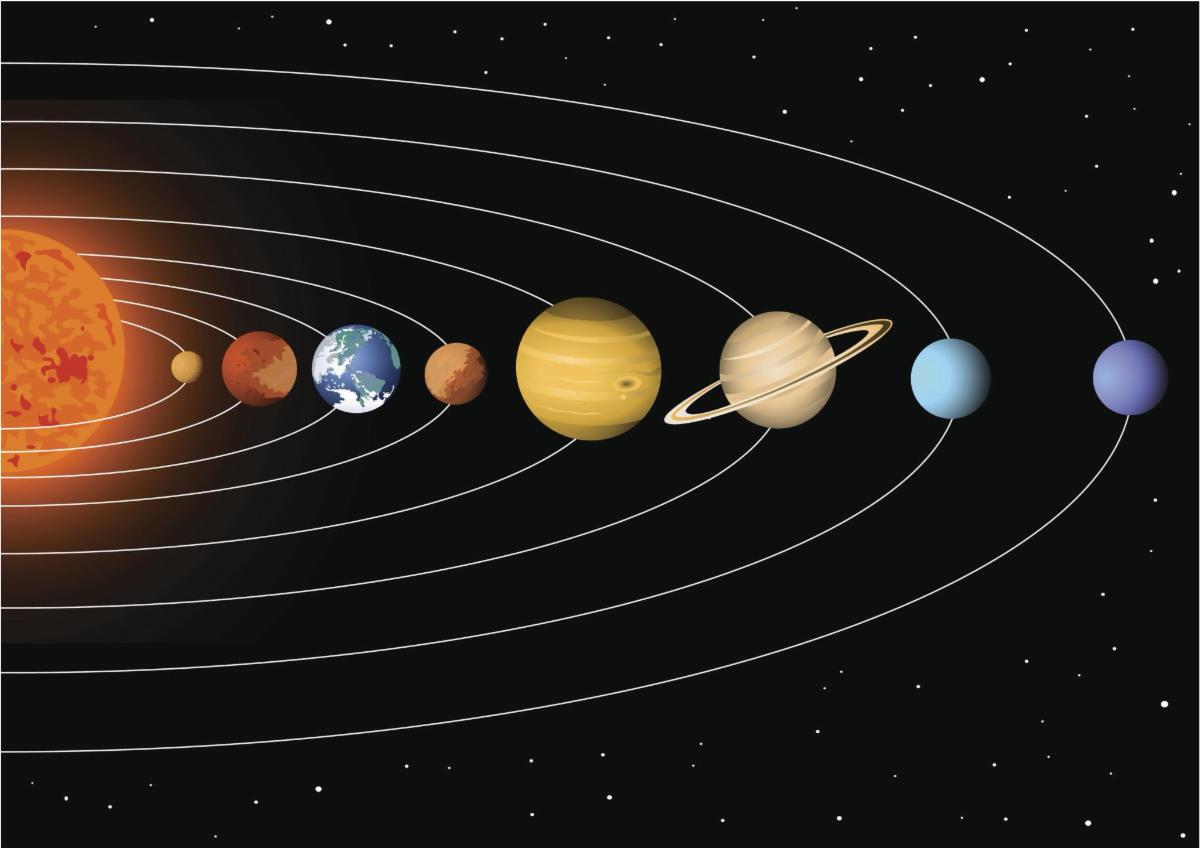
Between our planet and the sun are two others, Mercury and Venus. Both have a few pluses (e.g., no known diseases, no wars and no religions). These advantages are canceled somewhat by certain disadvantages, such as lack of water, oxygen, and life forms, plus severe temperatures. Mars and the other four planets in our solar system are also highly unattractive for human purposes. Earth will be the # 1 best planet for humans for a very long time, if not forever, so let’s get much much better at looking after it.

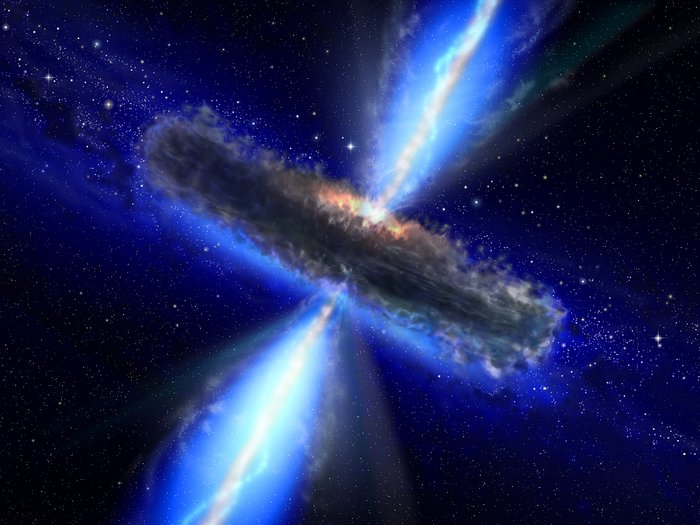
One thing we definitely don’t ever want to do is build a black hole. You can guess why, but I’ll review the highlights. A black hole is a region of space with an attitude. It has so much concentrated mass within it (you can’t imagine how much—it’s beyond awesome) that its gravitational pull would be inescapable.


The nearest known black hole to Earth is Gaia BH1, located about 1,560 light-years distant in the constellation Ophiuchus; there might even be an isolated black hole as close as 80 light-years away, but this suspicion has not been confirmed. A supermassive black hole resides at the Milky Way's center, called Sagittarius A—around 26,000 light-years distant. 


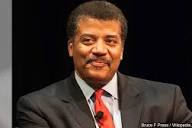
Several years ago I attended a lecture in St. Petersburg by Neil deGrasse Tyson (left), the media savvy, highly entertaining astrophysicist who directs the Hayden Planetarium at the American Museum of Natural History in New York. Thanks to Dr. Tyson, I can appreciate the galactic health hazards posed by black holes. The good scientist even wrote a best-seller about this phenomenon entitled, “Death By Black Hole.” So, make no mistake—these are mean mothers that will absolutely ruin anyone’s attempt to live a wellness lifestyle. Don’t get anywhere near one and for god’s sake, so to speak, don’t even think about building one! A black hole, that is. 

THE LARGE HADRON COLLIDER


This may seem obvious—who would want to do that, build a black hole, even if it were possible? Nobody. Yet, amazingly enough, a good number

of conspiracy types convinced themselves that oblivion by black hole might be on the horizon if scientists built the “Large Hadron Collider,” or LHC.


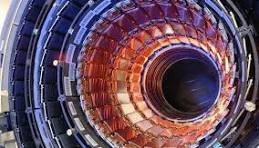
The LHC was built despite dire predictions, and is now a reality, working as designed for the past 15 years firing protons to energies of seven trillion electron volts before banging them together. The goal is to discover the kind of energies and conditions last seen a trillionth of a second after the Big Bang. The collider mashes gold ions to create what is known as “quark—gluon plasma.” So far, this wondrous advancement of cosmic science seems really cool, and there has been no hint of a black hole, tiny or otherwise, though fear remains in some conspiracy-oriented minds that the end may yet be nigh.  


In a cosmic sense, there really is no such thing as a “tiny” black hole. One of these suckers the size of a bottle cap would contain enough mass and thus gravitational pull to digest the planet, moon and half a dozen other planetary bodies in our solar system much faster than a speeding bullet. A bullet travels at a glacial pace compared to a proton in the LHC.

The Large Hadron Collider lies in a tunnel 17 miles in circumference

deep (574 feet) beneath the France–Switzerland border near Geneva


CONSPIRACY BUFFS 


Many HLC-phoebes remain on edge, fearing an inadvertent screw-up that could give birth to a black hole faster than you could say, “sweet Jesus!” The black hole alarmists envision Earthlings swept violently into a bleak void, a cavity of calamity smack dab in our proverbial backyard. The only good news, kind of, is that if this ever happened, we would experience neither fear nor pain as we became spaghetti-plasma as Earth was vaporized in a millisecond (0.001).


Collider black hole conspiracists describe variations of string theory to make their case. They foresee something called a “strangelet” that could “turn the Earth into a dead, shrunken dense lump of strange matter.” (See Dennis Overbee, “Asking a Judge to Save the World, and Maybe a Whole Lot More,” New York Times, March 29, 2008.)


The conspiracy worry-fest goes beyond dread of an inadvertent black hole. A broader network of alarmists are discomposed by varied alarms about the true purpose of the HLC, such as the whole thing being a nefarious contrivance:

  • To open portals to other dimensions;
  • To bring about apocalyptic events, such as earthquakes;
  • By time travelers to destroy Earth;
  • To shift the world into an alternate timeline; and/or
  • To open a gateway to hell for demons or the antichrist.