Rail & Labor News from RWU
| |
Weekly Digest Number 45 - November 5th, 2024 | |
Welcome to the RWU Rail & Labor News! This news bulletin is produced and emailed out each Tuesday morning. We hope you find each week's news and information useful. If so, please share with co-workers, friends, and colleagues. If you like, you can sign them up to get all the news from RWU HERE. Or forward them the link. Got a hot tip? Please forward the article and a link to raillabornews@gmail.com. Note: If you read over this news bulletin each week, you will be sure to never miss the important news of what is going on in the railroad world from a worker's perspective! | |
|
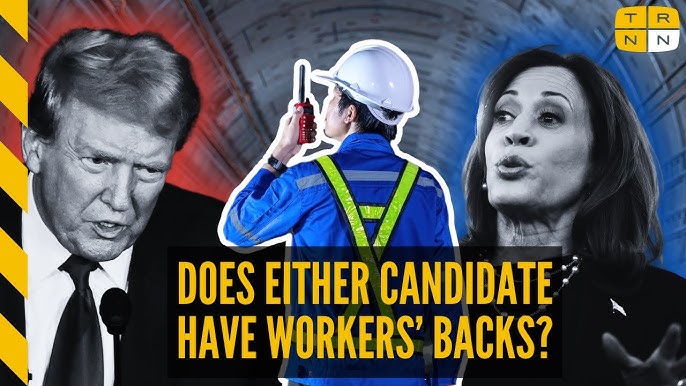
Editor's Note: Two years ago, rail workers stood at the threshold of a national strike, ready to fight for safety and dignity on the rails. But when Biden and Congress intervened, they crushed the workers’ right to strike, forcing them into a contract that ignored the core issues—safety, scheduling, and respect for the lives that keep the rails moving. In this discussion, three seasoned railroaders; who you may know, revisit that betrayal and the bitter lessons learned, as they consider how working people must push forward.
This isn’t just about choosing sides in an election. It’s about deciding how workers can wield real power, inside and outside a political system that often treats them as expendable. These workers are urging a new path—one rooted in solidarity and a determination to build beyond the ballot box, toward a future where labor’s voice can no longer be ignored.
| |
|
The Real News Network / November 2nd, 2024
The US was on the cusp of seeing its first national rail strike in decades two years ago. Then, President Joe Biden, at the urging of the rail companies and with the help of both parties in Congress, preemptively blocked railroad workers from striking in December of 2022. Workers were forced to accept a contract that did not address the vast majority of issues that have put them, our communities, and our supply chain at risk. How has this all shaped railroad workers’ attitudes and approaches to the upcoming elections? In this urgent panel discussion, we pose this question directly to three veteran railroaders and have an honest discusssion about how working people should act strategically within and outside the electoral system to advance their interests.
| |
Editor's Note: As BNSF and Norfolk Southern announce new agreements with the National Conference of Firemen and Oilers (NCFO) and other unions, it’s clear they’re aiming for stability in advance of the next bargaining round. These deals promise a 3.5% annual wage increase, better vacation options, and enhanced healthcare—a seemingly solid win on paper. Yet, for workers, the question remains: are these terms enough to address the relentless pressures of their roles, or just another patch on a system fraying at the edges? This piece explores the fine print of these agreements and what they may signal for the future of rail labor. | |
Progressive Railroading / October 28th, 2024
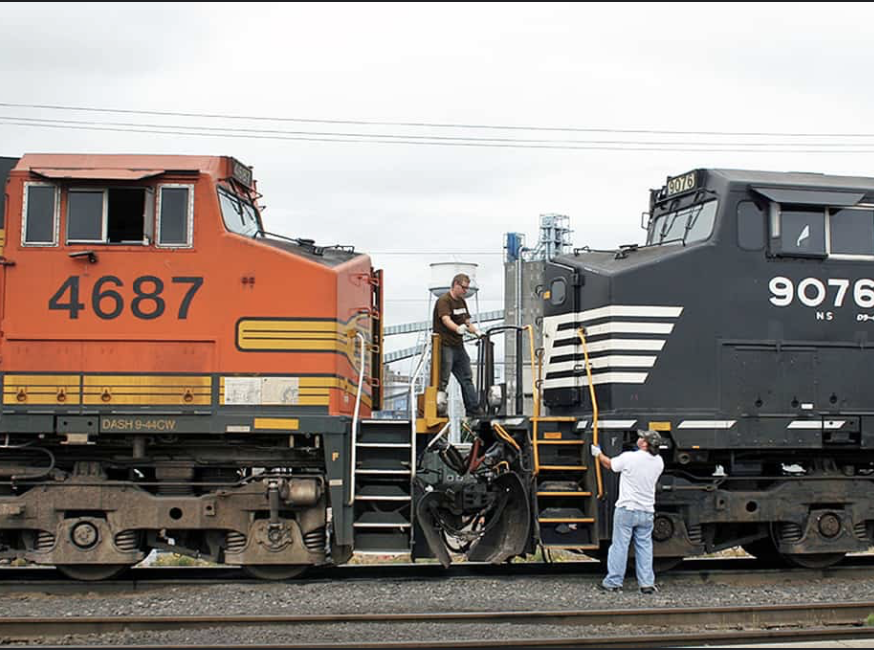
National Conference of Firemen and Oilers (NCFO) members who work for BNSF Railway Co. have ratified their collective bargaining agreement with the Class I, BNSF announced last week. NCFO members also recently ratified the union's tentative agreement with Norfolk Southern Railway. To date, NS has reached tentative agreements with 10 of its 13 unions, which cover 67% of its workforce, NS officials said in a press release. According to press releases from BNSF and NS, the respective agreements will provide employees with a 3.5% average wage increase per year for the next five years and offer employees more vacation time earlier in their careers, as well as enhanced healthcare benefits. Additionally, BNSF reached a tentative five-year collective bargaining agreement with the International Brotherhood of Electrical Workers (IBEW), the Class I announced late last week. The agreement with IBEW is the ninth tentative agreement announced by BNSF two months before the collective bargaining round. Those agreements represent 53% of BNSF’s union workforce.
| |
|
Editor's Note: The FRA’s proposed rule on handling PTC outages underscores a familiar truth: technology may promise safety, but without a real commitment to its responsible use, it’s an empty promise. This rule aims to set clear, uniform protocols when PTC systems are down, mandating that railroads promptly report outages and follow specific safety measures.
Yet, for workers on the front lines, this regulation will only matter if it’s enforced with integrity. Safety isn’t a set of guidelines on paper; it’s the result of a system that values lives over profits. As railroads navigate these standards, the rail labor force and public alike should ask: will these changes be more than lip service, or is this just another measure to keep the wheels turning at any cost?
| |
|
Progressive Railroading / October 28th, 2024
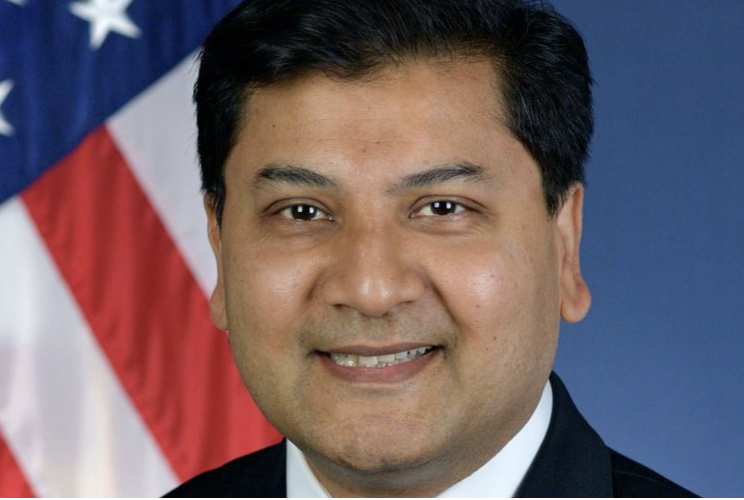
The Federal Railroad Administration has proposed a rule to ensure that railroad operations can continue safely under limited circumstances when positive train control (PTC) systems are temporarily disabled. PTC technology is designed to prevent train-to-train collisions, over-speed derailments, incursions into established work zones, and the movement of trains through switches that are left in the wrong position. The FRA proposes standardizing railroad operations regulations when PTC systems are not enabled, which can occur due to a PTC outage or when PTC systems are temporarily disabled to facilitate maintenance, repairs, or upgrades to railroad infrastructure. “This proposed rulemaking intends to establish clear, uniform processes for addressing issues with PTC systems while eliminating uncertainty and inconsistent application of FRA’s regulations,” said FRA Administrator Amit Bose in a press release. The proposed changes will ensure that railroads consistently provide FRA with the information necessary to assess temporary outages promptly, establish additional operating requirements to protect public and worker safety when outages occur, and enhance the efficiency of rail operations, Bose added.
| |
|
Editor's Note: The NCCC has made its move, opening the national bargaining round with promises of an 18.8% wage increase over five years, better healthcare, and vacation benefits—a shiny package meant to mask the deeper cracks in this industry. Although, after years of grueling schedules, bare-bones staffing, and relentless pressure, rail workers deserve more than token concessions. This offer may seem decent, but it does little to address the brutal conditions that keep workers stretched to their limits and communities at risk, which could have been addressed in the last round, but…
The carriers want an “early resolution” to keep labor quiet and profits high, but hopefully rail labor knows better than to be bought off with crumbs. This bargaining round isn’t just about percentages; it’s about demanding real change, a system that puts workers and safety above Wall Street’s hunger for more. Rail workers have been shortchanged long enough—it’s time to push for a deal that finally respects the people who keep this industry moving.
| |
 |  |
The National Carriers’ Conference Committee (NCCC) announced its bargaining notice to the 12 major rail labor organizations representing unionized rail employees, officially opening the industry’s national collective bargaining process. The NCCC represents the freight-rail industry in national collective bargaining. In recent months, several Class 1 rail carriers and their union counterparts have reached — and in many cases, ratified — five-year local collective bargaining agreements ahead of the national bargaining round, NCCC officials said in a press release. Additional ratifications are pending. The terms of these early local agreements call for increasing pay by 18.8% over five years, enhancing health and welfare benefits with no increase to the employee contribution rate, and giving employees access to more paid vacation time earlier in their careers. These new local agreements build on the 24% wage increase from the 2022 bargaining round. NCCC officials said the agency’s Section 6 notices propose an early resolution of the bargaining round based on the pattern established by these recent local agreements.
| |
Editor's Note: The FTA’s new rule finally sets a national safety standard for transit-rail workers, requiring agencies to establish protection programs and train workers to report unsafe conditions. After decades of preventable injuries and fatalities, it’s a step long overdue. But safety won’t come from rules alone—it demands real enforcement and accountability. This regulation will mean something only if transit agencies prioritize worker lives over profit and convenience. | |
|
The Federal Transit Administration has issued a new regulation to protect transit workers while on or near railways. The rule marks the first time the FTA has issued a national standard to make transit-rail workers’ jobs safer. Under the final authority, published today in the Federal Register, transit-rail agencies nationwide will be required to create a roadway worker protection program and receive State Safety Oversight Agency (SSOA) approval within one year. FTA officials said in a press release that the agencies will also be required to implement training for workers on reporting unsafe acts and conditions. According to data reported in the National Transit Database, 29 transit workers were killed, and 114 were seriously injured while performing trackwork between Jan. 1, 2008, and June 30, 2024, FTA officials said. The new rule was praised by the National Transportation Safety Board, which has been warning about roadway worker safety for years.
| |
Editor's Note: A federal court in Omaha upheld the reinstatement of a BMWED member at Union Pacific, pushing back against the railroad’s attempt to override an Adjustment Board’s decision. This ruling reaffirms the role of Arbitration Adjustment Boards under the Railway Labor Act (RLA) in handling “minor” labor disputes. Union Pacific’s tactic—trying to leverage its financial power to drag an unfavorable decision into federal court—marks a troubling attempt to shift the rules in its favor. The court’s decision is a win for labor, sending a clear message that railroads cannot simply buy their way around established protocols and justice for workers. | |
BMWED-IBT / October 30th, 2024
A federal court in Omaha upheld the reinstatement of a BMWED member on Union Pacific on Oct. 25, the correct decision and an apparent cause for celebration. What makes it especially noteworthy, however, is what the court said about the railroad’s craven attempt to vacate the award in the first place and its affirmation that labor disputes mostly remain the purview of Arbitration Adjustment Boards as stated in the Railway Labor Act.
A brief explanation of Adjustment Boards and their role as prescribed by the RLA is essential to fully understand the significance of Senior United States District Judge Joseph F. Bataillon’s ruling and the devious strategy Union Pacific intended to employ. The RLA spells out precisely the rules by which the BMWED and rail management handle “minor” labor disputes, such as supposed carrier policy and regulations violations. Union Pacific was unhappy with the decision of the adjustment board. Instead of accepting it – as has been protocol for decades – it appealed the arbitrator’s decision to the United States District Court for the District of Nebraska. That may sound like a routine step, but it marked a potentially significant shift in how “minor” rail labor disputes would come to resolution.
Union Pacific attempted to change the game's rules, strategizing that their financial advantage in prolonging unfavorable decisions legally could result in an avenue to overturn arbitration that didn’t go their way. For decades, the RLA has provided our members with a fair and economical path to justice when accused of wrongdoing and potential termination. Yes, the gears of justice can grind slowly, and sometimes, an arbitration decision can be disappointing. However, the process is fair to both the Union and the carrier, as it was intended when the RLA first adopted it. Union Pacific's attempt to subjugate this process by prolonging unfavorable awards to the federal court is corrupt behavior, and the court's decision to stop it is a correct repudiation of their dishonest plan.
| |
|
Editor's Note: Norfolk Southern’s leadership claims it’s back on track, touting improved service and a focus on profitability and efficiency targets. But beneath the customer-friendly talk lies a hard truth: NS is doubling down on cost-cutting and productivity, pushing for a sub-60 operating ratio that prioritizes Wall Street’s demands over worker safety and community well-being.
After the East Palestine disaster, the failed takeover attempt, and recent leadership chaos, NS’s “commitment” to its stakeholders looks more like an effort to regain corporate standing than a genuine change of course. For those who’ve seen what NS’s relentless drive for profit has cost, the question is clear: Will the railroad put people before profits, or are we in for more of the same under a new banner?
| |
Progessive Railroading / October 2024
Ed Elkins reaches out to customers often to gauge if Norfolk Southern Railway is providing the transportation service they need. The Class I’s executive vice president and chief commercial officer knows it’s extremely difficult to meet sales and marketing goals if the service product isn’t up to snuff. Lately, what Elkins is hearing repeatedly during customer talks is NS’ service performance is better than it was just a short while ago. And many of them are ending conversations with the same advice for the railroad going forward: Keep it up.
That has a deeper meaning for NS than just for operational performance. The company needs to remain upright and continue cruising on its course toward key objectives rather than allow a recent series of bad maneuvers to torpedo the organization. The new leadership team is doubling down on a commitment to profitability, productivity and efficiency targets, such as generating $250 million in cost and productivity savings this year followed by another $150 million in 2025, and eventually reaching a sub-60 operating ratio.
Over the past two years, three major setbacks have not only been huge impediments to NS but caused a lot of unwanted scrutiny, criticism and backlash from federal authorities, shippers, shareholders and other stakeholders:
- the major derailment in East Palestine, Ohio, that occurred in February 2023;
- Ancora Holdings Group LLC’s attempted takeover of NS and proposed overhaul of the Class I’s executive leadership and board in early 2024; and
- the Alan Shaw saga that quickly surfaced and boiled over in September.
| |
|
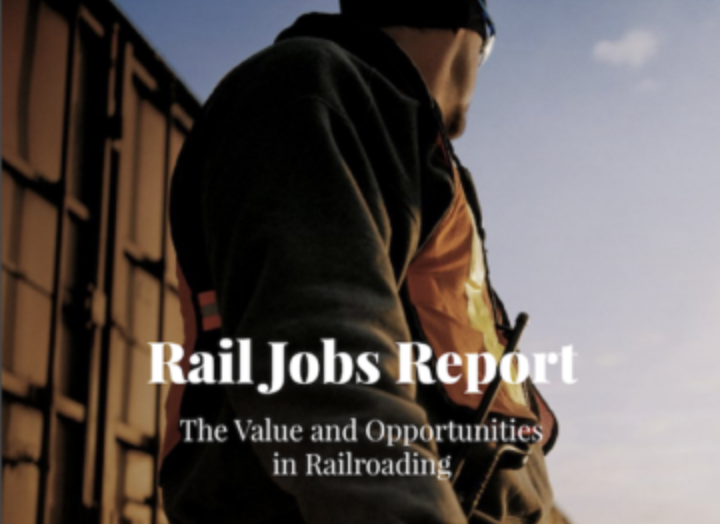
Editor's Note: The Association of American Railroads would have us believe that railroading is a land of milk and honey, where wages are high, benefits are plentiful, and career opportunities are endless. But let’s be honest—this report is a carefully crafted PR move, glossing over the relentless demands, grueling schedules, and safety risks that rail workers face daily.
The AAR paints a rosy picture of stability and opportunity while ignoring the elephant on the tracks: an industry addicted to cost-cutting, longer trains, and relentless efficiency targets that push workers to the brink. Sure, they highlight the pay, but what about the sacrifices? The missed family moments, the 24/7 on-call life, and the ever-present risk of accidents that come with a system stretched thin. They brag about “world-class benefits,” but those benefits ring hollow when they come at the cost of a railroader’s health and safety.
Railroading is indeed a job to be proud of, but it’s the workers, not the industry leaders, who make it so. If the AAR truly valued these workers, they’d push for safer conditions, reasonable schedules, and real job security—not just release a glossy report with a smile and a handshake. For rail labor, the AAR’s report is nothing more than lipstick on a broken system that puts profits over people, year after year.
| |
|
RT&S / October 30th, 2024
The Association of American Railroads (AAR) on Oct. 29 released the “Rail Jobs Report: The Value and Opportunities in Railroading,” which provides a comprehensive review of the benefits and opportunities that come with freight rail careers.
Featuring various employee testimonials, the report spotlights railroaders throughout the industry with stories of advancement, family legacy and career impact, features statistics that distinguish freight rail jobs from those across other industries, highlighting railroading’s “strong wages, world-class benefits and hundreds of career paths and advancement opportunities,” according to AAR.
Highlights from the report include:
- “The median tenure of railroad employees is 13 years (compared to 3.9 years for other private sector workers).
- “The average Class I railroad employee’s annual pay and benefit package is valued from $135,000 to almost $190,000.
- “Effective Jan. 1, 2025, unionized freight rail employees’ monthly health care premiums will decrease by more than 10%, from $309.21 to $277.54 (compared to the national average monthly premium of more than $500 for employer-provided family coverage).
- “Career railroaders (those 60+ who have served at least 30 years) receive more than two times as much retirement income as the average Social Security recipient.
- “Veterans account for about 1 in 6 rail employees.”
“Railroaders are the lifeblood that powers our industry and supports every facet of the economy,” said AAR President and CEO Ian Jefferies. “Rail work is not only a source of pride; it is a pathway to stability, growth and opportunity that often spans generations. Combining data and employee testimonials, this report demonstrates the value of a railroading job – and the reasons why so many railroaders turn these jobs into careers.”
| |
Editor's Note: Mexico’s reclaiming of railway lines for state-run passenger transport marks a bold shift, with projects like the Mexico-Pachuca and Mexico-Querétaro trains promising reduced travel times, improved safety, and expanded access to underserved communities. This reform is a step toward prioritizing public good over private profit, bringing the benefits of rail travel back to the people. | |
BNamericas / October 30th, 2024
With the approval yesterday by two-thirds of the congresses of the Federative Entities of the Reform of Constitutional Article 28, the Mexican State regained the right to use railway lines to provide passenger transport services, said the Head of the Railway Transport Regulatory Agency (ARTF), Andrés Lajous Loaeza.
Mexcian President Claudia Sheinbaum highlighted that during this current administration, studies began on three railway projects: the Mexico-Pachuca Train (105km) where people who make this journey will save 25 percent of their travel time, with 1 hour and 20 minutes. The Mexico-Querétaro Train (225km), where studies began with the support of the National Defense Secretariat, will save around 40 percent of the time for those who make the trip daily (it will take 1 hour and 40 minutes). Studies were also carried out so that the new Tren Maya higher-speed rail system could have freight trains.
At a press conference, she stressed that the reform aims to promote passenger train services from the State. This will allow for a reduction in travel time, improved safety, a better quality of life, reduction in the carbon footprint (more efficient than other modes of transport), and will provide services to isolated communities because, during the privatization process, they were connected by passenger trains that stopped operating.
| |
Editor's Note: The White Pass & Yukon Route Railway celebrated a historic first with an all-female crew, marking a proud milestone for the 123-year-old line. Engineer Lindsay Breen, conductor Eliza Myers, and brakeman Eileen O’Keefe, each of whom rose through the ranks, led the Oct. 15 journey. Breen put it simply: “It took long enough.” This landmark moment highlights the growing presence and achievements of women in railroading, an industry where change, though slow, is steadily taking shape. | |
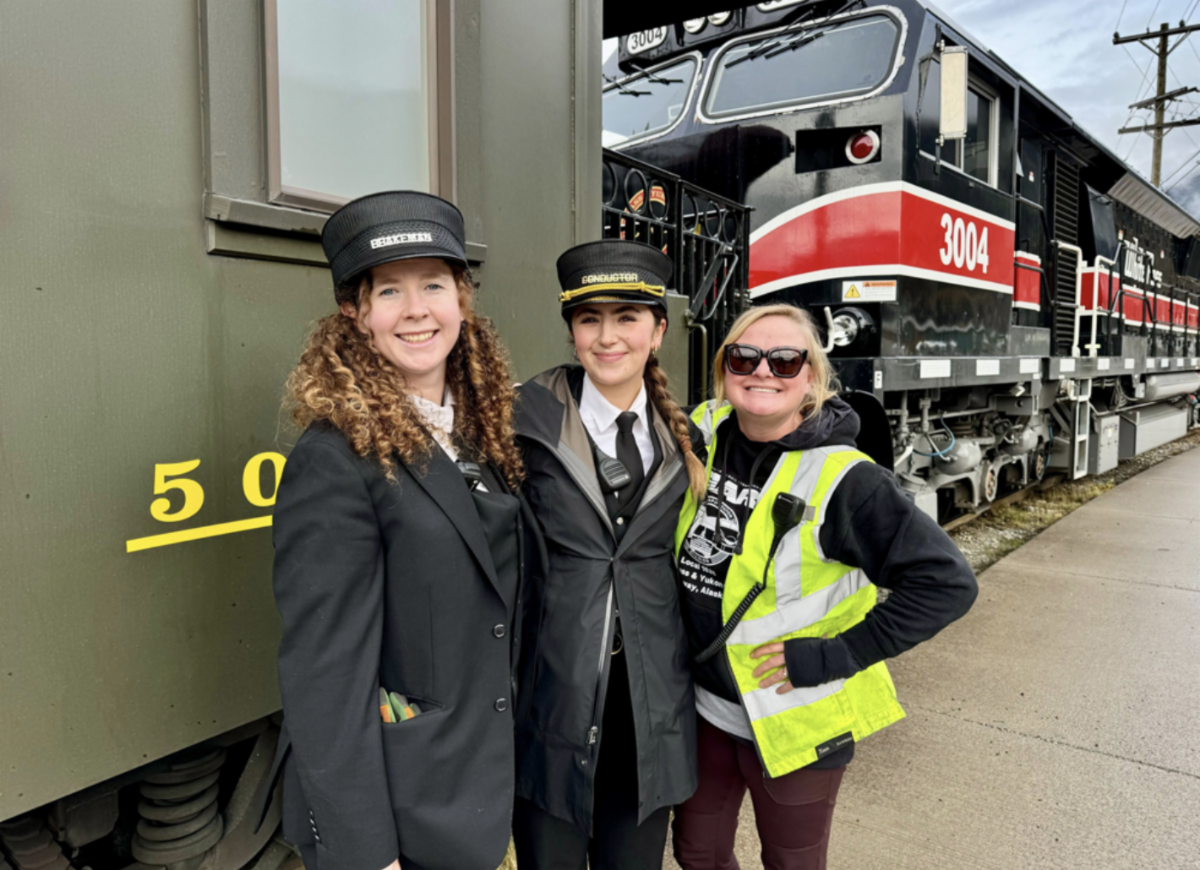 | |
The White Pass & Yukon Route Railway marked a milestone in its well over a century of operation earlier this month when it operated a train with an all-female crew for the first time. The event occurred on Oct. 15 with a crew of Lindsay Breen, the railroad’s first woman engineer; conductor Eliza Myers; and brakeman Eileen O’Keefe, the railroad said on Facebook and other social media. The White Pass & Yukon has five female crew members on its 29-person roster, including two engineers. “It was really neat that it was finally happening,” Breen told Alaska Public Media. “It took long enough.”Breen has worked for the railroad for 12 years, starting as a train agent. She worked as a dock representative and coach cleaner before moving into crew service, first as a brakeman and then conductor. Myers has similarly climbed through the ranks, working in the ticket office, as a dock representative, and as a brakeman. She also wants to become an engineer. The narrow gauge railroad dates to 1900. It currently operates 67.5 miles between Skagway and Carcross, Yukon Territory.
| |
|
How does racism show up in our workplaces and our unions? What are some strategies to confront it and build solidarity for a more robust, multiracial labor movement? And what can you say to union siblings who aren’t convinced racial justice has anything to do with union politics?
This workshop addresses how class and race are inextricably linked, tracing back to the origins of “race” as an invention of the ruling class to divide workers. We'll talk about how to move to strategies of unity.
This workshop has three parts. We ask that you attend all of them.
When: Tuesdays, November 12, 19, and 26.
Time: 7:00 p.m. to 9:00 p.m. Eastern (6:00 p.m. to 8:00 p.m. Central / 4:00 p.m. to 6:00 p.m. Pacific).
Where: This is an online workshop and will be held via Zoom.
Registration fee
$25 - Registration plus a HALF OFF one-year subscription to Labor Notes
$10 - Regular registration
| |
|
Please join us for this important discussion about FRA Corridor Grants and those rail lines that will benefit. Conference registration is available at $25 for non-members. This includes a full RUN membership through the 2025 year. Current RUN members are free, but YOU MUST REGISTER in advance to receive the Zoom link to the meeting. You can also send a check to Rail Users Network, PO Box 354, Northampton, MA. 01060, but do that now to ensure postal delivery and time to send you the link to the virtual conference that will be held via Zoom. The conference is just 2 weeks away. A copy of our guest speakers and agenda is attached in PDF format. Please feel free to forward and share or print a copy to have on hand. Questions? Please contact Richard Rudolph at: rrudolph1022@gmail.com
| |
NEWS FROM AROUND THE LABOR MOVEMENT | |
In These Times / October 31st, 2024
Former President Donald Trump is promising to deport millions of immigrants if he wins back the White House, and estimates put the cost of implementing such a move in the hundreds of billions. Trump’s mass deportation plan would also tear apart communities, put people into camps, and break up families. But what about the cost to all of our economic futures? While the U.S. immigration system is far from optimal and urgently needs reforms, here are two facts not controversial among economists: 1) Immigration expands the U.S. economy. And 2) the economy grows without hurting the wages of U.S.-born workers.
Doubt it? Look what has happened in just the past few years. Immigration has increased since the Covid pandemic hit the U.S. in 2020, while unemployment rates have been near historic lows. That increase in immigration led the Congressional Budget Office to predict the rise of $8.9 trillion in GDP and a decrease of $900 billion in the deficit over the next 10 years as immigration contributes to economic growth and tax revenues.
There are significant challenges in the U.S. economy, to be sure. We have seen decades of economic polarization and stagnating wages for most workers. But some politicians like Trump have tried to blame immigrants for our monetary policy failures. We shouldn’t fall for it. Immigrants are a vital part of our economy, making up nearly 19% of the labor force in this country and 21% of business owners. Immigrants' jobs are crucial to our economic future, especially as the population ages. Without them, our economy would suffer, and tens of thousands of U.S.-born workers would lose their jobs. And, as The Guardian reports, “the loss of migrant workers would trigger productivity losses and a new round of inflationary pricing pressure.”
| |
Medium / October 17th, 2024
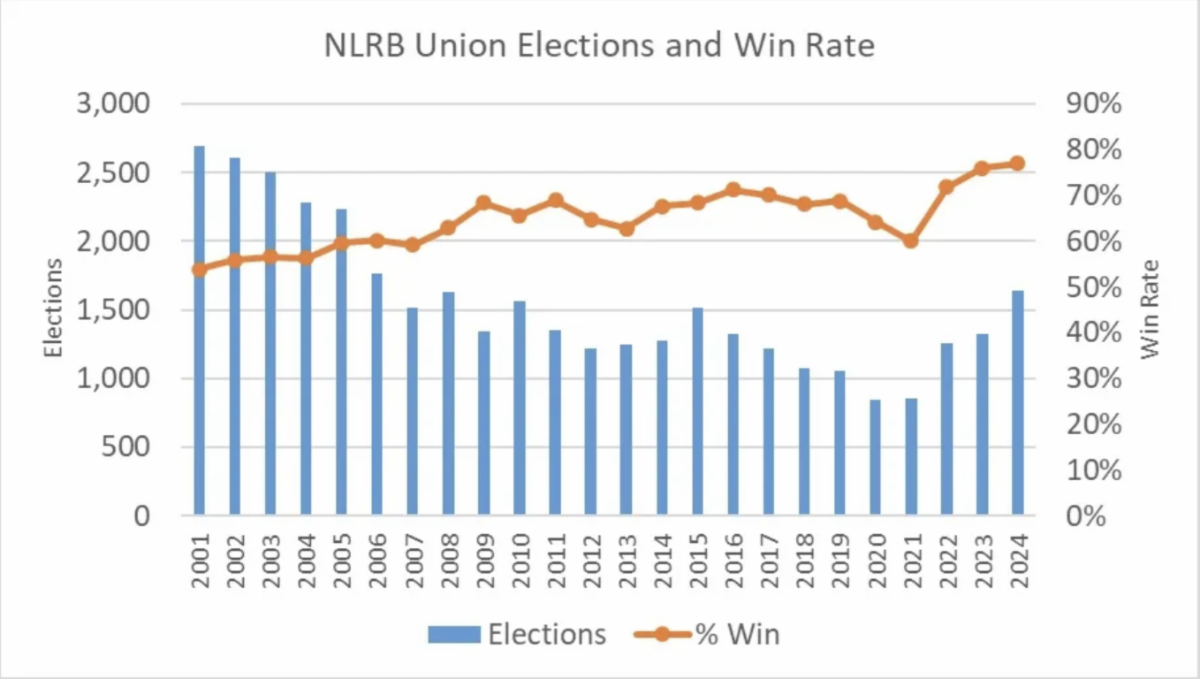
The National Labor Relations Board (NLRB) just announced that in the 2024 federal fiscal year (from October 2023 to September 2024), it received 3,286 union election petitions, up 27% from last year and more than doubled in 2021. The NLRB also released its 2024 Election Report. This report covers most private-sector union elections in the U.S. Another agency covers Other private-sector elections in the transportation sector, and various state and federal agencies report public-sector elections. This report has been highly anticipated since the NLRB announced that there had been a significant increase in union election petitions this last year.
Why have we seen such an improved union election performance in the previous three years? I think it’s a combination of worker discontent arising from the COVID-19 pandemic labor conditions, greater union interest among younger Gen Z workers, and a more aggressive NLRB under the Biden administration that has contributed to this recent surge. But we need to do much more. Union membership rates have been falling for decades, and the U.S. Bureau of Labor Statistics (BLS) reported that last year it stood at about 10% of the workforce and an appallingly low 6% in the private sector. The number of “represented” workers, including workers who are not union members but are covered under union contracts, is slightly higher.
| |
|
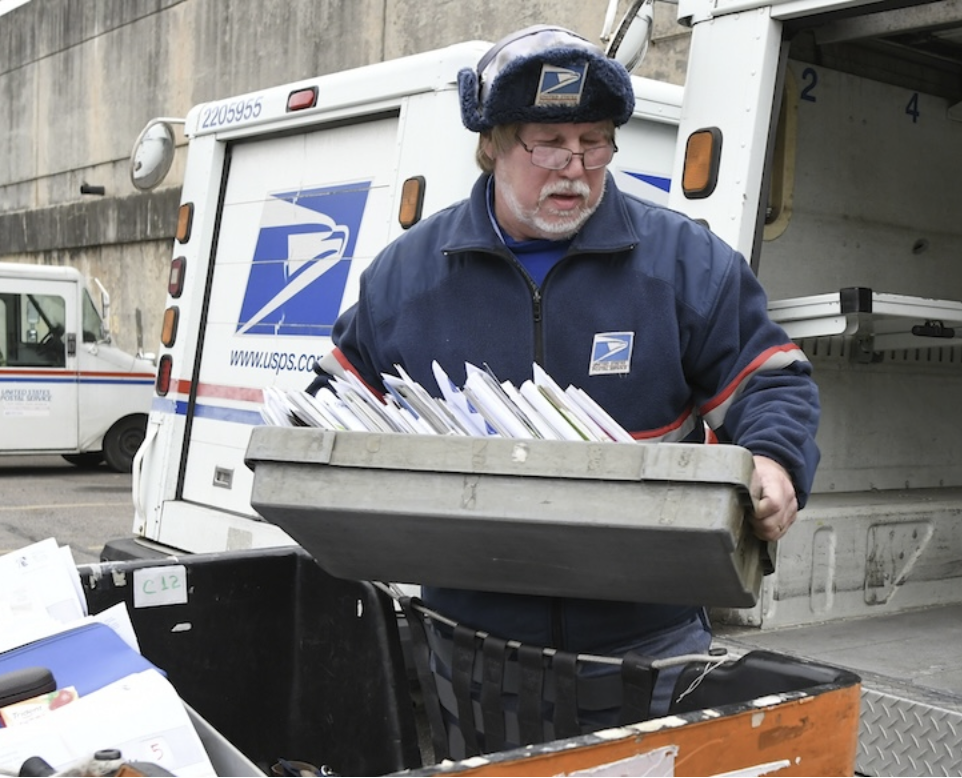
Workers are battling an overhaul of the U.S. Postal Service that would cost thousands of jobs and slow mail delivery to half the country. In the name of efficiency, a letter mailed within Cheyenne, Wyoming, would travel to Denver and back. If you miss a package, your local post office might no longer have it. It might be 45 minutes away. In March, Buffalo became the first place to fend off the closure of its mail processing plant in a team effort by Letter Carriers (NALC) Branch 3 and Postal Workers (APWU) Local 374.
The unions turned out 300 people to picket in front of the plant and 700 to pack a public hearing, said Branch 3 President David Grosskopf. They deluged USPS with feedback in its online survey. They lined up the support of their state reps and city council, and they got neighboring town councils to pass resolutions, too. They even got their senator to call the Postmaster General personally—and it didn’t hurt that their senator was Majority Leader Chuck Schumer. Within a few weeks, the plant consolidation was canceled.
Thousands of their jobs are at stake under Postmaster General Louis Dejoy’s 10-year “Delivering for America” modernization plan. This plan would close 200 mail processing plants and funnel all mail to 60 mega-plants called Regional Processing and Distribution Centers (RPDCs), each with a football-field-sized parcel sorting machine—a series of conveyor belts, scanners, and chutes that can sort 5,000 packages an hour. USPS is chasing its competitors Amazon, UPS, and FedEx, which already have bigger and more automated facilities like the UPS Worldport hub in Louisville, Kentucky, the size of 90 football fields, where a package touches human hands only twice—on its way in, and on its way out—traversing 13 minutes of conveyor belts in between.
| |
WEEKLY DERAILMENT DEPARTMENT | | | | |