Rail & Labor News from RWU
| |
Weekly Digest Number 49 - December 3rd, 2024 | |
Welcome to the RWU Rail & Labor News! This news bulletin is produced and emailed out each Tuesday morning. We hope you find each week's news and information useful. If so, please share with co-workers, friends, and colleagues. If you like, you can sign them up to get all the news from RWU HERE. Or forward them the link. Got a hot tip? Please forward the article and a link to raillabornews@gmail.com. Note: If you read over this news bulletin each week, you will be sure to never miss the important news of what is going on in the railroad world from a worker's perspective! | |
Editor's Note: Unifor’s strike authorization at Canadian National Railway highlights the growing frustration among rail workers over wages, pensions, and job security. This “overwhelming” vote reflects a broader labor movement unwilling to accept anything less than fair compensation and protections for the essential work they perform. While CN touts its commitment to “good for employees, customers, and the economy,” workers know that without leverage like this, promises often fall short. Solidarity across borders remains critical as rail labor fights for a fair deal in an industry too often driven by corporate profits over worker welfare. | |
Reuters / November 25th, 2024
Unifor said on Monday that its members at Canadian National Railway have authorized a strike action if the parties fail to reach an agreement by Jan. 1. Unifor, which represents more than 3,600 members at the railroad's Council 4000 and Local 100 committees, said members voted "overwhelmingly" in favor of the strike action.
"CN is committed to reaching negotiated agreements with Unifor that are good for employees, customers, and the economy," said Ashley Michnowski, a spokesperson for Canadian National. Unifor, which represents CN Rail's car technicians and heavy-duty mechanics among other workers, said negotiations with the railroad will resume from Nov. 30 to Dec. 8 in Montreal. The union initiated talks with CN Rail in September, with bargaining priorities that included higher wages, addressing concerns about the pension plan, and ensuring job security for its members.
| |
Editor's Note: The establishment of a second Presidential Emergency Board in the NJ Transit-BLET dispute underscores the limitations of the Railway Labor Act in delivering swift justice for rail workers. While the process stalls meaningful action, locomotive engineers continue to shoulder the weight of an underfunded and poorly prioritized regional rail system. Rail labor must use this moment to expose the imbalance between drawn-out legal procedures and the urgent need for fair treatment and adequate resources for workers. It’s a stark reminder that systemic reform is long overdue in how labor disputes are resolved. | |
Progressive Railroading / November 27th, 2024
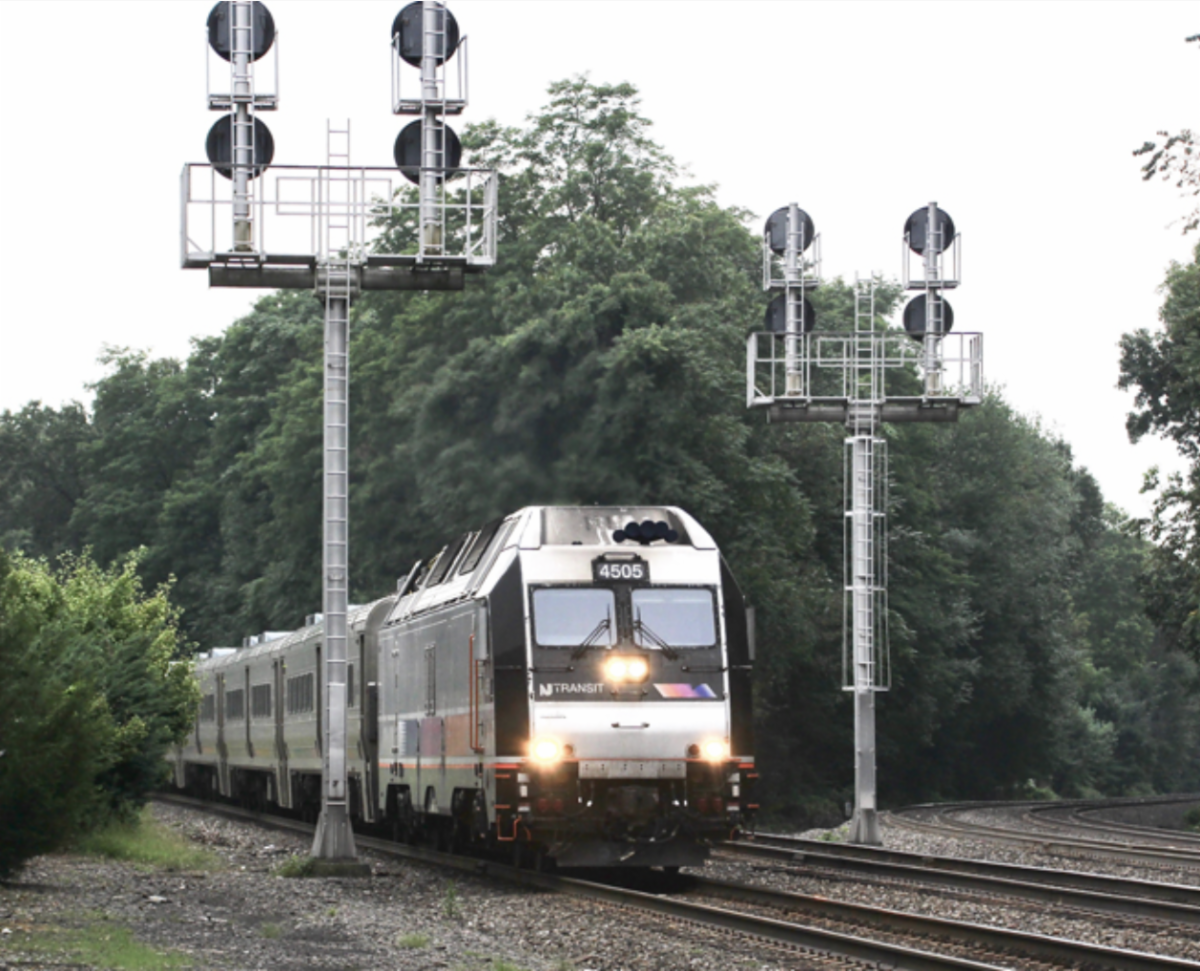
President Joe Biden last week established a second Presidential Emergency Board (PEB) to help resolve a dispute between New Jersey Transit rail operations and its locomotive engineers represented by the Brotherhood of Locomotive Engineers and Trainmen (BLET).
In July, Biden established the first PEB to investigate a dispute between the union and NJ Transit. After the board reported its recommendations for settling the dispute, the board was terminated. However, its recommendations were not accepted by the parties involved in the dispute, according to a National Mediation Board press release. As a result, Biden appointed the second board.
PEBs are established under the Railway Labor Act. After the parties submit their final offers to the board, it reports its findings to the president with its selection of the most reasonable offer within 60 days of the board's creation. No work stoppages and no changes in the conditions out of which the disputes arose are permitted for 120 days after the board's creation.
| |
Editor's Note: The ratification of the first-ever BLET contract at the Florida, Gulf & Atlantic Railway is a major step forward for short-line railroaders. Transitioning from “at-will” employees to union members, these workers have secured critical protections like seniority rights, grievance procedures, and overtime pay—rights many in the industry take for granted. While the 17% wage increase may seem modest on a national scale, it’s a significant milestone for a formerly non-union workforce and sets the stage for even greater gains in the future. This win is proof that organizing works, even in the toughest environments. | |
|
Brotherhood of Locomotive Engineers and Trainmen / November 25th, 2024
Railroad workers at the Florida, Gulf & Atlantic Railway (FG&A), who joined the Brotherhood of Locomotive Engineers and Trainmen to gain collective bargaining rights, have ratified their first-ever contract. This marks a significant milestone for train and engine service employees at the formerly non-union short-line railroad.
Before selecting the BLET as their designated collective bargaining representative in July of last year, workers at the FG&A were all non-union “at-will” employees. “Railroaders at FG&A wanted union representation to address issues related to safety, working conditions, wages, and other compensation with their employer,” said BLET National Vice President Randy Fannon, who spearheaded the BLET organizing and contract negotiating efforts at FG&A. “With the ratification of their first-ever BLET contract, our FG&A members now have an established policy, structure, and guidelines to hold management accountable.”
Ratified on November 21, the five-year agreement formally establishes many basic rights that BLET members working at other railroads already enjoy: a seniority roster with prior rights protections; grievance procedures and union protection from discipline; guaranteed extra boards with rest days; a process to promote engineers; a formal training process; paid personal time off; and other work rule and safety improvements. Additionally, the contract provides general wage increases of 17% (18.3% compounded) and establishes the ability for all T&E employees to earn overtime wages.
|
|
Editor's Note: STB Chairman Robert Primus’s critique of AAR’s recurring data errors highlights the industry’s broader struggle with accountability and transparency. The Rail Cost Adjustment Factor is not just a bureaucratic exercise—it’s a key metric that impacts labor negotiations, freight rates, and operational planning. For rail labor, accurate data means holding carriers accountable to fair cost adjustments and ensuring that inflated numbers aren’t weaponized against workers. If AAR is truly committed to its “highest standards,” it should welcome scrutiny, because rail workers and the industry deserve better than recurring errors. | |
Progressive Railroading / November 27th, 2024
Surface Transportation Board Chairman Robert Primus yesterday sent a letter to the Association of American Railroads to express concern about the quality of AAR's data submissions in recent years. Specifically, Primus is questioning the data related to the rail cost adjustment factor (RCAF), an index published by the board that is formulated to represent changes in railroad costs over time. Every quarter, the AAR computes three types of RCAF figures and submits them to the board for approval.
In recent years, the AAR has had to refile four quarterly RCAF filings due to errors or the need for modifications of the data, STB officials said in a press release. Accurate RCAF reports are integral to the STB processes and also are relied on by many other industry stakeholders, Primus writes. His letter asks that the AAR submit to the board a detailed description of its quality controls in calculating the quarterly data. In addition, the board is considering having a dependent accounting firm review the RCAF annually instead of the current biennial schedule.
Asked for a response, AAR spokeswoman Jessica Kahanek said in an email that the AAR will respond formally to the chairman's letter. "AAR has a long, well-established history of transparency and maintaining the highest standards in reporting and data accuracy," Kahanek said.
| |
Editor's Note: VIA Rail’s struggle to secure a fair track access agreement with CN mirrors the familiar challenges faced by Amtrak and other passenger rail providers under freight rail dominance. CN’s ability to dictate priorities highlights the inherent tension between public service and corporate interests, with rail labor often caught in the middle. VIA’s “captive client” status underscores how monopolistic control undermines efficiency and passenger experience, while workers are left grappling with the fallout of poor infrastructure and operational bottlenecks. Without systemic changes, both passengers and rail labor will continue to bear the brunt of an industry skewed toward profit over service. | |
Trains Magazine / November 27th, 2024
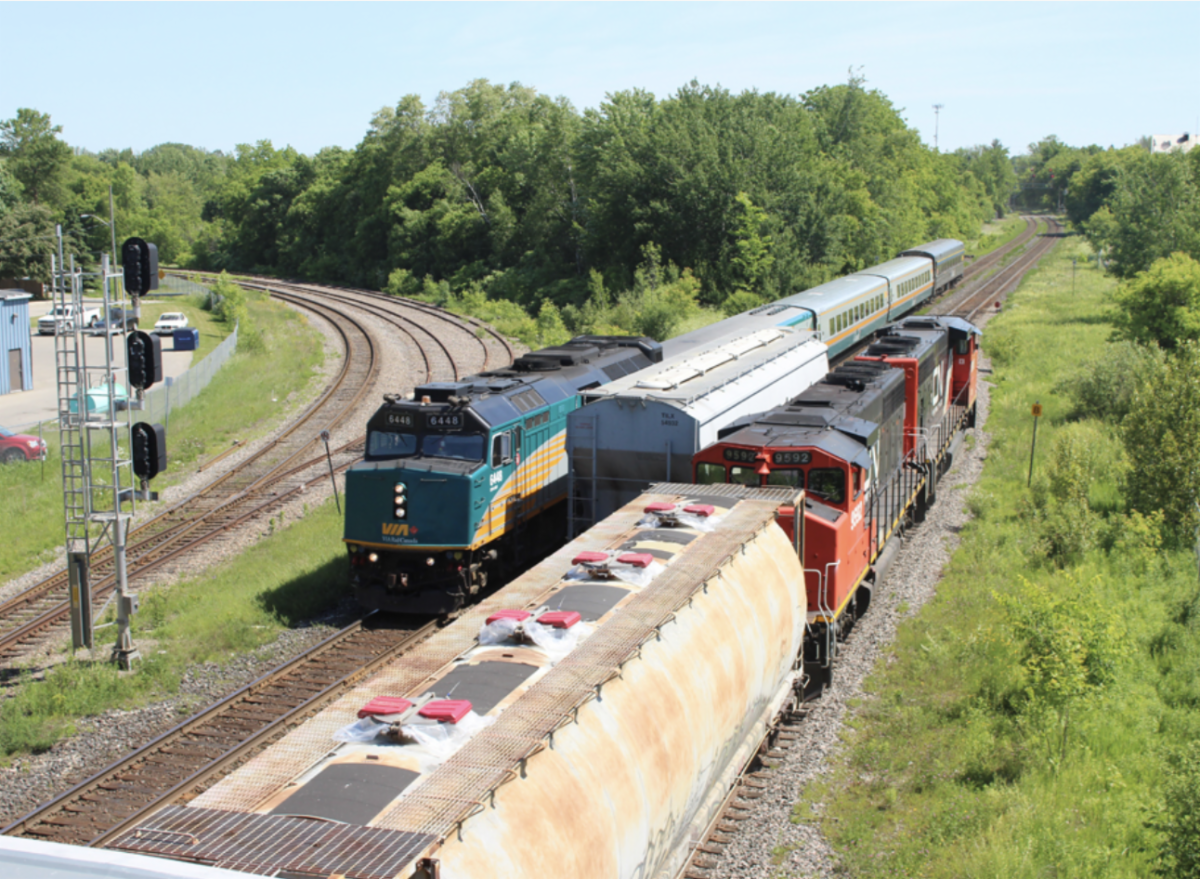
In a move similar to Amtrak’s efforts to address issues with host railroads with the Surface Transportation Board, VIA Rail Canada has asked the Canadian Transportation Agency to impose a new track access agreement with the Canadian National Railway.
But VIA’s filing, made in June 2023, has gone nowhere, the Canadian Press reports, in part because a request for confidentiality for parts of CN’s response is still being considered. VIA told the agency that its “captive client” status and CN’s “quasi-monopolistic position” means CN can prioritize its operations over those of the passenger trains, and that a Montreal-Toronto trip that once took four hours took an average of 5 hours, 33 minutes as of 2022. CN said in a statement to the Canadian Press that it complies with its current agreement with VIA, which includes no provisions regarding speedy travel, saying the dispute is “the result of VIA looking for improved performance at a lower cost to them, with increased costs to CN” to maintain routes to meet passenger needs.
The dispute comes against a backdrop of a more recent CN-VIA conflict over the operation of the passenger company’s Venture equipment in the Quebec-Ontario corridor service. CN has imposed new speed restrictions on the Venture trainsets at some grade crossings, citing unspecified shunting issues with crossing-gate activation. The VIA-CN issues also come as the Canadian government considers a slow-moving proposal to create a passenger-only “high-frequency rail” route between Toronto and Quebec City, although media reports now indicate the government is leaning toward proposing a true high-speed rail project.
| |
Editor's Note: Trump's previous pick for the DOT Secretary job - Elaine Chou - was a wealthy conservative business woman drawn from the shipping industry, and no friend to passenger rail or rail labor. Now Trump's new pick for the job appears to have little to no experience in the transportation field, and it is unknown as of yet what his stance might be on rail development and expansion. | |
|
Rail Passengers Association / November 22nd, 2024
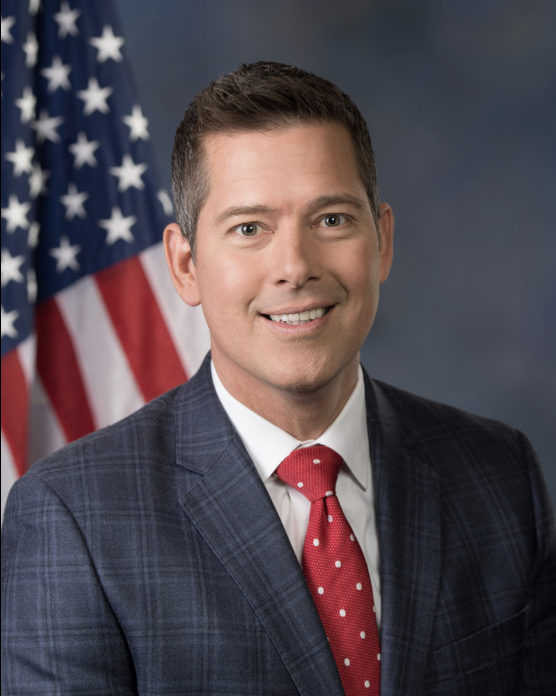
President-Elect Donald Trump nominated former Wisconsin Congressman Sean Duffy to be his Secretary of Transportation earlier this week. What the rail policy of a Duffy-led U.S. Department of Transportation in Trump’s second administration would look like is largely unknown, but the Rail Passengers Association discovered former Congressman Duffy has an alarming voting history on rail-focused amendments that we believe requires answers.
Rail wasn’t mentioned by name in Trump’s announcement of his nomination of Duffy:
“[Duffy] will prioritize Excellence, Competence, Competitiveness, and Beauty when rebuilding America’s highways, tunnels, bridges, and airports,” said Trump. “He will ensure our ports and dams serve our Economy without compromising our National Security, and he will make our skies safe again by eliminating DEI [diversity, equity, and inclusion] for pilots and air traffic controllers.”
| |
Editor's Note: When conservative pro-business anti-public transportation groups cannot win at the polls, they take to the courts to overturn popular referendums like the recent transit plan just approved by Nashville, TN voters. | |
Trains Magazine / November 29th, 2024
A group opposing a transit improvement plan passed by Nashville voters earlier this month has filed suit seeking to overturn the results, arguing the plan includes projects not allowed under the state law governing the referendum.
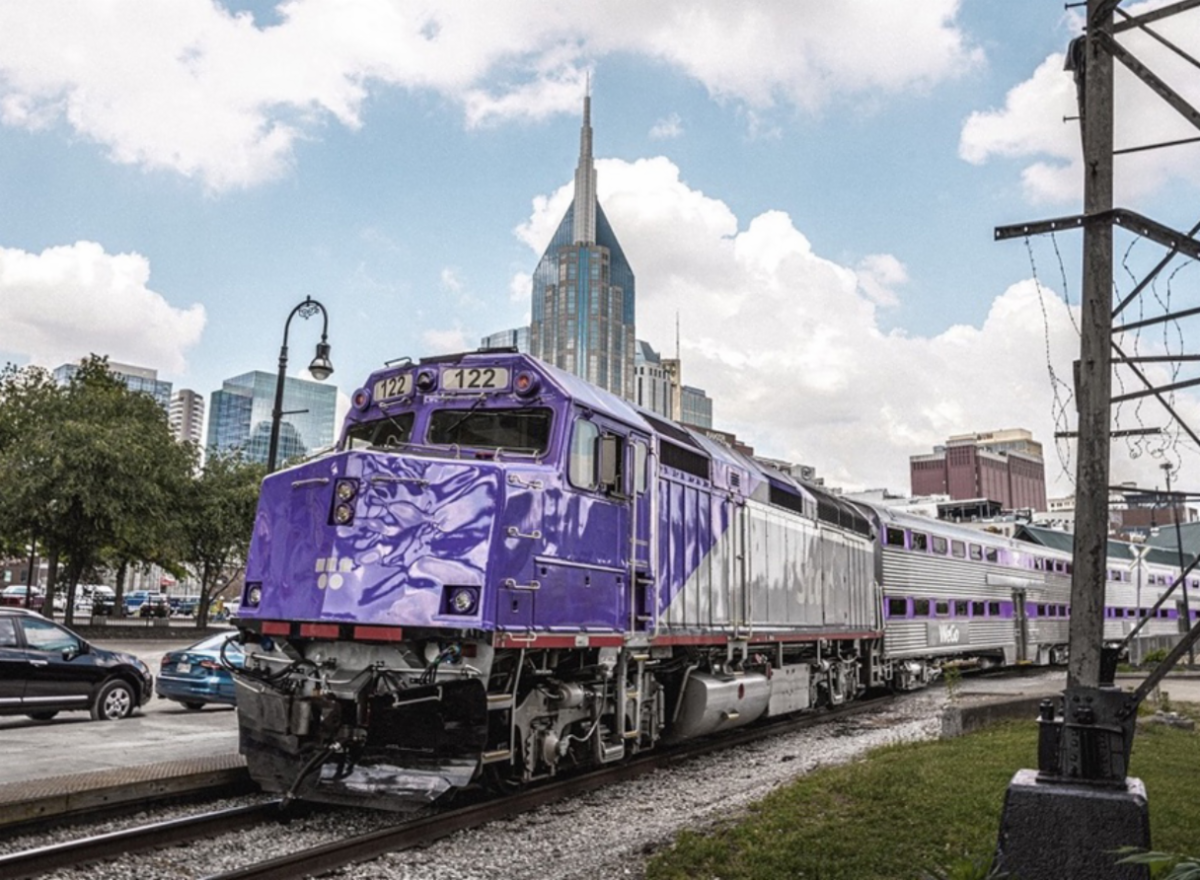
The Nashville Tennessean reports that the lawsuit was filed Wednesday, Nov. 27, by members of the Committee to Stop an UnFair Tax. That group opposed the half-cent sales tax in Davidson County ticketed to improve bus service, roads, and sidewalks. Changes to the WeGo Star commuter rail service are a small part of the $3.1 billion Transit Improvement Program. Some 65.5% of voters favored the plan.
The group’s lawsuit says the measure is “proposing the illegal use of tax dollars for sidewalks, streets and housing and similar projects unrelated to a ‘Public Transit System.’” The city’s law director, Wally Dietz, said in a statement to the Tennessean that the referendum fully complies with state law and that the suit “is a nuisance and a case of legal sour grapes by repeating arguments raised and rejected by the voters.” Nashville Mayor Freddie O’Connell, a defendant in the suit, said the plan was “fully vetted by attorneys, accountants, the Metro Council, and ultimately the people of Nashville.” He said the city would move ahead with the plan.
| |
Editor's Note: Far too many maintenance-of-way employees are killed annually in accidents such as the one outlined below, accidents that one might assume are easily preventable in this day and age. | |
Trains Magazine / November 27th, 2024
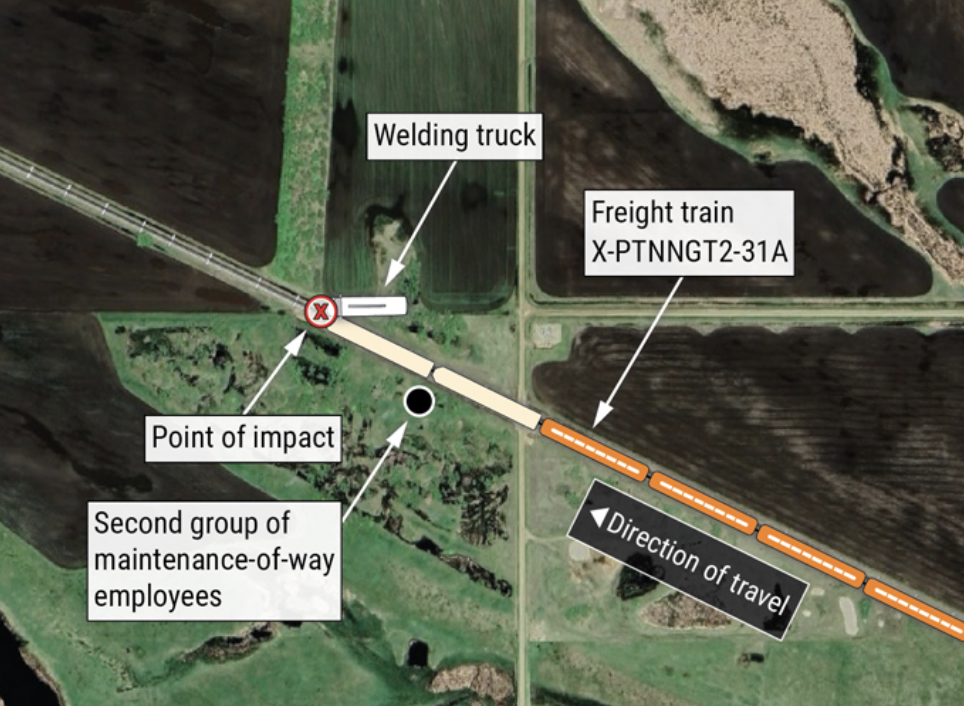
A BNSF train was traveling about 46 mph when it struck a welding truck, killing a maintenance-of-way employee, in a Nov. 4 incident near New Rockford, N.D., the National Transportation Safety Board said in a preliminary investigation report issued on November 27th, 2024.
A second employee in the truck was injured, treated at a hospital, and released. The worker killed was later identified as 58-year-old Darrin Polansky of Brainerd, Minn.
The incident occurred about 11 a.m. at a grade crossing equipped with stop signs but no other warning devices such as flashing lights or crossing gates. The two workers in the welding truck were part of a maintenance-of-way team that included a second group of workers in other vehicles. As the second group approached the crossing, the workers in the welding truck decided to move from the south side of the crossing to the north side to prepare to work and began backing across the tracks; employees in the second group attempted to warn those in the welding truck by radio that the train was approaching. NTSB investigators at the scene conducted sight distance observations and reviewed images from the train’s outward-facing camera and the welding truck’s inward-facing camera, among other activities. The ongoing investigation will focus on BNSF safety practices for maintenance employees.
| |
Editor's Note: Incredibly exciting new from Mexico where the popular new President has outlined a commitment to public rail expansion - both freight and passenger. Thirty years ago, Mexico's nationalized rail system was sold off to private industry, mostly to North American Class One and shortline rail systems, eliminating thousands of rail worker jobs and the country's expansive passenger rail network. | |
|
International Railway Journal / November 26th, 2024
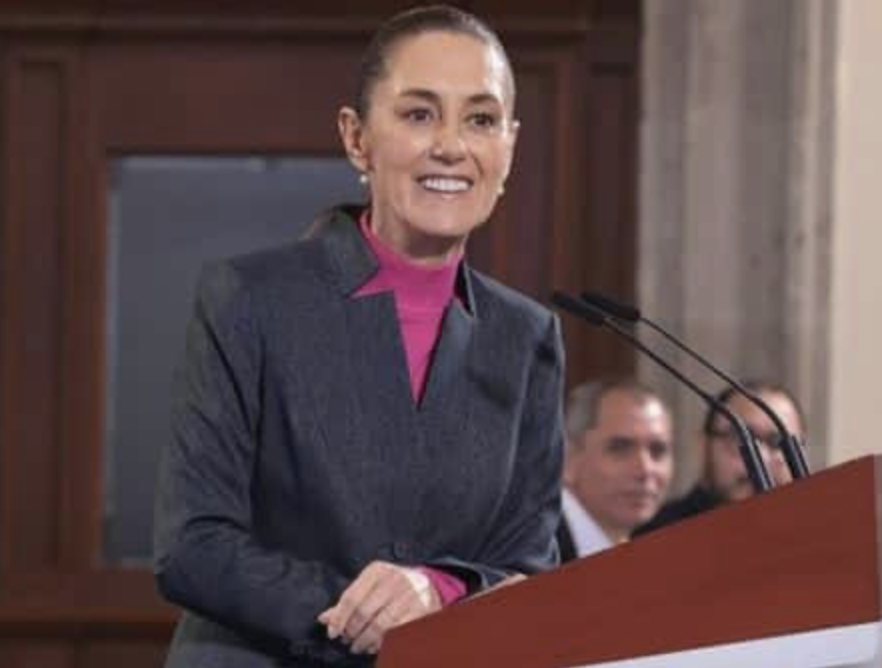
MEXICO’s president, Ms Claudia Sheinbaum Pardo, has announced that the Mexican government's budget for 2025 includes funding for the consolidation of passenger and freight trains, with Pesos 157bn ($US 7.6bn) allocated for rail Infrastructure.
Mr. Andrés Lajous Loaeza, head of Mexico’s Railway Transport Regulatory Agency (ARTF), says that in the coming years, the government aims to build 3000km of railway tracks that will allow for the operation of passenger trains, while it is also a priority to strengthen rail freight services. He said that the government may grant allocations to public companies or concessions to private individuals. Sheinbaum has switched spending on future rail projects from the Ministry of Defence, which will continue to be responsible for existing schemes, to the Ministry of Infrastructure, Communications and Transport.
Sheinbaum says resources have been allocated for strategic projects such as the introduction of passenger trains from Mexico City to Querétaro and from Mexico City via Felipe Angeles International Airport to Pachuca, and to launch freight services on the recently-completed Mayan Train network. “Trains are coming to Querétaro, Pachuca, Guadalajara, Irapuato, and to the north, to Nuevo Laredo,” she said on November 22.
| |
Editor's Note: Great to see some mainstream press catching in to the hoax that the North American rail system has become, calling out the Class One carriers for their profiteering, stock buybacks, cutbacks, lousy customer service, Amtrak disruptions, safety degradation, and all the rest. | |
Washington Monthly / October 29th, 2024
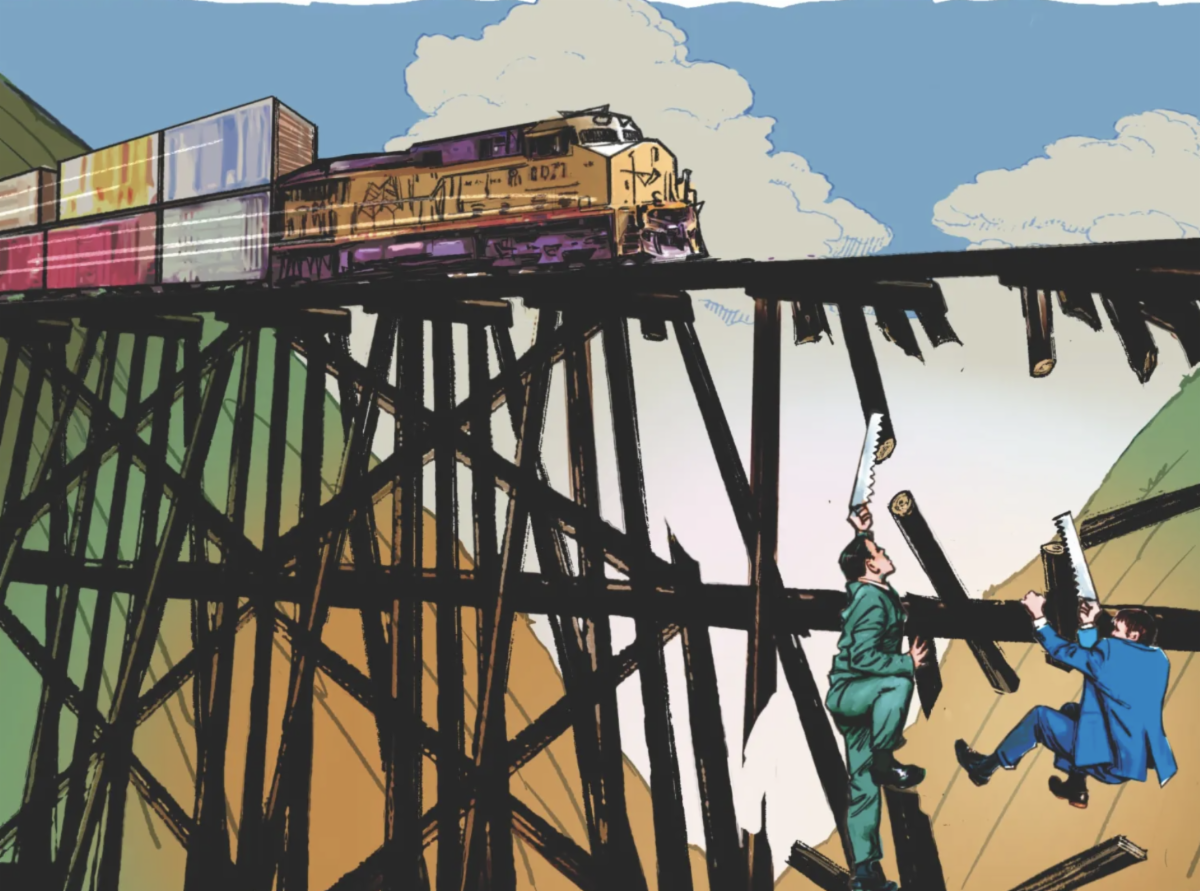
Our freight rail system is melting down. After being deregulated in 1980, freight railroads merged into a handful of giant monopolistic systems that became highly profitable. Those profits, plus the lack of regulation, in turn attracted financiers who over the past decade have taken control of major railroads and forced them to adopt a new predatory business model. Financiers are maximizing short-term profits and returns to shareholders by effectively liquidating the rail system through radical downsizing and degraded service, all while further damaging the prospects for American manufacturing by charging higher and higher freight rates.
The continuing degradation of the freight rail system is causing many other harms to the public. For example, it’s forcing many shippers to shift from rail to pollution-spewing heavy trucks that cause extensive damage to roads and bridges and that kill or injure a surging number of Americans every year. Freight transportation may seem like a banal subject. But getting it right is key to everything from fixing global warming and improving public health to overcoming dangerous dependencies on geopolitical rivals.
Railroads have raised the cost of shipping by rail nearly 30 percent faster than the rate of general inflation since 2004, with captive shippers facing especially steep price hikes and other added fees. Meanwhile, railroads have cut their workforces by approximately 30 percent since 2014, scrapped thousands of locomotives and freight cars, and abandoned many branch lines and low-margin lines of business—all while also running longer and longer trains on less and less track to fewer and fewer places less and less often.
| |
Editor's Note: While it is crucial that this and other Appalachian rail arteries washed out by the hurricane are rebuilt and reopened, the carriers have a responsibility to do so in an environmentaly responsible manner in compliance with the law. | |
Citizen Times / November 22nd, 2024
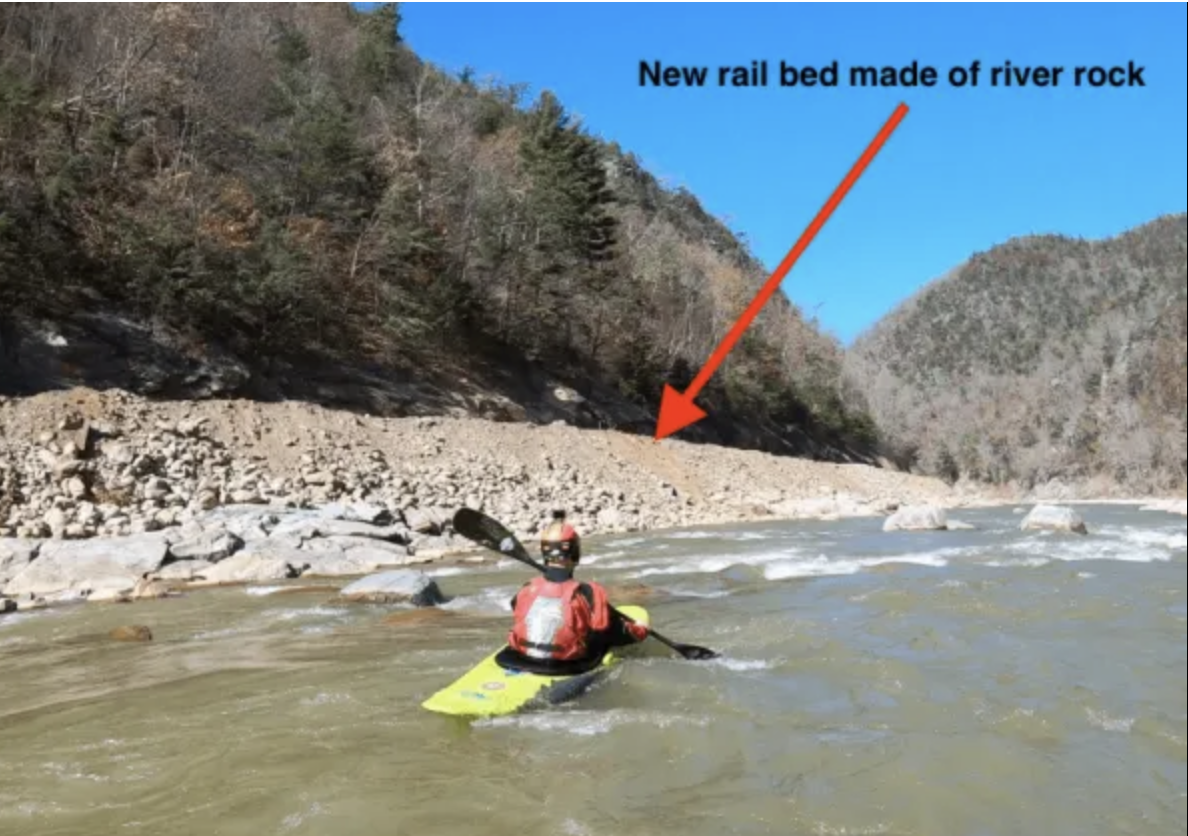
Two environmental nonprofits have sued three federal agencies alleging that the government is allowing a Florida-based railroad company to damage the Nolichucky River Gorge as it makes repairs to its tracks. The lawsuit was filed by the Southern Environmental Law Center on behalf of nonprofits American Whitewater and American Rivers against the three federal agencies on Nov. 18 in the Western District of North Carolina.
The lawsuit alleges the agencies have allowed a Florida-based railroad company, CSX Transportation, to mine and damage the river as the company works on repairs along the gorge that spans between Tennessee and North Carolina. After the Nolichucky washed away rail lines running along the gorge, CSX launched an operation to ensure the "recovery of track material from the Nolichucky River," CSX spokesperson Sheriee Bowman said. That effort includes recovering "rails, ties, ballast rock, bridge spans, and other rail bed fill material that washed into the river."
The company isn't just removing rails and ties, but "natural material that was there before the storm," Patrick Hunter, managing attorney of SELC's Asheville office, told the Citizen-Times. The removal of natural river rock from both sides of the river would affect the natural habitats of the creatures that live in the Nolichucky but also significantly impact the businesses along the river, Hunter said.
| |
Editor's Note: While electrification of railroad mainlines is not a cure-all for the nation's railroads, it boosts efficiency dramatically for both passenger and freight operations where it is installed. The spectacular transition outlined below is just one small example of what can be achieved through electrification. | |
Jalopnik / November 27th, 2024
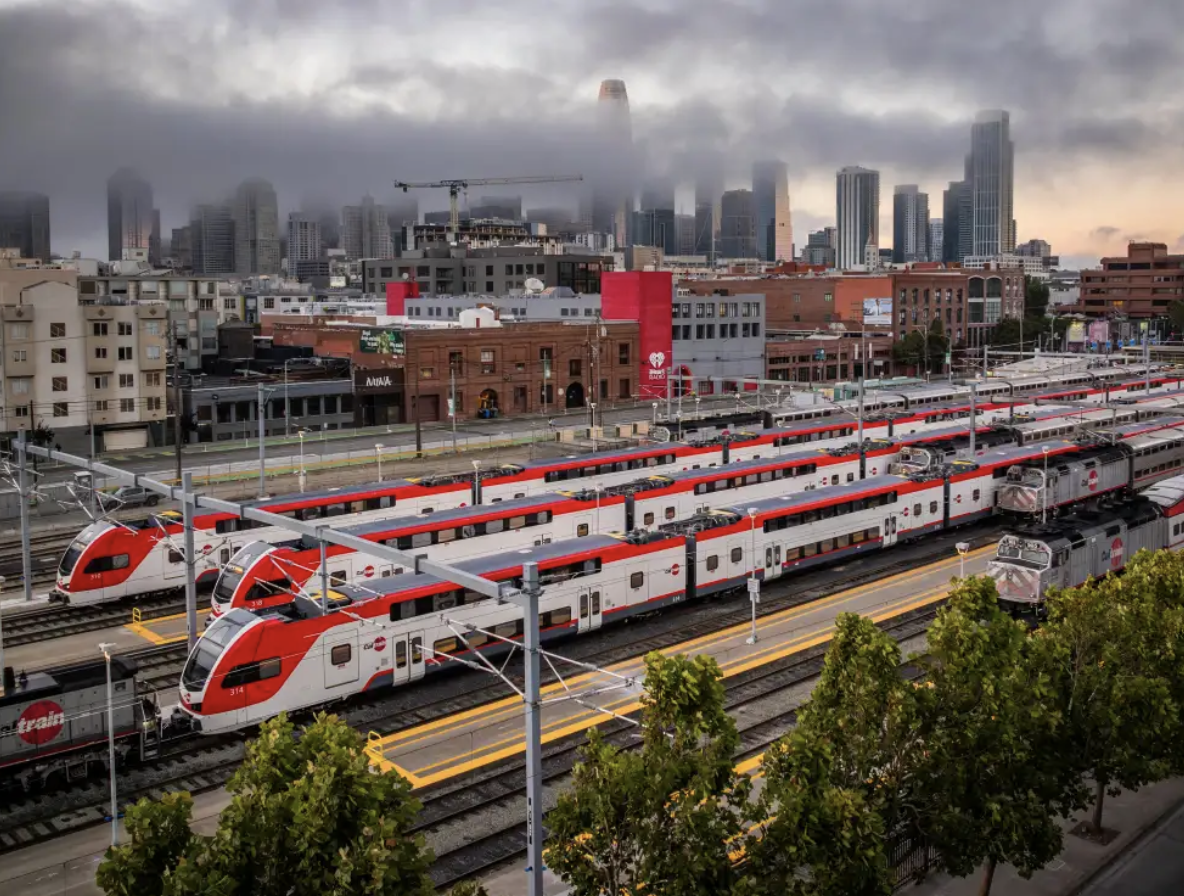
The State of California is known for its reliance on the automobile and its less-than-comprehensive public transportation sector, but a massive jump in ridership of an improved rail line could be a sign that its reputation may change. Ridership of the Caltrain service is way up, and it’s all thanks to a transition away from old-fashioned diesel trains that were upgraded to new electric trains in August of this year.
Electric trains start and stop faster than diesel trains can, and they retain the same 79-mph top speed, allowing Caltrain to introduce faster and more frequent service between San Francisco and San Jose. More than 753,000 passengers rode Caltrain trains during October, its first month of fully electric service. That overall ridership number is up 54 percent year over year, and weekend ridership increased by over 140 percent.
Ain’t it crazy how investing in nice trains with modern technology encourages more people to use the service? Yes, trains are expensive, but it’s a valuable investment that appears to be well-liked by Bay Area residents. Even though Jalopnik is a car blog, we’re huge proponents of public transportation and reliable, efficient rail lines, and would love to see more cities upgrade their services.
| |
Editor's Note: The railroads on North America have a sordid past when it comes to their relationship with indigenous communities. It remains to be seen of course if this effort by CN in Canada will in fact accomplish the ambitious agenda laid out here. | |
Canadian National / November 26th, 2024
CN released its first Indigenous Reconciliation Action Plan (IRAP), to strengthen ties with Indigenous communities, foster relationships, and create opportunities for meaningful collaboration on the journey toward genuine reconciliation. The IRAP commitments and actions were developed and shaped by the insights, priorities, and feedback received from Indigenous communities and CN employees who engage with these communities. CN’s IRAP outlines a vision to guide CN on its reconciliation journey over the next three years, in Canada.
The Action Plan is structured around five pillars:
- Cultural Awareness and Employee Engagement
- People and Employment
- Economic Reconciliation
- Community Engagement and Relationships
- Environmental Stewardship, Safety and Sustainability
“Our Indigenous Reconciliation Action Plan is a major milestone on CN’s path toward reconciliation with Indigenous communities. As a company, we are committed to driving meaningful change and ensuring that our efforts have a lasting, positive impact. This is about more than a plan—it's about deepening relationships, fostering collaboration, and building a better future together.”
- Olivier Chouc, Senior Vice-President and Chief Legal Officer.
| |
NEWS FROM AROUND THE LABOR MOVEMENT | |
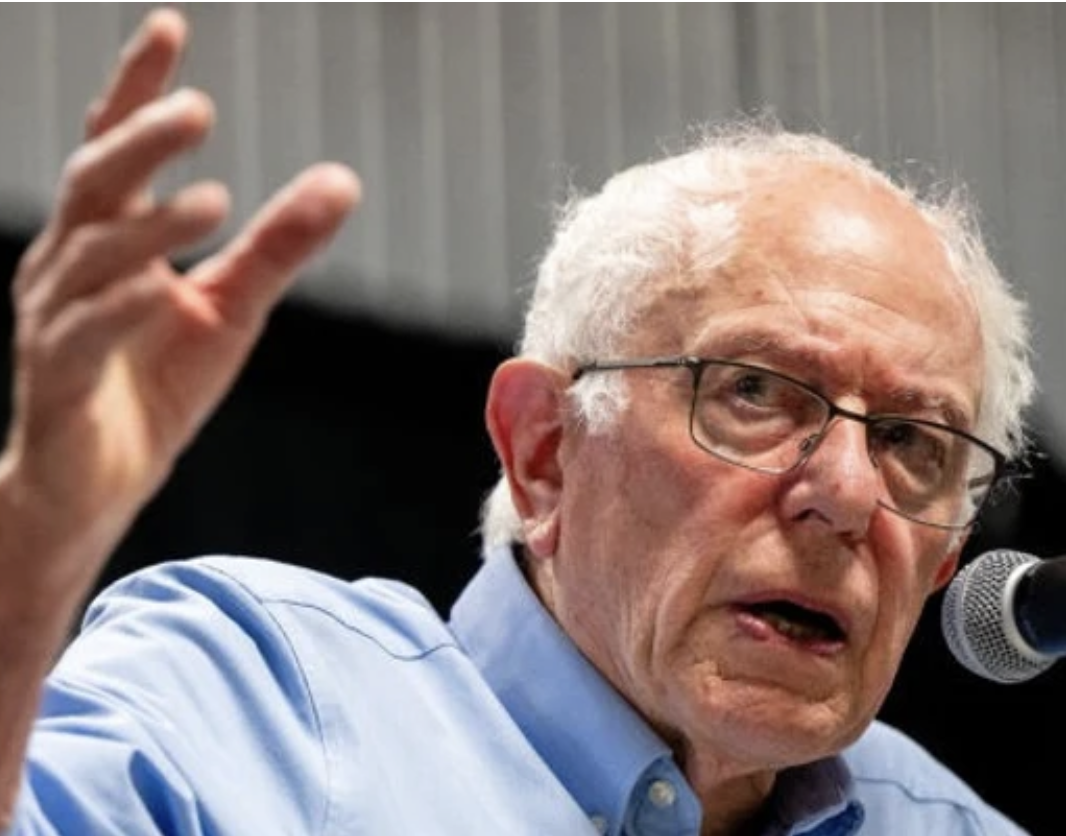
Editor's Note: Bernie Sanders - Independent Senator from Vermont and critic of both major political parties - has been hinting post-election of the need for a new party based in the working class, free of corporate control. RWU has been calling for the establishment of such a party for a few years now. See Resolution from 10/6/2020 HERE | |
Common Dreams / November 27th, 2024
An email Sen. Bernie Sanders sent to supporters this past weekend fueled speculation that he could be laying the groundwork for a new political party in the wake of Democrats' crushing defeat in the 2024 election. But in an interview with The Nation's John Nichols published Tuesday, Sanders (I-Vt.) said that he's not considering forming a party to challenge the entrenched Democratic and Republican establishments—at least not at the moment. "Not right now, no," Sanders told Nichols, who asked the senator directly about his email to supporters and whether he intends to create a new party.
The senator argued in the email it is "highly unlikely" that the Democratic leadership will "learn the lessons of their defeat and create a party that stands with the working class and is prepared to take on the enormously powerful special interests that dominate our economy, our media, and our political life." Sanders, who caucuses with the Democrats in the Senate, told Nichols that while he's not currently backing the creation of a new party, he is making the case that "where it is more advantageous to run as an Independent, outside of the Democratic primary process, we should do that." He also emphasized the need for more working-class candidates across the country.
"Real change in this country will come about when an organized working class leads the fight for justice. We need working-class candidates to help us do that."
| |
Editor's Note: Great to see some of the lowest paid airline workers striking for better pay. It would be even greater to see flight attendants, pilots and others strike in concert with them! | |
AP News / November 26th, 2024
Workers who clean airplanes, remove trash, and help with wheelchairs at Charlotte’s airport, one of the nation’s busiest, went on strike Monday during a busy week of Thanksgiving travel to demand higher wages. The Service Employees International Union announced the strike in a statement early Monday, saying the workers would demand “an end to poverty wages and respect on the job during the holiday travel season.” The strike was expected to last 24 hours, said union spokesperson Sean Keady.
Most of them earn $12.50 to $19 an hour, union officials said. Those workers should make $22 to $25 an hour, said the Rev. Glencie Rhedrick, of Charlotte Clergy Coalition for Justice, at an SEIU Airport Workers United rally across from the airport. She was joined by striking employees and advocates, many raising signs that read, “Respect Black and Brown workers” and “Respect, Protect, Pay Us.”
“We cannot live on the wages that we are being paid,” ABM cabin cleaner Priscilla Hoyle said at the rally. “I can honestly say it’s hard every single day with my children, working a full-time job but having to look my kids in the eyes and sit there and say, ‘I don’t know if we’re going to have a home today.’”
| |
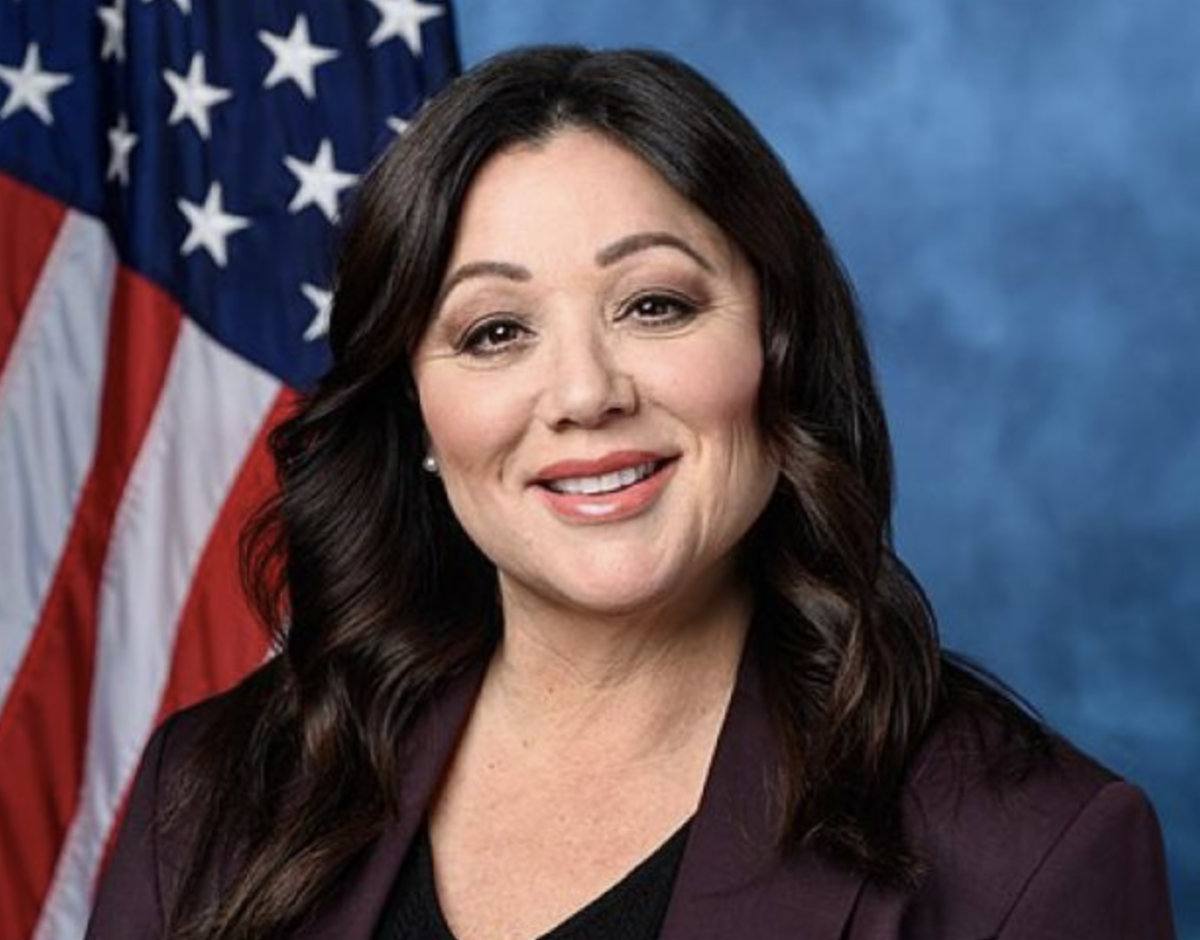
Editor's Note: This is a curious choice for Labor Secretary to be sure. Once she starts to issue pro-labor and anti-corporate proclamations and edicts, we will see what the Trump administration has to say. Look for her replacement/resignation within the year. | |
|
Portside Labor / November 26th, 2024
Donald Trump announced the choice of a secretary of labor whom many American workers like. His pick, Representative Lori Chavez-DeRemer of Oregon, who just lost her re-election bid, was one of only three Republicans to cosponsor the PRO Act, which protects workers’ right to organize. She also cosponsored the Public Service Freedom to Negotiate Act, which requires all states to recognize public-sector unions.
Chavez-DeRemer, the daughter of a Teamster, has such a pro-union record that some Republicans are in a full-blown panic about her nomination. Her nomination puts the economic populist wing of the Republican Party on a collision course with more traditional Republicans, who have always been on the side of company bosses. She embodies the contradiction that is the Trump coalition. It won political power with widespread support from blue-collar workers but has up until this point looked poised to hand the federal government over to business-friendly billionaires.
| |
WEEKLY DERAILMENT DEPARTMENT | | | | |