Weekly Digest Number 38 - September 21st, 2021 |
|
(Editor's Note: This article is a follow up in-depth report to last week's lead article by the same reporter, Stas Margaronis.) |
|
STB’S Oberman: Some Class One Railroads May Violate "Common Carrier Mandate" While Reducing Service and Raising Rates |
|
Martin Oberman, chair of the Surface Transportation Board (STB), said that some U.S. Cass I railroads may have evaded their legal ‘common carrier’ obligations and said such an evasion might trigger a possible STB investigation:
“The strategies pursued by the railroad industries as a whole, and it is not the same among all the Class 1s, have serious implications as to whether the ‘common carrier mandate’ is being carried out as intended and as required by statute. This is a subject that may warrant further exploration by the STB.”
Railroads’ Common Carrier Obligations
According to the Federal Register: “The ‘common carrier’ obligation refers to the statutory duty of railroads to provide “transportation or service on reasonable request.” 49 U.S.C. 11101(a). A railroad may not refuse to provide service merely because to do so would be inconvenient or unprofitable.”[1] Oberman echoed the concerns of some shippers and railroad unions who have complained about cutbacks in rail service: “Smaller but profitable destinations are being ignored or actively demarketed.”
Some shippers, including agricultural exporters, have complained that cutbacks in rail service are forcing them to spend more money transporting freight to and from U.S ports utilizing more expensive long-haul trucking. Oberman made these remarks while addressing the North American Rail Shippers Association (NARS) convention at Chicago.
|
|
(Editor's Note: RWU encourages all rank & file rail workers with insights into this mess from their experiences with PSR to give your input. Legislative Board Chairs would do well to gather info from their respective memberships to supply first-hand accounts of how the Class Ones carriers' irresponsible profiteering has contributed to this quagmire.) |
|
USDOT Solicits Public Input on Supply-Chain Problems |
|
The department’s request for information, posted yesterday in the Federal Register, is in response to President Joe Biden’s executive order that federal agencies address transportation bottlenecks and other ongoing problems in the U.S. supply chain.
Biden also established a Supply Chain Disruptions Task Force, co-chaired by the secretaries of transportation, agriculture and commerce. In fulfilling its requirement, the USDOT intends to produce a report on the nation’s freight and logistics sector, focused on how the freight system supports the supply chains and any challenges and resilience issues within that system, according to the notice.
"DOT has heard from many stakeholders about issues related to bottlenecks on highways, rail and at ports, as well as severe container/chassis shortages and lack of adequate warehousing capacity, particularly around the nation's largest ports," the notice states. Public comments are due Oct. 18.
|
|
(Editor's Note: Through the determination of the Bakers union rank & file - together with solidarity from other workers including railroaders - the members forced Nabisco to back down. When it is our turn, they will be there for us!) |
|
Nabisco Strike Ends: BCTGM Members Overwhelmingly Accept New Contract |
|
VICTORY ACHIEVED THROUGH COURAGE, SACRIFICE AND SOLIDARITY
Members of the Bakery, Confectionery, Tobacco Workers and Grain Millers International Union (BCTGM) working for Nabisco/Mondelez in Portland, Ore., Aurora, Colo., Richmond, Va., Chicago, Ill. and Norcross, Ga. have voted overwhelmingly to accept a new collective bargaining agreement. Approval of the contract ends the BCTGM’s strike against Nabisco which began on August 10, 2021.
In commenting on the membership vote to ratify the new contract, BCTGM International President Anthony Shelton stated, “This has been a long and difficult fight for our striking members, their families and our Union. Throughout the strike, our members displayed tremendous courage, grit and determination.
“The BCTGM’s striking members made enormous sacrifices in order to achieve a quality contract that preserves our Union’s high standards for wages, hours and benefits for current and future Nabisco workers. Their sacrifice will benefit all BCTGM members and working people around the country for years to come. Those Brothers and Sisters who walked the picket lines day in and day out are true BCTGM heroes.
“The BCTGM is grateful for the outpouring of fraternal support and Solidarity we received from across the labor movement in the U.S. and around the world.
|
|
BMWED/SMART-MD Requests Mediation After Latest National Bargaining Meeting with NCCC |
|
The BMWED and SMART-MD bargaining coalition held a mediation session with the National Carriers Conference Committee on Friday, September 10, 2021.
Despite the BMWED and SMART-MD Coalition giving the carriers a comprehensive proposal on June 4, the carriers still refuse to meaningfully respond to such. Instead, the Carriers continue to provide essentially the same Powerpoint presentations where they argue railroad workers are overpaid, undeserving of paid sick days, have too “rich” health and welfare benefits and that they make lazy, uneducated decisions about their use of those health insurance benefits.
“For over 18 months, the railroads have repeatedly “thanked railroad workers” by giving them ‘at-a-boys’ for their tireless efforts to maintain the Nation’s infrastructure so that supplies keep moving across the country, BMWED President Freddie Simpson said. “We are tired of the cheap talk: Give these men and women the wage increases, paid sick days and vacation days that they deserve, and quit trying to slash their healthcare benefits. The only reason you suits can make money hand-over-fist and have your Zoom meetings in your corporate offices is because our members are real railroaders that actually know how to run the railroad and do the honest work that you have no clue how to do. Cut the platitudes and start cutting backpay checks for these honest hard-working men and women.”
|
|
CP, KCS Reach Second Merger Agreement |
|
Canadian Pacific and Kansas City Southern today announced they have entered into a second merger agreement, under which CP has agreed to acquire KCS in a stock and cash transaction representing an enterprise value of approximately $31 billion, which includes the assumption of $3.8 billion of outstanding KCS debt.
The transaction, which has the unanimous support of both boards of directors, values KCS at $300 per share, representing a 34% premium, based on the CP closing price on Aug. 9, 2021, the date prior to which CP submitted a revised offer to acquire KCS, and KCS' unaffected closing price on March 19.
"Our path to this historic agreement only reinforces our conviction in this once-in-a-lifetime partnership," said CP President and Chief Executive Officer Keith Creel in a press release. "We are excited to get to work bringing these two railroads together."
By combining, the two Class Is will unlock the full potential of their networks and employees, Creel said.
"This perfect end-to-end combination creates the first U.S.-Mexico-Canada rail network with new single-line offerings that will deliver dramatically expanded market reach for CP and KCS customers, provide new competitive transportation options and support North American economic growth," he added.
|
|
(Editor's Note: With international commerce booming, one would expect intermodal to be breaking records every week. Surprise, surprise, it is DOWN. Of course, this has nothing to do with the Class One railroad's incompetence, or so they claim. Ever notice how when carloads in a commodity group are up, the Class One's gleefully take credit for it. Yet when they are down, that has nothing to do with the carriers' actions... Yeah, right.) |
|
Week 36: Intermodal Volume a Drag on U.S. Rail Traffic Total |
|
U.S. railroads logged 468,610 carloads and intermodal units for the week ending Sept. 11, a 1.3% decrease compared with the same week last year, according to Association of American Railroads (AAR) data.
Total carloads for the week were 223,710 units, up 4.5%, while intermodal volume was 244,900 containers and trailers, down 6%.
Six of the 10 carload commodity groups posted an increase compared with the same week in 2020. They included coal, up 9,749 carloads to 69,927; metallic ores and metals, up 4,227 carloads to 22,395; and nonmetallic minerals, up 3,731 carloads to 30,476.
Commodity groups that posted decreases compared with the same week in 2020 included motor vehicles and parts, down 4,862 carloads to 10,121; grain, down 4,830 carloads to 16,718; and petroleum and petroleum products, down 558 carloads to 9,797.
Meanwhile, Canadian railroads reported 73,214 carloads for the week, down 5.8%, and 62,820 intermodal units, down 11.1%. Mexican railroads reported 19,250 carloads, up 13.5%, and 14,032 intermodal units, down 11.2%.
|
|
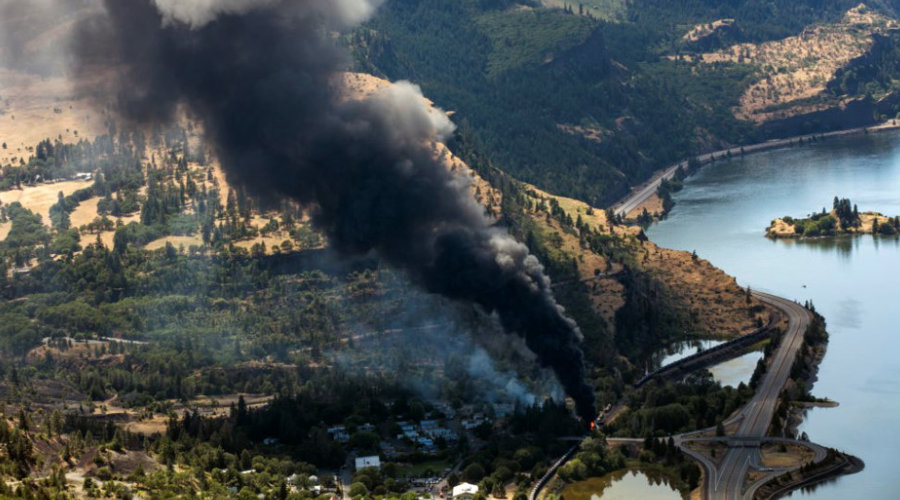
(Editor's Note: This spot is very close to the location where a BNSF conductor attempted to make a proper air test a decade ago and was fired, filed a whistleblower case and won, beat the BNSF in court for $1.66 million, and whose trial now goes to court once again on appeal by the carrier next month, 10 years later.)
|
|
FRA: Proper Safety Checks by BNSF Could Have Prevented December Derailment |
|
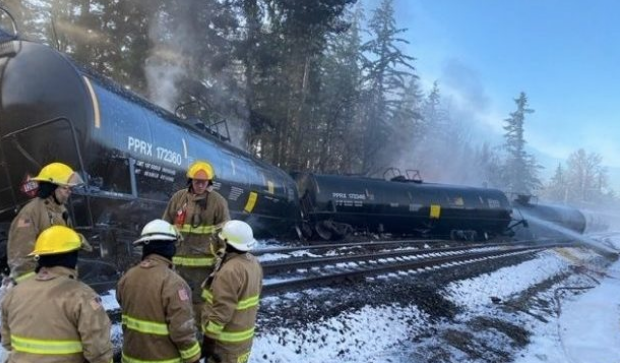
A Federal Railroad Administration (FRA) report says vandalism may have caused the derailment of a BNSF train in Custer, Wash., back in December. The FRA, however, has not cleared BNSF of any wrongdoing.
The report notes possible causes for the crash that resulted in 10 railcars off the track and the leakage of 29,000 gal of crude oil. Three tanker cars caught on fire.
According to the FRA, the train was left unattended for hours during a crew change at a stop north of Bellingham the morning of the crash. The derailment happened minutes after the stop, and the area had been prone to railroad vandalism. The FRA said BNSF should have warned crews of the recent activity and safety checks should have been performed prior to the train moving again.
“Vandals had opportunities to tamper with the couplers and brake pipe angle cocks,” said the report. Inspectors did indeed find two of the train’s angle cocks completely or partially closed, and a person had to deliberately close them. Messing with the angle cocks effects the braking system.
The report also states a safety check could have spotted the issue with the angle cocks.
|
|
(Editor's Note: More hedge fund shenanigans no doubt designed to squeeze more profit out of the carrier and do further damage to the workforce. Corporate capitalism in action.) |
|
TCI Launches Proxy Battle with CN |
|
TCI, which owns a 5% state in CN and opposed the railroad’s proposed merger with KCS, yesterday announced it is calling for a special meeting of CN shareholders for the purpose of adding four new members to the board who will "provide the deep railroad experience the current board lacks," according to a TCI press release.
The four nominees are Gilbert Lamphere, Allison Landry, Rob Knight and Paul Miller. "We did not seek a proxy fight, but without urgent action CN's operational and financial performance will continue to lag its peers under a Board that lacks the right railroad experience and operational expertise," said Chris Hohn, TCI founder and managing partner, in the release. CN's bid for KCS "exposed a basic misunderstanding" of the railroad industry and its regulation, he added.
"A new, highly-qualified board with renewed senior management will help ensure CN is put on the right track to the benefit of the Canadian and US economies, shippers, employees and shareholders. CN can do better, and with a new board, it will," Hohn said.
|
|
(Editor's Note: Prior to the Trump Administration, the DOT considered movement of LNG by rail simply too dangerous a prospect. Two years ago, RWU sent a formal comment on the question of LNG by Rail to the Pipelines and Hazardous Materials Safety Administration. Read it HERE. One cannot help but wonder what the future holds now)
|
|
Safe Transportation of Liquefied Natural Gas by Railroad Tank Car - Phase II: Public Meeting 2 |
|
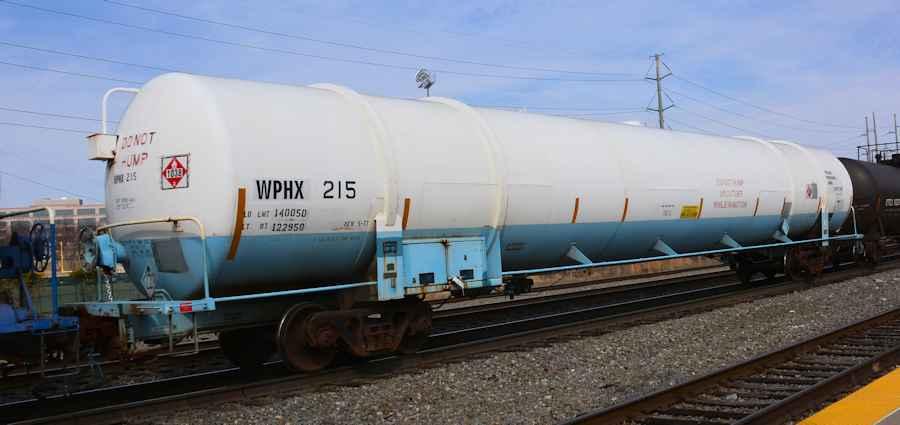
An ad hoc committee appointed by the National Academies of Sciences, Engineering, and Medicine will review, per request of Congress, current U.S. Department of Transportation (USDOT) plans and activities to inform government and industry decisions about the transportation of liquefied natural gas (LNG) by rail and consider ways to ensure the continued safety of these shipments over the longer-term. The committee's review will be carried out in two phases, each producing a report with findings and recommendations as appropriate.
Public Webinar Dates and Times:
Day 1: Monday, September 20, 2021 - 09:00am - 5:00pm EDT
Day 2: Tuesday, September 21, 2021 - 09:00am - 1:45pm EDT
*Participants are required to register.
**Attendees register once and can attend any of the occurrences
The public is welcome to provide comments to the study comment committee on Monday, September 20, 2021, from 4:00 pm - 5:00 pm EDT.
Please register here if you are planning to provide comments (cut and paste the below link to your browser):
https://survey.alchemer.com/s3/6511924/Public-Comments-LNG-Study
|
|
(Editor's Note: What this report fails to mention is that the cause of this wreck was found to be faulty rail and a lack of proper inspection. Please note the paltry amounts of the fines levied. For a railroad that just bought back 7 billion of its own stock last year, a fine of less than $100,000 is not even a drop in the bucket.) |
|
EPA Settles with UP Over Crude Oil Spill Near Columbia River |
|
As part of the settlement agreement and final order, UP will pay a civil penalty of $52,500 to the U.S. Treasury. In addition, UP will pay a $30,000 civil penalty to the state of Oregon for discharging oil to the Columbia River, according to a settlement agreement with Oregon Department of Environmental Quality (DEQ), according to an EPA press release.
The violations allegedly occurred when a UP train derailed in June 2016 and released 47,000 gallons of Bakken crude oil in Mosier, Oregon. Most of the released oil discharged to the Mosier wastewater treatment plant, which was forced to shut down for two weeks. About 10 gallons of the Bakken Crude oil passed through the treatment plant and caused a sheen on the Columbia River.
The train — which consisted of 96 tank cars carrying crude oil from New Town, North Dakota, to U.S. Oil & Refining Co. in Tacoma, Washington — derailed in the Columbia River Gorge near Mosier. As a result of the incident, 16 of the 96 cars derailed, four cars were breached and released Bakken crude oil to the environment and several cars caught fire.
Of the 47,000 gallons of oil released, 16,000 gallons burned or vaporized. Federal, state and UP cleanup actions included installing several wells to monitor and treat contaminated shallow groundwater. A total of 2,960 tons of oil-contaminated soil was excavated and transported off-site for disposal.
|
|
FINAL CALL: Freight Automation: Dangers, Threats, and Opportunities for Health and Equity
|
|
Thank you to all who have registered for our upcoming webinar Freight Automation: Dangers, Threats, and Opportunities for Health and Equity. We are gearing up for an engaging conversation with our featured speakers Joel Ervice, Regional Asthma Management and Prevention (RAMP); Martha Ockenfels-Martinez, Human Impact Partners (HIP); and Angelo Logan, Moving Forward Network (MFN) on Wednesday, Sept. 22 at 7 p.m. Eastern (6 p.m. Central, 5 p.m. Mountain, 4 p.m. Pacific).
In the meantime, we highly encourage you to read the report of the same name, which was released earlier this year by RAMP, HIP and MFN. Below are some summary trends from the report on what freight automation means for frontline workers’ economic security and safety:
“I look at automation as a short-term fix for the financial health of the country. Automation eliminates jobs which eliminates the ability for people to buy goods and services.” — Buddy Smith, President, Local 1233, International Longshoremen’s Association
“Health and safety is an issue. Because the pace is increasing [with automation], are we going to see more accidents and injuries or even heart attacks? We’ve had a couple members at Amazon have strokes.” — Roberto Clack, Associate Director, Warehouse Workers for Justice
“Every industry is being impacted [by automation], which presents a lot of danger to our industry because when people get hurt on our job they don’t get paper cuts, they don’t get headaches. When people get hurt on the docks they lose limbs or they lose lives.” — Vivian Malauulu, ILWU Local 13 Registered Longshore Worker and Benefits Officer
|
|
California Propeller Clubs’ Meeting Focuses on Railroads’ Impact on California Ports |
|
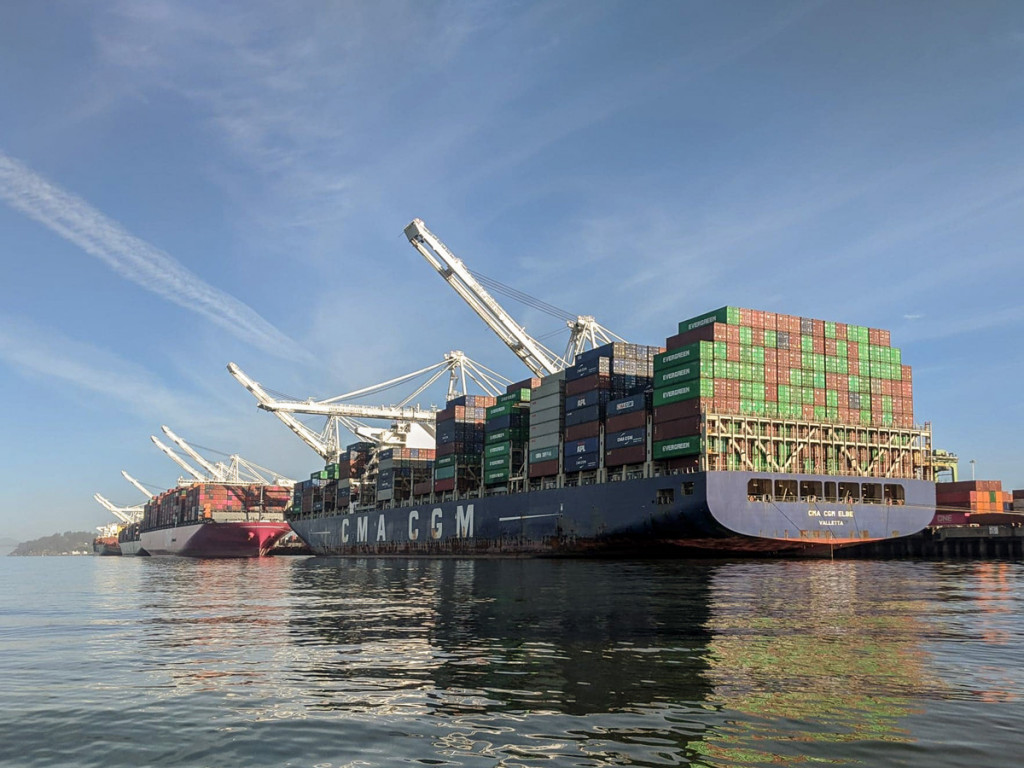
The Propeller Clubs of Northern California and of Los Angeles and Long Beach convened a joint forum to discuss the impact of U.S. railroads on California ports. On September 14th, maritime stakeholders from Northern and Southern California attended the virtual event where they heard the following reports:
Jessica Alvarenga, government affairs director Pacific Merchant Shipping Association (PMSA), reported that average rail dwell time for containers moving on rail destined for Midwest destinations from the Ports of Los Angeles and Long Beach averaged “11.8 days in June.”
However, on September 17th, PMSA reported the rail dwell time had declined to 8.2 days:
“Dwell time in August for containers leaving via rail was down compared to the month before. The railroads worked hard to drop the average dwell time for containers leaving via rail to 8.2 days, down from 11.3 days in July. 42.7% of containers leaving on rail remained on terminals for more than 5 days, also down from 53.4% the month before.”
In January of 2021 the average rail dwell time at the two Southern California ports was “7.9 days,” Alvarenga said.
She explained that the rail dwell time is measured from the time the container “leaves the terminal once it’s been offloaded from the vessel” until the container departs by rail for Midwest destinations.
|
|
|
|
|
|
|