|
Rail & Labor News from RWU
| | Weekly Digest Number 24 - June 10th, 2025 | | Welcome to the RWU Rail & Labor News! This news bulletin is produced and emailed out each Tuesday morning. We hope you find each week's news and information useful. If so, please share with co-workers, friends, and colleagues. If you like, you can sign them up to get all the news from RWU HERE. Or forward them the link. Got a hot tip? Please forward the article and a link to raillabornews@gmail.com. Note: If you read over this news bulletin each week, you will be sure to never miss the important news of what is going on in the railroad world from a worker's perspective! | | THIS WEEK'S RAIL AND LABOR NEWS | | Editor's Note: This article lays bare the hypocrisy of the rail industry and its lobbyists when it comes to rail safety. A number of railroad workers/union officials are quoted including former RWU General Secretary Ron Kaminkow. | | |
The American Prospect / June 5th
Rail carriers have long claimed to prioritize safety above all else, but their actions tell a different story. Inspired by Wall Street demands for cost-cutting, the widespread adoption of precision scheduled railroading, or PSR, has led North American railroads to pursue drastic workforce reductions, run longer trains with smaller crews, and inadvertently shift costs onto shippers in a bid to maximize shareholder value.
“That reduction has been extremely hard on the workers. Physically hard, mentally hard,” Tony Cardwell, president of the Brotherhood of Maintenance of Way Employes Division (BMWED), a member of the Teamsters Rail Conference, told the Prospect.
Now the railroad industry, which in recent years has spent more on stock buybacks than rail and equipment maintenance, has an even greater opportunity to implement PSR’s extreme cost-cutting measures, helped along by the Trump administration’s deregulatory agenda.
| | Editor's Note: Whether north or south of the border, Class One railroads in both the U.S. and Canada are the biggest culprits in delaying passenger trains - and by extension, turning away repeat customers, and hurting passenger operators' bottom line. So much for so-called "Precision Scheduled Railroading." What a farce. | |
Progressive Railroading / June 5th
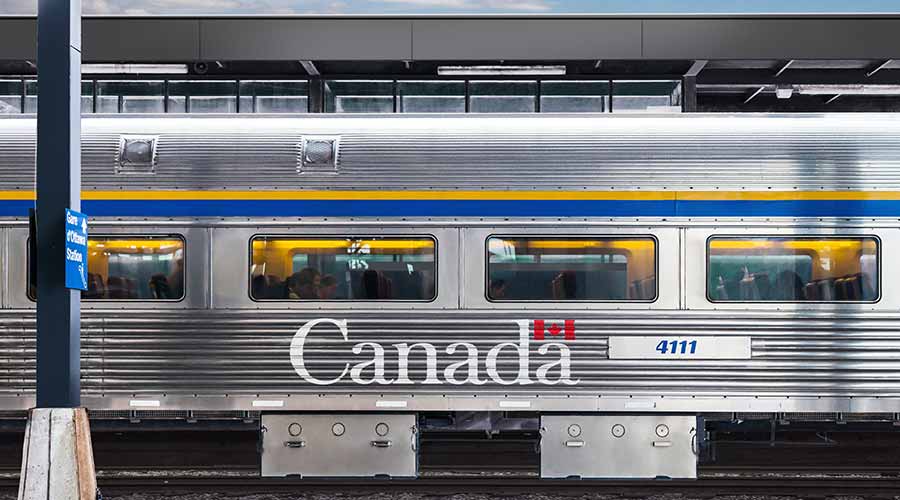
VIA Rail Canada's on-time performance (OTP) fell to 30% in first-quarter 2025 compared to 72% in Q1 2024, the passenger railroad said Tuesday in its Q1 2025 financial report.
VIA Rail officials blamed the decline in OTP to ongoing CN-imposed speed restrictions on certain VIA trains in the Quebec City-Windsor corridor.
"[The disruptions] are the direct result of infrastructure restrictions imposed by CN, restrictions that we believe are arbitrary and unnecessary," said VIA Rail President and CEO Mario Peloquin in a press release. VIA Rail has appealed the situation in court.
| | Editor's Note: How much of this is just PR, wishful thinking or downright silliness, time will tell. The Class Ones gave up on carload traffic years ago, and the numbers prove it. Try shipping a carload of freight on a Class One carrier these days. Good luck. That said, BNSF is a slightly different animal, not subject to the day-to-day whims of Wall Street being privately owned. However, despite officially not buying into PSR, BNSF has generally behaved very much like a PSR railroad. And just wait for the next dip in the economy or what have you, and the railroad will resort to cost cutting, and you know what is going to get cut? You can bet, this "team." | |
Progressive Railroading / June 3rd
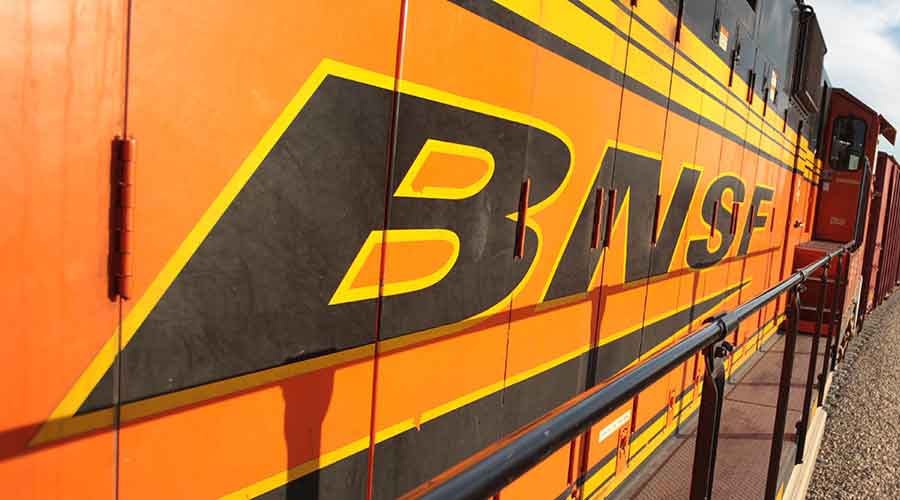
BNSF Railway Co. yesterday announced it has created a new team focused on single carload growth.
Led by General Director of Marketing Mark Ganaway, the First Mile/Last Mile team combines the Class I's short-line development and industrial products business development teams. It will be dedicated to growing carload volume across BNSF’s 32,500-mile network, according to a BNSF press release.
“As our industry continues to evolve, every single carload is important to our network, and every single rail shipment helps our customers create more value for the nation’s consumer,” said BNSF Executive Vice President and Chief Marketing Officer Tom Williams. “First Mile/Last Mile will be focused on providing solutions and breaking down those barriers, leading to a more streamlined supply chain from start to finish.”
|
| Editor's Note: Tragedy struck again, and once more, a worker won’t be coming home. The investigation will follow, statements will be made, but the question remains: how many more lives must be lost before rail safety is treated as non-negotiable? | |
Trains Magazine / June 3rd
A worker in a Metrolinx rail yard in Mississauga was killed Monday (June 2) after becoming trapped in a machine at the facility, CityNews Toronto reports.
Police were called to the incident about noon. The man was pronounced dead at the scene. Additional details have not yet been reported. Canada’s Ministry of Labour will investigate.
“Our thoughts are with the individual and their loved ones during this difficult time,” Metrolinx, the regional public transport agency for Ontario, said in a statement.
| | Editor's Note: Railroad volumes dip, tariffs ease, and now the market braces for a “mini-surge.” But let’s be clear, this isn’t a recovery, it’s a scramble. Freight rail’s fortunes remain at the mercy of global trade policy, not long-term planning or domestic investment. Until we build an industry that prioritizes resilience over reaction, we’ll keep chasing freight like a dog chasing cars. | |
Freight Waves / June 5th
Gross says he was surprised it took as long as five to six weeks for the air pocket decline to hit U.S. railroads. “We’ve only really seen it now for the past two or three weeks,” he said of BNSF and Union Pacific (NYSE: UNP) intermodal volumes.
Now, with tariffs on Chinese goods reduced to 30% from May 12 through the middle of August, Gross is expecting a mini-surge in volume to begin in the middle of this month. “It’s not going to be … a huge volume, because even though 30% is a lot lower than 145%, it’s still pretty significant,” Gross said of tariffs on Chinese goods.
The hold on reciprocal tariffs, which vary by country and will remain in effect until at least July 9, means importers of goods made elsewhere also may try to rush containers to the U.S., he says.
| | Editor's Note: When rail workers prepare to walk, it’s never just about wages.. it’s about dignity. If negotiations keep circling while VIA Rail clutches its balance sheet, then June 22 may be the day labor stops asking and starts demanding. The law gives them the right to strike, but history gives them the reason. | | |
Progressive Railroading / June 3rd
Unifor yesterday announced that contract talks with VIA Rail Canada Inc. have broken off, setting the stage for a national rail dispute that threatens to disrupt passenger travel across the country later this month.
After another week of bargaining in Montreal, no tentative agreement was reached between VIA Rail and Unifor's Council 4000 and Local 100 bargaining committees, Unifor officials said in a press release.
A 60-day conciliation period facilitated by federal officials ended May 31. If an agreement isn't reached during a 21-day cooling off period, Unifor could begin a legal strike on June 22. Both parties return to the table on June 17 and bargaining will continue up to the deadline.
| | Editor's Note: The author is the former Legislative Director for SMART-TD in the State of Nevada and a former member of the RWU Steering Committee. He remains active in Railroad Workers United. | |
Nevada Current / June 5th
The 2025 Nevada legislative session has come to a close, and with it, any remaining illusions that rail safety is a bipartisan priority in this state.
Assembly Bill 446, a bill shaped by rail labor and safety experts, should have sailed through. It proposed common-sense measures: limits on train length, minimum crew requirements, better lighting in railyards, oversight of contract carriers, and functional defect detectors. These were not radical demands. They were safeguards forged from decades of experience and, in many cases, tragedy. But instead of passing legislation to protect workers and communities, lawmakers threw up roadblocks. A fiscal note from the Public Utilities Commission of Nevada didn’t clarify cost, it inflated it. It was less about what AB446 would require, and more about what the agency wanted to avoid.
| | Editor's Note: This is a substantial amount of money that is being directed by the Labour government to light and regional rail projects across the UK. Meantime on this side of the Atlantic, funding for such projects at the federal level is now drying up. | |
Rail Journal / June 4th
The British government has unveiled a £15.6bn funding package that includes commitments to support various rail and light rail projects in cities and regions across England.
Among the highlights is a £2.1bn allocation to the West Yorkshire Combined Authority, part of which will enable the start of construction in 2028 on the West Yorkshire light rail project, which comprises two lines in Leeds and Bradford. The plan is for the first services to operate by the mid-2030s.
Neighbouring South Yorkshire is also set to receive £1.5bn to renew the Sheffield Supertram network, including investments in a new fleet, integrated ticketing, and updates to stops, as well as laying the foundation for a future extension.
| | NEWS FROM AROUND THE LABOR MOVEMENT | | Each week, RWU includes a few articles about advances and developments in the larger labor movement that are of interest to railroad workers. Got an artcile to submit for possible inclusion next week? Email it along to raillabornews@gmail.com. Thanks! | | Editor's Note: The increasing power and wealth of the super rich around the world has resulted in declines in workers' power and rights in recent years. What do we do? Organize and fight back! | |
Portside / June 2nd
Workers’ rights across every continent in the world are in a “freefall”, according to the 2025 Global Rights Index released by the International Trade Union Confederation, the largest trade union federation in the world.
The index noted workers’ rights and democracy around the world are often under attack by “far-right politicians and their unelected billionaire backers. Whether it’s Donald Trump and Elon Musk in the US or Javier Milei and Eduardo Eurnekian in Argentina, we see the same playbook of unfairness and authoritarianism in action around the world.”
In the US, the index cited “the Donald Trump administration has taken a wrecking ball to the collective labour rights of workers and brought anti-union billionaires into the heart of policymaking”.
| | Editor's Note: While these attacks to undermine labor standards may not immediately apply to rail workers, you can bet that if these states manage to destroy general labor rights, the rail carriers will be lobbying for theirs as well. All railroad workers should be deeply concerned about this potential erosion of labor rights at the state level, whether or not we are immediately affected. | |
Portside / May 30th
Following a growing trend, Republican lawmakers this year proposed legislation in Florida, Kentucky, and Ohio that would undermine federal laws on child labor, minimum wage, and worker health and safety protections. These proliferating state challenges to federal law are laying the groundwork for more extreme and dangerous Project 2025 proposals to allow employers across the country to hire children for hazardous jobs or to allow states to “opt out” of various federal labor standards like the minimum wage.
The Trump administration’s first 100 days have closely followed the Project 2025 policy roadmap. Mass firings of federal civil servants, closures of field offices with labor enforcement roles, and deep cuts have quickly imperiled the federal government’s capacity to ensure U.S. workers get paid what they’re owed, stay safe at work, have the freedom to form a union, and work in environments free from discrimination.
| | Editor's Note: Not only do we need to keep trucks from getting bigger, we need to dramatically reduce the number of truck on our nation's highways. Millions of carloads that are now beating up and clogging up our roads should be safely and efficiently moving down the railroads. But with a privately held monopolistic rail system more interested in lowering operating ratios, cutting costs, cow-towing to stick holders and buying back its own stock rather than investing in expanded infrastructure and customer service, trucks steal away the lion's share of freight movements. | | WEEKLY DERAILMENT DEPARTMENT | | Each Tuesday in this news bulletin, RWU does our best to present a picture of what has been happening over the course of the previous week in terms of derailments in North America, and investigation determinations of previous accidents. NOTE: This list is by no means comprehensive. Smaller and less consequential mishaps are generally not reported here. If the wreck results in injury or fatality, or is especially damaging/extreme, a full article will appear as a feature in the dozen or so rail articles above. Know of a train wreck? Please feel free to forward a link to raillabornews@gmail.com for possible inclusion next week. Thanks! |
| | | |