Rail & Labor News from RWU
| |
Weekly Digest Number 38 - September 19th, 2023 | |
Welcome to the RWU Rail & Labor News! This news bulletin is produced and emailed out each Tuesday morning. We hope you find each week's news and information useful. If so, please share with co-workers, friends, and colleagues. If you like, you can sign them up to get all the news from RWU HERE. Or forward them the link. Note: If you read over this news bulletin each week, you will be sure to never miss the important news of what is going on in the railroad world from a worker's perspective!
| |
Editor's Note: It would be laughable if it were not so dangerous. UP claims that its furloughs and layoffs of shop maintenance workers has nothing to do with the high rate of out-of-compliance rolling stock, even as it states that the company is attempting to catch up with its backlog of bad-ordered equipment. | |
|
Regulators Blast Union Pacific for Running Unsafe Trains
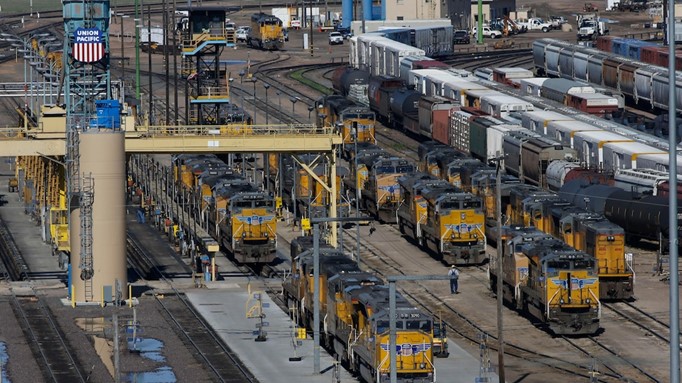
On Friday, Sept, 8th Union Pacific, the nation’s largest freight railroad carrier, received a blistering letter from federal regulators who criticized the company for poorly maintaining its fleet, furloughing workers who perform train maintenance and allowing its managers to pressure inspectors to stop their efforts in order to keep freight moving. The letter, signed by Federal Railroad Administration head Amit Bose, came after the agency inspected the company’s East Departure Yard in North Platte, Nebraska, this summer and found that more than 70% of the train engines had safety defects, as did 20% of the cars — defect ratios twice the national average. Conditions didn’t improve when inspectors returned and found locomotives with defects still in use. “We haven’t been able to get to them yet,” a Union Pacific director said, according to the letter
| |
Editor's Note: NS workers and union reps would be wise to take all of this with a grain of salt. CEO Shaw says NS has already begun to follow the recommendations and is strengthening collaboration with local labor leaders. Does this mean more phony union-management joint blame-the-worker safety "culture" programs? Shaw says the RR is enhancing its post-accident analysis and communication efforts. Does this mean pinpointing worker behaviors and taking reprisals? Shaw claims the NS is upgrading the facilities where railroaders report for work. Does this mean cameras and more surveillance? And he claims that they are expanding the safety department’s field team. Does this mean more "weed weasels", spying, and harassment of workers in the field? Remember, the NS did not earn the name "Nazi Southern" for nothing. | |
|
ATLANTA – Norfolk Southern’s independent safety consultant has made 11 recommendations the railroad should follow in order to improve its safety culture. Atkins Nuclear Secured, in its first report since being hired in May to assess the railroad’s safety efforts in the wake of the disastrous Feb. 3 derailment in East Palestine, Ohio, says NS is a “high-performing organization” with leadership that’s devoted to safety. But the report says there’s much the railroad can do right away to prevent accidents and injuries ...
| |
Editor's Note: Railroad Workers United is working with local organizations to keep the nation's only municipally owned interstate mainline freight railroad in public hands. | |
|
As the November 7th vote nears, more and more citizens are questioning the wisdom of turning over the city's mainline freight artery between Cincinnati and Chattanooga to corporate outlaw Norfolk Southern. Two groups, "Derail the Sale" and "Save Our Rail" are mounting an all out effort to convince the voters of the city to reject the proposed sale and to keep the rail infrastructure in public hands. RWU is assisting them with the struggle.
|
|
Editor's Note: This explosion was not the result of derailment. Was it the result of improper loading or securement? More and more, these jobs are performed by subcontractors - usually non-union - that could and should be performed by well-trained in-house employees of the railroad. And in another move to shift responsibility away from the rail corporations, Class Ones now want to shirt liability to chemical manufactures. See button below. | |
|
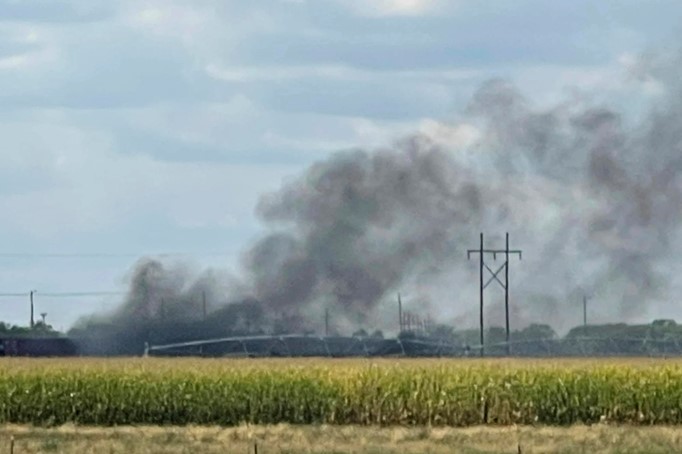
OMAHA, Neb. (AP) — An explosion inside a shipping container at the world's largest railyard prompted evacuations in western Nebraska Thursday because of the toxic smoke generated when one of the chemicals aboard caught fire. Around noon, an explosion occurred inside an intermodal container on a railcar at Union Pacific's Bailey Yard in North Platte, though it wasn't clear what caused the explosion, railroad spokeswoman Robynn Tysver said. No one was injured, and no cars derailed. Authorities evacuated everyone within a one-mile radius of the explosion in the western end of the railyard because of the smoke ...
| |
Editor's Note: There is a good chance that you have never heard about this tragic wreck last year at this time where two rails were killed. It was downplayed and barely made mention of in the press. This is one more accident that should have never happened and is inexcusable in this day and age of CTC and PTC. The track conditions that allowed this to happen were well known. | |
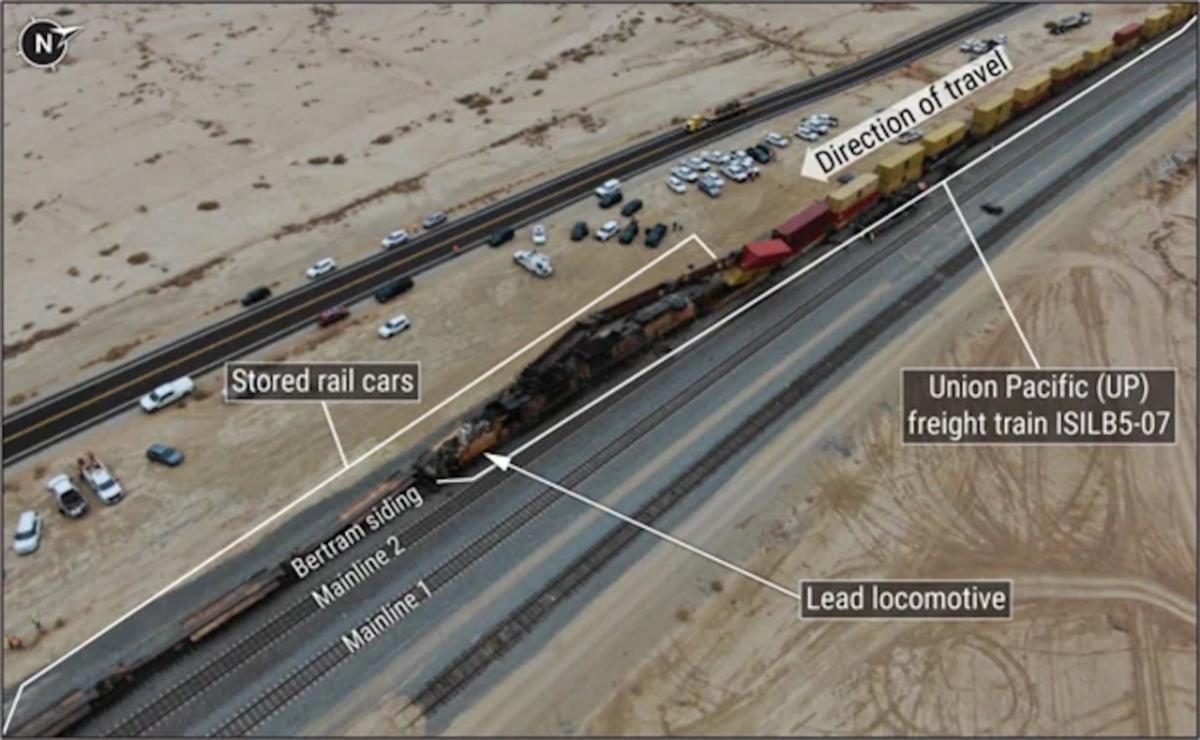 |  |
“This accident was completely unacceptable,” says Steve Ditmeyer, who in his extensive career served at senior-level positions at Burlington Northern and the Alaska Railroad, in a regulatory/R&D role with the FRA, and as teacher with the U.S. Military Academy and other institutions. “The territory, of course, was theoretically under PTC control, and collisions were to be prevented. But the control center’s PTC computer was incapable of knowing whether or not the Bertram Siding was occupied because of (1) rust on rails and wheels along with track circuit problems that caused intermittent loss of shunt, and (2) the lack of any other procedure for train crews (and their on-board PTC computers) to inform the control center’s PTC computer of cars, by initial and number, either being placed in or removed from the siding and have positive confirmation of it. A work order reporting system, like UP once had or like the one which was demonstrated during BN’s ARES PTC program on the Mesabi Iron Range, would have accomplished that..."
| |
Editor's Note: Just another example of how taxpayers are expected to assist Class One rail corporations with basic infrastructure repair and replacement while billions in profits are diverted to shareholders. Many cities across the country like Cleveland have numerous decaying rail bridges and tunnels that need repairing or replacing. Who will pay for this? Who should pay for this? The Class Ones scream every time the government attempts to regulate them in any fashion, yet they are more than happy to externalize costs such as bridge upkeep to cities. states and feds. Pretty hypocritical as well as irresponsible. | |
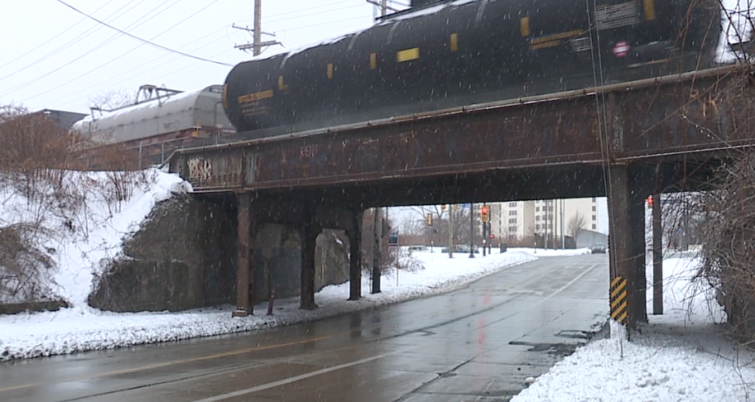
In June of this year, RT&S reported that “Justin Bibb, the Mayor of Cleveland, surveyed residents about rail bridges in the city and sent a letter to the Public Utilities Commission of Ohio and Class Is.” Now, the city of Cleveland has issued misdemeanor violations at “99 locations in all parts of Cleveland for falling and crumbling concrete, high weeds, graffiti and more,” according to a report from News 5 Cleveland. The first-degree misdemeanor violations are for CSX and Norfolk Southern owned rail bridges across the city, including a NS owned railroad bridge “spanning over Broadway Avenue near Harvard.” The bridge is “terrible; when it rains, it rains down on my car. . . Concrete can fall down on your windshield, and what, you’re going to have an accident, people behind you are going to wreck; they can’t leave it like that,” says a Cleveland Slavic Village resident.
| |
Editor's Note: According to reports from RWU members who work at the MBTA, these poll numbers bear out what the workers have been saying in recent years. It is time to take the work back in-house, kick out the contractors, and properly fund the system, one of the largest commuter transportation networks in the U.S. | |
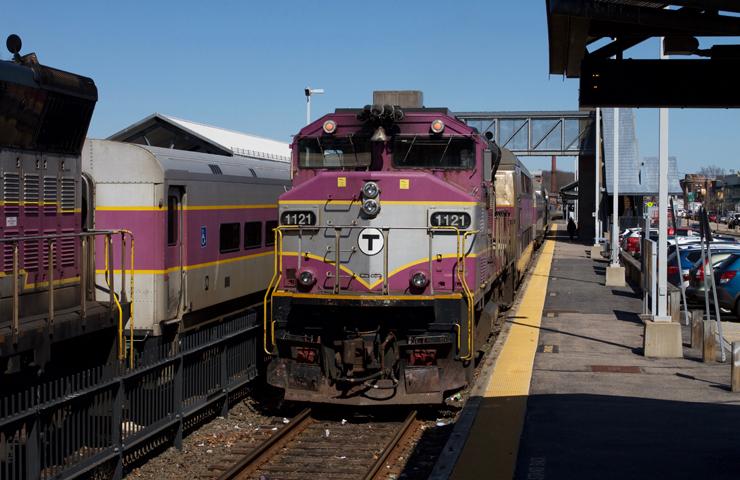
The MBTA has been plagued in recent years with safety issues, lack of investment, and
deferred maintenance [see “Panel’s report says ‘safety is not the priority’ at MBTA,” News Wire, Dec. 10, 2019]. The problems, including deteriorated tracks, forced the agency to implement slow zones across the system this year.
| |
Editor's Note: One more reason to eliminate older highly polluting locomotives with modern Tier 4 compliant units. Better yet, electrify the mainlines with overhead catenary and run the railroad carbon neutral with no threat of forest fire danger. | |
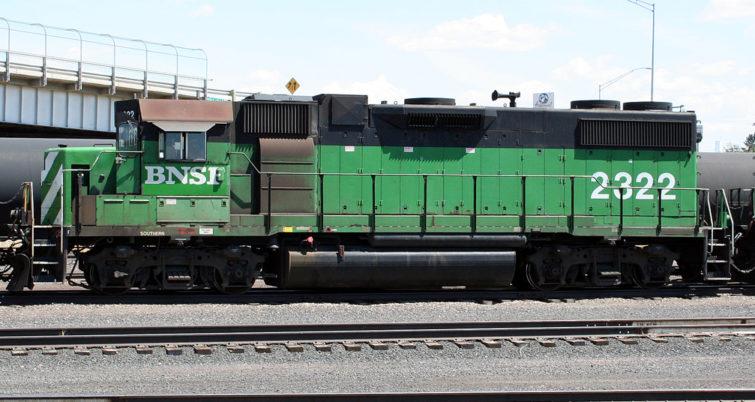
Earlier this summer, a fire ignited in Skamania County, Washington east of BNSF Tunnel 5. The fire burned through more than 500 acres and destroyed homes. Currently, a Washington Department of Natural Resources wildland fire investigation report shows that “debris from brakes and carbon emission particles from a BNSF locomotive engine” caused the fire.
| |
Editor's Note: It has been 19 years since this route last saw passenger train service. Amtrak and the states served have worked endlessly to restore partial service to the Gulf in the way of this New Orleans- Mobile route, and have been opposed at every step by Class Ones CSX and NS. Agreement to run the service was only reached when the Class Ones were finally forced by the STB to cut a deal. It remains to be learned exactly what the terms of this "secret deal" are. Just one example of how the Class Ones hold the public interest hostage and fail to live up to their agreements with the nation's passenger carrier since its creation in 1971. | |
|
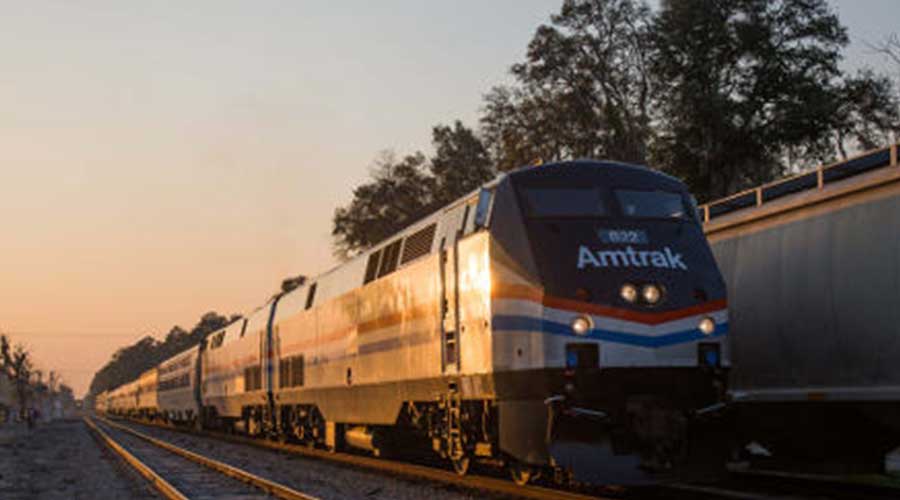
Amtrak and the Southern Rail Commission (SRC) last week provided an update on plans to begin passenger-rail service between New Orleans and Mobile, Alabama. Amtrak is running familiarization trips for the service, which is anticipated to begin in 2024. However, numerous steps have yet to be completed before an exact launch date can be announced, Amtrak and SRC officials said in a press release. Those steps include partnership agreements with federal, state and local governments, as well as with the host railroads CSX and Norfolk Southern Railway. Amtrak trains will run on the Class Is' tracks.
| |
Editor's Note: There are lies, damn lies, and statistics. Is the rail industry getting safer or less safe? There are statistics to show just about anything. But one thing is for sure - if the freight industry is moving 21% less freight and using 30% fewer employees, then all thing being equal, the accident/injury rate should be dropping accordingly by that degree. Right? | |
|
All is not good in any sector of the industry: In the period 2014-2022, for the entire industry, the rate of train accidents (calculated per million train-miles) not at grade crossings (RTANGC) increased almost 27%; human factor (employee error)-caused increased 12.5%. In the same period, the RTANGC for Class I railroads (which account for 75% of the total train-miles and about 65% of total employee-hours recorded in the industry) increased33.6%; human factor-caused increased 17.8%. In the commuter sector, the RTANGC increased 63%; human factor-caused increased 31%.
| |
Editor's Note: It is despicable that Congress cannot act on even this wishy-washy watered down rail safety bill. All the rhetoric and hyperbole in the wake of the East Palestine wreck has so far not translated into any Congressional action for rail safety improvements. Despite being full of loopholes for rail corporations, complete with deferred timelines for various implementations to be decided upon at a later date, the Bill is still too unpalatable for the Class Ones and their political allies. | |
|
In a Sept. 8 press release, Deluzio said that the proposed Railway Safety Act legislation, which he introduced earlier this year with U.S. Rep. Nick LaLota (R-N.Y.), has "significant bipartisan momentum." The bill was introduced in response to the Feb. 3 Norfolk Southern Railway train derailment in East Palestine, Ohio. A companion to legislation in the Senate, the House bill would institute requirements for wayside defect detectors, increase fines for wrongdoing committed by rail carriers, enhance safety procedures for trains carrying hazardous materials and establish a permanent requirement for trains to operate with at least two-person crews.
| |
Editor's Note: Once again, these advisories are hardly worth the paper they are written on. Just as when the National Transportation Safety Board (NTSB) recommends a fix to the Class Ones, these FRA advisories generally go ignored. Rather than "advice," we need RULES. | |
|
The FRA's preliminary investigation of a recent train derailment in Gothenburg, Nebraska, indicates that high-impact wheels damaged the rail the train was operating over and caused the derailment, FRA officials said in the advisory. Current industry practices for using WILDs to identify and replace high-impact wheels could help prevent such incidents in the future, according to the advisory, which the FRA published yesterday in the Federal Register.
| |
NEWS FROM AROUND THE LABOR MOVEMENT | |
Editor's Note: The Auto Workers union (UAW) has been on strike now since last Friday. We need union leaders in rail like this! One-member-one vote and a grassroots caucus made it happen. Read the RWU Resolution of Solidarity. | |
Editor's Note: With congested and crumbling highway infrastructure, the obvious answer is more trains and more railroad workers, especially regionally where high population density exists. | |
|
Regional Rail means running frequent trains on memory schedules (such as every 15 minutes in major cities, and every two hours statewide) to serve many types of travelers —not just those commuting to and from downtown for work. This change is already catching on. In this talk, High Speed Rail Alliance's executive director, Rick Harnish, will explain Regional Rail’s benefits and what is needed to succeed.
| |
Weekly Derailment Department | | | | |