Rail & Labor News from RWU
| |
Weekly Digest Number 32 - August 6th, 2024 | |
Welcome to the RWU Rail & Labor News! This news bulletin is produced and emailed out each Tuesday morning. We hope you find each week's news and information useful. If so, please share with co-workers, friends, and colleagues. If you like, you can sign them up to get all the news from RWU HERE. Or forward them the link. Got a hot tip? Please forward the article and a link to raillabornews@gmail.com. Note: If you read over this news bulletin each week, you will be sure to never miss the important news of what is going on in the railroad world from a worker's perspective! | |
Editor's Note: Finally, after nearly a half-century of delay and disruption to Amtrak passenger trains, the government is calling out formally one of the Class One disrupters for violating the law. In recent years, so-called "Precision Scheduled Railroading" (which is neither precise nor scheduled) has added to the delay of Amtrak trains. If the law can be enforced, the Class Ones might have to do a makeover of their shoddy operations model, do proper maintenance and inspection, run shorter trains, properly staff the railroad, and run it like it can and should be run. So the knock-on effect could be a good thing for rail freight and rail freight workers as well. | |
|
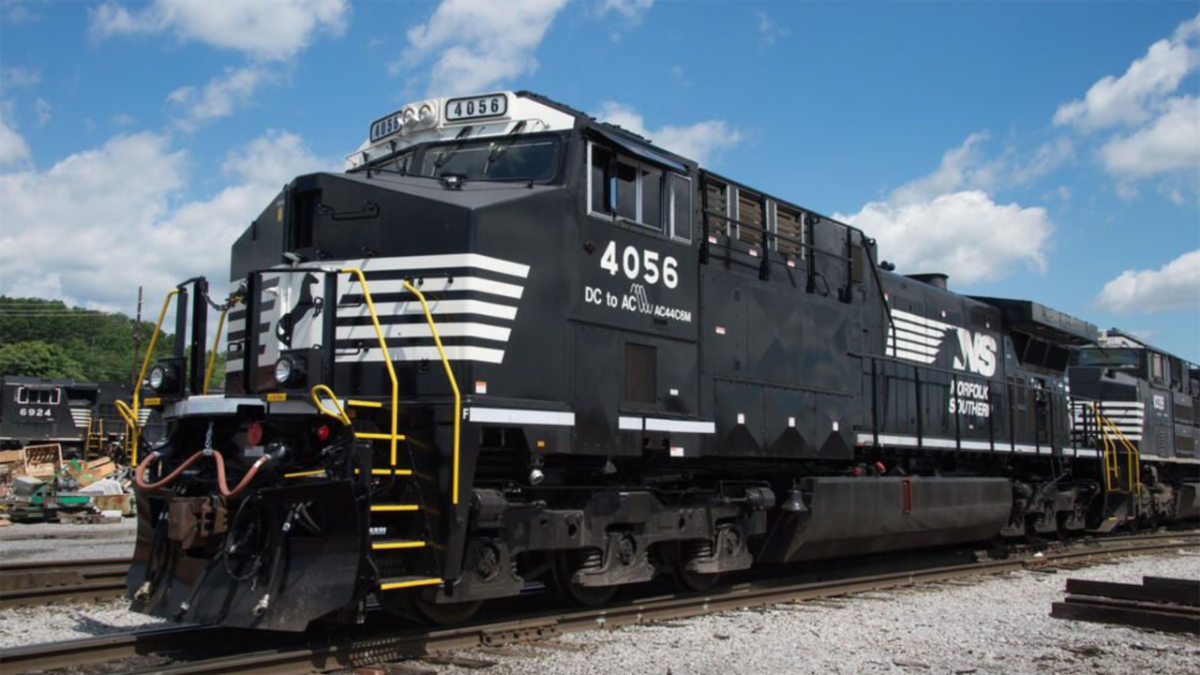
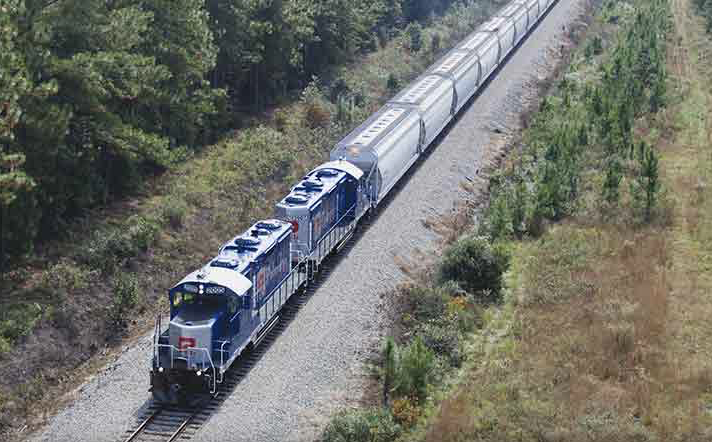
WASHINGTON — The U.S. Justice Department is taking Norfolk Southern to court, alleging the railroad’s delays of Amtrak’s Crescent violate federal law. The civil complaint, filed Tuesday in U.S. District Court for the District of Columbia, alleges NS regularly fails to give the Crescent preference over freight trains as required by statute, leading to delays that harm and inconvenience passengers, impede passenger rail transportation, and negatively affect Amtrak’s financial performance. The New York-Atlanta Crescent operates on NS-owned or -managed track between Alexandria, Virginia, and New Orleans, including the state-owned North Carolina Railroad segment between Danville and Greensboro, North Carolina. In all, NS controls 1,140 of the Crescent’s 1,377 route-miles. In 2023, the Justice Department said, only 24% of southbound Crescent trains traveling on NS-controlled track arrived at their destination on time.
|
|
Editor's Note: A long time in the making, this will be just one of many strikes that Canadian railway workers have undertaken this past decade or more. And just like in the U.S. in 2022, the Class One carriers - in this case CP and CN - bear full responsibility for the "economic damage" that may be done as the result of any work stoppage. While making record profits and engaging in massive stock buybacks and staffing cuts, there is simply no excuse to not bargain in good faith with the workforce. | |
|
The railway and the union representing engineers and conductors remain far apart on a new agreement
| |
|
CALGARY, Alberta — With labor negotiations at a standstill, a Canadian rail strike is likely to occur in late August, Canadian Pacific Kansas City CEO Keith Creel said Tuesday. CPKC and the Teamsters Canada Rail Conference are still talking but remain far apart on a new contract, Creel said on the railway’s second quarter earnings call. The Canadian Industrial Relations Board has said it will release a decision by Aug. 9 on what commodities are vital to health and safety and must keep moving during a work stoppage. Members of the TCRC, which represents engineers and conductors on CPKC and Canadian National, have voted to authorize a strike that could begin with 72 hours notice once the CIRB decision is issued. A strike would shut down both CPKC and CN in Canada.
| |
Editor's Note: Public Rail Now Organizer Adam Barrington lays out the case for why the Class One Wall Street controlled rail industry in North America should be publicly owned in the interests of railroad workers, passengers, trackside communities, shippers, the environment, and the nation as a whole. | |
|
The toxic rail derailment in East Palestine, Ohio, was a symptom of a privatized rail system that prioritizes profit over public safety.
| |
|
Common Dreams 8/4/2024
Under the private ownership of the Class I railroads, we have seen time and again the callous prioritization of profit over people. For the sake of short-term profit, inspections are cut short, tracks and equipment are not maintained, and the rail workforce is gutted — features of an industrial system that calculates derailments as part of the cost of doing business. The Class I railroads’ — the largest domestic rail carriers — pursuit of short-term profit has led to critical understaffing, longer trains, diminished maintenance of tracks and equipment, inadequate inspections, and other underinvestments that leave rail workers and trackside communities vulnerable to derailments and disasters. The Class I railroad robber barons are perfectly willing to risk the lives of workers and people living in trackside communities so long as it means more money for them and their shareholders. This is not hyperbole.
| |
Editor's Note: Good to see rail workers being organized into the union. These workers will join the ranks of most other commuter rail operations that are unionized across the U.S. and Canada. | |
|
BLET / July 31
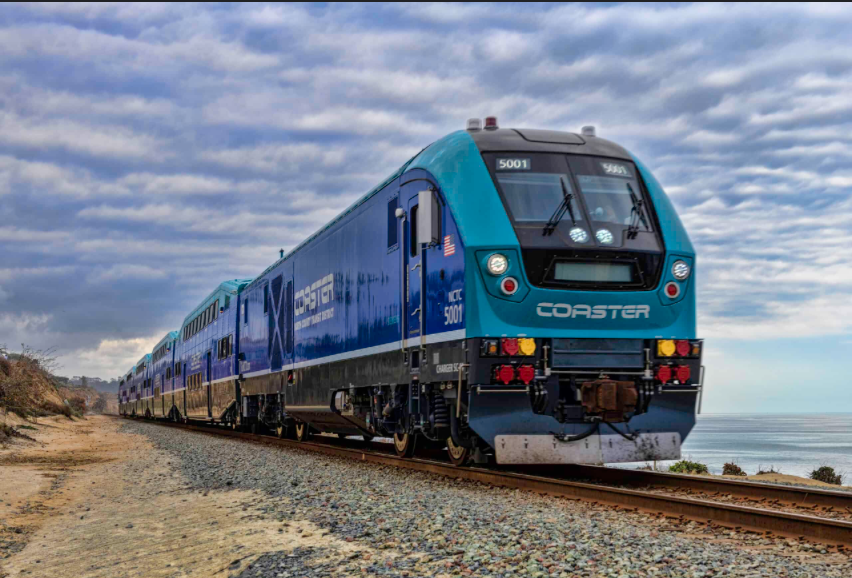
Train and engine service employees with commuter railroad COASTER voted to join the union in an election certified by the National Mediation Board earlier this afternoon. The new COASTER employees will be represented by the BLET’s Amtrak General Committee of Adjustment. COASTER provides commuter rail service over a 41-mile stretch through San Diego County between Oceanside and downtown San Diego, California.
|
|
Editor's Note: Kudos to the BLET for inviting Bernie Sanders to speak to their Eastern Regional conference. Sanders played a key role throughout the bargaining process which came to a head in 2022, advocating for the right of freight rail workers to strike and win their demands. | |
Teamsters / July 29
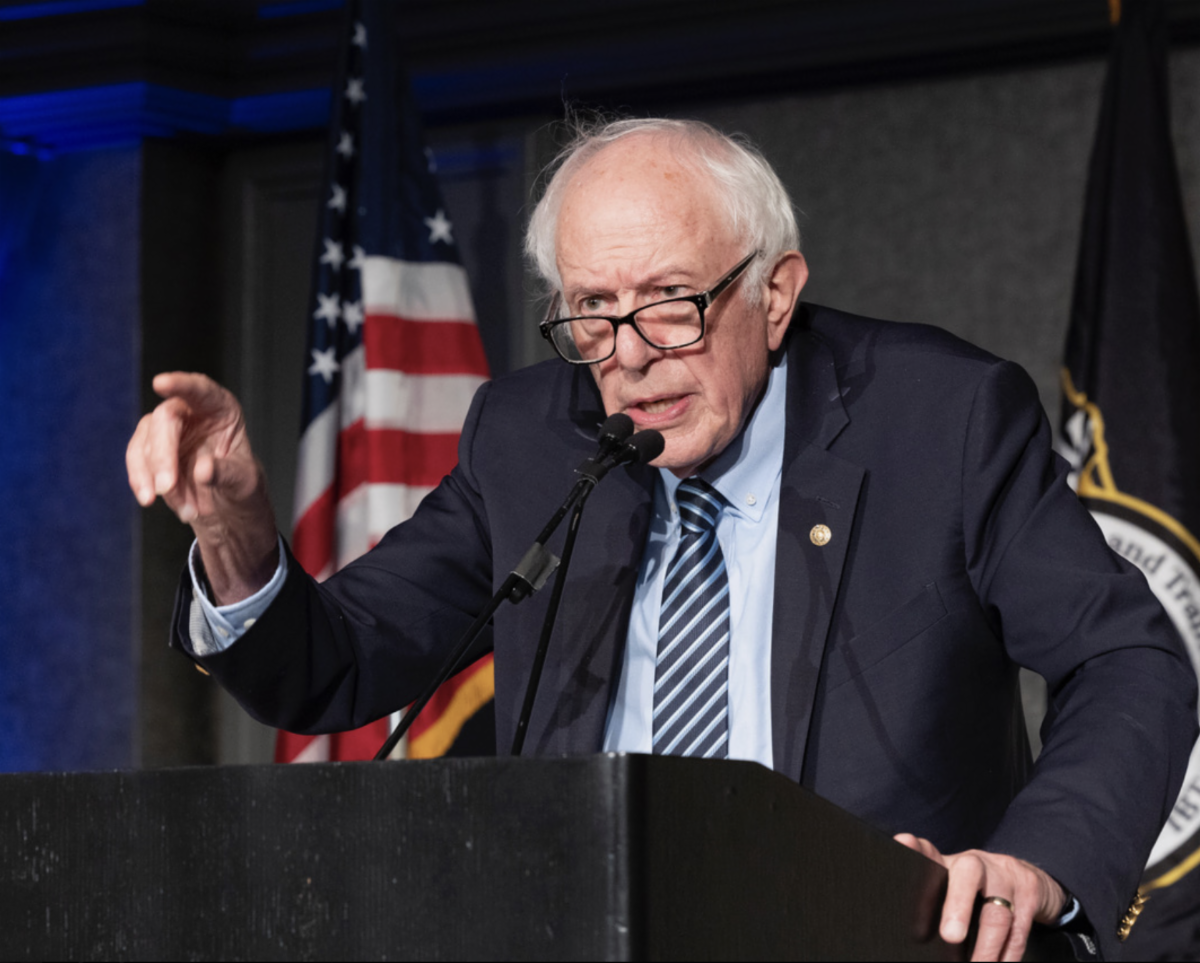
Sen. Bernie Sanders, (I-Vermont), called out America’s railroad industry for putting profits over safety in his address to more than 300 members of the Brotherhood of Locomotive Engineers and Trainmen (BLET), an affiliate of the Teamsters Union, on July 29 in Washington, DC. “Nobody in America understands the type of outrageous corporate greed that is taking place in America today better than workers in the rail industry. You guys are living it every day,” Sanders said. “This is an industry that has slashed over 20 percent of its workforce while spending — this is really quite unbelievable — $225 billion on stock buybacks and dividends since 2010.”
| |
Editor's Note: One cannot help but wonder about this decline in freight traffic on the U.S. shortline railroads. The vast majority of the freight handled is interchanged one or more times with the larger Class One carriers. Are the problems at the Class Ones - increasing rates, lousy service, delayed shipments, reduction in switching frequencies, demurrage charges, and all the rest of the PSR hurting shortline car loadings? | |
|
Progressive Railroading / July 30
When it comes to periods of traffic growth, the year’s first half didn’t qualify as one for short lines. The collective carloads for 458 short lines totaled 3,072,718 through 26 weeks, down 3.9% year over year. Traffic in three of 14 commodity groups fell by double-digit percentages: coal at 15.3% to 119,524 units; petroleum and coke at 12.4% to 107,784 units; and farm and food products excluding grain at 10% to 145,294 units. Traffic increased in only three commodity groups, led by intermodal at 12.5% to 503,396 units. Motor vehicles and equipment loads climbed 4.7% to 102,871 and ores carloads rose 3.5% to 85,858.
| |
Editor's Note: Glowing reports of increases in freight volumes year-over-year appear encouraging. However, they seem to be all based on intermodal's rebound after a disastrous year in 2023. Carload traffic remains flat or in decline. | |
Progressive Railroading / August 1
U.S. freight railroads moved 508,496 carloads and intermodal units in the week ending July 27, a 5.3% increase from volume moved in the same week a year ago. Total carloads for the week fell 0.5% to 228,845 units, while total intermodal volume rose 10.5% to 279,651 containers and trailers. Four of the 10 carload commodity groups that AAR tracks every week posted increases. They included grain, up 37.9% to 20,665 carloads; farm products excluding grain, and food, up 9.5% to 16,811; and forest products, up 5.3% to 8,360. Commodity groups that logged decreases included coal, down 9.1% to 61,382 carloads; nonmetallic minerals, down 3.8% to 33,264; and metallic ores and metals, down 2.7% to 21,455.
| |
Editor's Note: It is ironic that while climate change has the potential to push rail transport front and center as the most environmentally safe and sensitive means of transport, that same climate change could derail plans for its expansion due to associated costs. Rail workers and advocates must push hard for rail expansion, despite the obstacles as we know that ultimately, rail is the wave of the future regardless. | |
|
POLITICO / August 3
Commuters and other travelers along America’s busiest stretch of passenger railway have faced a nightmare summer of heat-related delays and cancellations that are complicating the transit legacy of a president nicknamed “Amtrak Joe.” Record heat has exposed long-standing physical problems along the Northeast Corridor between Boston and Virginia that highlight the need for planned improvements that would get a big boost from the bipartisan infrastructure law while leaving officials without immediate answers for outraged constituents.
| |
Editor's Note: The rail carriers are raising the alarm that this will wreck havoc on the rail industry and destroy rail jobs in the state adopting such legislation, in this case California. Isn't this the same argument they make about state 2-person crew laws? About state laws restricting train length? State laws that mandate practically any other safety practice? Of course it is. Rail workers would be wise to not be fooled by corporate scare tactics. This is a safety and health issue not just for the citizens who live adjacent to rail yards, but for switchmen, engineers, maintainers, crew can drivers and others, all who labor 40 hours a week plus in this unhealthy environment. | |
|
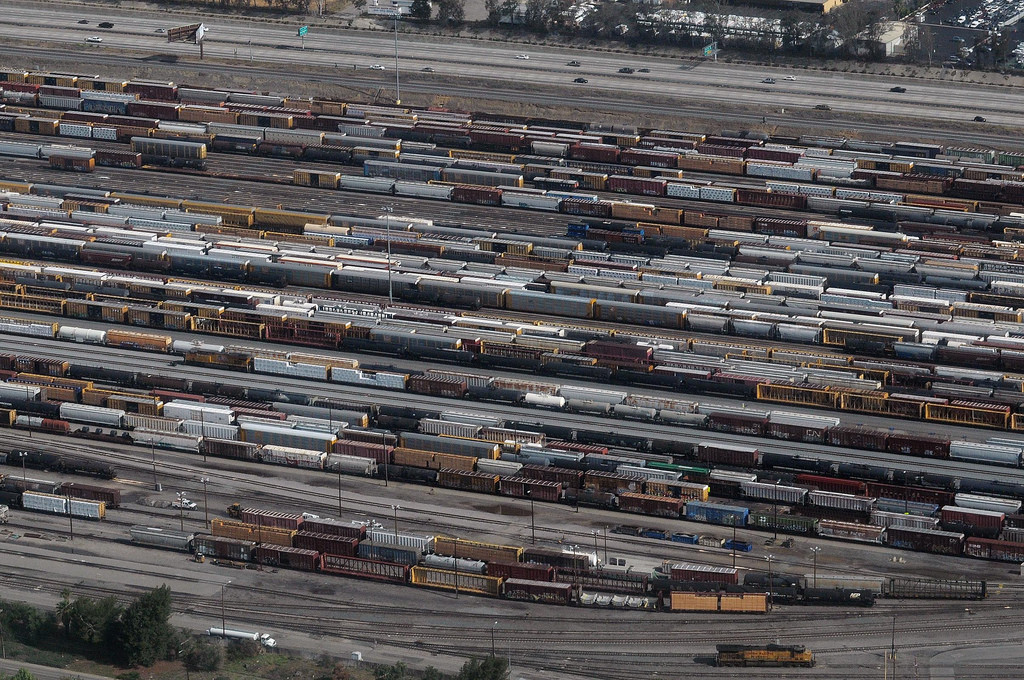
DIAMOND Bar, Calif. — A Southern California regulatory agency on Friday adopted new rules requiring railroads to significantly reduce pollution from rail yards starting in 2027, an action that would require nitrogen oxide emissions to be reduced up to 82% by 2037.
The South Coast Air Quality Management District’s new Freight Rail Yards Indirect Source Rule would require the reductions through the use of cleaner technologies, such as lower-emission locomotives. However, as the Los Angeles Times reports, the rule is contingent on U.S. Environmental Protection Agency approval of state regulations for locomotives and trucks. Those rules, which require use of zero-emission locomotives in California by 2035 (2030 for those in switching service), are being challenged in court by the rail industry.
|
|
Editor's Note: Railroad workers have a huge stake in whether or not a high speed network is built, who builds and operates it, and whether or not this is the best way forward for a modern rail system in North America. Would this augment a revitalized and robust conventional freight/passenger network or detract from it? Rails should join this important conversation. | |
|
Date & Time
Sep 18, 2024 10:00 AM in Pacific Time (US and Canada)
Description
In March, Rep. Moulton (D-MA) and Rep. Suzan DelBene (D-WA) introduced the American High-Speed Rail Act, which would invest $205 billion federal dollars into high-speed rail. Join us for a conversation about this game-changing proposal.
| |
NEWS FROM AROUND THE LABOR MOVEMENT | |
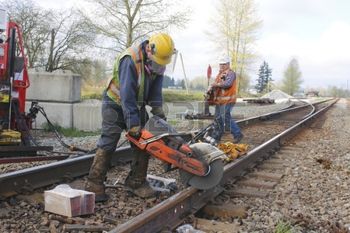
Editor's Note: Many railroaders - including track workers, car inspectors, shop workers, switchmen, among them work long hours outside all year long. Legislation to add protections for these workers is needed as record breaking temperatures register across the continent this summer. | |
|
In 2023, an estimated 2,300 people in the US died from heat-related illness, the highest record of heat-related deaths in 45 years. “The excessive heat the US has experienced in the last month is particularly dangerous to the people who have to work in it – hundreds of thousands of workers succumb to heat-related illness, injury and death each year,” said Rebecca Dixon, president and CEO of the National Employment Law Project. “As human-caused climate change produces more extreme temperatures, the need for strong federal heat protections is becoming more urgent every summer.”
| |
Editor's Note: This is an important workshop for all workers to better understand and appreciate the intersection between class and race, and to build solidarity and unity on the job among co-workers. | |
|
This workshop has three parts. We ask that you attend all of them. The sessions will be on Thursdays, August 15, 22, and 29, from 7:30 p.m. to 9:30 p.m. Eastern (4:30 p.m. to 6:30 p.m. Pacific). This is an online workshop and will be held via Zoom. How does racism show up in our workplaces and our unions? What are some strategies to confront it and build solidarity for a stronger, multiracial labor movement? And what can you say to union siblings who aren’t convinced racial justice has anything to do with union politics? This workshop addresses how class and race are inextricably linked, tracing back the origins of “race” as an invention of the ruling class to divide workers. We'll talk about how to move to strategies of unity.
| |
Editor's Note: Working class people need tools to liberate themselves. People understand intrinsically to some extent that they are working class, but to come to class consciousness awareness and gain the tools needed for liberation requires schooling, discussion, and education. | |
|
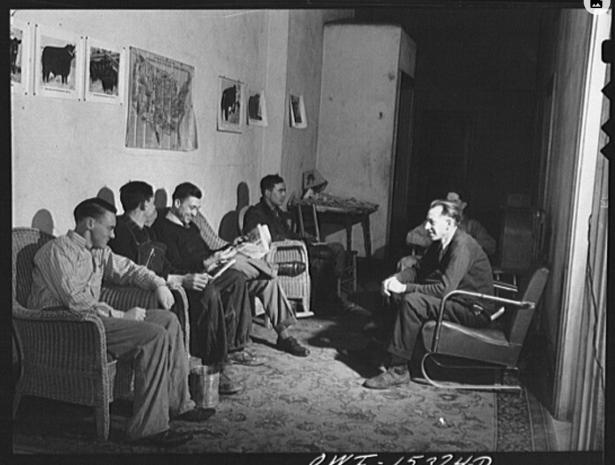
IN DECEMBER OF 1936, A DAY INTO THEIR HISTORIC SIT-DOWN STRIKE AT a General Motors plant in Flint, Michigan, autoworkers set up a school. Surrounded by idle machines, freed from the foreman's gaze, they took classes in public speaking and labor journalism, in political economy, in the history of the labor movement.
This was not a spontaneous idea. Some of the key players in the strikes—the nascent United Auto Workers (UAW) union's education director and several rank-and-file organizers, as well as its future president, Walter Reuther, and his brother, Roy—had spent time at Brookwood Labor College, a small independent school for workers who wanted to radicalize the labor movement.
| |
WEEKLY DERAILMENT DEPARTMENT | | | | |