Rail & Labor News from RWU
| |
Weekly Digest Number 33 - August 13, 2024 | |
Welcome to the RWU Rail & Labor News! This news bulletin is produced and emailed out each Tuesday morning. We hope you find each week's news and information useful. If so, please share with co-workers, friends, and colleagues. If you like, you can sign them up to get all the news from RWU HERE. Or forward them the link. Got a hot tip? Please forward the article and a link to raillabornews@gmail.com. Note: If you read over this news bulletin each week, you will be sure to never miss the important news of what is going on in the railroad world from a worker's perspective! | |
THIS WEEK'S RAIL AND LABOR NEWS | |
Editor's Note: Good to see the On-Board staff unions at Amtrak finally reach agreement on the new contract. SMART-TD is the last to have not reached agreement. Time for Amtrak management to step up and do the right things by the Conductors at the nation's passenger railroad. | |
Progressive Railroading / August 6
The Amtrak Service Workers Council (ASWC) bargaining committee recently reached a new tentative agreement for its members. ASWC represents all Amtrak on-board service workers and is made up of Transportation Communications Union (TCU), Transport Workers Union, and Unite-HERE members. The pact was overwhelmingly ratified by 91% of TCU members and includes wage increases totaling 30%. The pact calls for no increases to monthly health-care cost shares and several healthcare plan improvements take effect Jan. 1, 2025, regarding specialty drug copays, hearing needs, and other benefits. It also includes work rule changes and 10 weeks of paid parental leave. In addition, employees in active service as of March 1, 2020, will receive a service recognition bonus of $2,000.
| |
Editor's Note: Great to see the freight shippers pointing out that their troubles and Amtraks' are inextricably linked. Shippers and passenger rail advocates - together with rail workers, trackside communities, tribes, environmental activists and others - all are in the same boat, stymied by the privately owned Class One dominated freight rail system in North America. Perhaps these forces can come together around Public Ownership of Rail | |
Trains Magazine / August 7
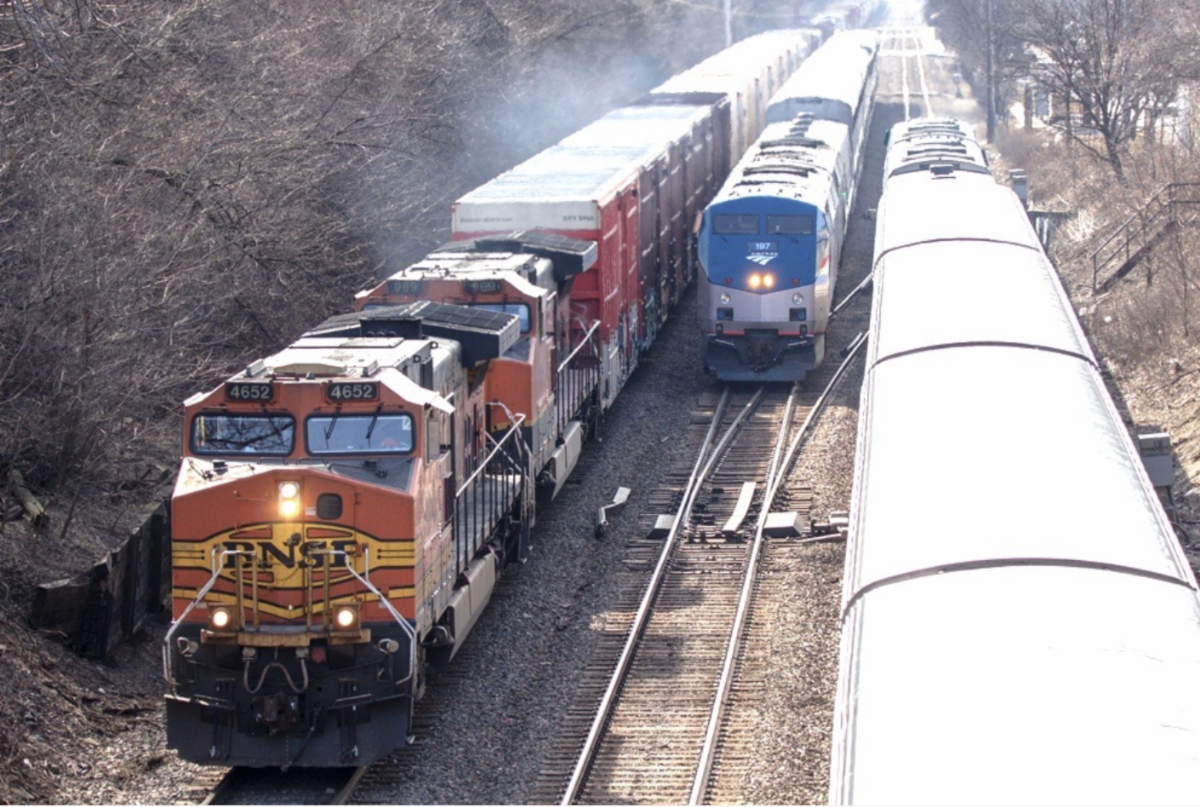
Rail-shipper groups say the poor on-time performance of all 15 Amtrak long-distance trains — which prompted the Justice Department to file a lawsuit last week against Norfolk Southern for its handling of The Crescent — is merely a reflection of Class I railroad freight operations. Class I railroad freight service, shippers argue, suffers from Wall Street's insistence on low operating ratios and keeping capital expenses to a minimum in order to fund share buyback programs.
| |
Editor's Note: This organizing drive should be a snap. Considering how Brightline West has accepted millions in public subsidies and made nice with the unions there, it would be surprising - and unacceptable - if they turned hostile to their existing workforce in Florida. | |
|
Trains / August 8
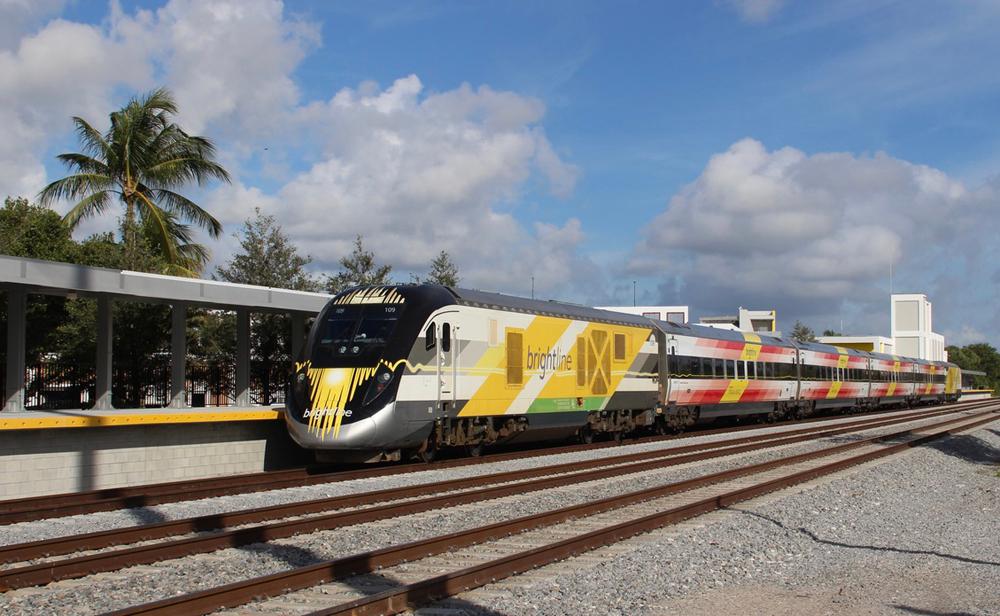
WASHINGTON — On-board workers with Florida’s Brightline have filed to form a union, the Transport Workers Union of America has announced. The workers made the filing today (Thursday, Aug. 8) with the National Mediation Board, the government agency that handles labor relations with railroads and the airline industry under the Railway Labor Act. Workers involved include lead attendants and on-board attendants. Brightline has previously announced an agreement with 13 unions, including the TWU, to use union workers to operate and maintain the Brightline West project in Southern California and Nevada
|
|
Editor's Note: Pathetic to see the Class Ones threaten a lockout, as if to say the unions are being so unreasonable that the railroad will simply have to lock them out of the property. It is a public relations tactic, but it could backfire on them. | |
CBC / August 9
Both of Canada's national railways are now threatening to lock out employees if their separate labor negotiations with Teamsters Canada aren't resolved by 12:01 a.m. on Aug. 22. CN Rail is formally calling on the federal government to deploy binding arbitration in the company's dispute with Teamsters Canada. In a media release, CN Rail said it is making the request to "protect Canada's economy." CN said that if the dispute isn't resolved soon, it will have "no choice" but to begin a phased network shutdown, concluding with a lockout. Canadian Pacific Kansas City (CPKC) said in a media release it is issuing its lockout notice publicly to give customers and supply chains time to plan for a work stoppage. The rail company adds that it has offered to enter binding arbitration with the Teamsters.
| |
Editor's Note: Another reason for railroad infrastructure to be held publicly. Thousands of railroad bridges that potentially are a hazard are simply left to the rail carriers to determine if they are safe or not. Thousands of them are decaying, built more than a hundred years ago and in need of repair/replacement. | |
Progressive Railroading / August 9
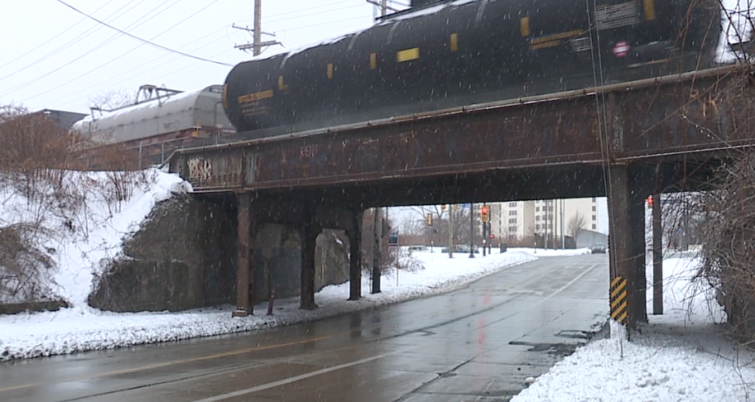
U.S. Sen. Bob Casey (D-Pa.) on Aug. 1 introduced the Rail Bridge Safety and Transparency Act (S. 4954), which aims to increase the safety of rail bridges in the nation. There are more than 100,000 railroad bridges in the United States, yet there is little federal oversight of their safety, Casey said in a press release. The bridges typically are inspected and monitored by the railroads that own them based on individual guidelines. As a result, the inspections are largely inaccessible to local officials and constituents, leaving communities unaware of the safety of their local rail bridge. Casey said. S. 4954 would create standards for rail bridge oversight by the U.S. Department of Transportation (USDOT). It would direct the USDOT to create standards to establish a minimum structural rating system for rail bridges and require railroads to inspect their bridges in line with those standards. The USDOT would also perform independent bridge inspections to ensure safety standards are upheld.
| |
Fortune / July 30
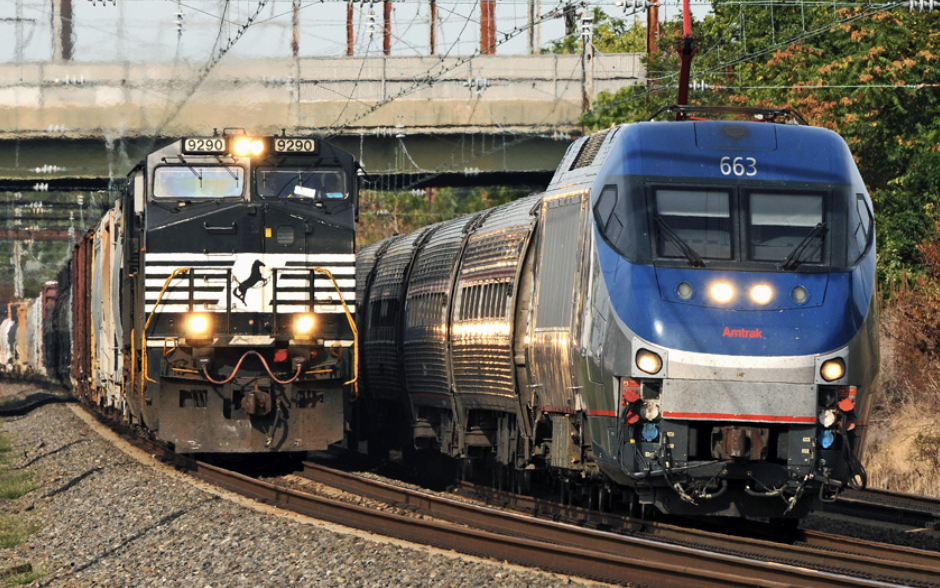
Norfolk Southern has been causing chronic delays for Amtrak between New York and New Orleans by forcing the passenger trains to wait while its massive freight trains pass, the federal government said in a lawsuit. The Justice Department filed the lawsuit because it says the railroad is consistently violating the federal law that requires Amtrak’s trains to get priority when they cross a freight railroad’s tracks. Amtrak relies on tracks owned by one of the six major freight railroads across most of the country. “Americans should not experience travel delays because rail carriers break the law,” Attorney General Merrick B. Garland said. In recent years, since the passing of the Bipartisan Infrastructure Bill, which allocated $66 billion in funding for rail projects, Amtrak has taken a hard line against freight companies it says are breaking the rules. Amtrak has pushed for investigations into freight rail carriers and lobbied for the right to sue them in federal court.
| |
Editor's Note: For nearly 20 years the Gulf Coast has gone without passenger service after Hurricane Katrina severed the line temporarily. The Class One carriers CSX and NS have worked tirelessly to block service restoration. But the forces to bring to route - at least from New Orleans to Mobile - back to passenger service may finally prevail next year. | |
Progressive Rail / August 7
The City Council of Mobile, Alabama, yesterday approved a pact with Amtrak and the Alabama State Port Authority that will help enable the return of passenger rail service to the Gulf Coast city for the first time in nearly 20 years. Through an agreement between the port authority, the state of Alabama and the City Council, about $3 million in funding has been promised to Amtrak for the next three years, marking essential progress for the return of service. The funds build upon a $178.4 million grant previously awarded by the Federal Railroad Administration, according to a press release issued by Transportation for America.
| |
Editor's Note: Had Amtrak not been starved of capital for 50 years, and had Congress and the Amtrak Board taken responsibility and purchased new rolling stock in recent decades, Amtrak would be able to capitalize on the surge in rail passenger demand. As is, many of its trains are running short of equipment with two, three, and even four cars fewer than in the past., its trains full and mostly sold out weeks in advance. | |
NPR / August 4
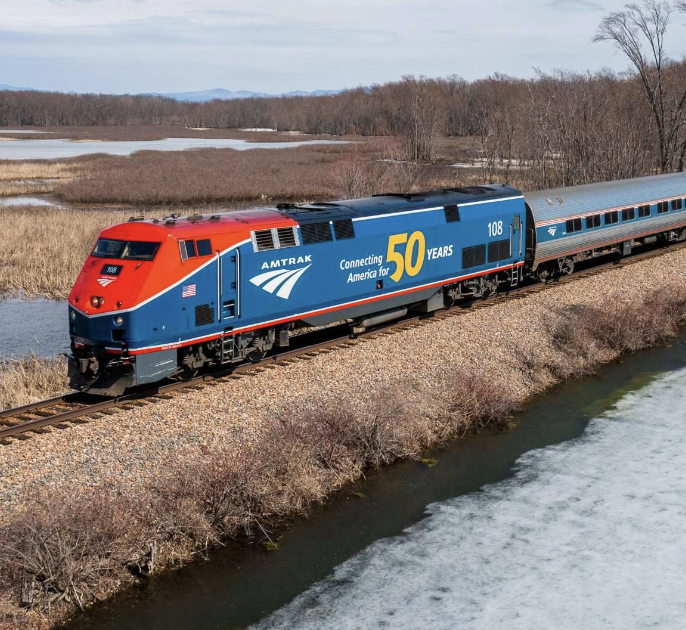
Amtrak is on its way to carrying more passengers this fiscal year than ever before. The government-subsidized rail service is on its way this fiscal year to carry more passengers than ever before in its 53-year history. Through the first nine months of the budget year - through the end of June - Amtrak had about 24.1 million riders. That's up 18% over the prior year and on pace to top that record set in 2019 of about 32 million passengers.
| |
Editor's Note: While the Comment below makes sound business sense, it flies in the face of the "logic" of "Precision Scheduled Railroading" and the whole trajectory of the freight rail industry in North America for at least a generation, fixated as it is with short-term profits, stock buybacks, low Operating Ratio and cuts to staff, maintenance, inspection, etc. We will not hold our breath waiting for the Class Ones to drop rates and push for new customer traffic. | |
Trains / August 7
Railroads’ success is often defined by service metrics like car dwell, velocity, or operating ratio. These measurements are snapshots documenting how long railcars idle or how quickly trains move between points. Better velocity means more profitability. These subjects have been a growing part of the conversation since Precision Scheduled Railroading was adopted industry-wide. In sales and marketing, you use these same service measurements as talking points in customer meetings, but a railroad’s operating performance isn’t the only thing customers care about. A railcar must arrive when it’s scheduled to, but there’s more to it. As with most big decisions in all aspects of life, cost is important, and customers’ transportation managers are often tasked with finding the most economical solution for his or her employer. Just because trains are on time doesn’t allow railroads to charge higher rates. Commodities are always changing in value and railroads need to be agile. Quoting an uncompetitive rate on the basis of a superior service offering could cause the most efficient railroad in the industry to lose business.
| |
Editor's Note: As the union is discovering, it is one thing to negotiate and sign an "agreement" with the rail carriers, it is another to implement it and enforce it as agreed upon. The "needs of the service" have a way of taking precedence over any contract with its workers. | |
AP / August 9
Union Pacific is holding back on its promises to make schedules more predictable for train crews to address the quality of life concerns that nearly caused a nationwide rail strike two years ago. The nation’s largest railroad has told the Brotherhood of Locomotive Engineers and Trainmen that Union Pacific isn’t getting enough work out of its engineers anymore under the new schedules and had to hire more workers than it planned, so the company wants to change the schedule improvement agreement it signed and touted last year. Where they have been implemented, the new schedules make it possible for engineers to attend doctor’s appointments and keep important promises to show up for their kids’ activities or family gatherings, union members say. “It’s been a game changer,” said Mark Ganong, who has worked for Union Pacific in Texas for 22 years. “I think it’s improved my quality of life — well, I know it has. I think it’s improved my overall health, my attitude and my ability to schedule things.”
| |
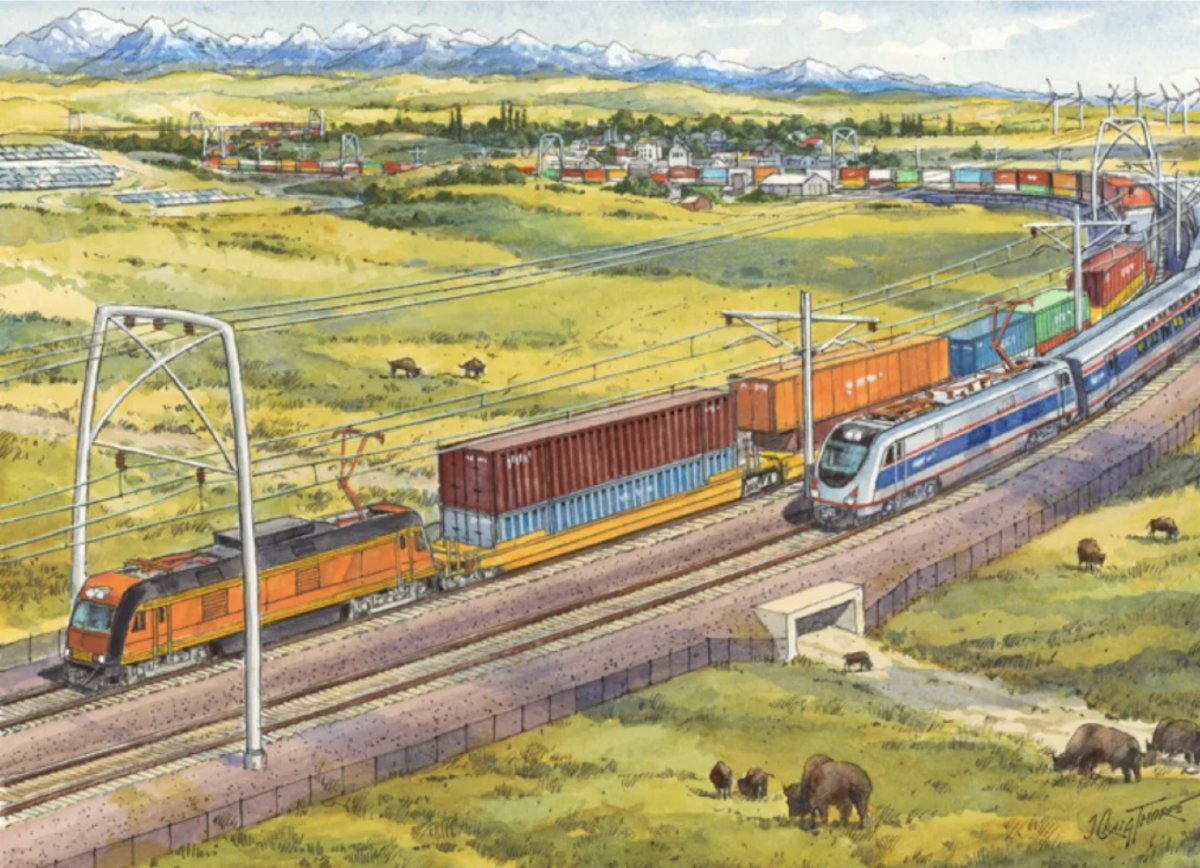
Editor's Note: Our friends at Solutionary Rail have issued a comprehensive take on why and how to rebuild the North American rail network to better serve the public. Must reading for all advocates of rail revitalization. | |
Solutionary Rail / August 2
Today’s U.S. is a deeply polarized nation. Perhaps the greatest divide is between major metropolitan areas close to the coasts, and rural areas and smaller industrial cities in the heartland. Many smaller airports have lost scheduled flight service, and that which remains is often inordinately expensive. Bus service is not what it once was. And rail service is often a shadow of its heyday. As life has more and more centralized in the large metros, access for rural and smaller communities by other than by private automobile has declined. For instance, healthcare often requires long drives to metropolitan facilities. To build a future for the vast swathes of the U.S. that are being left behind, and begin to heal cultural and political divides, we need to reconnect America. For that, we need to look to our past, when railroads connected all parts of the nation.
| |
Editor's Note: We are reprinting this article for those who might have missed it the first time around. Note that this runs under a new title and has been reprinted in this journal "Consortium News." The article is making the rounds! | |
Consortium News / August 7
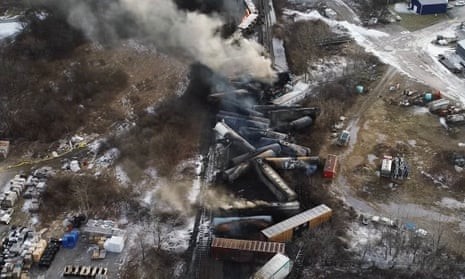
The National Transportation Safety Board announced in June that the infamous East Palestine, Ohio, freight train derailment was caused by a defective wheel bearing. But that technical issue does not tell the whole story. Federal investigators found that the railway company Norfolk Southern failed to communicate information to emergency responders in a timely manner, which contributed to the exposure of responders and the public to post-derailment hazards. According to the June 2024 NTSB report abstract on the derailment and hazardous materials release, Norfolk Southern’s delayed transmission of consistent information “also delayed the Ohio State Patrol’s recommendation to the incident commander that the shelter-in-place order be replaced by an evacuation.” Norfolk Southern officials and contractors also provided misleading and incomplete information while advocating for an unnecessary vent and burn of tank cars carrying vinyl chloride. A vent-and-burn action is, according to the Federal Railroad Administration (FRA), a response of last resort. Norfolk Southern began planning the vent and burn shortly after the derailment, rejecting three other removal methods that could have been far less dangerous to responders and the people of East Palestine.
| |
Editor's Note: For those who naively believe that somehow NS is charting a new path of growth, safety and respect for employees, think again. All three of these men cut their teeth apparently as big time supporters of PSR. | |
|
Progressive Rail / August 8
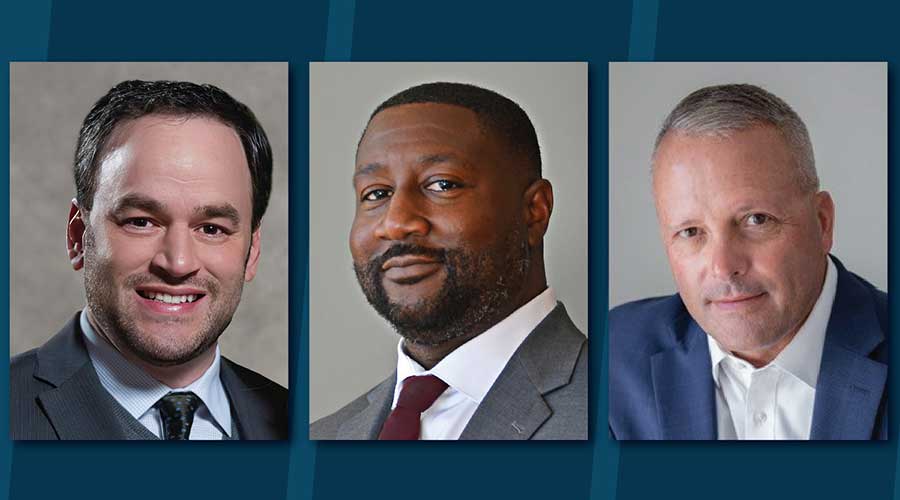
Norfolk Southern Railway yesterday announced it has appointed three industry veterans with precision scheduled railroading (PSR) experience to help lead its transportation team. Tim Livingston joins NS as senior vice president of transportation and network operations. Reporting to Livingston will be Rodney Moore, now VP of transportation for the Northern region; and Dewayne Swindall, now VP of transportation for the Southern region. All three will report to Chief Operating Officer John Orr. The new leadership structure will bolster accelerated operational improvements throughout the company's network with PSR-experienced senior leaders, NS officials said in a press release
| |
NEWS FROM AROUND THE LABOR MOVEMENT | |
Each week, RWU includes a few articles about advances and developments in the larger labor movement that are of interest to railroad workers. Got an artcile to submit for possible inclusion next week? Email it along to raillabornews@gmail.com. Thanks! | |
Editor's Note: Big business - including the rail carriers - have long sought to diminish or destroy OSHA's effectiveness altogether. One of their arguments - that the standards are rigid and non-flexible, hurting businesses - is shredded here on the "Confined Space" website. | |
Confined Space / August 6
At last month’s House hearing on OSHA standards, we constantly heard the tired refrain that OSHA standards are a “one-size-fits-all” solution that ignores the variations between different types of workplaces, different parts of the country, different size employers and provide a strait jacket for employers with no flexibility. We have heard this sad old complaint about every OSHA standard since the agency was created in 1971. But it is just wrong. It is an old business talking point, but it has been an effective one, which is why they are still using it.
| |
Editor's Note: The Labor Movement is what has always stood between a democratic society and a totalitarian regime of the rich. Rail workers have had a key role historically in opposing plutocracy and today can play a part in staving off fascism. | |
|
Portside / August 8
2024 is historic in the story of global democracy. Around four billion people will vote in more than 40 countries. But in what state do we find democracy? The facts speak for themselves – if democracy were a hospital patient, it would need constant care. The global trade union movement, as the world’s largest social movement, needs to stand up For Democracy. Unregulated, neo-liberal globalization has left billions of people behind and this breeds support for right-wing populists. This has fed a rising tide of authoritarian and totalitarian regimes that neither respect limits on their power nor protect the freedoms and rights of workers, minorities, civil society or trade unions.
| |
Editor's Note: Harris' pick for VP running mate Walz was probably about the best of the bunch that were under consideration for the job. But does this mean the Dems are pandering to the Labor Movement and the working class? If so, they have a way to go yet, even if they are more "pro-labor" than their GOP opponents. | |
|
In These Times / August 6
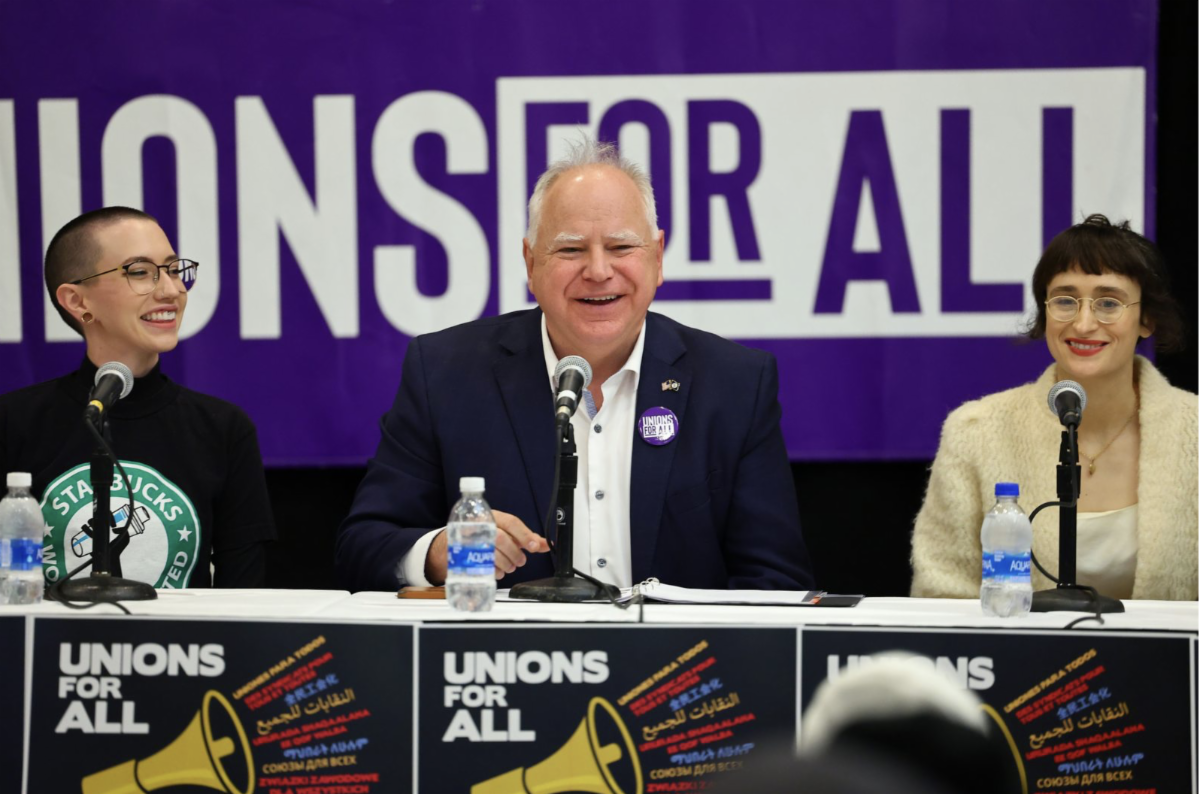
Kamala Harris announced Minnesota Gov. Tim Walz as the second half of the Democratic presidential ticket. Harris’ choice may signify a nod to those on the left wing of the party, who down the stretch were heavily pushing for Walz publicly and on social media — or, more likely, internal polling simply showed him as the best candidate to go toe-to-toe with J.D. Vance, Donald Trump’s Republican vice presidential nominee. Either way, the addition of Walz to the Democratic ticket can help union leaders, members and working families breathe a sigh of relief: his personal history and policy choices have shown him to be a friend to unions.
| |
WEEKLY DERAILMENT DEPARTMENT | |
Each Tuesday in this news bulletin, RWU does our best to present a picture of what has been happening over the course of the previous week in terms of derailments in North America, and investigation determinations of previous accidents. NOTE: This list is by no means comprehensive. Smaller and less consequential mishaps are generally not reported here. If the wreck results in injury or fatality, or is especially damaging/extreme, a full article will appear as a feature in the dozen or so rail articles above. Know of a train wreck? Please feel free to forward a link to raillabornews@gmail.com for possible inclusion next week. Thanks! |
| | | |