Rail & Labor News from RWU
| |
Weekly Digest Number 39 - September 24th, 2024 | |
Welcome to the RWU Rail & Labor News! This news bulletin is produced and emailed out each Tuesday morning. We hope you find each week's news and information useful. If so, please share with co-workers, friends, and colleagues. If you like, you can sign them up to get all the news from RWU HERE. Or forward them the link. Got a hot tip? Please forward the article and a link to raillabornews@gmail.com. Note: If you read over this news bulletin each week, you will be sure to never miss the important news of what is going on in the railroad world from a worker's perspective! | |
THIS WEEK'S RAIL AND LABOR NEWS | |
Editor's Note: This week’s hearing serves as a reminder that while railroads tout progress, many of their customers still face unreliable service and dwindling options. As the STB pushes back against railroads’ excuses, we must stay vigilant. The focus must remain on real improvements, not just polished numbers. As rail labor, we have to ask—how can we champion better service for our customers while fighting for fair working conditions? The industry’s future depends on finding that balance. | |
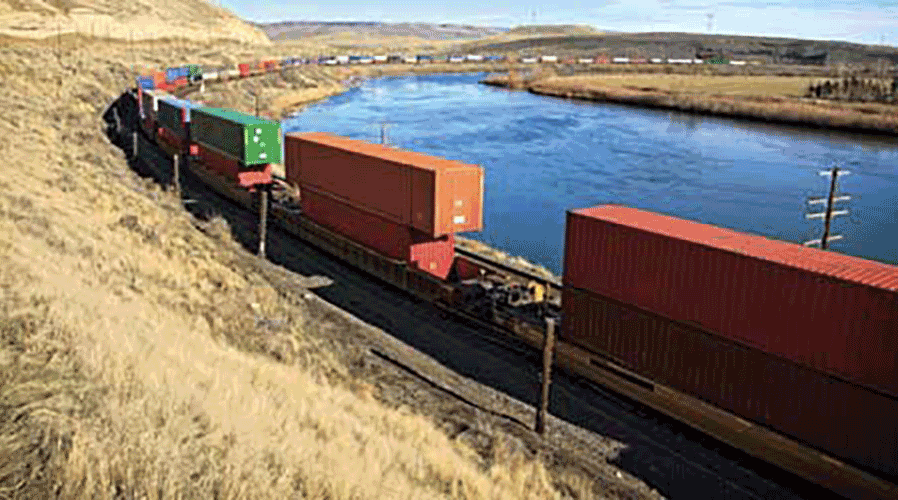
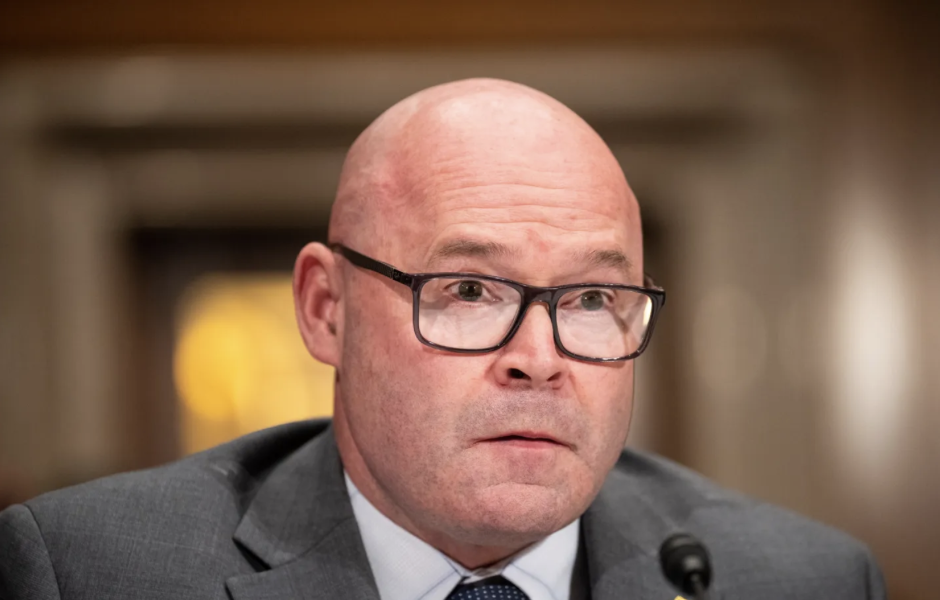
 |  | WASHINGTON – At the opening of today’s Surface Transportation Board hearing on the lack of rail freight volume growth, Vice Chair Karen Hedlund said she was still struck by what she heard the day before from analysts shippers and Class I railroad executives. “What we heard yesterday was a tale of two cities. And I’m still trying to get my head around it,” she says. “From our economists and consultants, we heard a pretty grim story. From our Class I railroads, ‘Hey! Look at all the investments we’re making! We’re just doing great!’ And somewhere in between we have to figure out what’s going on.” Testimony on the hearing’s second day hit on the same themes. Rail customers told regulators that they want to put more freight on the railroads. But unreliable service, inflexible rates, and a lack of rail competition means that they are instead sending more of their business to trucks. “If you’re not reliable and you can’t provide service and you’re not competitive, you’re not going to have growth,” says Mike Seyfert, CEO of the National Feed and Grain Association.
| |
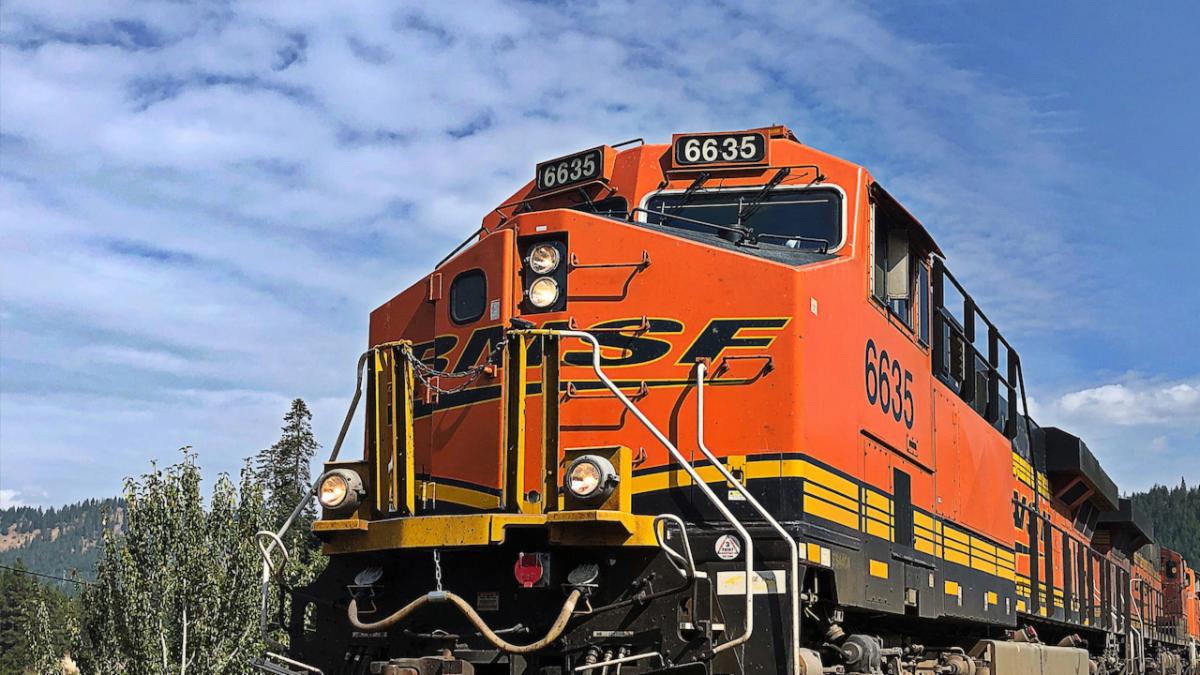
Editor's Note: These new labor agreements from Norfolk Southern and BNSF signal a long-overdue shift towards improving the quality of life for rail workers. Paid sick leave and better scheduling are steps in the right direction, but the question remains: will these changes be enough to address the deeper issues that have long plagued the industry? As rail workers, it’s crucial that we continue pushing for comprehensive reforms that prioritize both operational efficiency and our well-being, ensuring these agreements aren’t just symbolic victories. | |
|
Progressive Railroading / September 20
The Brotherhood of Railway Carmen Division/TCU (BRC) and Transportation Communications Union (TCU) have voted to ratify their respective tentative agreements with Norfolk Southern Railway, the Class I announced yesterday. The TCU and BRC are the first to approve new five-year contracts with the railroad months before the start of the next collective bargaining round, NS officials said in a press release. The ratified agreements cover nearly 10% of NS' union workforce and will provide a 3.5% average wage increase per year over the next five years. They also offer NS railroaders more vacation earlier in their career, as well as improvements to health-care benefits. To date, NS has reached tentative pacts with nine of its 13 unions that cover nearly 65% of its craft workforce.
| |
Editors Note: The tentative agreement between BNSF and SMART offers a glimmer of progress, but let’s not lose sight of the bigger picture. Rail workers have faced empty promises before, and while predictable schedules are a start, real change demands more. This is about securing lasting improvements—not just for convenience, but for dignity in the workplace. Workers deserve better than token gestures; they deserve true respect and fairness in their labor. We must stay vigilant to ensure these agreements hold up beyond the headlines. | |
|
Retuers / September 19
Berkshire Hathaway-owned BNSF Railway said on Thursday it has reached a tentative agreement, for a five-year deal, with the International Association of Sheet Metal, Air, Rail and Transportation Workers (SMART) union. The agreement, which still needs to be ratified by the union members, provides a 3.5% average wage increase per year over the next five years, including improvements in healthcare benefits and provisions that offer railroaders more vacation days earlier in their career "The news marks eight tentative agreements in less than one month's time, representing more than 15,000 employees and more than 46 percent of BNSF's union workforce," the railroad said.
|
|
Editor's Note: Senator Sherrod Brown’s demand for CSX to meet with Collinwood rail yard workers highlights an ongoing struggle between rail carriers and their workforce. The potential relocation and layoffs reflect the broader issue of railroads prioritizing profit margins over worker stability. This call to action reinforces the need for accountability and meaningful dialogue between management and labor. As rail workers, we must support efforts to ensure that our jobs, livelihoods, and communities are not undermined by corporate decisions made behind closed doors. | |
|
Progressive Railroading / September 20
U.S. Sen. Sherrod Brown (D-Ohio) is calling on CSX President and CEO Joe Hinrichs to meet with workers and reverse plans that would remove train crews from the Collinwood Rail Yard in Cleveland. CSX has said it plans to relocate some employees from the Collinwood yard to one 80 miles away in Willard, Ohio, or 180 miles away in Buffalo, New York, according to a press release issued by Brown's office. CSX's plan would not only disrupt Cleveland-based workers, it would negatively impact the reliability of the railroad's Ohio operations, Brown said in a letter to Hinrichs. "When a train is disabled or delayed significantly, which happens often, a crew change is required under federal safety regulations," Brown wrote. "Because of the great distance between Buffalo and Willard, the removal of train crews from Collinwood in Cleveland will result in more trains being stalled because train crews have reached their maximum hours of service, and the length of resulting delays will increase because relief crews will travel much further to reach points in northeast Ohio."
| |
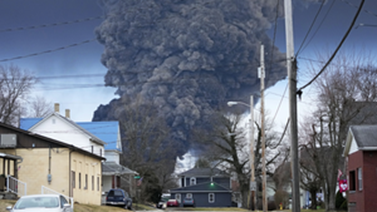
Editor's Note: The devastating impacts of the East Palestine derailment continue to raise alarms, with toxicologists now labeling the hazards unleashed as some of the worst they’ve ever seen. This event not only underscores the long-standing concerns about rail safety but also highlights the importance of strict regulatory oversight. As rail workers and advocates, we must push for more robust safety measures to protect both workers and the communities we serve from such preventable disasters. | |
|
Pittsburg Union Progress / September 18
Last year, toxicologist George Thompson began raising an alarm about the hazards created by the Norfolk Southern train derailment. The situation is worse than officials have indicated, he said. The chemicals unleashed by the disaster created a stew of dangerous agents with the potential to reach much farther than the immediate area in and around the Ohio town of East Palestine. People in Pittsburgh, 50 miles southeast, should be concerned. So should people in Washington, D.C. In fact, after studying weather models, Thompson estimated the toxic fallout from the train crash could cover more than 126,000 square miles. Despite Thompson’s experience — he’s now retired after working as a toxicologist for more than five decades — few people knew of his warnings. That’s changing.
| |
Editor's Note: Click on the image below to go to the event website: | |
Editor's Note: This report on long freight trains emphasizes what rail workers have long known—longer trains are dangerous, not just for us but for the communities we pass through. Railroads chase profits, ignoring the operational and safety risks, while regulators sit on the sidelines. It’s time Congress steps up and forces accountability, demanding regulators address these issues head-on. The lives of workers and the integrity of the communities we serve depend on it. | |
Progressive Railroading / September 17
Increased safety challenges and operational demands of long freight trains require a combination of actions from major freight railroads, the Federal Railroad Administration, and Congress, according to a new report from the National Academies of Sciences, Engineering, and Medicine. In addition to evaluating issues around safety, operations, and crew training for long trains, the report examines their potential to block grade crossings and to interfere with Amtrak’s intercity passenger trains. Over the past two decades, freight railroads have been operating increasingly longer manifest trains. The trains haul different types of rail cars of varying weights and sizes. The number and mix of cars can add to the extreme forces that moving trains experience, which can stress equipment and create handling challenges for train crews, increasing the potential for derailments if not closely managed, the report says. There is no threshold at which a manifest train becomes a “long train” and subject to greater safety concerns, the report states. Rather, as the length of the train increases, it becomes more important to manage in-train forces by placing additional locomotives in the train and assembling trains correctly. Also, since manifest trains carry a mix of cargo, rail cars of different types are picked up and dropped off en route, so a train’s handling demands can change over the course of a single trip.
| |
Editor's Note: Union Pacific’s decision to sit out early labor agreements raises red flags, particularly with talk of workforce reductions looming. While other railroads rushed into deals that many feel miss the mark, UP’s strategy seems more calculated, possibly tied to deeper plans for labor cuts or automation. Add to that the potential influence of the upcoming election, and it’s clear there’s more going on than meets the eye. As always, rail labor must remain vigilant to ensure workers aren’t left behind in the corporate shuffle. | |
Trains / September 19
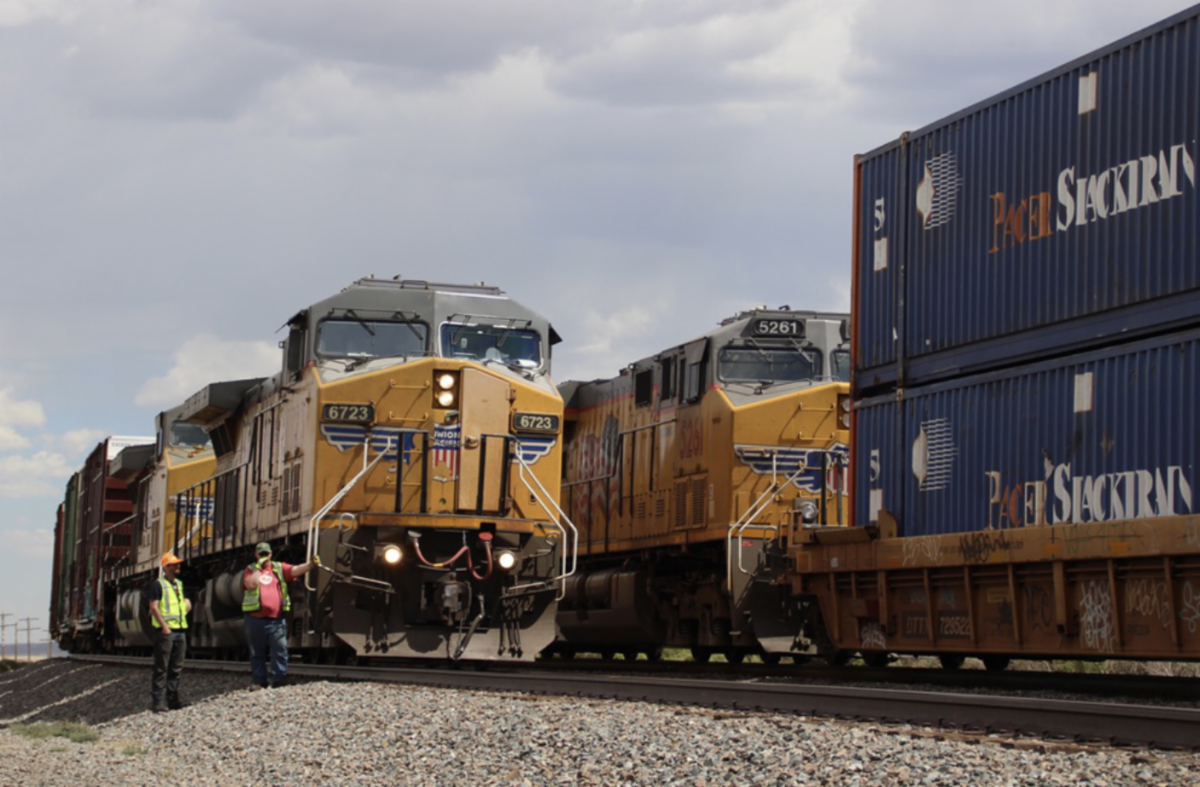
As BNSF Railway, CSX, and Norfolk Southern continue to sign tentative contract agreements with their labor unions well in advance of the start of national negotiations, one U.S. Class I railroad has been conspicuously absent: Union Pacific. UP executives explained today that – unlike the other railroads – they’re seeking to modernize work rules as part of their contract talks. “Some of the other railroads have started to enter into labor agreements with their unions. We, like them, agree that our employees are our most important resource and that they deserve very competitive pay and benefits, and we think our employees are among some of the highest compensated in the industry,” UP President Beth Whited said at the railroad’s investor day this morning “However, we are so focused on our strategy of safety, service and operational efficiency we think it behooves us two spend some time with our unions in this negotiating cycle to talk about ways we can work together as part of our agreements to improve availability and modernize work rules so that as we emerge from this negotiating cycle we’re able to ramp up our ability to provide that consistent and reliable service that our customers want and need from us. So that’s the focus that we have at UP,” she says. CEO Jim Vena emphasized that UP’s not late – the national negotiation process can’t start for another six weeks, and the current contract runs through June 30 of next year.
| |
|
Public Rail Now / September 2024
Public Rail Now is excited to announce their second research report in their campaign for public rail ownership. “From Margins to Growth: The Economic Case for a Public Rail System,” lays bare the economic facts for the current state of the US rail system is in a downward spiral, facts working railroaders have been espousing for decades. Public rail ownership has the potential to save up to $140 billion annually for US consumers, provide an estimated 180,000 new railroad jobs, and avert $190 Billion in public health, environmental and fiscal costs while helping to meet climate goals by avoiding 180 metric tonnes of carbon emissions. Long-term trends of decreased freight rail service, decreased market share and decreased employment have accelerated in recent years, particularly with the advent of Precision Scheduled Railroading(PSR) across most Class 1’s, leaving freight service in a severe decline. In many ways, these are predictable consequences of massive, largely unregulated regional duopolies.
| |
NEWS FROM AROUND THE LABOR MOVEMENT | |
Each week, RWU includes a few articles about advances and developments in the larger labor movement that are of interest to railroad workers. Got an artcile to submit for possible inclusion next week? Email it along to raillabornews@gmail.com. Thank you! | |
|
In These Times / September 16
Most people believe in fair pay for honest work. So why aren’t low-wage workers better paid? After 30 years of research, I can tell you that it’s not because employers don’t have the cash — it’s because profitable corporations spend that money on their stock prices and CEOs instead. Lowe’s, for example, paid $43 billion buying back its own stock over the past five years. With that sum, the chain could have given each of its 285,000 employees a $30,000 bonus every year. Instead, half of Lowe’s workers make less than $33,000. Meanwhile, CEO Marvin Ellison raked in $18 million in 2023. The company also plowed nearly five times as much cash into buybacks as it invested in long-term capital expenditures like store improvements and technology upgrades over the past five years. Lowe’s ranks as an extreme example, but pumping up CEO pay at the expense of workers and long-term investment is the norm among America’s leading low-wage corporations.
| |
Editor's Note: Perhaps the Biden Administration has learned its lesson not to block logistics workers' strikes after RWU raised such hell after he asked Congress for legislation preempting our strike in the fall of 2022. | |
Freight Waves / September 17
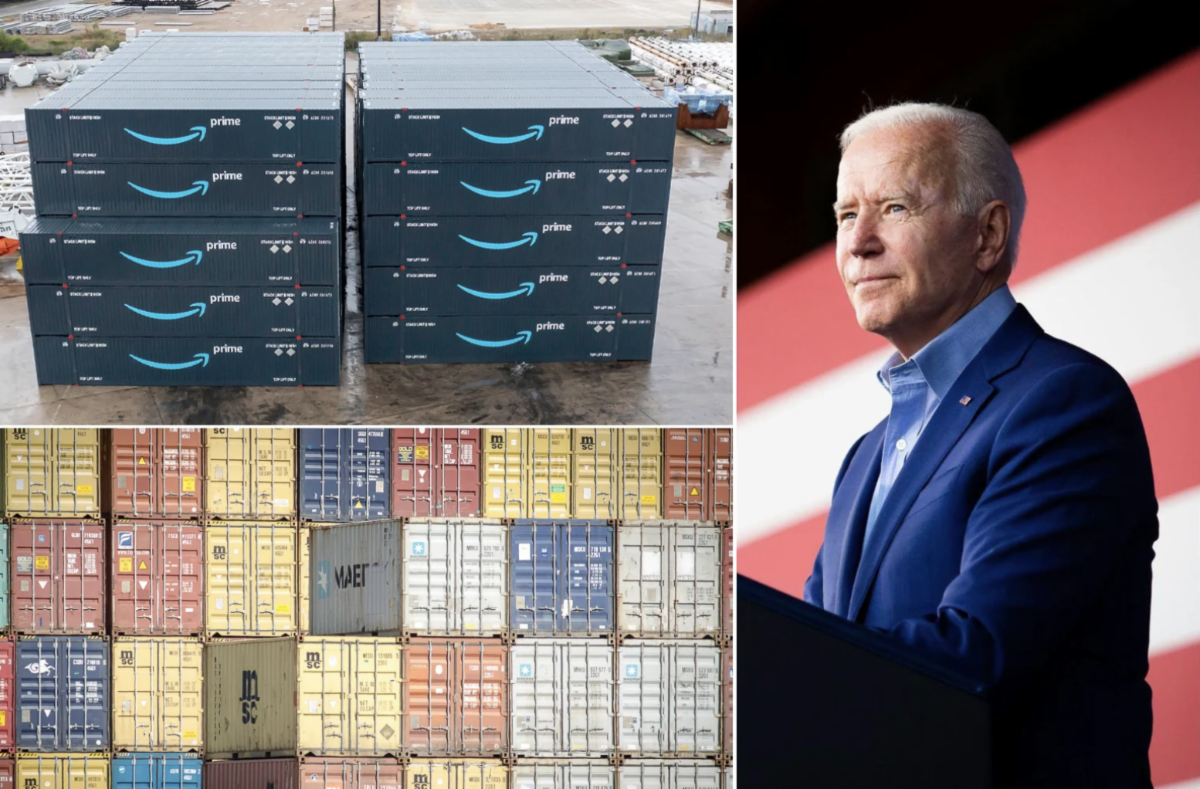
President Joe Biden won’t intervene to prevent a strike at East and Gulf Coast ports by union longshore workers, according to a published report. The federal Taft-Hartley Act grants presidents powers to intervene in labor disputes that threaten national security or safety by imposing an 80-day cooling-off period, and forcing employees back to work while negotiations continue. “We’ve never invoked Taft-Hartley to break a strike and are not considering doing so now,” a Biden administration official told Reuters. “We encourage all parties to remain at the bargaining table and negotiate in good faith.” Union dockworkers are prepared to strike on Oct. 1 when the current master contract expires, the International Longshoremen’s Association (ILA) again emphasized, according to the news report.
| |
|
In These Times / September 20
Why should anyone give a damn about a labor union’s presidential endorsement? A few reasons. Philosophically, since a good union is a democratic organization, an endorsement allows a politician to claim the legitimate support of a large group of hardworking Americans, the most treasured of groups. Politically, a good union’s endorsement also comes with money for the candidate and a team of union members to make calls and knock on doors, a valuable asset for any campaign. Practically, an endorsement allows a union to shore up support for its priorities by cozying up to a future elected leader. A union backs a politician, the politician fights for the union’s needs, and the mutually beneficial cycle carries on. The Teamsters’ non-endorsement of any candidate for U.S. president this week is notable because it fails on every last one of those metrics. In reality, there is every indication that Teamsters president Sean O’Brien kind of likes Donald Trump. He posed for pictures with Trump in the lobby of Teamsters headquarters, unnecessarily. He had a private meeting with Trump at Mar-a-Lago. He had the union donate $45,000 to the Republican National Committee, alongside a donation to the Democrats. And, to cap it off, he gave a prime-time speech at the Republican National Convention, mixing pro-worker slogans with ingratiating compliments to a smiling Trump. In doing so, O’Brien made himself into a useful patsy for the false and dangerous attempt by the Republicans to brand themselves as some kind of “working class” party.
| |
WEEKLY DERAILMENT DEPARTMENT | |
Each Tuesday in this news bulletin, RWU does our best to present a picture of what has been happening over the course of the previous week in terms of derailments in North America, and investigation determinations of previous accidents. NOTE: This list is by no means comprehensive. Smaller and less consequential mishaps are generally not reported here. If the wreck results in injury or fatality, or is especially damaging/extreme, a full article will appear as a feature in the dozen or so rail articles above. Know of a train wreck? Please feel free to forward a link to raillabornews@gmail.com for possible inclusion next week. Thanks! |
| | | |