Rail & Labor News from RWU
| |
Weekly Digest Number 12 - March 19, 2024 | |
Welcome to the RWU Rail & Labor News! This news bulletin is produced and emailed out each Tuesday morning. We hope you find each week's news and information useful. If so, please share with co-workers, friends, and colleagues. If you like, you can sign them up to get all the news from RWU HERE. Or forward them the link. Got a hot tip? Please forward the article and a link to raillabornews@gmail.com. Note: If you read over this news bulletin each week, you will be sure to never miss the important news of what is going on in the railroad world from a worker's perspective! | |
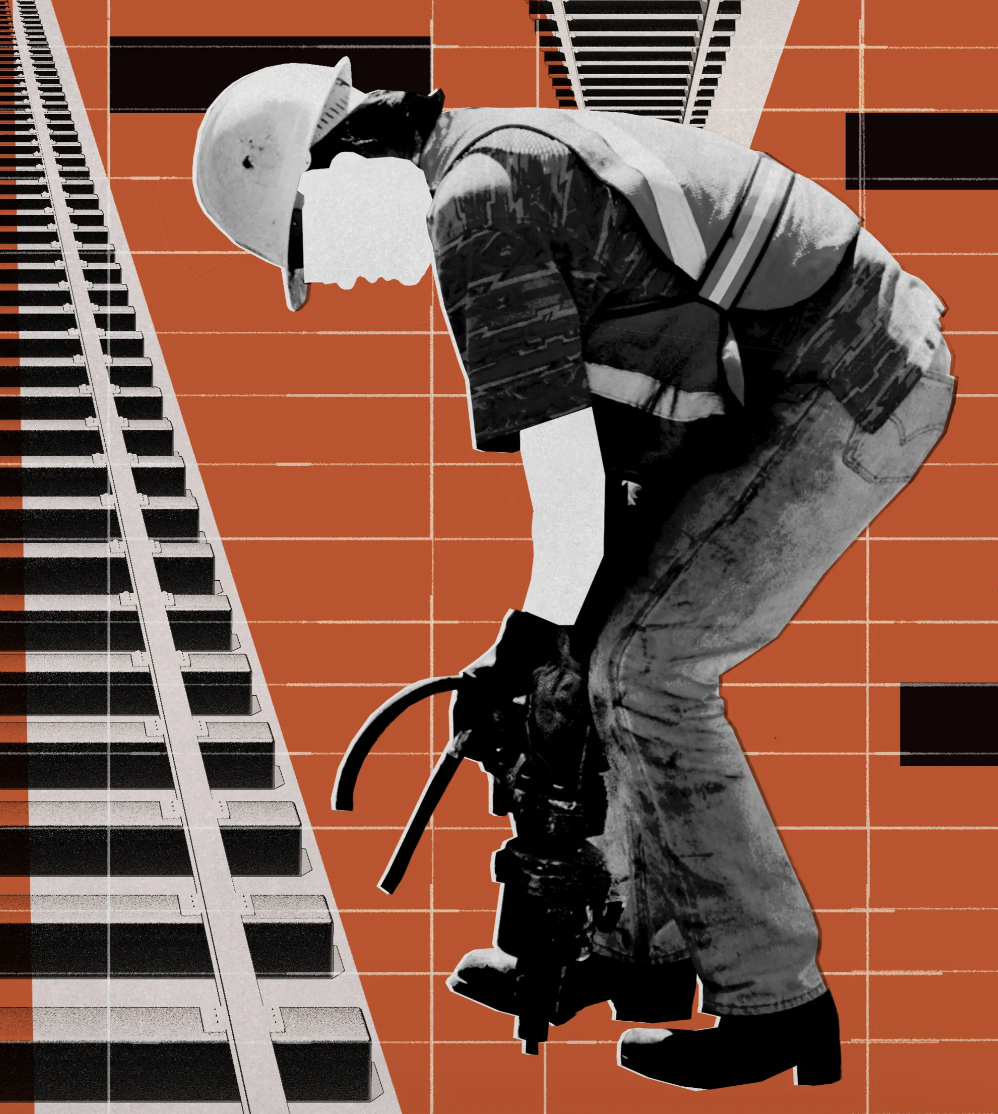
Editor's Note: ProPublica continues to do great work exposing the rail industry profiteers and empowering railroad workers. Thanks to government loopholes, rail companies haven’t been scrutinized by the Federal Railroad Administration for scores of alleged worker injuries and at least two deaths. Make sure you read this article! | |
|
Topher Sanders, Dan Schwartz, Danelle Morton and Gabriel Sandoval / March 13
Thanks to government loopholes, rail companies haven’t been scrutinized by the Federal Railroad Administration for scores of alleged worker injuries and at least two deaths. But, as ProPublica has previously reported, railroad companies go to extreme lengths to portray themselves as safer than they really are — retaliating against workers who report defects and silencing those who get injured. Officials with the FRA have said there is not much they can do about the forces — like the financial implications of appearing to admit liability and a culture that faults managers when employees get hurt on their watch — that can drive companies to quash injury reporting.
| |
Editor's Note: The idea that 440 truckloads being transported by a single train with a minimum of two crew instead of one would somehow make railroads less competitive with trucking doesn't wash. | |
|
Nathaniel Kline / March 12
Virginia’s legislative effort to require two crew members on all trains died after the governor vetoed the legislation on Friday. “While I support the goal of improving safety within the rail industry, the proposed methods appear premature and lack the necessary nuance required for effective regulation,” wrote Gov. Glenn Youngkin in his veto response on Friday. “Mandating crew sizes, as proposed, is a blunt regulatory tool that encroaches upon the established mechanisms for railroads and unions to negotiate staffing and scheduling matters through collective bargaining,” Youngkin wrote. He also cited worries that the bill could hurt the state’s economy by pushing traffic from railroads to highways, possibly worsen roadway congestion or blunt innovation in the rail industry.
| |
Editor's Note: Update - Apparently the Ancora group attempting to take over the NS Board of Directors has now agreed to meet with the STB Chair. We will keep you updated on if it actually happens and how it goes. | |
|
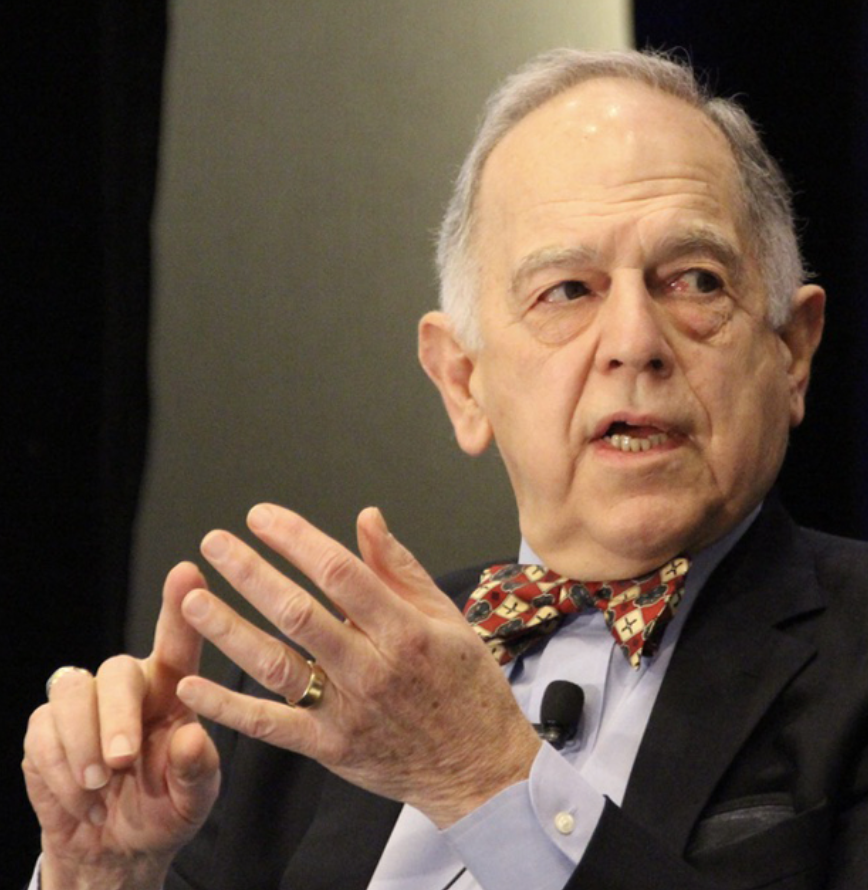
Surface Transportation Board Chairman Martin J. Oberman says he’s disappointed that executives from Ancora Holdings, the activist investor firm engaged in a proxy battle with Norfolk Southern, have yet to schedule a meeting to discuss its goals for the railroad. Regulators are concerned that Ancora’s short-term focus on cost-cutting could lead to another service crisis related to a shortage of train crews. “This effort by a Wall Street firm—with short-term dollar signs in its eyes—to strip resources out of a railroad, of course, is not new,” Oberman said at the Southeast Association of Rail Shippers conference.
|
|
Editor's Note: The rail carriers simply dismiss their critics - government or otherwise - with the wave of a hand, and do not even have the decency to refer to them by name. | |
|
John Kingston / March 13
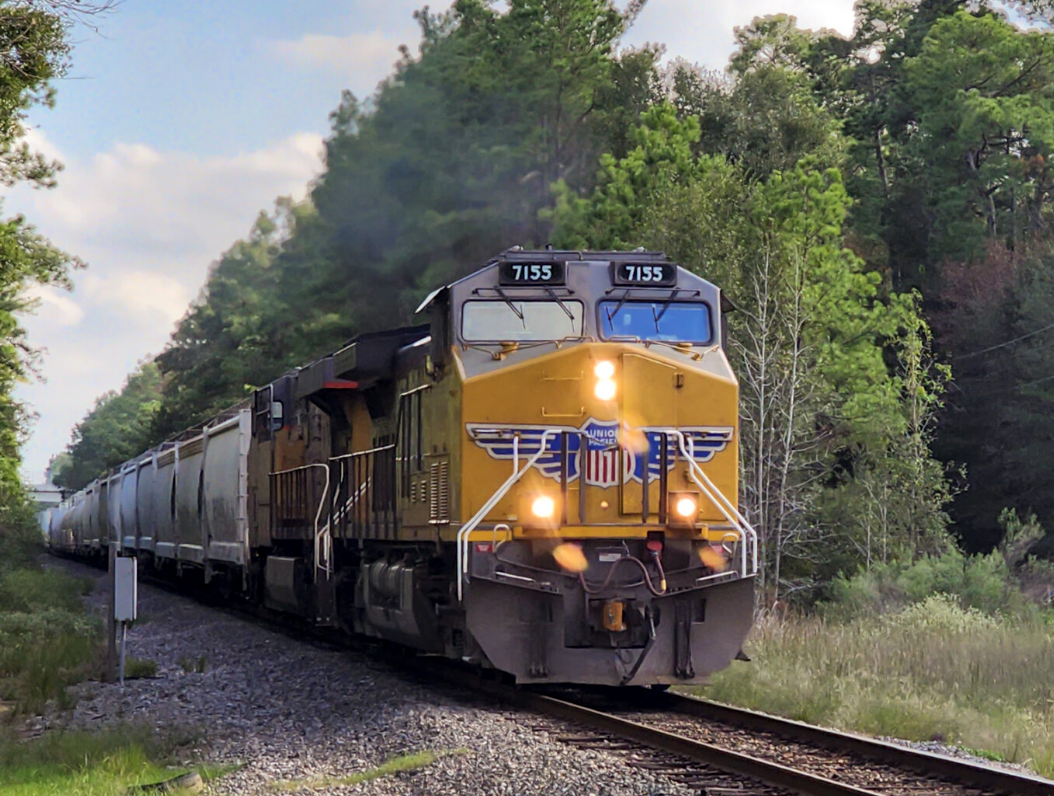
Jim Vena’s opening remarks Wednesday at the J.P. Morgan 2024 Industrials Conference could easily be seen as a rebuttal to one man: Amit Bose, the chairman of the Federal Railroad Administration. Bose wrote a letter to the Union Pacific CEO Feb. 29, responding to reports of extensive furloughs at the Class 1 railroad that serves the Western half of the U.S. “Despite FRA’s warnings and recommendations, and at a time when Class I freights should be prioritizing ways to improve a decade-long record of stagnant safety performance, it is disappointing to see that UP is actively disregarding the federal government’s concerns.”
| |
Editor's Note: Maddock Thomas - who RWU has contracted with to produce a "White Paper" on public ownership of the rail industry - will present at this upcoming scholarly conference in Boston. | |
|
Labor Resource Center / UMass Boston
"Questions of whether and how organized workers should engage the state are as old as the labor movement. Still, the pitfalls and possibilities of this engagement have been particularly stark in 2023. Amid a generational upsurge in militant labor action, a sitting president joined a picket line for the first time, just months after the Supreme Court reaffirmed its willingness to dismantle settled labor law on behalf of its billionaire benefactors."
Saturday, March 30, 2024 RWU friend Maddock Thomas takes part in a panel on Industrial Policy and Labor Power. The session starts at 1:30 at: Carpenters Center, 750 Dorchester Ave. in Boston.
| |
Editor's Note: This might just be a great way for states such as Colorado to assist in the funding of a passenger train revival. NOTE: Now that Union Pacific has largely moved all east-west thru freight out of the state, leaving former Rio Grande Railway mains and branches abandoned and underutilized with tons of track capacity, the state has been presented with a golden opportunity to revive a passenger train network to serve tourists and citizens alike throughout the mountain state. | |
|
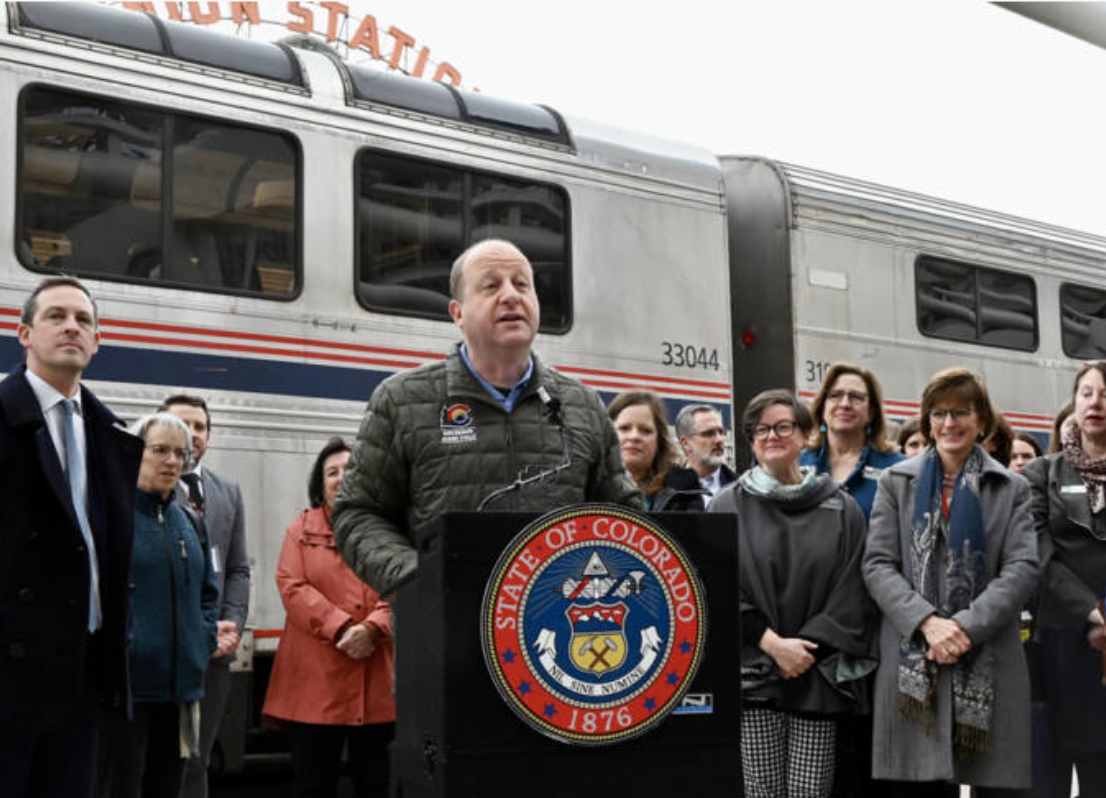
Colorado legislators plan to introduce a bill that will increase the state fee on rental cars by $2 to $3 per day to help pay for proposed passenger rail service along the Front Range and to Craig, CO. The fee would generate as much as $50 million annually, which the state would use for matching funds for federal grant programs — specifically targeting the $60 billion for rail projects in the Infrastructure Investment and Jobs Act.
| |
Editor's Note: Ever notice that whenever a Class One railroad is obliged to make anything public about their operations that might hold them accountable to the public, they plead that it will reveal "trade secrets" and give their competition an "unfair advantage." Give us a break. | |
|
The Surface Transportation Board on Thursday denied Union Pacific’s request for a protective order that would have put a cloak of confidentiality over the temporary employment data the railroad is required to submit. In its decision, the board also directed UP to submit public versions of previously submitted data. UP now must file public versions of its Feb. 15 and Feb. 29 data submissions within five days. Oberman said, "UP has not demonstrated that releasing this employment data would cause competitive harm. On the contrary, given the crucial importance of reporting on employment data to the restoration of robust rail service and the growth of the national economy, the public’s right of access to this information is paramount."
| |
Editor's Note: Railroad Workers United has long been disillusioned with the two political parties in the United States, and has called for support for a new party based upon organized labor. One such effort is calling for a conference. Read all about it and register to attend below. | |
|
Labor and Community For An Independent Party
When President Biden - the self-proclaimed “…best friend labor has ever had…” – and Congress legislated a bogus contract down railroad workers throats in 2022, veteran rails were not surprised. If we’re not victims of direct government intervention, such as happened in 2022, 2011, 1991 and 1983, then the threat of such intervention impacts our contract negotiations. Railroad workers have long known that the 2-party system is stacked against us. From our resolution on elections, which has evolved since 2012: “…RWU calls for working people and their organizations – together with community groups, environmental organizations, consumer advocates, and others – to break with the twoparty corporate dominated political system and explore other avenues, including but not limited to, the founding of a new political party, in order to achieve our goals.” Labor and Community for an Independent Party (LCIP) advocates for building a labor based independent party from the ground up. They will be sponsoring a Zoom Conference, “Breaking the Grip of the Two-Party System”, on Sun, Mar. 24, from 9:00 AM – 3:00PM Pacific time, to address the major issues thatconfront us and discuss how to most effectively organize resistance.
For more info on LCIP and the conference, click the link below:
| |
Editor's Note: Here is a rare example of a blue collar guy running for office. While we need more of this, we also will need a party that supports such efforts. We don't have one now (see the article above). This guy actually includes in his campaign platform support for rail safety! | |
Steve Early / March 16
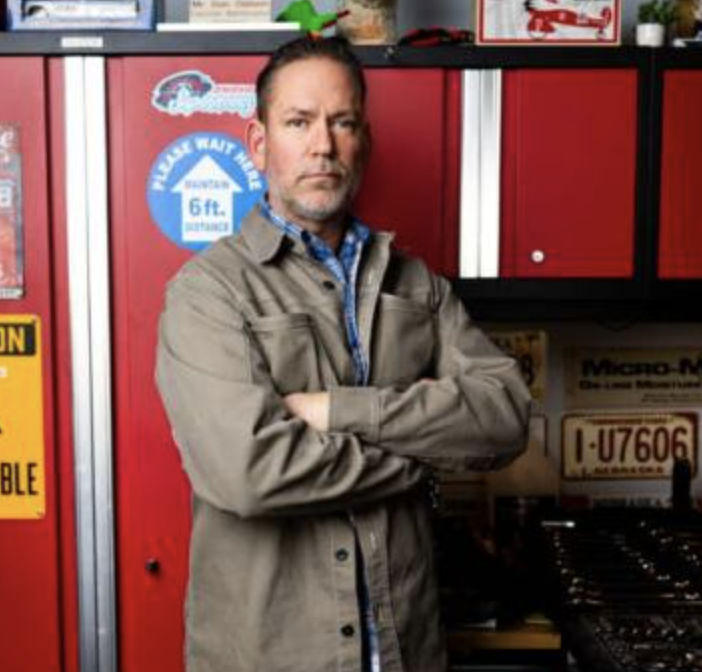
Dan Osborn is running a labor-backed independent bid for U.S. Senate this year in Nebraska. His opponent, Sen. Deb Fischer, the 73-year-old Republican incumbent first elected in 2012, pledged to serve only two terms, but is now seeking a third. Fischer has built a $2.7 million re-election war chest with support from defense contractors, Senate Republican colleagues and AIPAC (the American Israel Public Affairs Committee). Osborn, a married father of three children, first rose to prominence in his home state four years ago as president of the Bakery, Confectionery, Tobacco Workers and Grain Millers International Union Local 50G, after he led a successful 11-week strike by 500 union members at an Omaha Kellogg cereal factory.
| |
Editor's Note: The rail industry likes to talk about autonomous trains that need ZERO employees on board to scare us into accepting SINGLE person train crews. Don't be fooled, neither zero or single person crewed trains will work safely and efficiently. Keep up the fight for a minimum of two crew members on board every train! | |
|
Brotherhood of Locomotive Engineers and Trainmen / March 15
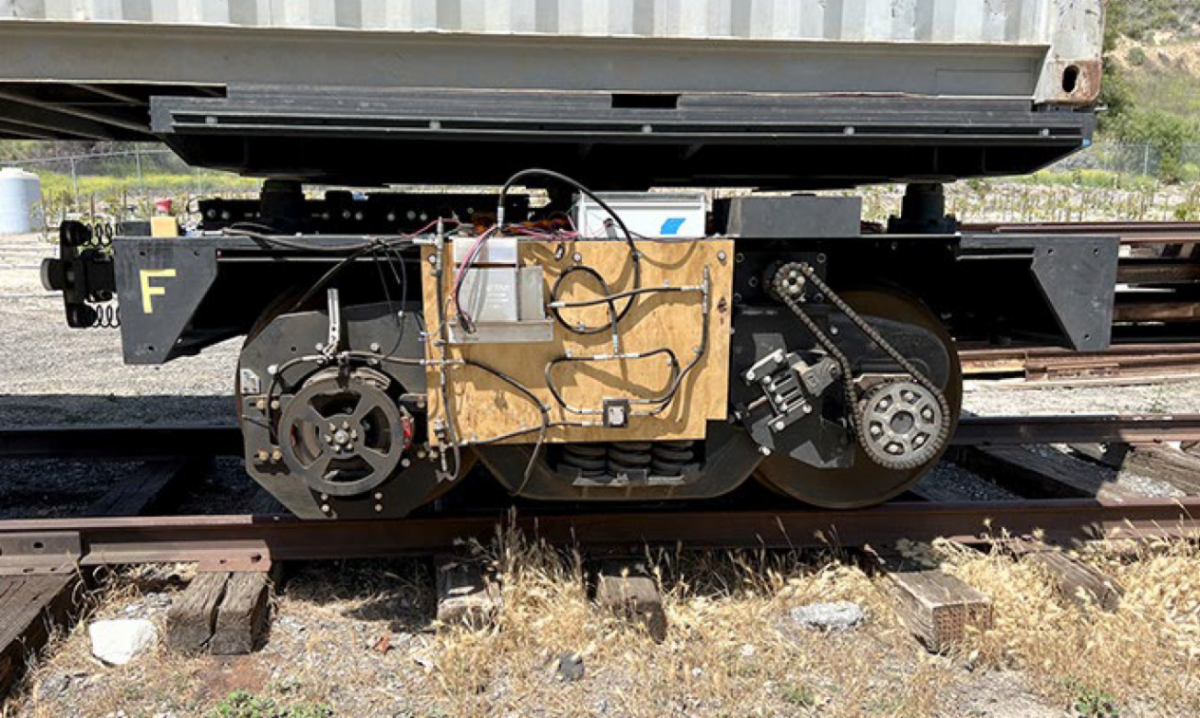
BLET National Vice President Vince Verna reiterated the BLET’s support for new technology that makes the rail industry safer, but urged caution against the introduction of autonomous train technology that is “not ready for prime time. From our attendance at multiple demonstrations of the automated cars, the technology is just not developed enough yet to meet a basic level of safety that is needed to be used outside of dedicated, unconnected testing facilities."
| |
Editor's Note: While this step towards passenger train revival is exciting, the path is a rocky one for sure, as pointed out by the author. As he astutely points out, for one, if the privately held "host" railroads refuse to cooperate, then the chances of success are slim. | |
Marybeth Luczak / March 11
The Brotherhood of Locomotive Engineers and Trainmen (BLET) and Genesee & Wyoming subsidiary Berkshire & Eastern Railroad have ratified a new agreement governing rates of pay, benefits and work rules for 32 members. According to the union, some of the contractual improvements are: 13% hourly rate of pay increase, accelerated progression of Entry Level rates of pay, “so engineers receive the 100% rate of pay much sooner", availability of a 401(k) savings plan, with 100% company match up to 4% of an engineer’s yearly compensation, and pay rates at one and a half times the hourly rate on holidays, in addition to a holiday allowance.
| | |
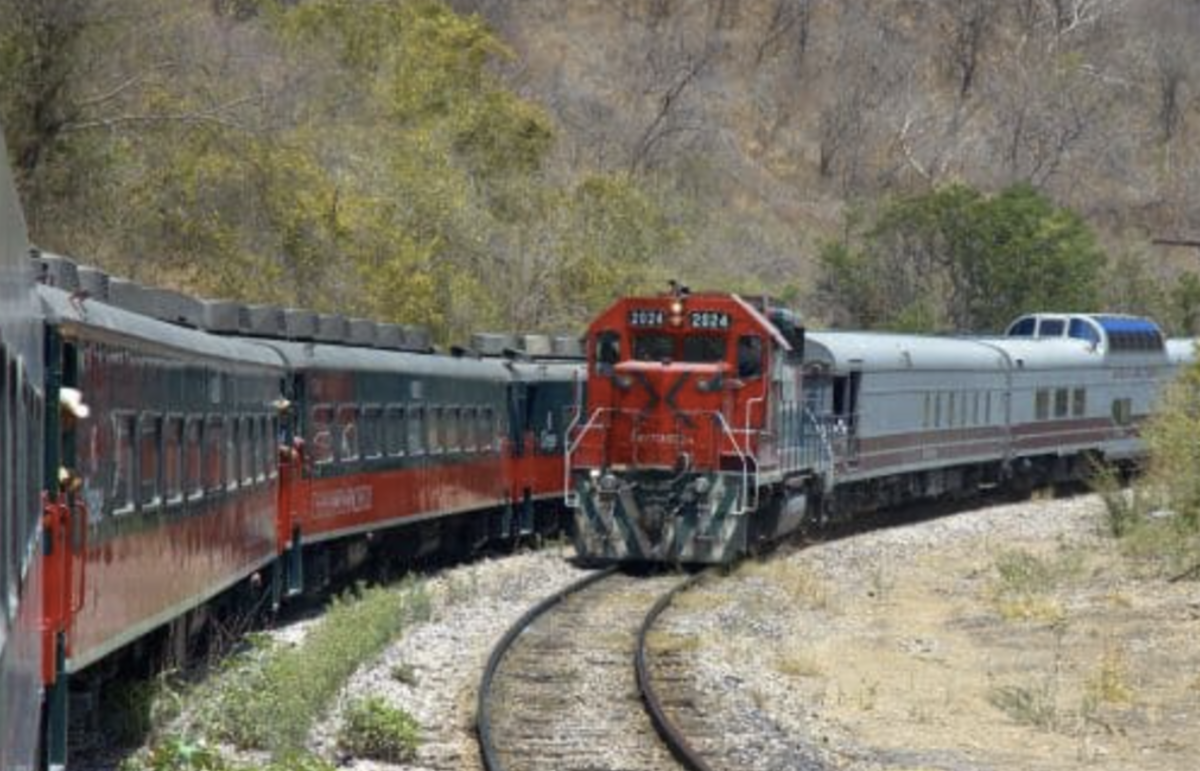
Editor's Note: It is great to see that the Mexican government is working to bring back its passenger trains, jettisoned by the private carriers when the national system was privatized - largely to US rail corporations - in the 1990s. | |
Robert Preston / March 8
Mexico’s Secretary of Infrastructure, Communications and Transport, Jorge Nuño, has announced that the government has received expressions of interest from the country’s three major freight operators in reintroducing passenger services on eight routes. Ferromex, Ferrosur and Kansas City Southern de México (KCSM), the latter now part of Canadian Pacific Kansas City (CPKC), have submitted the proposals in response to a government initiative announced in November 2023 by Mexico’s President, Andrés Manuel López Obrador.
“In this way, the Mexican state is taking back the right to use the railways that belong to the nation, in order to award concessions to private companies or allocate to public companies the development and implementation of passenger services." said Nuño.
| |
Editor's Note: Rail workers and trackside communities desperately need rail safety legislation, but it looks like even the stripped down stuff that is being floated in Congress is not about to go anywhere. | |
Brotherhood of Locomotive Engineers and
Trainmen / March 15
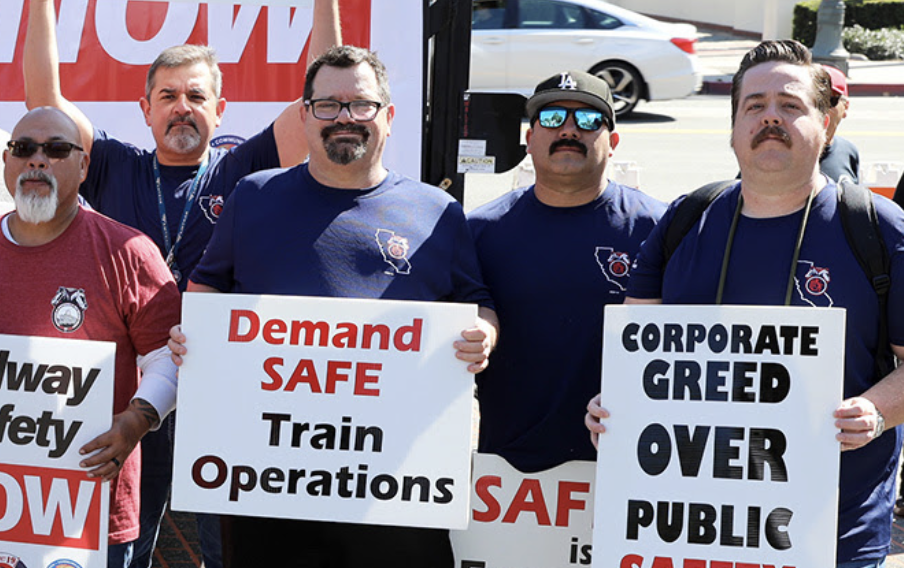
In February, members of the BLET joined multiple rail labor crafts in Los Angeles for a rally to support the Rail Safety Act, the bipartisan bill in the U.S. Senate intended to boost industry safeguards in the aftermath of the 2023 toxic train derailment in East Palestine, Ohio. “It is time for us to take decisive action to prioritize safety over profit and to ensure that the tragic events that have spurred this legislation are never repeated,” Brother Snow said. “We should not and cannot wait for the big derailment that is destined to occur to destroy a community in California.”
| |
NEWS FROM AROUND THE LABOR MOVEMENT | |
Editor's Note: Airline workers from all crafts continue to stand up and fight back against the airline industry in both passenger and freight service. They deserve the support of every rail worker! | |
|
Eric Kulisch / March 13
In a surprise maneuver last week, a rebel group of FedEx Express pilots forced union leadership to break off contract negotiations by requesting that federal authorities release the parties from mediation before the company could even respond to its latest counteroffer. The division has undermined the union’s negotiating credibility at a delicate moment, with growing prospects the opposition faction could move to oust the union’s current leadership. Disunity among FedEx pilots has grown in recent years. A 57% majority killed the tentative contract last summer, and some pilots wanted to recall the negotiating committee. Many were upset with ALPA for being too accommodating toward FedEx, including in a 2015 contract they say eroded schedule flexibility and other quality-of-life issues.
| | | | |