Rail & Labor News from RWU
| |
Weekly Digest Number 22 - May 28, 2024 | |
Welcome to the RWU Rail & Labor News! This news bulletin is produced and emailed out each Tuesday morning. We hope you find each week's news and information useful. If so, please share with co-workers, friends, and colleagues. If you like, you can sign them up to get all the news from RWU HERE. Or forward them the link. Got a hot tip? Please forward the article and a link to raillabornews@gmail.com. Note: If you read over this news bulletin each week, you will be sure to never miss the important news of what is going on in the railroad world from a worker's perspective! | |
Editor's Note: The chickens come home to roost. The craft war between craft unions BLE and UTU of the day twenty years ago and their failure to unite opened the door for the carriers to institute RCO in the yard. With their foot in the door, the Class Ones are now moving more and more towards using RCO outside the yard, on the line-of-road, much to the chagrin of the operating crafts. Let's not now make the same mistake and grovel before the carriers like we did a generation ago to see which union will represent the worker holding the RCO box on the road. We need to UNITE and FIGHT against the expanded use of RCO, period, whichever "craft" represented by whichever union is promised the job. | |
|
Frances Robles, Sergio Olmos, Mark Walker and Nicholas Bogel-Burroughs / May 27
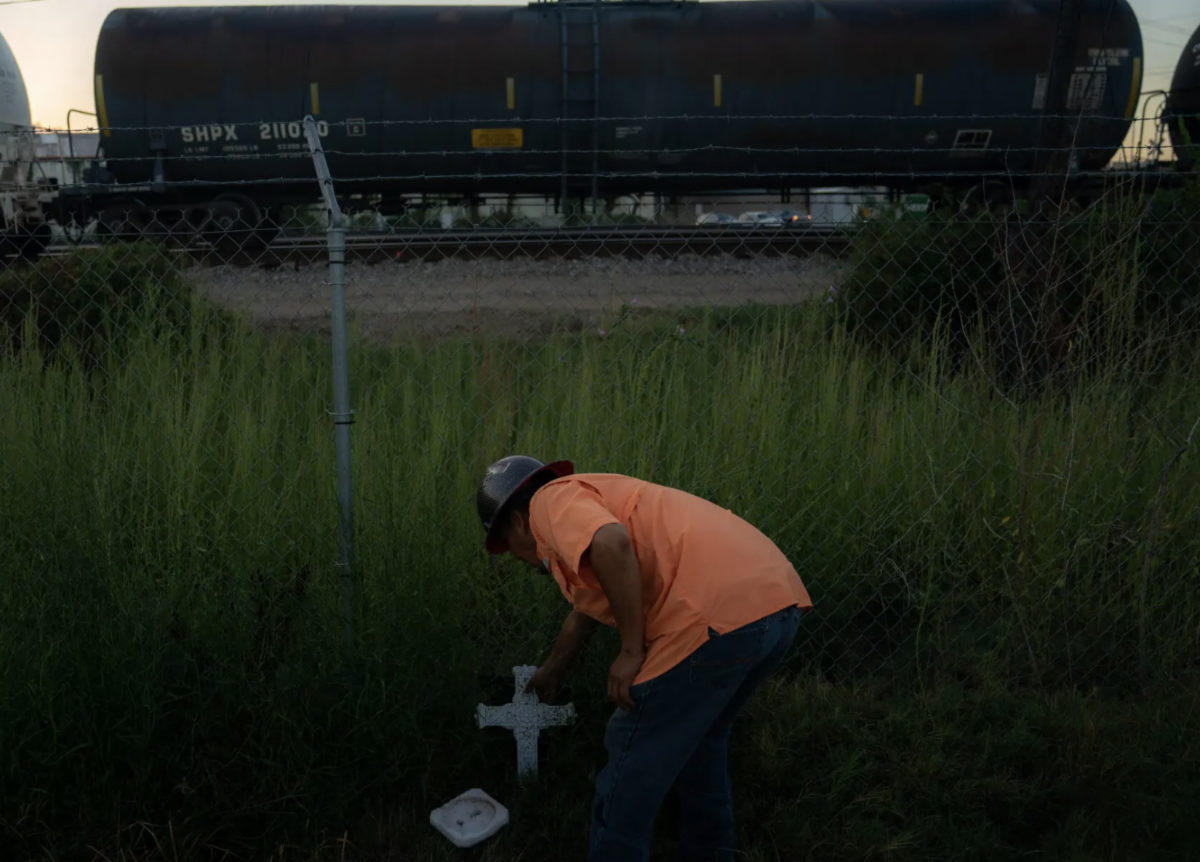
While trains have long presented a deadly risk to pedestrians, a recent rash of accidents involving remote-control locomotives has prompted a new federal review of the technology long billed by the railroad industry as safer than conventional trains. Railroad unions have also lodged demands to step up safety measures as the trains increasingly operate on open tracks outside the confines of a rail yard. A railroad inspector in Ohio was killed in September when he stepped into the path of a remote-controlled locomotive. He was the third rail inspector since 2015 to die after being struck by a remote locomotive. Railroads are significantly expanding their remote operations, part of a cost-cutting effort that has seen the railroad industry cut its work force by nearly a third and shift to longer and heavier trains. The companies now routinely operate remote trains not just inside rail yards, as initially envisioned when they debuted two decades ago, but also between them. Many now run through residential and commercial neighborhoods, sometimes carrying hazardous cargo such as petroleum or hydrochloric acid.
|
|
Editor's Note: Once again, is this enough? Just how much does it take to compensate a whole town for its destruction due to the reckless and irresponsible behavior of a Fortune 500 corporation? | |
|
Caleb Revill / May 23
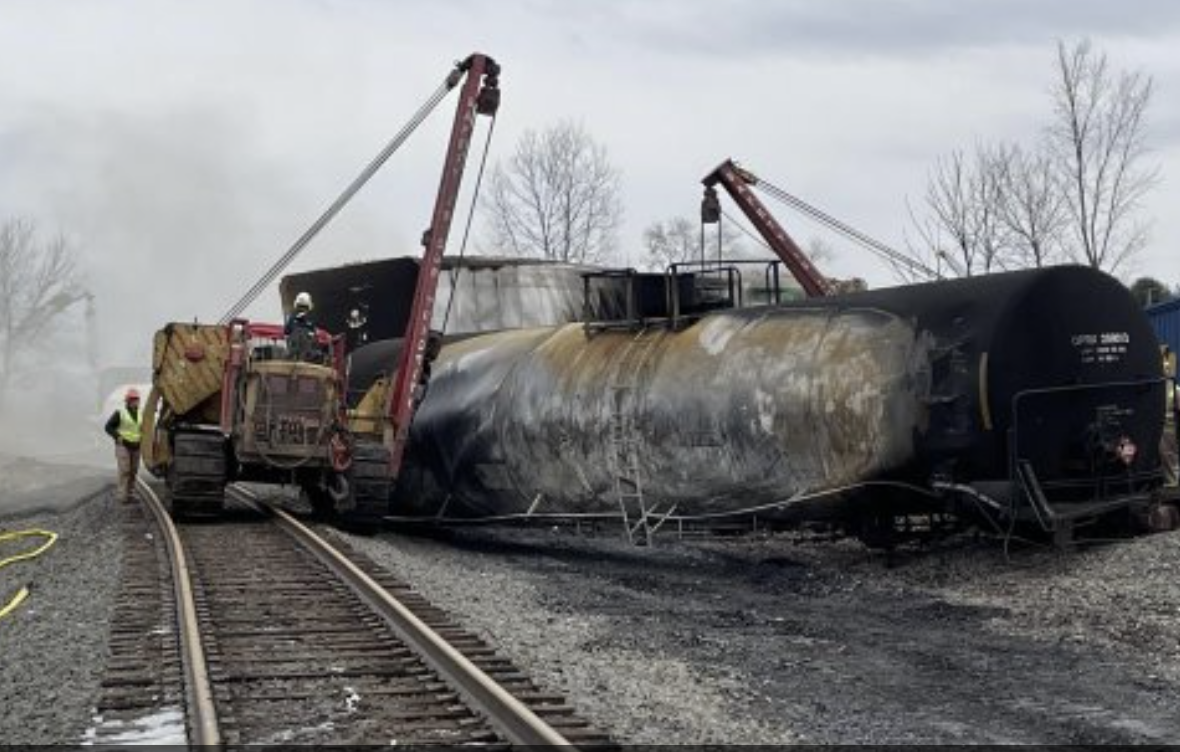
The U.S. Environmental Protection Agency and the Department of Justice announced a $310 million settlement with Norfolk Southern Railway Company on Thursday, holding the company accountable for addressing and paying for the damage caused by the Feb. 3, 2023 train derailment in East Palestine, Ohio. According to a press release from the EPA, the settlement must first be approved by the U.S. District Court for the Northern District of Ohio. If approved, Norfolk Southern will be required to take measures to improve rail safety, pay for health monitoring and mental health services for the surrounding communities, fund long-term environmental monitoring, pay a $15 million civil penalty and take other actions to protect nearby waterways and drinking water resources.
| |
Editor's Note: Amtrak is poised to expand like never before. If these capital investments can be made in an expedited manner, facilitating millions of additional travelers, Amtrak could finally prove its value to the nation, opening the flood gates from even more investment in passenger rail infrastructure. But will Amtrak be able to navigate the quagmire set up by the Class One freight "host" railroads? That is the question. | |
David Lester / May 17
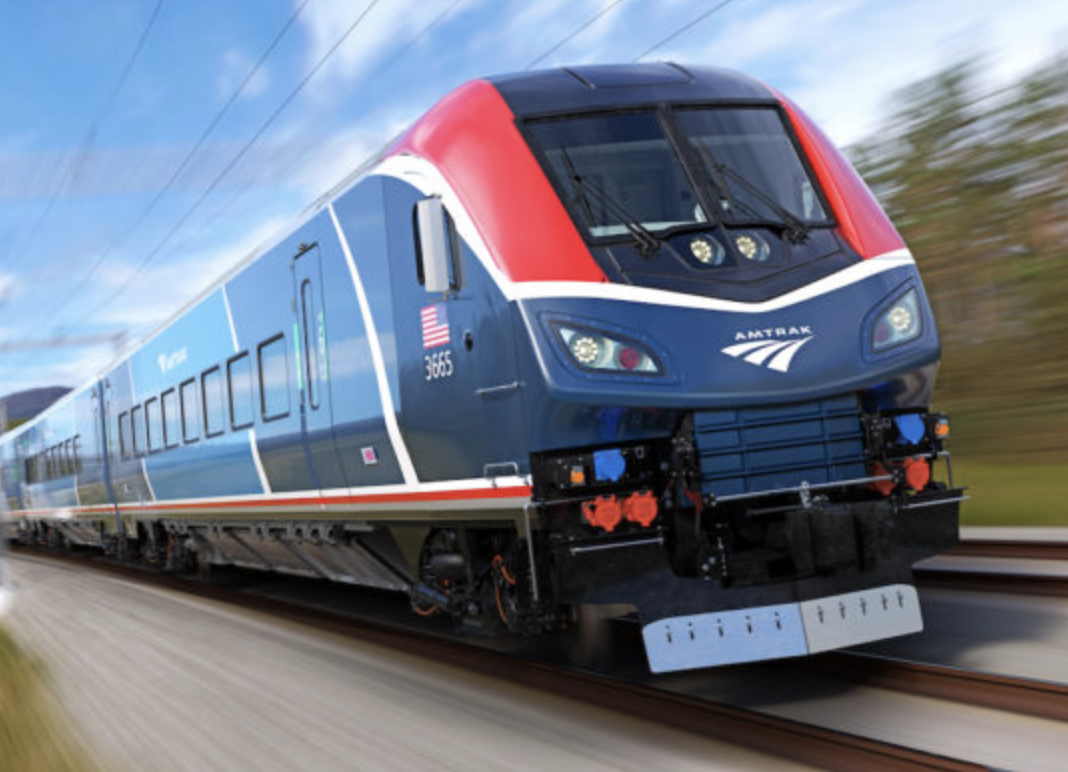
Amtrak President and CEO Stephen Gardner joined Amtrak EVP of Capital Delivery, Laura Mason, for a discussion of Amtrak's infrastructure investments. In the video discussion, Gardner and Mason review major projects like the Frederick Douglas Tunnel Program, the Hudson Tunnel, along with fleet investments that Amtrak says will “enhance the customer experience and make train travel smoother and faster.” The video discussion lasts about five minutes. Click below to watch the video.
| |
Editor's Note: Just like their counterparts south of the border, Canadian Class Ones are counting on Big Brother to have their back in bargaining and circumvent a national strike. If these corporations on both sides of the border knew they could not count on government intervention, they might just bargain in good faith and rail workers might just be able to win better working conditions that would benefit not just us but shippers, passengers, trackside communities and their respective nation's economies. | |
|
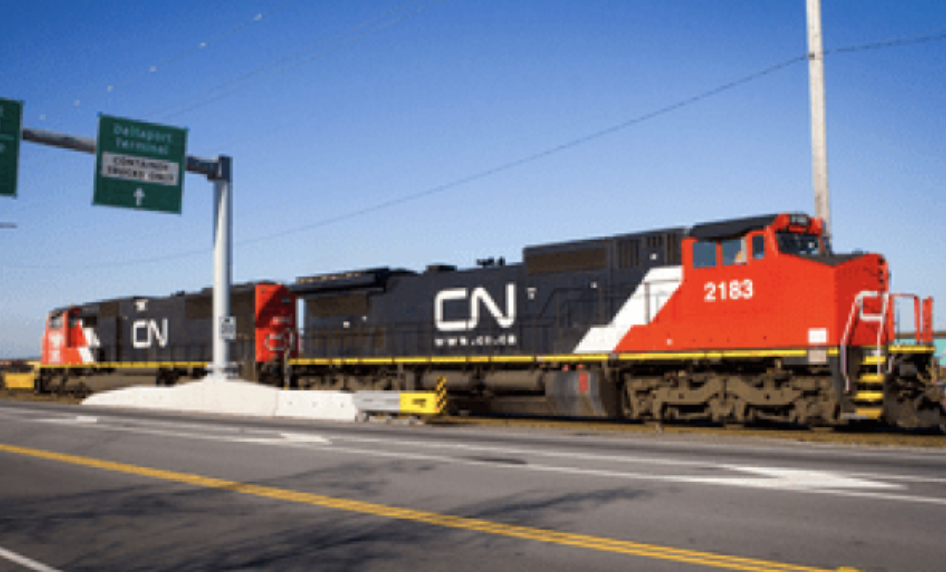
Canadian rail operators are placing their bets on government intervention to prevent a nationwide rail strike rather than negotiating, according to the union. The Teamsters Canada Rail Conference (TCRC) union began bargaining earlier this month with rail operators Canadian National Railway (CN) and Canadian Pacific Kansas City (CPKC) after the parties’ collective agreement expired on 31 December 2023. The union has vowed to strike at the earliest opportunity, which could cause widespread chaos across North American supply chains. A strike was set for 22 May but was called off following a request from Canadian labour minister, Seamus O’Regan, to the Canadian Industrial Relations Board (CIRB) to assess whether the strike could pose a threat to national safety.
|
|
Editor's Note: “The research team made clear in the final phase of testing, that additional research, testing and analysis is recommended to provide a better understanding of how long trains impact the durability of rolling stock mechanical components.” Always more study needed... and when is the phase where they talk to the people in the locomotive cab? The report mentions working with unions in the summary but nowhere else. | |
|
The Federal Railroad Administration (FRA) on May 22 announced that it has finalized three reports on the “safety and performance of long trains,” which have been submitted to the National Academy of Sciences (NAS) to inform “an ongoing NAS study mandated by Congress in President Biden’s Bipartisan Infrastructure Law to look at the impact of trains longer than 7,500 feet.” According to FRA, the reports include findings from tests conducted on air brake racks and the air brake system of a stationary train to examine how the length of long trains affects air brake system behavior and performance. FRA said its research team also conducted tests on a moving train “to better understand the dynamic performance of long trains and collect data on train dynamics and brake system performance.”
| |
Editor's Note: The autonomous trains in Australia have suffered quite a few setbacks in the last few years. Here is the latest. And this is on a railroad that runs strictly unit trains out in the middle of nowhere. And U.S. Class One carriers talk about running them here in the U.S. intermingled with a wide variety of traffic, passenger trains, mixed freights and thousands of railroad crossings, half of which are unprotected. Sound nuts? It is. | |
|
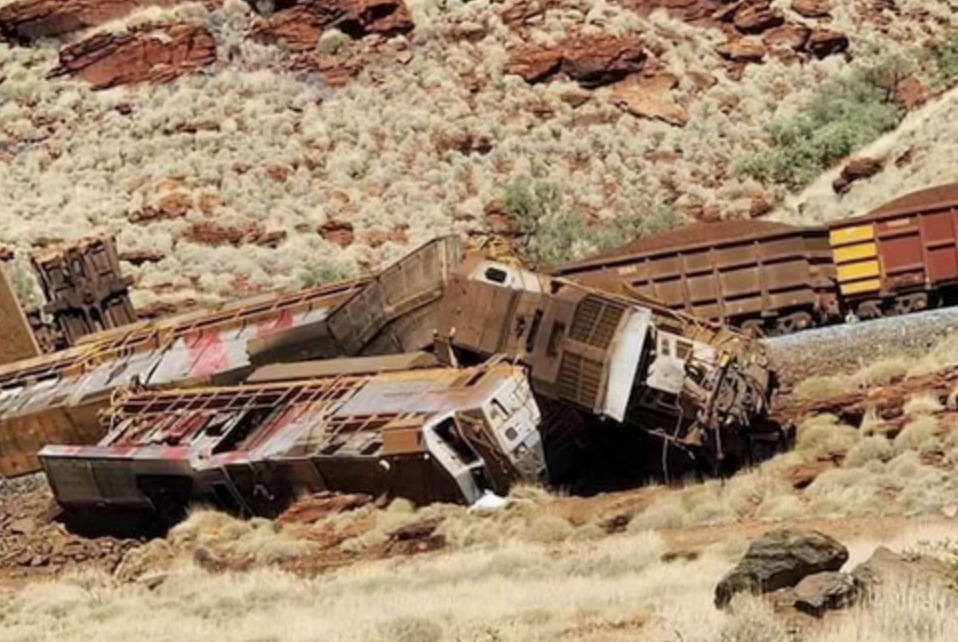
Rio Tinto has fully reopened its mining railroad in Western Australia’s Pilbara region after the collision last week involving two autonomous trains, with the Australian Financial Review reporting the mining company has suspended a procedure known as “on-site override” while investigation into the incident continues. The Mining and Energy Union claims that the on-side override command was sent to the wrong train in the incident, which led to a recovery train hitting a disabled train at the accident site approximately 80 kilometers (50 miles) from Karratha. While Rio Tinto reported no one was near the accident scene at the time of the collision, the union said workers trying to repair the disabled train had to evacuate after receiving a mayday signal that a collision was about to take place [see “Autonomous ore train involved in collision …,” Trains News Wire, May 13, 2024].
| |
Editor's Note: Signal maintainers' and train dispatchers' jobs are just as safety sensitive as train and engine service workers. This is a step in the right direction. And deserves a pump in pay as a result of these workers' positions being finally acknowledged for what they are. | |
|
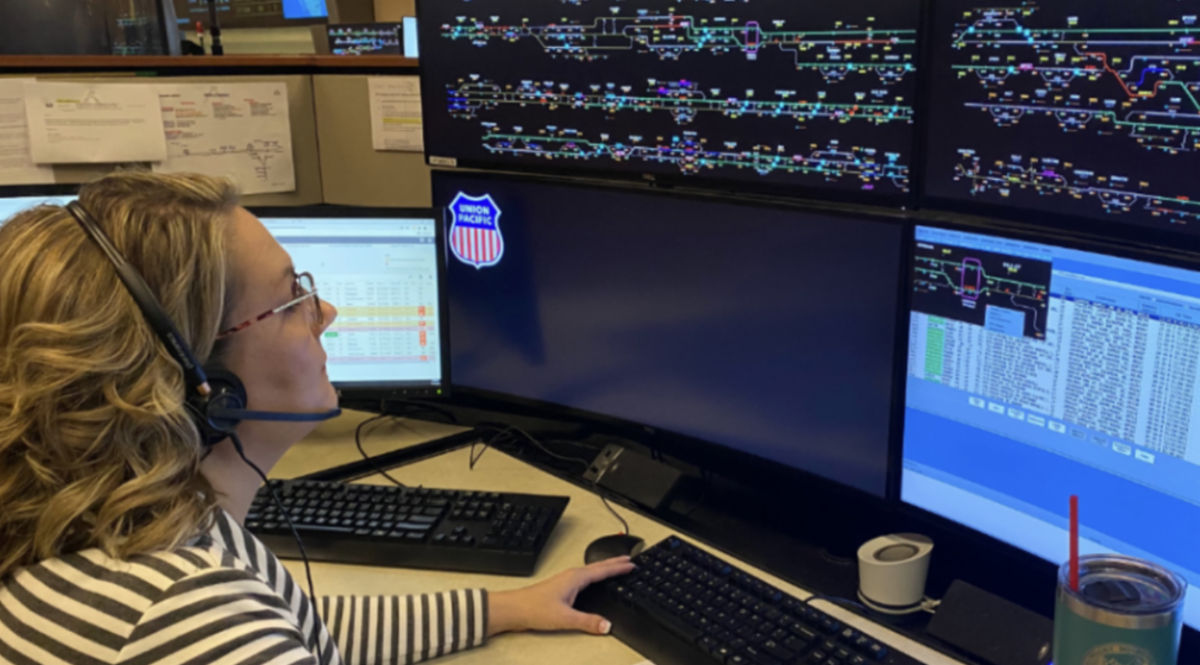
The Federal Railroad Administration (FRA) on May 20 announced two final rules requiring freight railroads, Amtrak and commuter railroads to develop certification and training programs for train dispatchers and signal employees. “Unlike with conductors and locomotive engineers, there have previously been no federal regulations mandating specific training requirements, safety and knowledge checks, and verification of safety records for dispatchers and signal employees,” the FRA reported. “These final rules address this gap in rail safety and will help ensure that certified dispatchers and signal employees are qualified and fit for duty.” According to the FRA, Class I railroads, Amtrak and commuter railroads will have to submit their written certification programs to FRA no later than 240 days after the effective date of this rule. Class II (regional) and Class III (short line) railroads will be required to submit their written certification plans 480 days after the rule goes into effect.
| |
Editor's Note: By their very nature, trucks and busses are dangerous. Inclement weather, bad road conditions, traffic congestion, operator fatigue and more have a greater propensity to endanger transit by truck/bus than rail. Trains are on a rail that prevents them from slipping and sliding off the highway or into other vehicles, and a signal system and PTC to further protect movements. Let's get trucks and busses (and cars) off the highways and move the freight, passengers and motorists onto the rails! | |
|
Brandon Cafferky / May 20
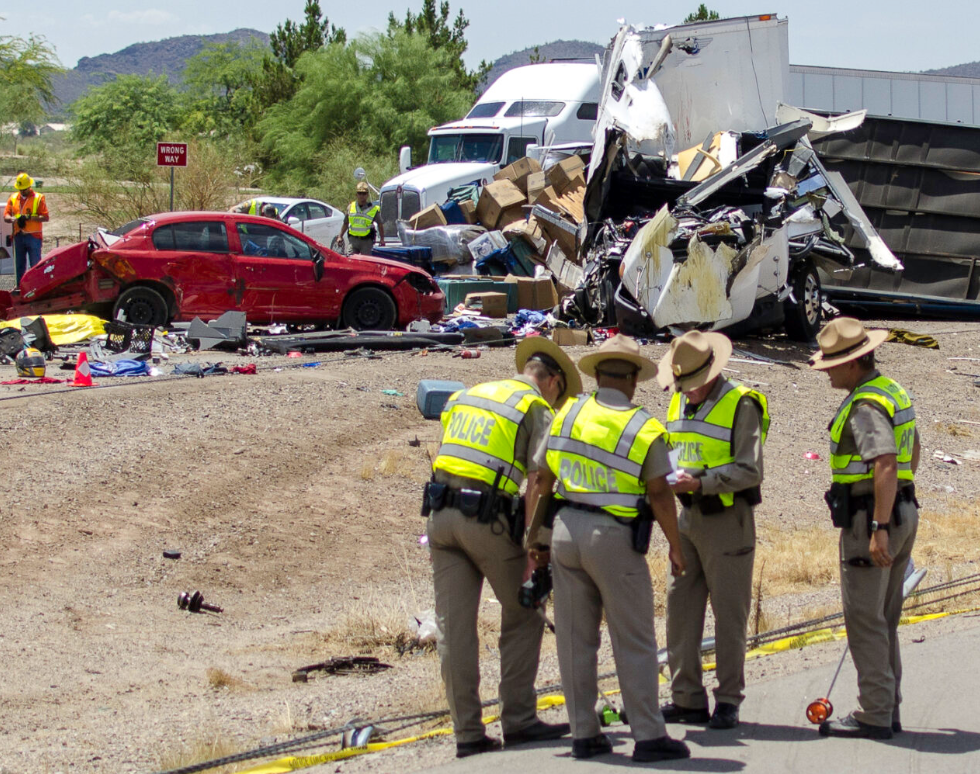
Deaths resulting from large-truck crashes where newly licensed drivers are involved continue to rise, according to recent government data, but a proposed safety requirement that could help reduce those deaths will likely be delayed again. The percentage of fatal large-truck and bus crashes involving new-entrant carriers climbed from 4.6% to 7.4% from 2017 to 2022, according to a snapshot of Federal Motor Carrier Safety Administration data taken at the end of 2023. In 2022, those crashes resulted in 494 deaths and over $5.5 billion in costs. “Unfortunately this trend continues among recent new-entrant program graduates,” said Kelly Stowe, an engineer with FMCSA, referring to the agency’s New Entrant Safety Assurance Program.
| |
Progressive Railroading / May 20
The Brotherhood of Locomotive Engineers and Trainmen (BLET) and the Chicago, Fort Wayne & Eastern Railroad (CFE) have reached a tentative five-year contract governing rates of pay, benefits and work rules. If ratified, the agreement would run through 2029 and cover 45 employees at the CFE, according to a BLET newsletter. The contract calls for wage increases of 29.5% (33% compounded) over the life of the contract. Other proposed contract elements include a $2,000 signing bonus; training pay increased to $15 a day; a probationary period decrease to 120 days; meal allowance increase on layover assignments; week-long temporary vacancies for extra board employees; and a boot allowance increase.
| |
Editor's Note: Germany is a very different situation for freight than the U.S., and this article is a bit light on specifics, but it’s great to see attention paid to the ‘carload network’. Intermodal is better than pure trucking but keeping freight in railcars from its origin to its destination avoids destroying local roads while using the full weight and dimensional capacity of the rail system. | |
Robert Preston / May 22
THE European Commission (EC) has approved a grant scheme introduced by the German government to support rail freight operators handling single wagonload traffic, which it says will help the sector to remain competitive and maintain the environmental performance of rail. “This €1.7bn scheme will enable Germany to support important segments of rail freight transport, which is a more environmental-friendly mode of freight transport compared to road,” says Ms Margrethe Vestager, EC executive vice-president in charge of competition policy. “It will help Germany meet its Green Deal objectives, while reducing the burden of rising costs for transport operators, to the benefit of freight customers.”
| |
Editor's Note: All of these remedies outlined in this article have shortcomings as compared to the electric overhead catenary wire option. Zero emissions, zero charge/refuel time + more powerful, longer lasting and reliable locomotives, regenerative braking, and more. Then why is this option not even mentioned, despite the fact that the world over it is being implemented as THE solution? Because the private Class One railroads do not want to make the necessary investments, too busy cutting costs, eliminating traffic, and pumping up the stock price. | |
Wall Street Journal / May 23
Railroad operators like to say that trains are greener than trucks when it comes to moving goods, pointing out that one railcar can haul three to four times as much as a truck, and one freight train can remove hundreds of trucks from the highways. Although the freight-rail industry is responsible for less than 2% of transportation-related greenhouse-gas emissions in the U.S., rail carriers— like the rest of the transportation industry—are under pressure to reduce those emissions, much of which are produced by dieselelectric locomotives. As a result, freight operators are investing in dieselelectric models that are more fuel-efficient, as well as exploring alternative ways to power locomotives, homing in on three main technologies: batteries, biodiesel and hydrogen.
| |
Editor's Note: Primus has been an outspoken critic of PSR and the recent antics on the Class Ones, even more so than outgoing Board Chair Oberman. Let's see what he can do now as the Chair. Go get 'em Robert! Railroad workers across the country are counting on you. You have our support! | |
BLET News / May 17
On May 11, President Biden named Robert Primus as the new Chairman of the Surface Transportation Board. Primus replaces outgoing Chairman Martin Oberman who retired on May 10. Earlier this year, the BLET secured unanimous support from all of organized Rail Labor to advocate for Primus to succeed Oberman as Chairman. “Mr. Primus is a true friend to Rail Labor and an asset to the Surface Transportation Board and our country,” the coalition of 13 Rail Labor unions wrote in a joint letter sent in January to President Biden. “He has made a singularly positive difference in the lives of our members and, as Chairman, we are confident that he will continue to move the Surface Transportation Board forward to further strengthen our nation's freight and passenger rail networks.”
| |
Editor's Note: Another bright spot here. Homendy has made some powerful statements in the last years years, notably with regard to East Palestine a few weeks following the wreck that "I can tell you this much: This was 100% preventable. We call things 'accidents.' There is no accident ..." | |
BLET News / May 17
On May 14, the U.S. Senate unanimously voted to confirm Jennifer Homendy to another five-year term with the National Transportation Safety Board, including another three-year term as Chair. She was first appointed to the NTSB in 2018 and has served as Chair since 2021. Homendy has been playing a very visible role, not only due to the East Palestine derailment and other rail safety issues, but also with the ongoing investigations of the recent collapse of Baltimore’s Francis Scott Key Bridge and Alaska Airlines Flight 1282 involving a Boeing 737-9 MAX.
| |
NEWS FROM AROUND THE LABOR MOVEMENT | |
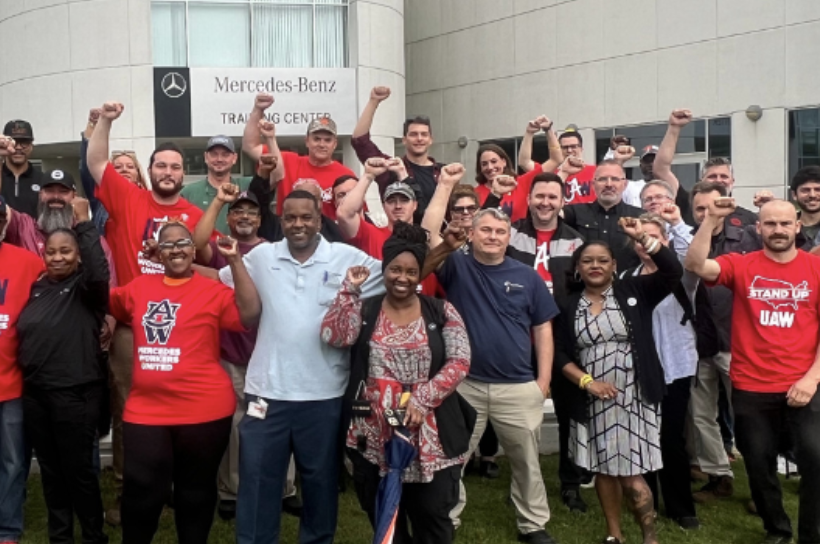
Editor's Note: This key loss at Mercedes stings, but the union drive by the UAW rolls on. Just like in the 1930s when the modern labor movement was built, there is bound to be set-backs like this one. But we roll the union on! | |
Jeremy Kimbrell / May 21
"I’m still hot as hell three days after losing a union election at the Mercedes factory complex in Alabama. After years of laying a foundation and six months of 100 percent dedication and putting everything on hold, it’s a tough pill to swallow—losing by 597 votes out of 5,000. That’s especially hard when a large majority of workers had committed to vote yes, but some flipped in the closing weeks. It’ll take time to know everything that went wrong or what exactly led to the loss, but while things are fresh on my mind, I’ll share a few thoughts. I’ve worked at Mercedes for nearly 25 years and have been part of multiple efforts over those years to build a union. This was the first time we got to a National Labor Relations Board-supervised election on whether to unionize."
| |
Weekly Derailment Department | | | | |