Rail & Labor News from RWU
| |
Weekly Digest Number 3 - January 16, 2024 | |
Welcome to the RWU Rail & Labor News! This news bulletin is produced and emailed out each Tuesday morning. We hope you find each week's news and information useful. If so, please share with co-workers, friends, and colleagues. If you like, you can sign them up to get all the news from RWU HERE. Or forward them the link. Note: If you read over this news bulletin each week, you will be sure to never miss the important news of what is going on in the railroad world from a worker's perspective!
| |
Editor's Note: The quagmire of state legislation regulating crew size, train length, and blocked crossings will continue. Ironically, the rail carriers made the case that this issue should NOT be appealed to the U.S. Supreme Court. Why? Because the railroads had won at the Ohio State Supreme Court level. But as soon as a state Supreme Court does uphold one of these state rail regulatory laws, you can bet the carriers will scream for the U.S. Supreme Court to step in! | |
|
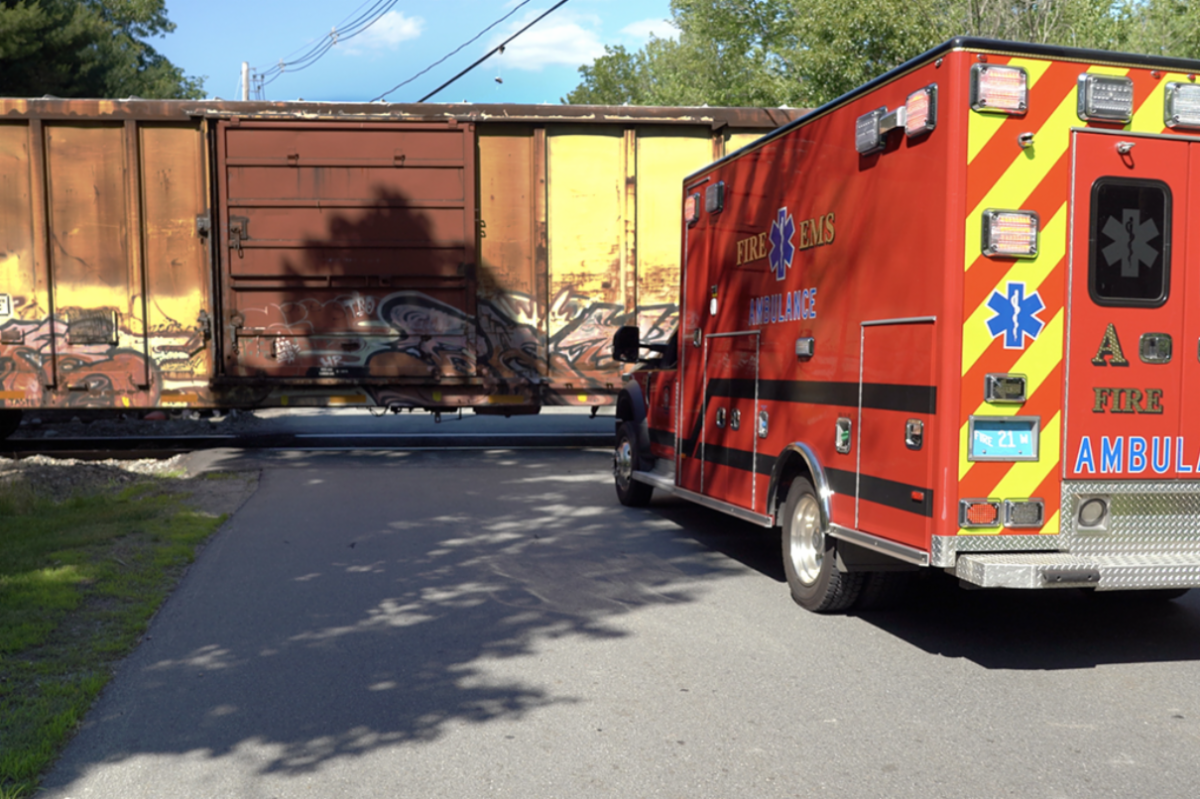
The U.S. Supreme Court (SCOTUS) on Jan. 8 declined to consider Ohio’s bid “to enforce a state law that penalizes railroads if their trains block grade crossings for more than five minutes, turning away a case that sought further clarity on the scope of federal preemption concerning rail regulations”... “This legal challenge came about after Ohio hit CSX with charges of violating the state law five times in Union County in 2018, and CSX promptly fought to have the charges dismissed...”
| |
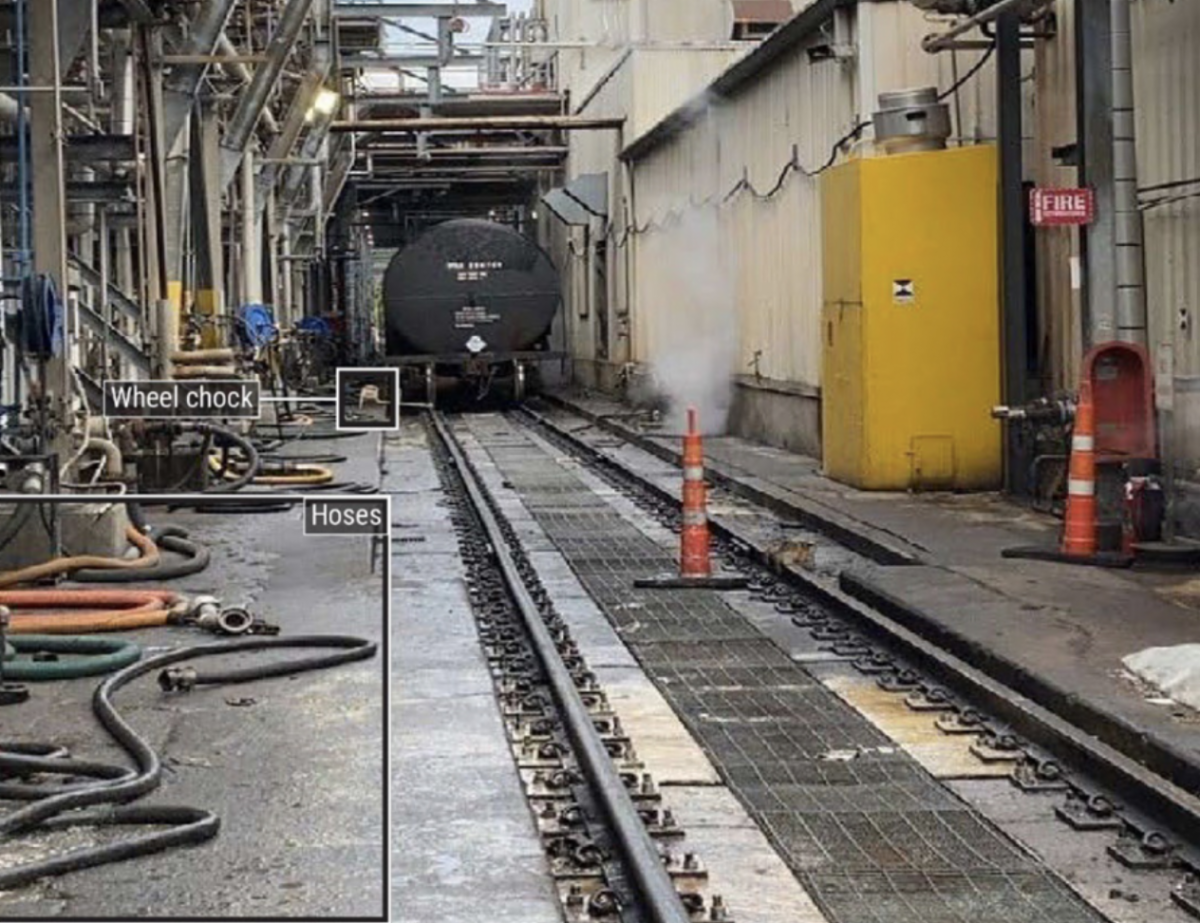
Editor's Note: The rail industry has traditionally reported that a huge number of accidents and injuries are the result of "slips, trips and falls". Their ridiculous solution? Watch where you are going! For us workers, the solution: Get rid of the damn tripping hazards! It appears apparent from the photo (see below) that this switchman most likely tripped over some of the detritus strewn along both sides of the track. | |
Trains Magazine / Jan 10
A conductor entered the “red zone” where there was an increased likelihood of being struck by equipment, and an engineer did not follow operating procedures to stop his train after failing to hear instructions from the conductor, the National Transportation Safety Board said in determining the probable cause of the fatal Oct. 28, 2022, incident involving a PSC Group conductor switching an ExxonMobil plant in Beaumont, Texas. PSC subsequently revised its procedures for track 7, which has a fairly constrained walking area, to require conductors to take a position at the final carstop location and face the movement; walking alongside the movement is no longer permitted. ExxonMobil cleaned up the walking area, added rail crossing signs at breezeways, and increased lighting.
| |
Editor's Note: RWU encourages all railroad workers to support Amtrak passenger rail expansion including these long distance routes. Passenger rail expansion means more jobs, often good jobs, for RR workers. But more, running passenger trains on Class One infrastructure means that the carriers must run their railroads in a more professional and conscientious manner, and work their freight trains' schedules into the passenger schedules, just like they once did for well over 100 years with an amazing degree of on-time performance. | |
Federal Railroad Administration / Jan 9
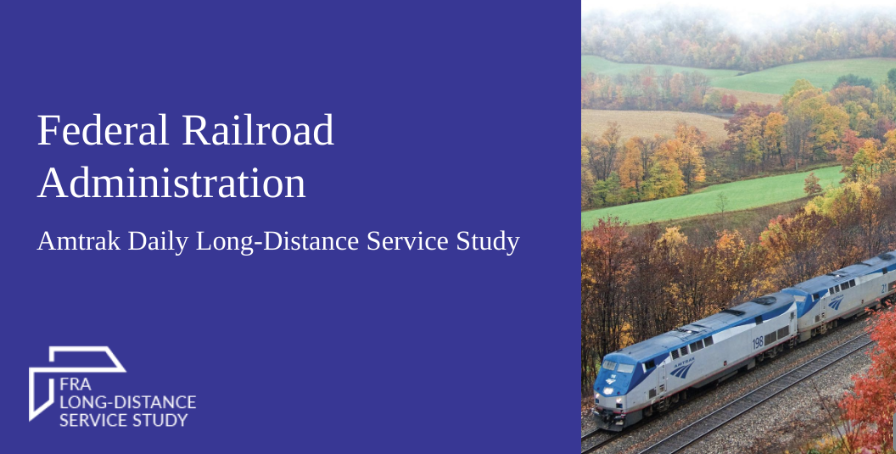
Long-distance routes are passenger rail routes of more than 750 miles, operated by Amtrak. Amtrak currently operates 15 long-distance routes; 13 routes provide daily service, and two routes—the Cardinal and Sunset Limited—operate three days per week. FRA recently announced 69 corridor selections across 44 states through the Corridor Identification and Development Program (Corridor ID). The Corridor ID Program is a comprehensive intercity passenger rail planning and development program that will help guide intercity passenger rail development throughout the country and create a pipeline of intercity passenger rail projects ready for implementation.
|
|
Editor's Note: What these CEOs do not state - as do neither the top rail union officials - is the fact that, had the rank & file not revolted, defying both their union leadership and the Class One carriers, we never would have won those subsequent "on-property" agreements concerning paid sick leave. Remember? The NCCC would not agree to a single day of paid sick leave, and the union leadership largely capitulated. When the operating crafts' union officials mounted a timid resistance, that was quickly quelled by the Biden-Walsh "historic agreement" at the 11th hour, offering just three days, which were not even sick days by any stretch of the imagination, to be taken only Tuesday - Thursday with 30 days advance notice. Ha! What a joke. Only because working railroaders - aided and abetted by Railroad Workers United (RWU) - continued to fight back, vote no on the proposed contract, and threaten to strike, were we able to win the concessions we did from the carriers property-by-property the following year. | |
|
A lot has happened, since Class I railroads averted a strike in 2022. CEOs and other officials at the Midwest Association of Rail Shippers Winter Meeting were happy to point to progress in labor relations. Which is good, because — believe it or not — the whole national contract process is about to start all over again. The problem with taking three years to navigate the convoluted, Byzantine negotiating process set by the Railway Labor Act is that the parties involved barely have time to catch their breath before resuming.
| |
Editor's Note: Once again, here is an opportunity for the feds to act on these common sense proposals from the shop craft unions. No more lip service, no more advisories, it is time to act! | |
|
A coalition of labor unions representing railroad shop workers has asked the Federal Railroad Administration and Surface Transportation Board to take five steps to improve safety and service on the Class I railroads. "The railroads pressure workers to ignore defects and defer necessary inspections, services, maintenance, and repairs required under the regulations and which are critical for the safe operation of trains across the Class I’s rail infrastructure network.”
| |
Editor's Note: Free transit can obviously be a great tool for mobility justice and quicker passenger flow, but ask the bus drivers in Albuquerque what they think. Perhaps require tickets or passes, but then subsidize appropriately? | |
LIAM CRISAN / JAN 11
In late 2023, Albuquerque, New Mexico became the largest U.S. city to fully embrace fare-free public transportation. This decision came after nearly two years of a successful “Zero Fare” pilot program. As ridership dwindled during the pandemic, the city expanded free rides from a few routes to the entire system. Barely a year later, ridership was up 49.4 percent and the program proved to be more cost-effective than previously imagined. Now, free fares are here to stay.
| |
Editor's Note: This Report is from the union that represents those workers who inspect and repair freight cars. They happen to know a little about the subject. Who best to listen to if we are interested in avoiding future train wrecks rooted in equipment failures such as the one at East Palestine last February? | |
Brotherhood of Railway Carmen / Jan 1
RAIL LABOR UNIONS’ REPORT: A FIVE-PRONGED APPROACH TO IMPROVE INDUSTRY SAFETY AND SERVICE RELIABILITY FOR CLASS I FREIGHT RAILROADS
| |
Editor's Note: It is disgraceful that the U.S. Congress is so stifled by corporate influence that this bill's prospects are dim. Even if it achieves a majority in the Senate, it is very unlikely to achieve the super majority needed under the filibuster rules. And if it survives the Senate, could easily be torpedoed in the House. On top of all this, the bill has already experienced endless amendments to make it more acceptable to the rail industry. And to begin with, even in its original state, the bill left out countless needed provisions and provided the industry with gaping loopholes and easily obtainable waivers right from its inception. | |
Trains Magazine / January 14
Senate Majority Leader Chuck Schumer has promised to schedule a vote on the stalled Railway Safety Act, the political website The Hill reports, but Republican leader Mitch McConnell opposes the legislation and may block it or delay it. The bill introduced in reaction to the East Palestine derailment includes provisions requiring two-person crews, wayside detectors, training for first responders, and increased rules for hazardous materials.
| |
Editor's Note: Good to see a European country allow this strike as "legal." Contrast this with what happened in the U.S. with government intervention to stop the national rail strike of engineers and others in Fall 2022. | |
|
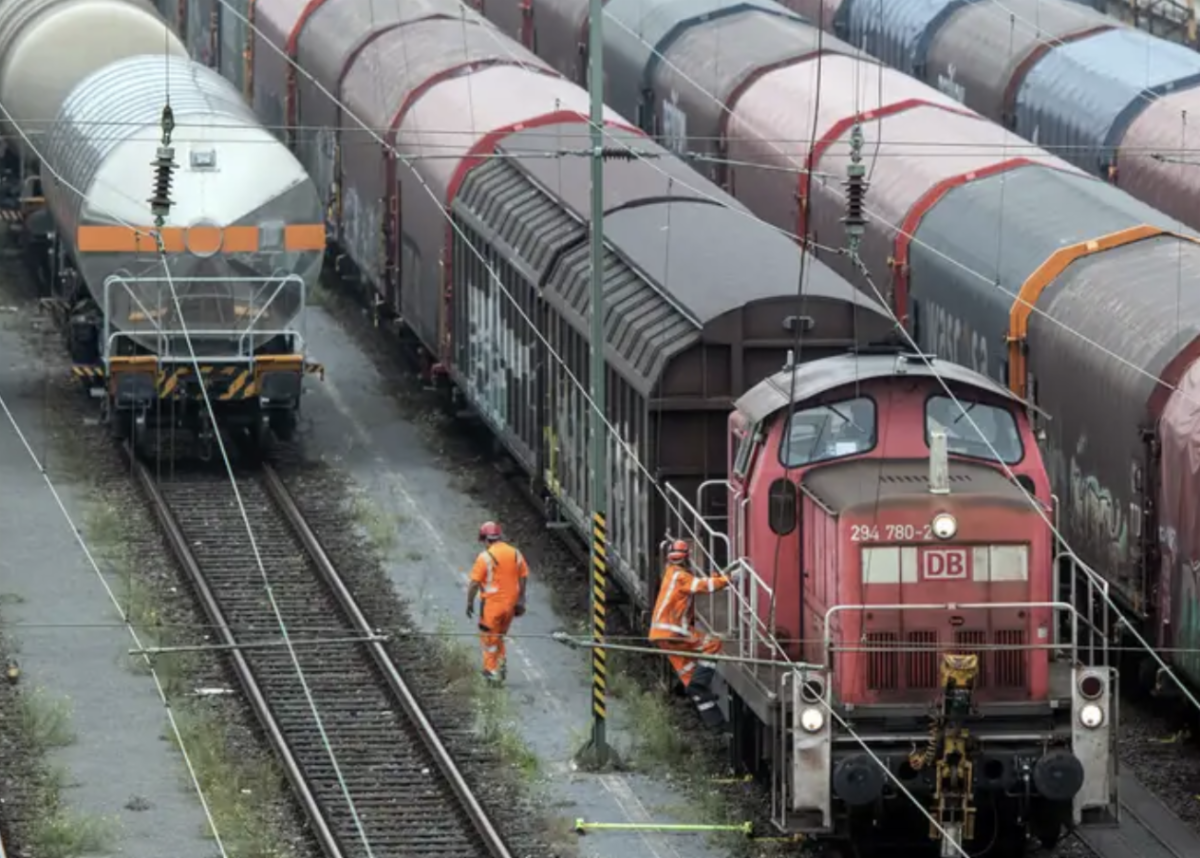
Freight movements across Germany could be thrown into chaos over the next couple of days as German train drivers begin a series of strike actions at state-owned rail operator Deutsche Bahn. The action could hit the clearance of containers out of the main German ports of Hamburg and Bremerhaven, a customer advisory from Maersk warned. “As a result, severe delays are to be expected on inland transportations, including deliveries that cannot be performed at all,” it said.
| |
Insa Wrede / Jan 9
Germany's GDL train drivers' union strike in passenger- as well as freight transport, set to last from Tuesday evening until Friday, will not only affect the state-owned rail operator Deutsche Bahn (DB). The standstill will also be felt by many companies in Germany which transport raw materials or goods via rail cargo. In addition, the consequences will also be felt in neighboring countries, because nearly 60% of Deutsche Bahn's freight transport services are carried out across Europe. Six out of 11 corridors for freight transport in Europe are running through Germany, according to the Federal Ministry for Digital and Transport (BMDV).
| |
Editor's Note: In the years wasted on endless studies and legal battles, perhaps the time could have been better spent rebuilding and modernizing existing right-of-way between these Texas cities. Of course the trains traversing this track would not make it from A to B in just 90 minutes, but a passenger train route that could simply equal driving times would draw millions of motorists off the highway. And require a fraction of the cost and a fraction of the time to build out. | |
RYOSUKE HANAFUSA / Jan 6
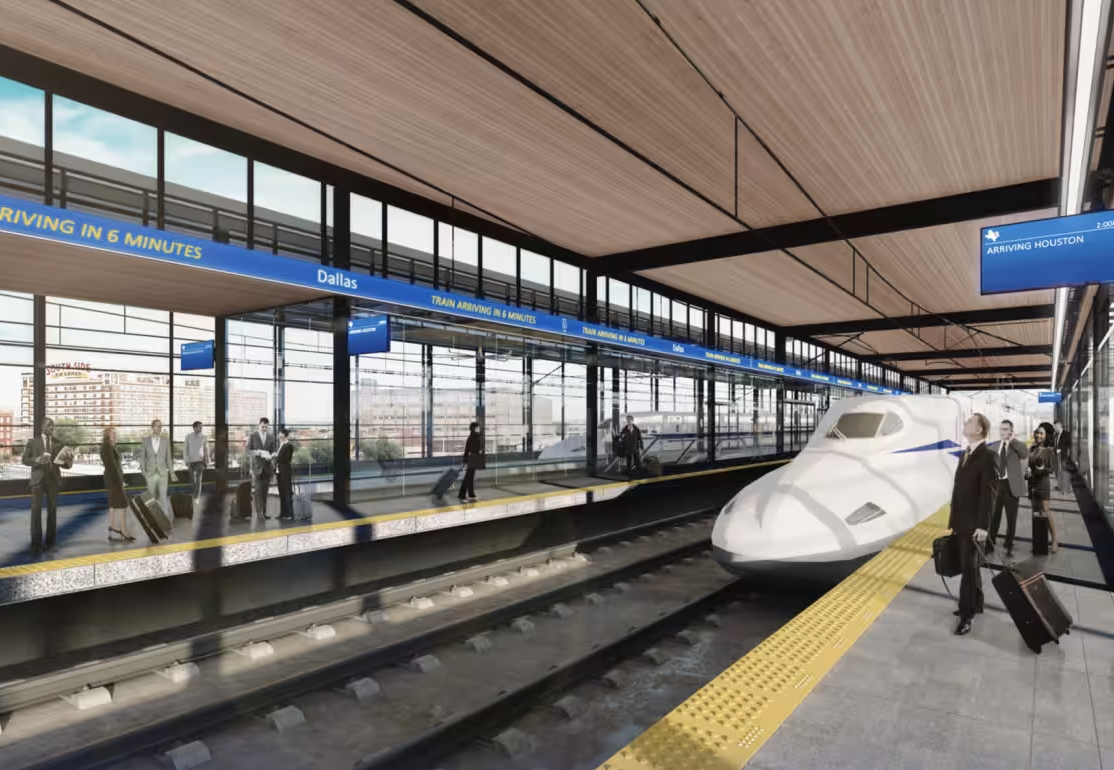
The U.S. federal government has awarded a planning grant to a proposed high-speed rail line in Texas to be built with technology from Japan's shinkansen bullet trains, for a project that has faced delays and ballooning costs. The proposed train service between Houston and Dallas could cover the 390 kilometers between the cities in 90 minutes. The main developer is private-sector company Texas Central, with Japanese companies such as Central Japan Railway and Hitachi providing technical support. Plans call for producing rolling stock and other technology developed for Japan's shinkansen bullet trains, adapted to Texas specifications.
| |
BMWED / Jan 11
"Yesterday in downtown St. Louis, BMWED members on the Class III Terminal Railroad Association of St. Louis demonstrated outside the boss’ office on Olive Street, imploring him to finally recognize the common and necessary benefit of paid sick leave. TRRA has the shameful distinction of being the only shortline within the American Rail System Federation of the BMWED yet to provide paid sick days to its employees. While management continues to insist that they are open to providing the need paid time off for illness they have yet to make the simple maneuver to put it in writing."
| |
NEWS FROM AROUND THE LABOR MOVEMENT | |
|
Bob Hennelly / Jan 15
This Martin Luther King Day comes just weeks after a year that’s been dubbed "the year of the strike" because in 2023 there were well over 300 such work stoppages involving 450,000 union workers willing to take the risk of walking out on their employer — a 900 percent increase from just a few years earlier. King’s last address in April 1968 was to striking sanitation workers in Memphis, Tenn., who went out in part because two of their co-workers, Echol Cole and Robert Walker, had been crushed to death by the errant trash compactor of their sanitation truck. Throughout King’s career, it was unions such as the United Autoworkers, the Transport Workers Union, SEIU 1199 and AFSCME that he saw as essential allies in his campaign for mass collective nonviolent action.
| |
Weekly Derailment Department | | | | |