Rail & Labor News from RWU
| | Weekly Digest Number 29 - July 15, 2025 | | Welcome to the RWU Rail & Labor News! This news bulletin is produced and emailed out each Tuesday morning. We hope you find each week's news and information useful. If so, please share with co-workers, friends, and colleagues. If you like, you can sign them up to get all the news from RWU HERE. Or forward them the link. Got a hot tip? Please forward the article and a link to raillabornews@gmail.com. Note: If you read over this news bulletin each week, you will be sure to never miss the important news of what is going on in the railroad world from a worker's perspective! | | THIS WEEK'S RAIL AND LABOR NEWS | |
Trains Magazine / July 13th
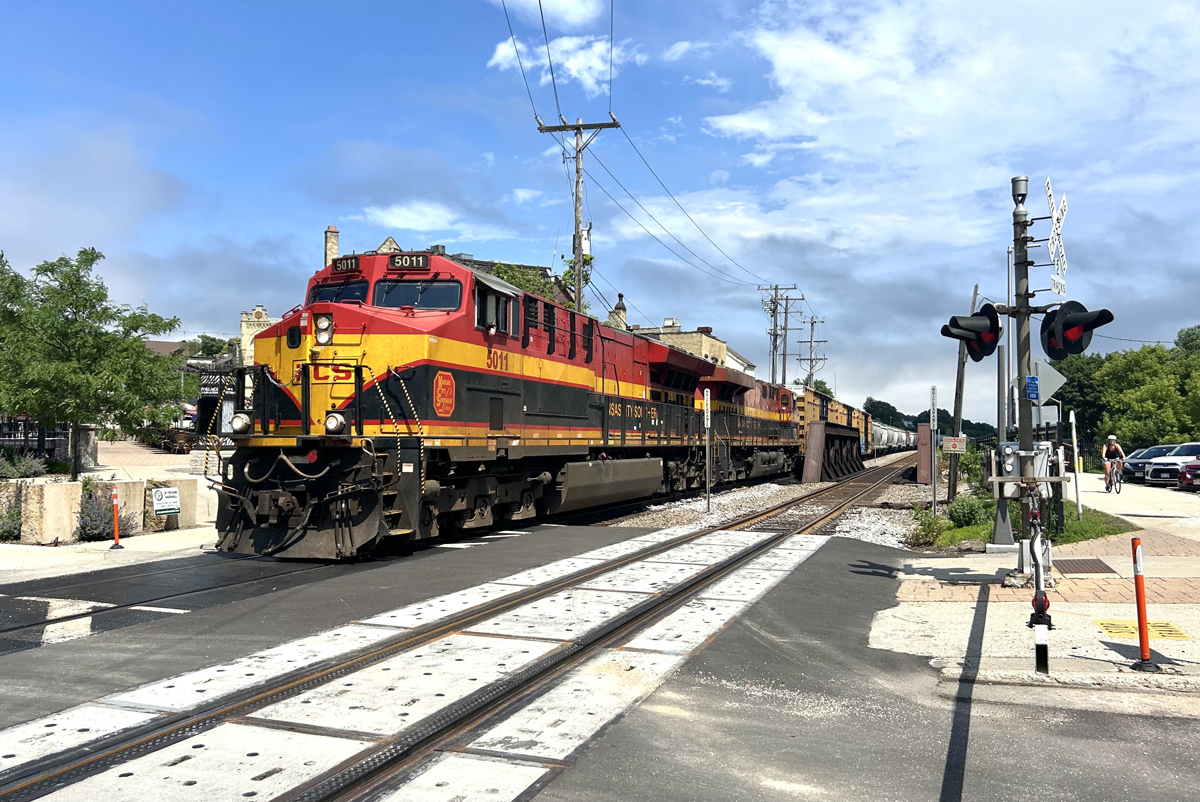
The union representing Canadian Pacific Kansas City conductors is polling members on a possible strike, claiming the railroad took advantage of a service crisis to make workplace job changes on the former Kansas City Southern.
The International Association of Sheet Metal, Air, Rail, and Transportation Workers-Transportation Division (SMART-TD) Local 457’s General Committee of Adjustment is polling members on a possible strike vote, General Chairman Samuel Habjan confirmed in a brief phone interview with FreightWaves late Saturday (July 12, 2025). The results of the poll are expected today. Habjan would not speculate on the results of the poll, or the union’s plans.
An email signed by “union members local 781” and obtained by FreightWaves claimed that the railroad was using the service crisis to cut jobs and reduce some employees’ working hours.
| |
Progressive Railroading / July 11th
The National Transportation Safety Board (NTSB) recently completed its investigation into a hazardous materials release that occurred when a BNSF Railway Co. freight train derailed in New Mexico on April 26, 2024.
The westbound BNSF train derailed 35 rail cars near Manuelito, New Mexico. The derailed equipment included six U.S. Department of Transportation specification 112A340W tank cars loaded with liquified petroleum gas. Four of the tanks were breached during or after the derailment, NTSB officials said in the report.
Due to the threat of an explosion, the local fire department evacuated a 2-mile radius and closed Interstate 40 in both directions. Portions of the highway was closed for about 48 hours. The evacuation, which displaced 52 people, and road closure were lifted on April 28. No injuries were reported.
| |
Trains Magazine / July 8th
A conductor who made an incorrect cut during switching, fouling a main track, was killed when a car he was riding on sideswiped the car fouling the main during a subsequent move, the National Transportation Safety Board said in its preliminary report on a fatal accident that occurred June 9, 2025, at Union Pacific’s Nacogdoches, Texas, rail yard.
The incident occurred about 3:26 p.m. local time when a train of two locomotives and five cars was making a shoving move. According to the NTSB report, the accident came shortly after yard’s manager of train operations finished spending most of the day assessing the conductor’s proficiency; the supervisor had been with the conductor as he went about his job from 8:30 a.m. to about 3:10 p.m.
The ongoing investigation will focus on conductor training and certification; rules compliance; safety oversight; and operating procedures relating to shoving moves.
|
|
WLBT 3 / July 10th
Some residents of a small community in the Mississippi Delta say they fear their health might be at risk after a train derailed and spilled a hazardous chemical compound that burned for hours.
Part of a Canadian National Railway train went off the tracks Saturday in Glendora, about halfway between Memphis, Tennessee, and Jackson, Mississippi. The derailment prompted a temporary evacuation of the village after a tank car containing benzene caught on fire.
Desiree Simmons and Diamond Hoskins said they were leaving work at an Emmett Till museum when they realized they had to take their families to safety. The derailment occurred nearby.
| | Editor's Note: This Board member sounds pretty self-assured that the STB can "handle" a transcontinental merger, when most of the mergers of the last 30 years or so have resulted in a mess. The question is not just can STB handle it, the larger question is just how bad will the Class One carriers screw it up. For what it is worth, RWU will most likely vociferously oppose any such merger. Let's hope the unions do the same. | |
Trains Magazine / July 9th
If a transcontinental rail merger is proposed — as has been a subject of speculation in recent months — it would be up to the Surface Transportation Board to approve or deny the request.
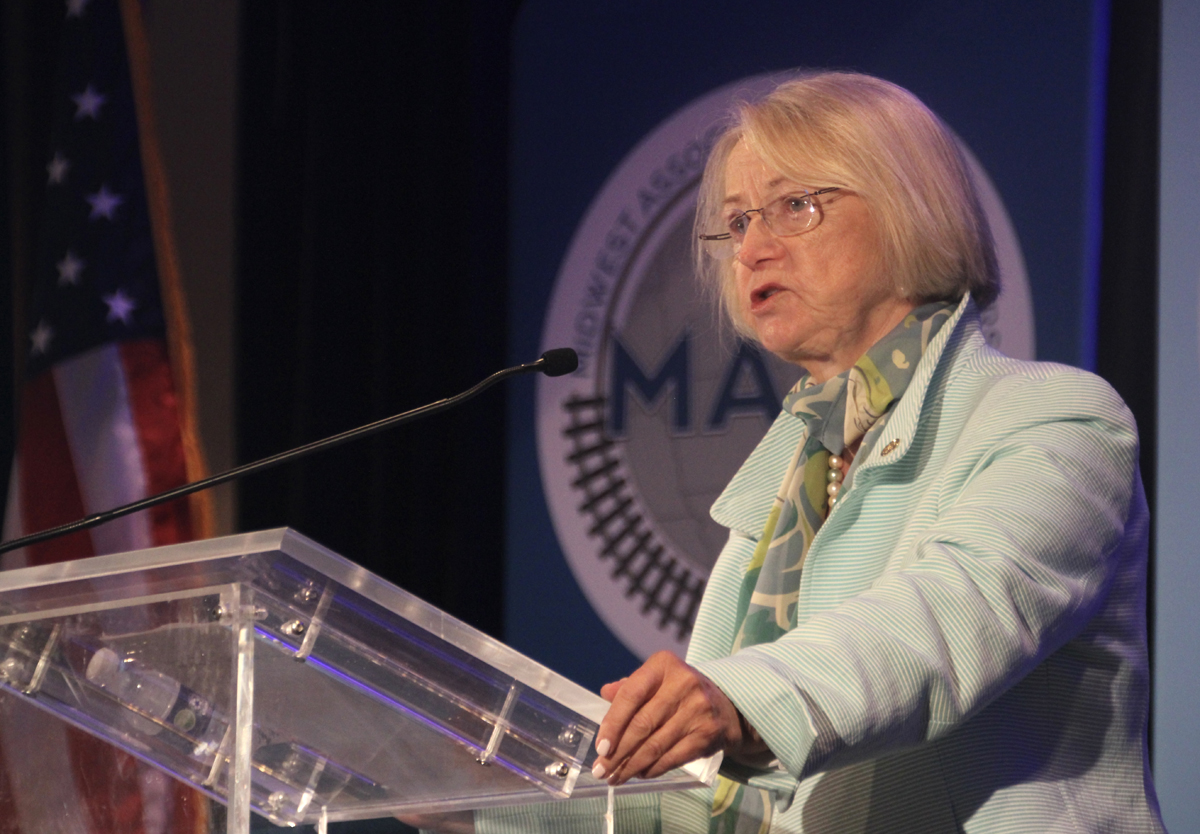
But the STB, like most government agencies, is now smaller than it was before the start of the Trump administration. Which, board member Karen Hedlund told the Midwest Association of Rail Shippers today (July 9, 2025), led to a question when she appeared recently before a group of transportation-industry law professionals.
“One of them, at the end of my remarks, asked kind of sheepishly, ‘There’s been some chatter about the possibility of a transcontinental merger. Given your current level of staffing, will you be able to handle it?’” Hedlund recalls. “And I said, well, we did the CPKC merger pretty handily.’ And it included a border-to-border environmental review, not an easy task."
| |
July 10th / Trains Magazine
If Class I railroads truly want to grow carload traffic — well, they have a lot of work to do to improve their service.
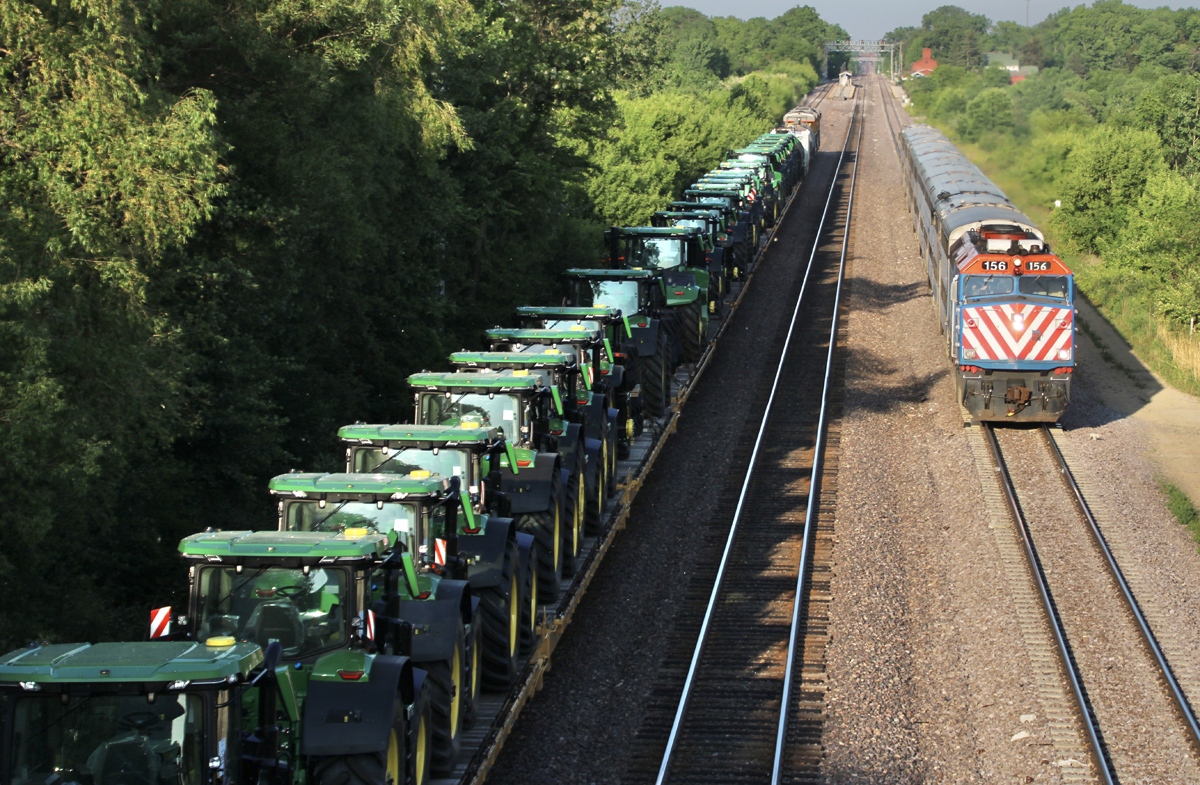
That was the loud-and-clear message from two presentations Wednesday (July 9) at the summer meeting of the Midwest Association of Rail Shippers, where Aaron Girard of Seneca Foods — the country’s largest processor and shipper of canned and frozen vegetables — and David Panjwani of John Deere & Co. addressed the drawbacks and barriers involved in rail shipping.
For Deere, the No. 1 issue is clearly one of reliability. The company spends well over $1 billion a year on transportation, said Panjwani, the company’s director of worldwide logistics.
| | Editor's Note: When UP assumed control of Southern Pacific 30 years ago, the newly created Surface Transportation Board (STB) allowed the merger to take place, despite giving UP a virtual monopoly on rail traffic in Nevada, Utah and much of Colorado/Wyoming. BNSF was granted trackage rights which it has hardly made use of. Now it wants to, UP balks. In fact, this entire merger should be revisited, and perhaps the former Western Pacific and Rio Grande lines should be spun off to BNSF, since UP makes little use of much of this trackage. | |
Progressive Railroading / July 10th
BNSF Railway Co. is asking the Surface Transportation Board to take "immediate emergency action" to prevent Union Pacific Railroad from blocking BNSF's trackage rights over UP lines in California, Nevada and Utah.
In a petition filed July 7, BNSF said it wants to use the lines to move double-stack intermodal trains for interchange with the Salt Lake Garfield & Western Railway (SLGW) in Salt Lake City. BNSF stated it obtained the trackage rights as a condition imposed by the board on its approval of the merger of UP and Southern Pacific Rail Corp. in 1996.
"UP and BNSF compete vigorously for intermodal rail movements to/from the West Coast," BNSF's filing states. "In 2024-2025, two intermodal customers moved a significant portfolio of business from UP to BNSF. To serve this business, BNSF must use its trackage rights over UP’s lines obtained under the UP/SP merger conditions — trackage rights that UP has consistently honored since the merger occurred nearly 30 years ago."
| |
Trains Magazine / July 9th
CSX says its crew members are uninjured following a grade-crossing collision and fire this afternoon near Atlanta — contrary to local news reports that said the crew members were among four people with significant injuries.
A WAGA-TV report quoted local police as saying the collision between a train and tractor-trailer rig ejected two people from the truck and sent four people to the hospital — three with serious injuries and one in critical condition. CSX said it was told the two people from the truck were transferred to the hospital with non-life-threatening injuries. WANF-TV is also now reporting two people were injured and says the two crew members were checked to see if they were OK after initially being told by police that there were four injuries.
| |
Freight Waves / July 9th
A federal court has tossed out the Surface Transportation Board’s 2024 reciprocal switching rule that would have allowed shippers who suffer from inadequate rail service to gain access to a second railroad.
The STB exceeded its authority when it adopted the rule, the U.S. Court of Appeals for the Seventh Circuit said in a decision issued yesterday.
The rule arose out of the 2022 service crisis that was related to widespread crew shortages on the big four U.S. railroads. The board said the rule would provide a streamlined path for access to reciprocal switching when service to a terminal-area shipper fails to meet any one of three performance standards.
| |
RT&S / July 11th
It’s 9 a.m. on a Tuesday in June. BNSF’s Gainesville, Texas, yard office is quiet, tucked in the heart of the terminal. Inside, benches, tables and computers line the room. A fresh pot of coffee brews as BNSF employees trickle in, stowing away essentials in lockers and chatting about weekend plans. The low hum of radio transmissions and the distant rumble of passing trains bring the building to life.
But long before the first cup of coffee is poured, the workday has already begun.
Track Supervisor Jesse Cunningham starts his day at 6 a.m. with a daily conference call that includes the roadmaster, track section employees, welders and teams from two subdivisions. The call covers safety briefings, daily assignments and lessons learned across the network.
| | NEWS FROM AROUND THE LABOR MOVEMENT | | Each week, RWU includes a few articles about advances and developments in the larger labor movement that are of interest to railroad workers. Got an artcile to submit for possible inclusion next week? Email it along to raillabornews@gmail.com. Thank you! | | Editor's Note: RWU urges all workers in the South who are not already gainfully employed by a railroad and are looking for meaningful employment opportunities to take advantage of this effort by the Southern Workers Assembly of which we are an affiliate and supporter of their important work. | |
Southern Worker
The U.S. South is the least unionized region of the country, a bulwark of right to work and anti-labor laws. The region plays a unique role in shaping systemic racism and white supremacy in the U.S. – from slavery, to Jim Crow, to today. It is dominated by some of the most reactionary and backwards forces in the country. Nearly 60% of Black workers in the U.S. live in the South, and the region has the fastest growing population of migrant workers.
The impact of racist and anti-labor policies has been disastrous for workers here. We earn the lowest wages and have the highest levels of poverty, we have shorter life expectancy and lower access to quality health care, we often live in communities polluted by industrial waste and other toxic byproducts of production, to name a few.
We know that the only way to change the quality of work and life here is to get organized. The Southern Workers Assembly is currently recruiting workers who want to be a part of leading this change, by getting jobs in key strategic industries across the region and digging in for the long-term to build power with their coworkers.
| |
Jacobin / July 7th
Compared to their counterparts around the world, US trade unions have historically been reluctant to undertake broad programmatic and transformative agendas. The division emerged most clearly in the early twentieth century: In France, the General Confederation of Labor (CGT) embraced a revolutionary syndicalist line that championed workers’ ownership of the means of production. In Germany, the Social Democratic Party (SPD) formed common cause with key trade unions; by World War I, it had become the single largest political party in the country on a platform of universal benefits for the working class.
No such developments would take place in the United States. After abandoning the campaign for an independent labor party in 1894, the American Federation of Labor instead prioritized sectional bargaining on behalf of its own membership, often against the interests of workers as a whole. This is especially true in the case of state welfare benefits: while trade unions have been essential to the expansion of social insurance systems around the world, US trade unions broke ranks with reformers to actively campaign against proposals for state benefits at crucial historical turning points. Why, in the words of the historian Mike Davis, is the US working class “different”?
| | |
Labor Notes / July 21st (event date)
National contracts with a common employer, like UPS or the Big 3 automakers, offer workers incredible power.
But many of us are not so lucky—we work under fragmented local contracts, with little to no coordination among bargaining units even when we’re fighting the same employer.
Join us for this discussion about how unions are coordinating bargaining and even aligning their contracts to maximize leverage in negotiations.
| | WEEKLY DERAILMENT DEPARTMENT | | Each Tuesday in this news bulletin, RWU does our best to present a picture of what has been happening over the course of the previous week in terms of derailments in North America, and investigation determinations of previous accidents. NOTE: This list is by no means comprehensive. Smaller and less consequential mishaps are generally not reported here. If the wreck results in injury or fatality, or is especially damaging/extreme, a full article will appear as a feature in the dozen or so rail articles above. Know of a train wreck? Please feel free to forward a link to raillabornews@gmail.com for possible inclusion next week. Thanks! |
| | | |