Rail & Labor News from RWU
| | Weekly Digest Number 32 - August 5, 2025 | | Welcome to the RWU Rail & Labor News! This news bulletin is produced and emailed out each Tuesday morning. We hope you find each week's news and information useful. If so, please share with co-workers, friends, and colleagues. If you like, you can sign them up to get all the news from RWU HERE. Or forward them the link. Got a hot tip? Please forward the article and a link to raillabornews@gmail.com. Note: If you read over this news bulletin each week, you will be sure to never miss the important news of what is going on in the railroad world from a worker's perspective! | | THIS WEEK'S RAIL AND LABOR NEWS | | Editor's Note: The big news this week is of course the fast moving merger between UP and NS. The two carriers hope to expedite the process through the Surface Transportation Board (STB). But opposition is building among shippers, rail workers, passenger train advocates, and others. (See articles below this lead article). Railroad Workers United will most likely be issuing a Special Bulletin with our position statement and press release before the week is over. | |
The New York Times / July 29th
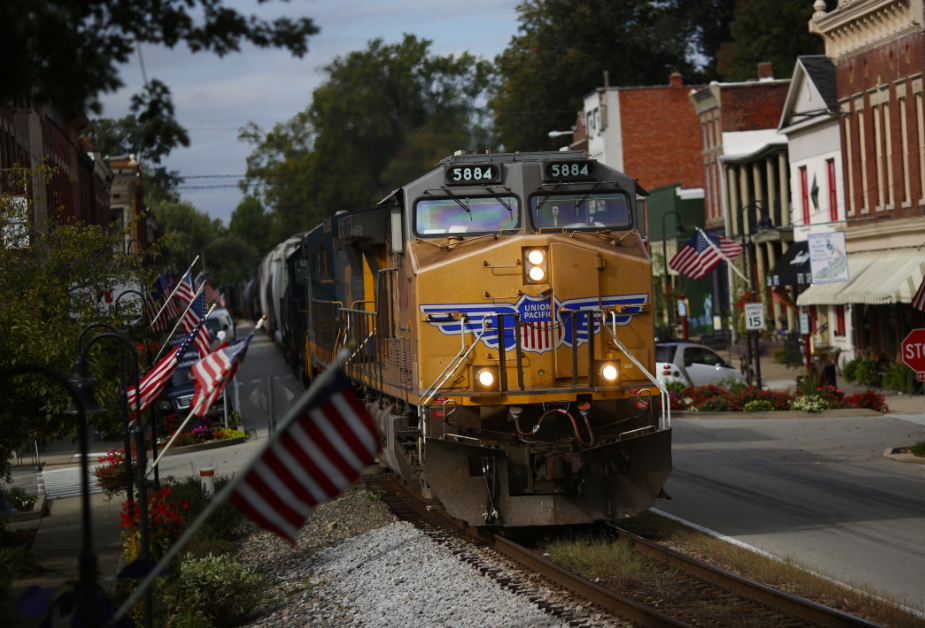
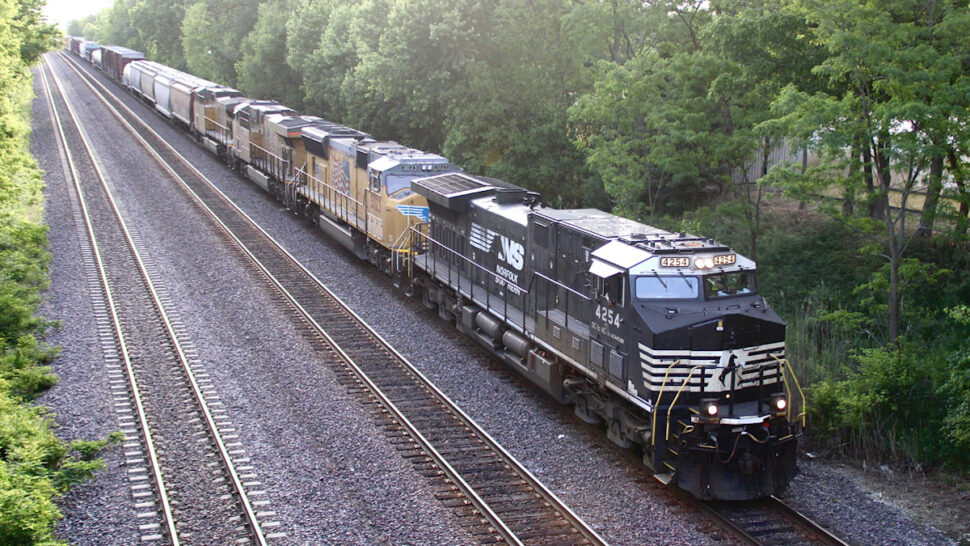
Union Pacific, a freight rail giant, announced on Tuesday that it had reached an agreement to acquire Norfolk Southern, another large railroad, in a deal worth $85 billion.
The merger would create the United States’ first coast-to-coast rail network and span some 50,000 miles across 43 states. But the deal would put around two-fifths of rail freight in the hands of one company, raising fears that it would reduce competition in a crucial industry.
Union Pacific, which operates west of the Mississippi River, and Norfolk Southern, whose tracks are mostly east of it, said the combined company would deliver freight faster by eliminating the need to switch railroads and opening new routes.
| | Editor's Note: Union Pacific calls it a historic merger; workers know it as a familiar play. Behind the $71.5 billion deal and coast-to-coast headlines is the same script: fewer carriers, fewer jobs, longer trains, and more control concentrated in the hands of those least burdened by derailments or delays. When CEOs say “efficiency,” they mean extraction.. of labor, oversight, and public trust. This isn’t railroading’s future. It’s monopoly capitalism at scale. | |
The Wall Street Journal / July 29th
The $71.5 billion merger deal between Union Pacific and Norfolk Southern joins 50,000 miles of railroad tracks that span from the Jersey shore to the ports in California.
The union, announced Tuesday, would create a single company controlling coast-to-coast rail shipments for the first time in U.S. history—a feat Union Pacific says would speed up shipping and make supply chains more efficient.
“Railroads have been an integral part of building America since the Industrial Revolution, and this transaction is the next step in advancing the industry,” said Union Pacific Chief Executive Officer Jim Vena, architect of the plan.
Union Pacific agreed to acquire Norfolk Southern in a stock and cash deal that prices Norfolk at $320 per share, with an equity value of $71.5 billion. Including assumed debt, the deal gives Norfolk an enterprise value of $85 billion.
| | Editor's Note: Rail unions have begun to state their concerns about the proposed Union Pacific - Norfolk Southern merger. TWU states forceful opposition, the other unions to date state "concerns." (see article and buttons below). RWU's Rail & Labor News weekly e-newsletter will keep you posted as they find (or do not find) their respective voices in the weeks/months ahead. | |
CNBC / July 29th
The largest rail workers’ union in the U.S. is planning to oppose the $85 billion mega-merger between freight railroads Union Pacific and Norfolk Southern.
SMART Transportation Division (SMART-TD) tells CNBC it will oppose the proposed deal over concerns about Union Pacific’s labor practices.
In a statement, the railroad union urged all parties to use “measured skepticism” in evaluating how the merger could impact rail workers, safety, service quality, and the long-term health of the freight rail industry. The union is currently in labor negotiations with Union Pacific for a new contract.
|
| Editor's Note: Senate Minority Leader Schumer has made a forceful statement in opposition to the merger. It would be great to see the rail unions rise to the occasion and not just "express concerns," but to come flat out and state their unequivocal opposition to this! If the Democratic leadership can articulate opposition, it is the least the rail unions can do! | |
Trains Magazine / July 30th
U.S. Sens. Roger Marshall (R-Kan.) and Tammy Baldwin (D-Wis.) are urging the Surface Transportation Board to “keep the best interests of rail shippers and consumers in mind” during the board’s upcoming review of the Union Pacific-Norfolk Southern merger, expressing concerns about the merger’s impact in a letter to board members.
Meanwhile, Nebraska’s two senators — Republicans Deb Fischer and Pete Ricketts — have issued statements supporting the merger because of its economic impacts on their state.
The letter from Baldwin and Marshall, dated Tuesday, July 29, express concerns that “a merger of this magnitude would diminish options for industry to transport goods, increase costs, create more unreliable service for U.S. shippers, and reduce overall competition in a market where the number of carries has diminished since 1950.”
| | Editor's Note: Both the Conrail carve-up in 1999 and the UP-SP merger in 1995-96 resulted in massive "service melt-downs,' seeing passenger trains delayed regularly as they attempted to weave through endless lines of stalled trains on clogged mainlines. And historically, as Class Ones have consolidated, they have become more and more belligerent and uncooperative in operation of passenger trains. This proposed merger does not bode well for Amtrak. | |
Trains Magazine / July 29th
The Rail Passengers Association said today it will be “actively involved in protecting the rights of passengers” as the Union Pacific-Norfolk Southern merger is considered by the Surface Transportation Board.
Amtrak had no comment on the merger announcement. Neither did commuter rail operator Metra, which has been involved in a lengthy legal and regulatory fight with UP over Metra operations on three Union Pacific routes in the Chicago area.
Rail Passengers Association CEO Jim Mathews said in a statement that passengers and shippers have good reason to treat this news with skepticism.
| | Editor's Note: Shippers are right to be wary.. when competition dies, service follows. This isn’t just a merger; it’s a controlled demolition of what little leverage customers and workers still have. As railroads collapse into duopolies, rates rise, transparency disappears, and “efficiency” becomes the excuse for everything from crew cuts to safety shortcuts. Labor and shippers may not always sit on the same side, but if this is the future, we’ll be riding in the same boxcar. | |
Freight Waves / July 29th
Groups representing rail shippers say they would be opposed to the creation of a transcontinental railroad in the U.S., arguing that further consolidation in the industry would reduce their competitive options, lead to higher rates, and worsen service.
Union Pacific and Norfolk Southern announced Tuesday that they had come to an agreement for UP to acquire NS for stock and cash worth $85 billion.
It’s further expected that BNSF and CSX for competitive reasons would eventually pursue a similar agreement.
The National Industrial Transportation League, the American Chemistry Council, and the Freight Rail Customer Alliance are watching warily as a final round of mergers would leave the U.S. with a pair of transcontinental Class I systems.
| | Editor's Note: “Synergies” is Wall Street code for cuts.. jobs, service, accountability. The UP–NS merger promises $2.75 billion in “efficiencies,” but history tells us where that money comes from: smaller crews, longer trains, thinner margins for safety, and a workforce expected to do more with less. Before shareholders and regulators greenlight another empire, they should ask who’s left to hold the brake valve when the cost-cutting runs off the rails. | |
Progressive Railroading / July 30th
Analysts, shippers and other rail industry stakeholders continue to react to yesterday’s announcement that Union Pacific Railroad and Norfolk Southern Railway reached an agreement to merge.
Under the deal, UP would acquire NS in a stock and cash deal that values NS at an $85 billion value. The merger would create the first U.S. transcontinental railroad network, one that would span more than 50,000 miles.
The transaction is expected to result in $2.75 billion in annualized synergies and economies. The proposed merger requires approval from the Class Is' shareholders and the Surface Transportation Board.
| | Editor's Note: This isn’t a merger, it’s a monopoly pre-nup. With a $2.5 billion breakup fee and guardrails against competing bids, the deal is engineered to protect shareholders from disruption, not workers or the public from harm. The Surface Transportation Board may still be reviewing, but the real decision-makers have already hedged their bets and written their own escape clause. | |
Trains Magazine / July 30th
The $85 billion Union Pacific and Norfolk Southern merger agreement includes a $2.5 billion breakup fee that anticipates potential twists and turns that could play out over the next two years.
The agreement has an expiration date of Jan. 28, 2028, but will be extended automatically if the Surface Transportation Board merger review process takes longer than anticipated.
NS is not allowed to seek better offers from potential suitors. But NS can consider unsolicited bids, at least until its shareholders vote on and approve the proposed UP-NS combination. If the NS board determined that an unsolicited bid was superior, UP would have the right to match it within five business days.
| | Editor's Note: Even CEOs are sounding the alarm. If CPKC’s three-month meltdown over a computer cutover is any indication, stitching together two sprawling Class I railroads is less a merger than a controlled burn.. with workers and shippers downwind. The railroads love to talk about precision, but the real legacy of these integrations is chaos at scale. When systems fail, it’s not the executives who get buried under the backlog, it’s the rank and file. | |
Trains Magazine / July 30th
Canadian Pacific Kansas City CEO Keith Creel today teed off on the proposed merger of Union Pacific and Norfolk Southern, raising a host of questions and concerns about the $85 billion deal that would reshape the railroad industry.
Creel, speaking on CPKC’s earnings call, issued a series of warnings about the transcontinental deal, including the potential for a nationwide rail service meltdown if UP and NS were to bungle the integration.
Creel knows the complexities firsthand: CPKC’s problematic May 3 computer cutover in former Kansas City Southern territory in the U.S. caused nearly three months of congestion, missed switches, and delays for customers in Louisiana, east Texas, and Mississippi. The impact of similar issues on a combined UP-NS system that stretches from coast to coast would be enormous.
| | Editor's Note: While Wall Street feasts on $85 billion mergers, America’s long-distance passenger trains limp along like relics of a forgotten promise. The communities they serve.. rural towns, working cities.. don’t need speeches about connectivity. They need coaches that aren’t falling apart. If DOT Secretary Sean Duffy wants to prove rail still matters beyond hedge funds and Class I balance sheets, he can start by putting new trains on the rails, with the money already in hand. | |
High Speed Rail Alliance / July 26th
Long-distance trains are high-value, high-impact mobility machines. They connect urban and rural areas, providing essential transportation for hundreds of smaller communities that are becoming more isolated from major economic centers.
But, after decades of neglect, the trains are old and worn out. There are too few coaches and bedroom cars to meet demand.
Please ask US Department of Transportation Sec. Sean Duffy to work with Amtrak to get an order for new trains placed—with funds already appropriated by Congress—as soon as possible.
| | Editor's Note: Well, here we got again! These "activist" investors will haunt and stalk the rail industry as long as it is privately held by corporations, demanding cuts to working conditions, customer service, maintenance, inspection and all the rest. Our job - and the job of our unions - is to firmly oppose this! But not just take "sides" with this management team or that management team as they rail unions did last year when NS was the target, but to say, "A plague on both your houses!" We do not want our unions dividing up over this set of exploiters or that set, groveling in the dirt to choose one master or another. Instead, the unions should come out for public ownership of the railroads, like the rest of our transportation infrastructure, and the way rail property is held around the world! | |
Freight Waves / July 31st
Ancora Holdings, the activist investor that waged a proxy battle for control of a beleaguered Norfolk Southern in 2024, now may have CSX in its crosshairs.
“We’ve been a growing shareholder in CSX (NASDAQ: CSX) and I think that company finds itself at the crossroads … of whether it wants to find a merger partner or whether it’s going to have to go retool management,” Ancora Alternatives President James Chadwick said Wednesday in an interview with CNBC.
Chadwick said that the railroad’s operational and financial performance has slipped under Joe Hinrichs, who became chief executive in September 2022. Prior to his tenure, Chadwick noted, CSX had a sub-60% operating ratio. Today CSX’s 64.1% operating ratio trails the other four publicly traded Class I railroads.
| | Editor's Note: This extraordinary story is exemplary of the harsh conditions that railroad construction workers - often first generation immigrants - labored under in the early days of railroad building. When people tell you that "Harriman, Vanderbilt, James J Hill, and Jay Gould built the railroads in the U.S., never forget that all they did was finance their construction. The working class BUILT the damn railroad, and contrary to what a recent CEO of CSX said during the big union contract fight in 2022, we contribute to their profits. In fact, as the words of the labor anthem "Solidarity Forever" make clear, "without our brain and muscle, not a single wheel can turn!" | |
The Conversation / August 1st
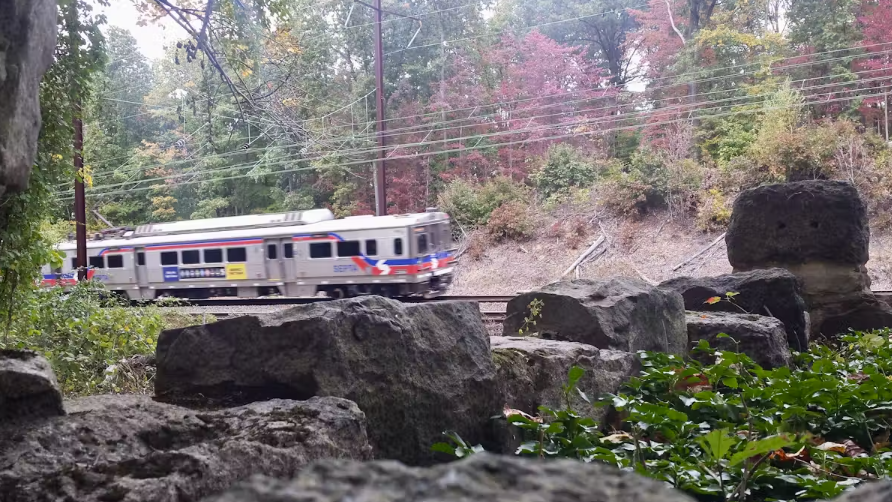
When commuters on the R5 [Paoli/Thorndale Line] SEPTA train that connects suburban Chester County to Philadelphia approach Malvern station, they might spot a square stone monument on the right side in a clearing surrounded by a thick stand of forest.
Above it, a sign paid for by the Amtrak electrical workers union and suspended from the trees reads:
BURIAL PLOT OF IRISH RAILROAD WORKERS: At this site, known as Duffy’s Cut, fifty-seven Irish immigrant railroad workers from the counties of Donegal, Tyrone, Derry and Leitrim died of cholera and murder in the summer of 1832.
| | NEWS FROM AROUND THE LABOR MOVEMENT | | Each week, RWU includes a few articles about advances and developments in the larger labor movement that are of interest to railroad workers. Got an artcile to submit for possible inclusion next week? Email it along to raillabornews@gmail.com. Thank you! | | Editor's Note: OSHA - the agency that came into being to protect worker health and safety on the job, is being further downgraded under the current administration to the point that it will become incapable of doing its designed purpose. | |
Jordan Barab / July 31st
The Trump administration has recently proposed major cuts to OSHA enforcement and issued a number of deregulatory actions as well as new policies that weaken OSHA’s enforcement process. If they continue, how are these actions likely to play out in America’s workplaces? Let’s take a look…..
You are a construction worker. You’ve been trained in previous jobs about the necessity — and legal requirement — of using fall protection equipment when you’re up on a roof.
But when you complain to your supervisor about being sent to work on the roof of a two-story house without any fall protection, his reply is “Well, I guess you just better be careful.”
When you threaten to call OSHA, he says if you do that, you can just go find another job. But you know he can’t legally retaliate against you for calling OSHA to report an unsafe work situation, so you call OSHA to report being forced to work at height without fall protection.
| | Each Tuesday in this news bulletin, RWU does our best to present a picture of what has been happening over the course of the previous week in terms of derailments in North America, and investigation determinations of previous accidents. NOTE: This list is by no means comprehensive. Smaller and less consequential mishaps are generally not reported here. If the wreck results in injury or fatality, or is especially damaging/extreme, a full article will appear as a feature in the dozen or so rail articles above. Know of a train wreck? Please feel free to forward a link to raillabornews@gmail.com for possible inclusion next week. Thanks! |
| | | |