Rail & Labor News from RWU
| | Weekly Digest Number 49 - December 2, 2025 | | Welcome to the RWU Rail & Labor News! This news bulletin is produced and emailed out each Tuesday morning. We hope you find each week's news and information useful. If so, please share with co-workers, friends, and colleagues. If you like, you can sign them up to get all the news from RWU HERE. Or forward them the link. Got a hot tip? Please forward the article and a link to raillabornews@gmail.com. Note: If you read over this news bulletin each week, you will be sure to never miss the important news of what is going on in the railroad world from a worker's perspective! | | THIS WEEK'S RAIL AND LABOR NEWS | | Editor's Note: Despite the antics of UP CEO Vena trading millions of dollars in donations for the White House ballroom, and Trump's exaltation of "merger, sound like a great idea," the momentum is building to stop the UP-NS merger. Railroad Workers United lost no time in July when the merger was announced, launching a full-blown campaign to stop it. Now we see shippers groups, passenger rail associations, Republican state Attorneys General and now trade associations coming out publicly to oppose the merger. We can do it. All rail workers have a key role to play. Get your local union to adopt a resolution: NO UP-NS Merger!! | |
Trains Magazine / November 25th
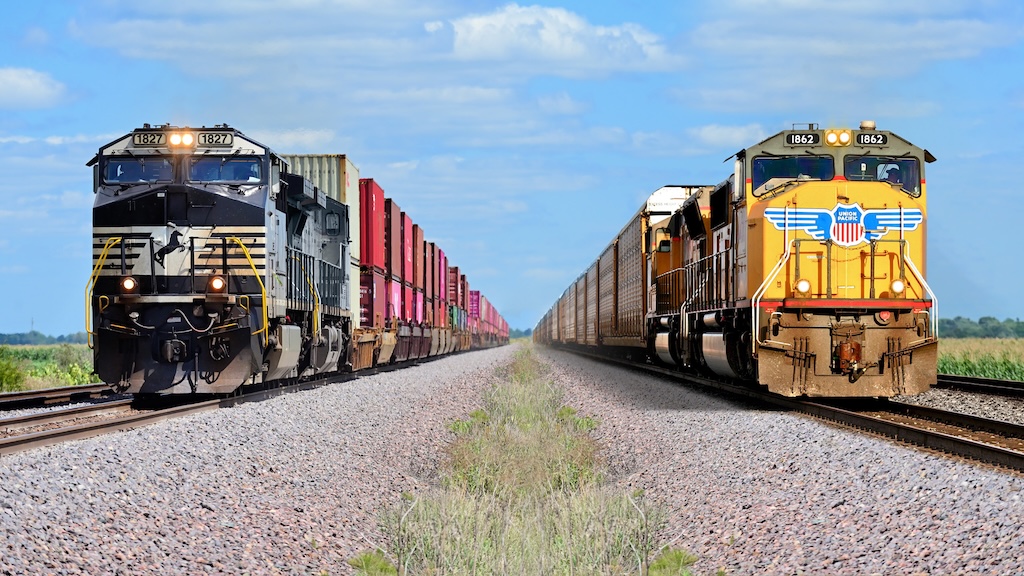
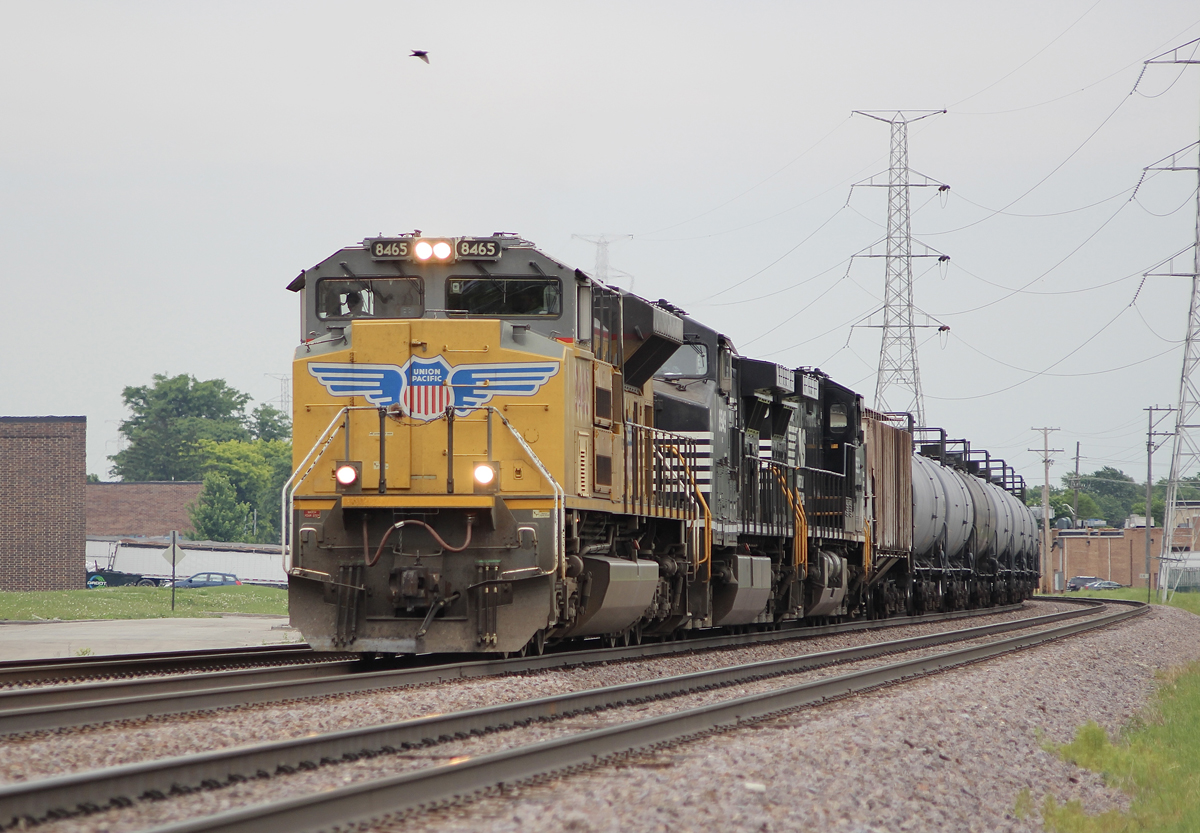
More than 60 trade associations have told federal regulators that they fear that Union Pacific’s proposed $85 billion acquisition of Norfolk Southern will raise rates, hurt service, and put too much traffic under control of a single railroad.
“History has shown that increased rail consolidation leads to fewer choices, higher transportation costs, service disruptions, and reduced economic competitiveness,” the associations said in their Nov. 24 letter to the Surface Transportation Board.
The groups urged the STB to give the merger a thorough review. The railroads have yet to file their merger application with the STB, but expect to do so in early December.
“Given the potential for widespread economic harm, it is essential that the Surface Transportation Board proceed with great care,” the groups wrote. “The creation of a transcontinental railroad must not come at the expense of competition, service reliability, or the broader health of the U.S. supply chain.”
| | Editor's Note: The railroad barons speak of “efficiency” the way a miser speaks of generosity.. loudly, and only when it fattens his own purse. They promise that a transcontinental empire will quicken the nation’s commerce, yet the only thing that has ever moved swiftly under their watch is the consolidation of power at the expense of the folks who make the wheels turn. Every merger in living memory has been sold as progress and delivered as scarcity: fewer jobs, fewer crews, fewer hands to shoulder the nation’s freight. The shippers will see no miracle, the public no renaissance.. only greater distance between those who work and those who profit. Let the carriers call this a bold new era; workers know it for what it is, another tightening of the screws under the familiar banner of “productivity.” And until labor stands as a counterweight to this ceaseless appetite for control, the railroads will continue to run on promises while the people are left waiting at the station. | |
|
Freight Waves / November 25th
The biggest U.S. railroads have a good thing going, why mess it all up with a disruptive mega-merger unlikely to benefit shippers or carriers?
That’s the view of BNSF Railway, western rival to Union Pacific which has agreed to acquire Norfolk Southern in an historic deal that if approved would create the first freight-only transcontinental railroad.
UP has pitched the consolidation as way to speed up the movement of freight without the delays or expense of hand-offs between railroads through congested hubs such as Chicago or New Orleans. The Omaha-based carrier claims that a streamlined coast-to-coast railroad will grow the business as shippers leverage reduced costs and improved productivity.
| |
| Editor's Note: The carriers and their chosen partners speak of “guarantees” the way corporations always do in a merger season.. as promises written in disappearing ink. Every agreement announced with fanfare is still bounded by the same logic that has gutted shops, hollowed crafts, and stretched the remaining workers thin enough to see daylight through. Truly not doubting the sincerity of the rank-and-file Boilermakers, nor the hope that any pact might spare them from the worst, but history teaches us that rail labor’s security is safest in the hands of labor itself, not in the ambitions of a consolidating empire. The companies call these commitments a foundation for a “resilient future,” yet resilience has too often meant little more than labor absorbing the shock while management takes the credit. Let’s be clear: a merger blessed with promises is still a merger poised to concentrate power, streamline away livelihoods, and call it progress. Until workers hold real leverage.. not press-release assurances, these deals remain less a shield than a reminder of how far we still have to go. | |
|
Trains Magazine / November 24th
Union Pacific and the International Brotherhood of Boilermakers have reached an agreement guaranteeing job security for union members if the UP-Norfolk Southern merger is approved, the fourth such agreement involving the railroad. It will cover current UP and NS workers at the time a merger occurs.
“The Boilermakers union looks forward to continued collaboration with Union Pacific and Norfolk Southern as this merger advances,” Timothy Simmons, the union president, said in a press release. “We believe the commitments already in place — and the shared understanding reflected in our agreement — lay the groundwork for a stronger, more resilient and more opportunity-rich future for every union Boilermaker serving the railroad industry.”
Previously, the International Association of Sheet Metal, Air, Rail and Transportation Workers-Transportation Division; the National Conference of Firemen and Oilers; and Brotherhood of Railway Carmen had reached similar agreements.
| |
| Editor's Note: When a railroad launches a website to “keep competition on track,” it usually means the real battle is happening off it. CN’s polished concern for shippers and the public lands neatly alongside every other corporate sermon delivered when empires start staking their claims. The truth is simpler: each carrier is defending its place in a shrinking arena where mergers promise efficiency for the boardroom and uncertainty for everyone else. Workers, communities, and customers are invited to “participate,” but only within the boundaries drawn for them. And until labor’s voice carries the same weight as these corporate campaigns, the only thing truly being monitored is how far consolidation can advance before the public notices. | |
|
RT&S / November 19th
The CN webpage devoted to comment about UP+NS leaves one big question unanswered.
The expected reactions occurred after the proposed merger of Union Pacific and Norfolk Southern was announced. The merger is generally opposed by two Class I roads along with shippers, shipper advocacy groups, labor organizations and some rail passenger interests. The opposition of these groups is clearly stated on their websites and in public statements.
Canadian National (CN) also has a web page devoted to the merger, entitled “Keeping Competition On Track.” On this page, CN messages three points: customer voices should be heard; the merger will have far-reaching implications; CN is closely monitoring the case. The webpage provides several links to the Surface Transportation Board website so users can obtain assorted information about the agency and its decisions, and also offers templates for letters if one wants to submit comments or “participate” or offer a “formal pleading.”
| |
| Editor's Note: It is curious to see the high and mighty dividing up over this issue. Shippers, rail carriers, and pro-business politicians, officials, and pundits all have a variety of perspectives on the question of the UP-NS merger. As opposition seems to be building and diversifying, it is more important than ever that the rail unions join the fight and throw their weight - for all its worth - into opposing the merger. For those unions who have come out in favor, it is not too late to change your tune. This merger is not good for workers. See the RWU and TWU position statements from this past summer. | |
Trains Magazine / November 21st
Rail industry officials focused on only three topics during the opening day of the RailTrends conference: Merger, merger, and merger.
Union Pacific’s proposed $85 billion acquisition of Norfolk Southern dominated conversations and presentations on Thursday. Can the plan to create a transcontinental railroad win regulatory approval? Can it lead to volume growth in an industry that has seen little of it since 2014? Will it force other Class I railroads to merge — or can interline partnerships be an effective competitive response to a railroad that will handle nearly half of all U.S. rail freight volume?
Shipper associations have argued that the merger will reduce rail competition and raise rates. But Adriene Bailey, a partner at the Oliver Wyman consulting firm, says Surface Transportation Board waybill data disputes this.
| | Editor's Note: One of the carriers that this investment group has purchased is the Wheeling & Lake Erie. The train and engine workers on that carrier are organized together into a single union - BLET #292 - which was extremely helpful in waging their protracted fight with the carrier to maintain the two-person crew on every train. They won. Their victory was every rail worker's victory, especially those in T&E service. Their hard-fought contract that preserved the two-person crew will be up for negotiation in July of 2026. Will this new corporate owner re-launch the long running effort for the single person crew on this property? If so, RWU stand s ready to assist these heroic workers in any way we can. Their fight is out fight! | |
Surface Transportation Board / November 26th
The Surface Transportation Board today announced it has granted authority for Fortress Investment Group LLC (Fortress) to acquire control of Wheeling & Lake Erie Railway Company (W&LE) and Akron Barberton Cluster Railway Company (ABC). The acquisition will add to Fortress’s existing portfolio of six Class III rail carriers. W&LE, a Class II carrier, operates over approximately 982 miles of track in Ohio, Pennsylvania, West Virginia, and Maryland. ABC is a Class III carrier that operates over approximately 84 miles of track in the vicinity of Akron, Ohio.
The Board’s decision follows a thorough review of the petition for exemption filed by Fortress on August 28, 2025. In its filings, Fortress explains that the transaction will enable W&LE and ABC to benefit from the shortline railroad experience and financial strength of Fortress’s other holdings. Fortress also asserts that the transaction will not lead to higher rates or reduced service and that W&LE and ABC will continue to provide freight rail service over their respective lines. W&LE and a carrier already controlled by Fortress, Union Railroad Company, LLC (URR), share one common customer, and that customer filed a statement in support of the transaction. There were no filings in opposition to the transaction.
| | Editor's Note: Great to see these modern high-horsepower locomotives - built by union labor at the Wabtec plant in Erie, PA - being built and ready for service ... in Australia. Why not here in the US of A? The dynamic braking is "regenerative" meaning everytime the locomotive brakes going downgrade, slows and stops, electricity is generated to assist in the battery power replenishment. With standard dynamic braking on most all locomotives in service in North America - all that electricity is dissipated as heat into the atmosphere, in effect wasted. It is time to start building these new locomotives for mainline freight service in North America, as a first step toward eventual catenary electrification of the major trunk lines on the continent. Then the railroads' huge superiority over all other forms of transport will be recognized, and a massive rail renaissance will commence. | |
Electrive / November 27th
The battery-electric locomotives (BELs) in question have been purpose-built for the mining company BHP, for use by its mines in western Australia.
The BELs were built by Wabtec, a Pittsburgh-based locomotive, freight & rail company, and have been designed specifically for the region’s ‘extreme heat and demanding conditions’. In terms of spec, both locomotives feature 7 MWh battery systems and regenerative braking, which BHP states will capture energy during downhill braking.
Once the BELs are safety commissioned, they will be trialled under real-world conditions on the iron ore routes before entering regular operation.
Peter Thomas, Wabtec Regional SVP for ANZ & SEA, said: “The arrival of Australia’s first battery-electric locomotives marks a significant milestone for heavy-haul rail innovation in the Pilbara. […] These FLXDrive locomotives are purpose-built to perform in one of the world’s most demanding environments, combining advanced battery technology and regenerative braking to deliver high efficiency and lower emissions.”
| | Editor's Note: Rail carriers - especially Class Ones - are fond of explaining away service failures due to "acts of God"; e.g., harsh weather conditions, bumper crops, unexpected events, etc. For companies that have operated for well over a century - having experienced floods, blizzards, tornadoes, washouts, heatwaves, mudslides, avalanches and more, one might expect that the rail carriers would have made contingencies in order to be prepared for really what are in effect, routine events when looked at in a historical context. Nope. And so-called Precision Scheduled Railroading (PSR) only made things worse, as maintenance, repair and train crews were cut to the bone to save money and bump up stock prices, the carriers simply gamble on prime operating conditions. And when "an act of God" does take place, well, tough luck to the shippers. Since the modern Class Ones are in effect a monopoly, the shipper is generally S.O.L. | |
Railway Supply / November 28th
CN Rail grain delays have resulted in the railway being ordered to pay more than $23 million in damages after it failed to move grain bound for British Columbia’s west coast ports during a season when a bumper crop coincided with severe winter weather, as reported by Vancouver Is Awesome.
In a decision released on Nov. 25, Federal Justice Alan Diner held the national railway liable to the Louis Dreyfus Company, a global “farm to fork” agribusiness that ships grain grown in central Canada to export terminals in B.C. The ruling turns what had been a long-running dispute into a CN Rail $23M grain delay ruling that grain shippers will view in the context of service obligations.
At the centre of the Louis Dreyfus vs CN Rail grain case were shipments destined for major export terminals in the Vancouver area and Prince Rupert in the 2013–2014 crop year, when farmers harvested the largest crop in Canadian history. CN argued it had prepared for the surge by pre-positioning rail cars and at one point claimed it was moving 5,000 cars a week across Western Canada.
| | Editor's Note: Join our friends at Solutionary Rail for this fascinating look at the history of ownership of the American railroads and how we have come to the place we are today, good, bad and ugly. | |
Solutionary Rail / November 27th
Rail systems around the world are mostly owned and operated by the public. But the U.S. has only ever flirted with public ownership, and mostly in moments where this seemed like the only way to preserve a functional railroad system. Instead, for almost a century, we pursued a model of regulating corporate railroads to fulfill their public purpose while sustaining the revenue needed to keep them afloat. Meeting both of these objectives proved to be a balancing act which took decades to achieve, by which time it was already coming undone, thanks to massive public investments in competing modes of transportation. While it lasted, however, this system fueled the rise of what was, at the time, the largest middle class ever known.
In Episodes 2 and 3, we focused on how the public responded to the partial collapse of this system in 1970 by creating Amtrak, a publicly-owned passenger railroad which relieved railroad corporations of their costly obligation to move people. We also discussed how Amtrak was nonetheless tasked with making a profit on this money-losing service, forcing it to eviscerate the nation’s passenger rail system in pursuit of that goal.
In this episode, we retrace this history from the freight rail side of things, showing how our refusal to take full public responsibility for this critical infrastructure, even when circumstances seemed to cry out for it, led us on a wild goose chase in search of another path to stability.
| | Editor's Note: The carriers promise a transcontinental renaissance, yet their own analysts can barely locate the pulse of the very traffic they claim will surge. Intermodal has stumbled for a decade, not from lack of mergers but from lack of stewardship, and no consolidation will substitute for the hard work of rebuilding what’s been neglected. A railroad that cannot grow under present conditions will not suddenly blossom because its map got bigger. These forecasts of “flat to down” are less prophecy than indictment: proof that the industry’s crises lie in its priorities, not its size. And until labor, shippers, and the public insist on a rail system built for service rather than spectacle, we’ll keep hearing grand promises while the numbers tell a quieter, truer story. | |
|
Freight Waves / November 21st
While the prospect of the first transcontinental railroad has created rare buzz in a staid business, analysts questioned whether Union Pacific and Norfolk Southern can produce the kind of growth in freight traffic they say an historic merger would bring.
“Over the past 10 years intermodal freight has underperformed versus benchmarks,” said consultant Larry Gross, during a panel discussion at the RailTrends conference. “This includes gross domestic product, long-haul trucking and containerized imports. Unless something changes, we’re not going to see growth or recovery.”
Gross said a re-opening of the Red Sea shipping route would be a headwind for intermodal because more freight will be end up being routed to the East Coast, and intermodal share off the East Coast is much lower than off the West Coast. The federal crackdown on commercial driver licenses could shrink motor carrier capacity and raise rates that may push more freight to intermodal. “But international freight will continue to be under pressure and I see no increase in domestic truckloads, so for 2026 I am forecasting intermodal to be flat to down overall,” said Gross.
| |
| NEWS FROM AROUND THE LABOR MOVEMENT | | Each week, RWU includes a few articles about advances and developments in the larger labor movement that are of interest to railroad workers. Got an artcile to submit for possible inclusion next week? Email it along to raillabornews@gmail.com. Thank you! | | |
AFL-CIO
Dial 855-493-4407 to be connected with your representative or fill out the form on this page to receive a call.
It’s time to get it done for America’s workers.
Thanks to the hard work of working families, union members and our allies, our bipartisan bill to reverse President Trump’s union-busting executive order is getting a vote in Congress. That’s right: We’ve got the 218 signatures we need—Democrats AND Republicans—to force Congress to vote on the Protect America’s Workforce Act in the next few weeks.
| |
Halt The Harm Network / Event: December 8th
Collaboration is at the heart of real change. This conversation brings together truckers, environmental advocates, and public-health allies to explore how unity across sectors can strengthen both worker rights and environmental justice. Together, we’ll look at how shared struggles—on the road, at the job site, and in frontline communities—can become shared solutions. By bridging these movements, we can drive cleaner air, safer jobs, and a healthier planet for everyone.
What You’ll Learn
- How collaboration between labor, environmental, and community organizations advances both health and justice.
- Real examples of how truckers and environmentalists are working together and building mutual respect to address environmental and health issues impacting us all.
- The chance to build relationships and share insights with individuals working across environmental, health, and labor fields.
| | WEEKLY DERAILMENT DEPARTMENT | | Each Tuesday in this news bulletin, RWU does our best to present a picture of what has been happening over the course of the previous week in terms of derailments in North America, and investigation determinations of previous accidents. NOTE: This list is by no means comprehensive. Smaller and less consequential mishaps are generally not reported here. If the wreck results in injury or fatality, or is especially damaging/extreme, a full article will appear as a feature in the dozen or so rail articles above. Know of a train wreck? Please feel free to forward a link to raillabornews@gmail.com for possible inclusion next week. Thanks! |
| | | |