Rail & Labor News from RWU
| | Weekly Digest Number 39 - September 23, 2025 | | Welcome to the RWU Rail & Labor News! This news bulletin is produced and emailed out each Tuesday morning. We hope you find each week's news and information useful. If so, please share with co-workers, friends, and colleagues. If you like, you can sign them up to get all the news from RWU HERE. Or forward them the link. Got a hot tip? Please forward the article and a link to raillabornews@gmail.com. Note: If you read over this news bulletin each week, you will be sure to never miss the important news of what is going on in the railroad world from a worker's perspective! | | THIS WEEK'S RAIL AND LABOR NEWS | | Editor's Note: Rail CEOs triumph when margins are fat, but what about the margin of safety for workers? For the past 15 years, execs have treated growth like a burden and profit like a god.. cut crews, shelve investments, starve intermodal, all in the name of lean numbers. But you can’t build strength on austerity. Rail labor knows that volume is what gives us power.. more traffic means more jobs, more maintenance, more leverage. What they call efficiency, we see as short-sighted greed. If railroads don’t invest in growth, service, and people, the track ends nowhere but in decline. | |
Freight Waves / September 16th
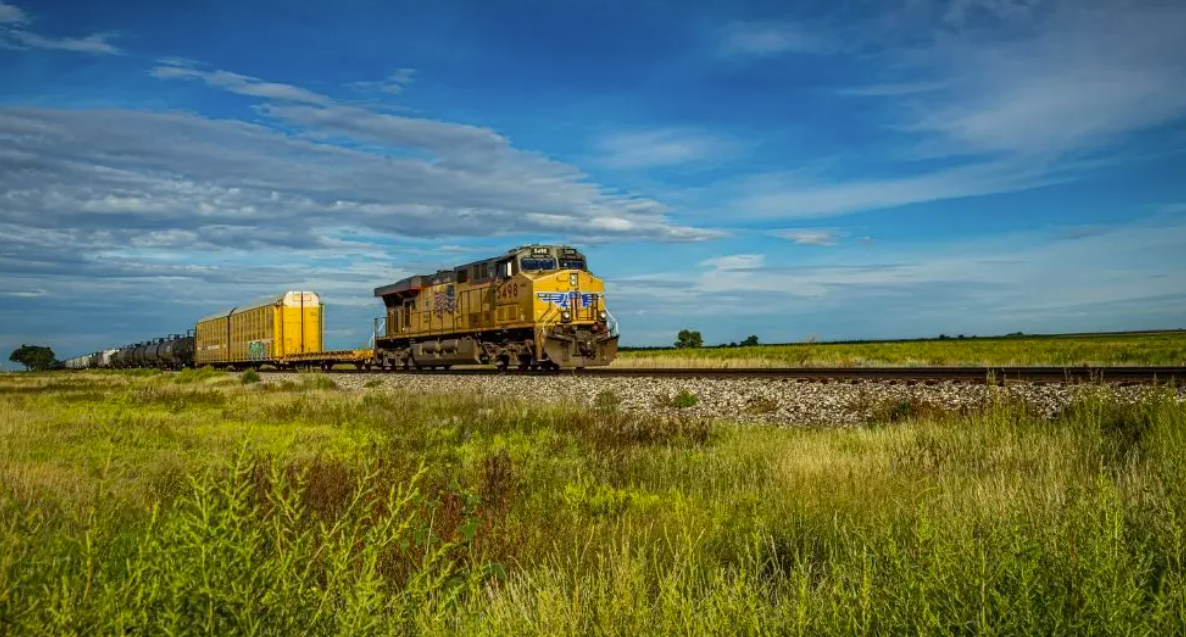
U.S. railroad traffic levels have been stagnant over the past 15 years because the Class I railroads were obsessed with profit margins while neglecting growth opportunities, CSX CEO Joe Hinrichs says.
Hinrichs, speaking at an investor conference last week, was asked why railroads have struggled to grow, even setting aside the long-term decline of coal traffic.
“Maybe it’s a little easier for me to opine on it because I wasn’t here for most of that time period,” Hinrichs says. The former Ford and GM executive came to the rail industry when he was named CSX’s CEO in September 2022.
“Let’s be honest. The last 10, 15 years, the main focus of the industry has been restructuring the business to get a lot more efficient and to create better margins, which in itself isn’t a bad thing,” Hinrichs says.
| | Editor's Note: While this is ostensibly good news, it is however ironic that never is it mentioned in the context of declining rail freight carloads in Colorado that the Union Pacific itself is at least partially responsible for the decline of rail in the state, including: the re-routing of all former through traffic via Wyoming; the closing of the Tennessee Pass mainline west from Pueblo; the implementation of "Precision Scheduled Railroading" (PSR) which emphasizes jettisoning carload traffic that does not make the low Operating Ratio (OR) grade; and the downgrading of the former Rio Grande Denver -Salt Lake City mainline and associated sidings. | |
Progressive Railroading / September 12th
Less than a decade ago, a number of communities in Colorado were gaining economic benefits from nearby coal mines and coal-fueled power plants.
But the state enacted laws requiring significant reductions in greenhouse-gas emissions, prompting many mines to close and many power plants to phase out coal and shift to lower-carbon fuel alternatives.
The drop-off in coal usage over the past several years in turn impacted freight-rail lines in parts of Colorado, significantly reducing traffic volume.
| | Editor's Note: For too long, we’ve bargained with an enemy disguised in a suit. A 9.5% raise over three years is a token handed out so that cost-cutting and overwork stay invisible. We’ve asked for fair wages, for respect, for workers’ dignity.. we’ve demanded 16% over four years because inflation didn’t stop while negotiations stalled. Now a PEB has been forced on them, not because management cares, but because workers made noise strong enough that the government could no longer ignore us. The cooling-off period is just that.. a pause, not peace. It’s time labor turns up the pressure, refuses the crumbs, and remembers our history: contracts are not gifts.. they’re battles, and every concession now shapes what’s next. | |
Progressive Railroading / September 16th
A coalition of five unions have requested the creation of a Presidential Emergency Board (PEB) to mediate the dispute between the Metropolitan Transportation Authority and the unionized MTA Long Island Rail Road employees.
The request of a PEB postpones a potential strike that would have started Sept. 18. A work stoppage would impact nearly 300,000 commuter-rail riders, CBS New York reported.
If the unions' request for a PEB is granted, the board would make recommendations in mid-October.
"If these unions wanted to put riders first, they would either settle or agree to binding arbitration. And if they don’t want to strike, they should say so — and finally show up to the negotiating table. This cynical delay serves no one," said John McCarthy, MTA's chief of policy and external relations, in a prepared statement.
|
|
High Speed Rail Alliance / September 12th
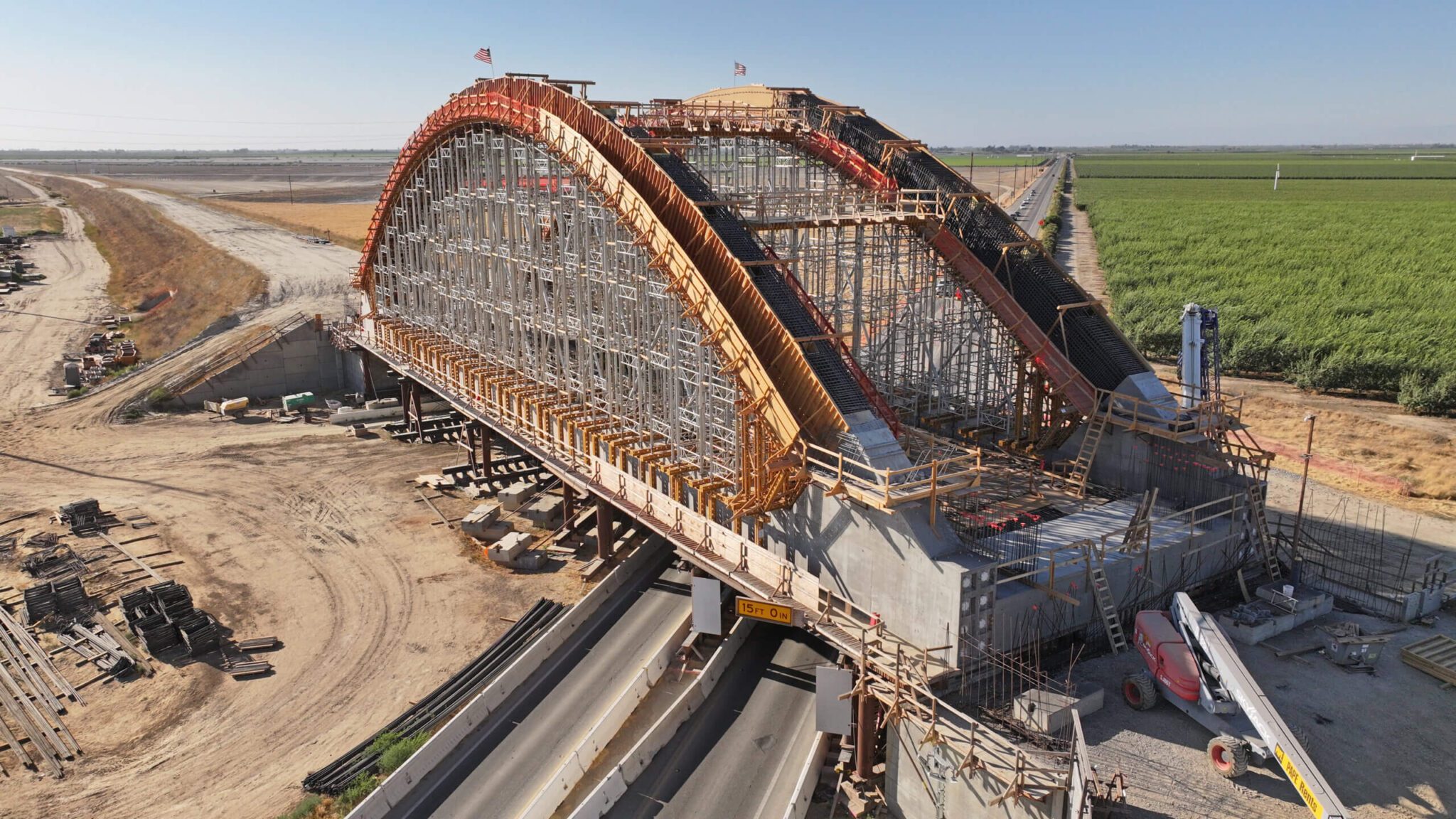
The California State Assembly has guaranteed $1 billion annually, through 2045, for the state’s high-speed line from San Francisco to Los Angeles. The move “demonstrates that Californians are standing up to the Trump Administration’s backward thinking obstruction and choosing instead to invest boldly the future,” according to the California High-Speed Rail Authority.
Last month, in a project update, the Authority cited uncertain funding as a primary source of delays and a challenge to the line’s completion. The guaranteed $1 billion in funding for 20 years—via a reauthorization of the state’s Cap-and-Invest program—helps resolve that uncertainty and will enable the Authority to attract private-sector investments and partnerships.
The Authority reports that 70 miles of guideway and 58 structures are complete on the 171 miles of line now under design or construction in the Central Valley. Additionally, all but 31 miles of the entire 494-mile line are environmentally cleared and construction ready.
| | Editor's Note: The author Bill Stephens is on the mark, when he concludes that, "the U.S. Class I railroads need a new game plan. Most railroad workers would surely agree. But just what would that game plan look like? We understand that Wall Street calls the shots, and that Wall Street "punishes" any attempt at real growth, which Stephens astutely notes requires investments — "more crews, more locomotives, more marketing and sales people — and those costs push up the almighty operating ratio in the short term..." So it would logically follow that the rail industry simply cannot come up with a new "game plan," as it is structurally and systemically precluded from doing so. The very nature of the privately owned rail industry mitigates against the long-term growth that we - rail workers, shippers, passengers, and the nation - all need. The solution, the new game plan if you will, can be found in public ownership of the railroads along the lines of the "Plumb Plan" of the early 20th century. See publicrailnow.org and the RWU Resolution in Support of Public Ownership. | |
Trains Magazine / September 18th
Back in the day when railroads were squeezed under the thumb of the Interstate Commerce Commission and saddled with money-losing passenger service and dying branch lines, Class I railroads went through merger after merger to fend off financial collapse.
The goal of those combinations was to eliminate duplicate routes, yards, shops, and headquarters in the hopes of remaining in the black. They were mergers born from failure. And they worked, for a time.
Now along comes Union Pacific decades later with its proposed $85 billion acquisition of Norfolk Southern. No one would call either railroad a failure.
UP was the most profitable railroad last year, hauling in $24.3 billion in revenue, $9.7 billion in operating income, and returning $4.7 billion to shareholders through a combination of dividends and share buybacks. If anything, it’s an embarrassment of riches under CEO Jim Vena, who has lit a fire under a long-slumbering franchise.
| |
National Rail Crossing Conference / Event on April 6-9, 2026
The National Highway-Rail Grade Crossing Safety Conference provides a collaborative forum for exchanging knowledge, sharing best practices, and promoting engineering design standards aimed at enhancing railroad grade crossing safety. Participants include representatives from state transportation agencies, federal organizations, passenger rail & freight railroads, and accredited transportation safety associations.
This workshop fosters interactive discussions to improve coordination and communication efforts between government agencies and the railroads. It also offers a valuable opportunity to share real-life experiences, addresses challenges, highlights lessons learned, and explores human-factor considerations related to all at-grade railway crossings.
| | Editor's Note: With every passing year, more and more environmental activists are coming to discover the inherent efficiencies of rail transportation. Rail has numerous environmental advantages over all other modes of transport. Much of the world has begun to figure this out. It's time for North America to forge ahead with a rail renaissance - both freight and passenger. Rail workers and the unions must seek out alliances and work with these people to make it happen! | |
Nature / September 16th
What if there were a technology that could help to reduce greenhouse-gas emissions, air pollution and environmental degradation, while improving health, reducing social inequality and boosting economic growth? There is, and this month it turns 200. The opening of the Stockton and Darlington Railway in northeast England on 27 September 1825 is generally considered to be the birth of the modern railway — an event that set in motion a revolution in human mobility and social organization.
Initially, the railways enjoyed breakneck expansion, but since the mid-twentieth century, railway development in most countries has hit the buffers, and been overtaken by growth in road and air travel. A study by the Paris-based International Transport Forum (ITF) of 51 mainly high- income countries found that rail’s share of freight transport had fallen from 38% in 1980 to 24% in 2017 (see go.nature.com/3vpckhd). In the European Union in 2022, just 8.4% of passenger kilometres were travelled by rail, compared with 9% by air and 73% by car.
| |
Solutionary Rail / September 20th
Wow, we interact with a lot of activists and advocates. What’s fascinating about this conversation is that amongst all of our guests thus far—Byron Porter is uniquely industry-adjacent. He brings together history, regulatory knowledge, and experience as a rail shipper and equipment provider for the railroad industry. You are gonna learn a ton from this incredible conversation—and that knowledge is gonna be very useful in the coming Endgame fight over the biggest rail merger in history.
We recorded this prior to the illegal firing of Robert Primus, so that won’t come up. The limits of a regulatory regime ill-prepared to counter the political influence that Union Pacific and the Wall Street profiteers wield is even more apparent today than when we recorded this.
The Wall Street profiteers are getting ready to stuff their pockets with winnings that could cost the country its last chance to put U.S. railroads back on track. Despite not being an activist, Byron is calling for a regulatory and business model revolution, not an evolution. And whether his or some other version of that future wins out—or whether this disastrous merger gets a mere wink and a nod—depends on all of us. What we all do next matters.
| |
GoFundMe
Zsuzsa Gyenes was impacted by the Norfolk Southern train derailment which spilled vinyl chloride throughout East Palestine, Ohio. In the days after the derailment, Norfolk Southern decided to vent and burn the chemical to get trains back up and running which led to a massive black plume creating air quality, soil, water and health consequences. Zsuzsa and her son have been struggling to make ends meet while battling illness. She was recently kicked out of her apartment by her landlord. Her life possessions put into garbage bags and thrown with her kittens in a garage. She now has her belongings but had to pay for several months of storage while she is currently homeless and living in a hotel. We are raising funds to get her back on her feet. Please consider a donation to our dear friend and warrior for justice, Zsuzsa Gyenes.
| | Editor's Note: They sneer at California’s high-speed rail because it threatens to succeed. Highways swallow billions and lives without a whisper, but rail is branded a boondoggle before the first train runs. The truth is simple.. success would expose the racket of oil and asphalt. Rail labor knows who builds and operates the future, and that’s what they fear.. workers proving the public has always had another way forward. | |
High Speed Rail Alliance / September 19th
Texas and California, America’s biggest states by population, both have massive infrastructure projects underway. You know something about California’s 500-mile high-speed line from San Francisco to Los Angeles, probably. But you likely haven’t heard about the North Houston Highway Improvement Project (NHHIP), which is reconstructing I-45N and segments of connecting freeways in Houston.
It’s interesting to compare the two projects.
California HSR is a popular punching bag for critics of both high-speed trains and California. Columnists and media outlets obsess over its costs. In a recent essay in Forbes, for example, Steve Forbes summed up years of attacks by calling it a “disgraceful boondoggle” and writing that “it’s long past time to derail this fiscal fiasco.”
| | Editor's Note: The UP-NS merger is nothing but robbery in daylight. They call it efficiency, but we know the truth.. fewer jobs, higher rates, and service left in ruins. Every consolidation has lined the pockets of the few and bled the many. Rail labor will not mistake monopoly for progress.. the strength of this industry lives with the workers, not the parasites who feed on it. | |
Agriculture of America / September 16th
The Rail Customer Coalition (RCC), which represents manufacturing, agriculture, energy, and other vital industries across the U.S. economy, sent a letter today to the Surface Transportation Board (STB) warning that Union Pacific’s proposed acquisition of Norfolk Southern could erode market competition across the U.S. freight rail network, driving up costs and exacerbating chronic service failures.
The two railroads filed a notice of intent regarding a proposed merger with the Board on July 30, and plan to submit a formal application for regulatory approval by January 2026.
The RCC, whose members collectively support more than 7 million American jobs and contribute over $4.8 trillion to the U.S. economy, cautioned that the merger could erode service options in an industry already dominated by just a few railroads controlling more than 90% of freight traffic.
| | Editor's Note: For 25 years, Canada’s safety board has demanded fail-safe train control, and for 25 years the carriers and regulators have stalled. The wreck in Montreal was not the fault of workers, but of an industry that gambles with lives rather than spend on safeguards. Automatic train control isn’t a luxury, it’s the floor of basic safety. Every delay is a choice to risk more blood for the balance sheet. | |
Progressive Railroading / September 17th
The Transportation Safety Board of Canada (TSB) yesterday released its investigation report of the Nov. 21, 2023, collision between a CN train and an Exo commuter train at the St-Leonard-Montreal-Nord station in Montreal.
The investigation found that the CN train crew had passed a restricting signal requiring them to limit their speed and be prepared to stop. However, believing the track ahead was clear, the train was accelerated. By the time the stationary commuter train became visible, it was too late to avoid the collision and subsequent derailment, TSB officials said in a press release.
The collision underscores the "urgent need" for Canada's railway to adopt physical fail-safe train controls that can automatically slow or stop trains when crews miss or misinterpret signal indications, TSB officials said.
| | NEWS FROM AROUND THE LABOR MOVEMENT | | Each week, RWU includes a few articles about advances and developments in the larger labor movement that are of interest to railroad workers. Got an artcile to submit for possible inclusion next week? Email it along to raillabornews@gmail.com. Thank you! | |
Earth Justice
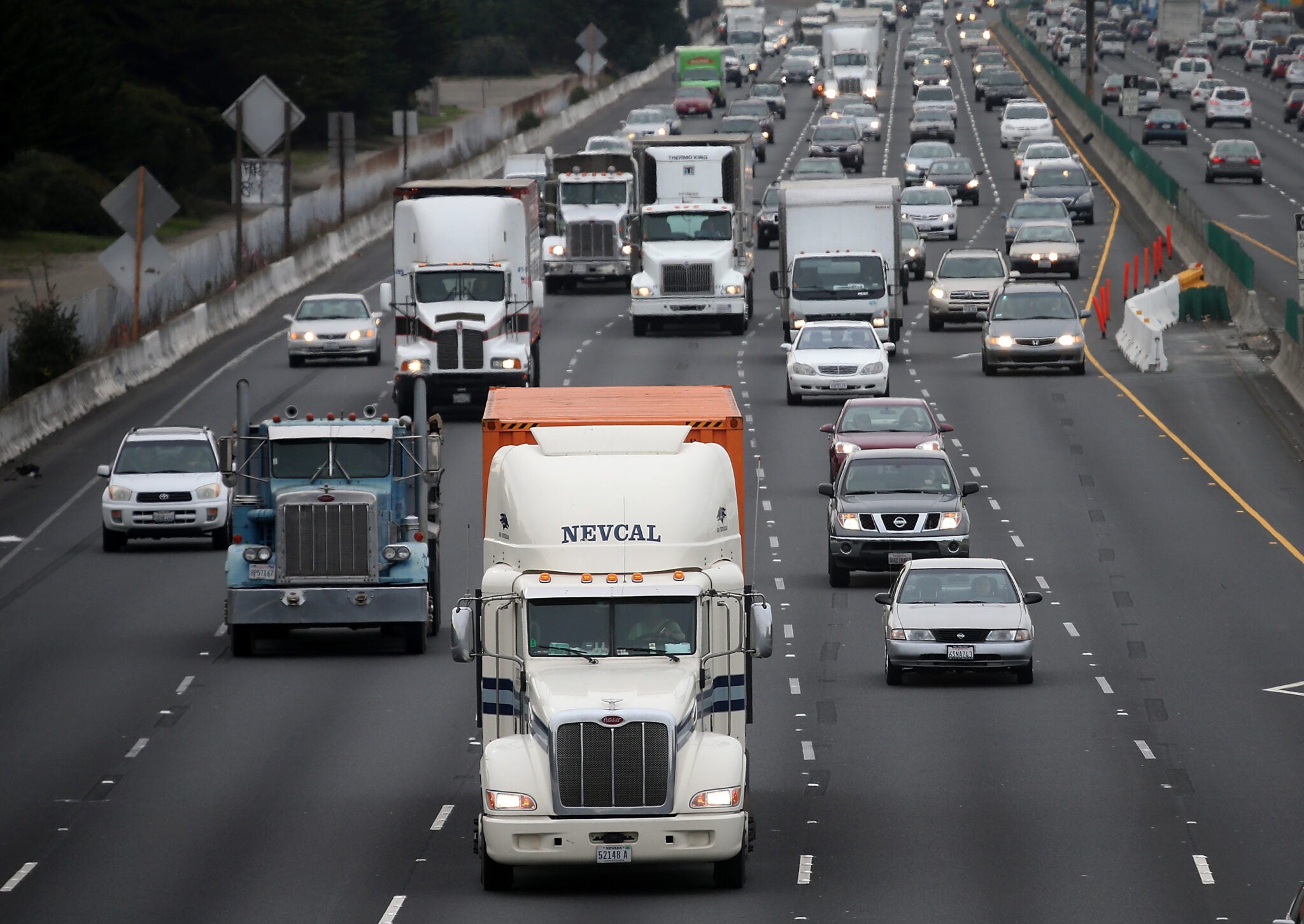
Every day, oil and gas companies haul potentially hazardous materials from oilfields onto our highways without following adequate safety rules, thanks to lack of federal enforcement.
This is putting truckers and communities at greater risk of catastrophe.
Join Earthjustice and our client, Truckers Movement for Justice, to demand that Department of Transportation (DOT) agencies enforce existing hazardous material rules when it comes to hauling oilfield waste.
| |
Labor Notes / Event October 2nd
The Labor Management Reporting and Disclosure Act provides union members a bill of rights, requires unions to publicly disclose certain details about their governance, and regulates union elections and trusteeships of local unions by international unions.
Learn how to use the law to build rank-and-file power in your union, and how to defend that power once you’ve built it!
This workshop will be facilitated by Will Bloom, labor lawyer, Despres, Schwartz, and Geoghegan.
When:Thursday, October 2
Time: 8 p.m. to 9:30 p.m. Eastern (5 p.m. to 6:30 p.m. Pacific).
Where:This is an online workshop and will be held via Zoom.
Cost: $10. No one will be turned away for lack of funds.
| | |
The Labor Force
In March, Trump signed an executive order attempting to strip nearly one million federal workers of their right to collectively bargain. According to the AFL-CIO, the order was the single biggest act of union-busting in American history.
We’re already feeling the effects of Trump’s attacks on the federal workforce—missed Social Security checks, long lines at the VA, garbage piling up in parks, grocery items going uninspected, and more.
Americans need to know that they can count on the competent public servants we have trusted for decades. But Trump wants to stack the government with unqualified political loyalists.
That’s why Democratic leaders in the House of Representatives have launched a discharge petition to force a vote on the Protect America’s Workforce Act.
The bill would overturn Trump’s executive order and restore collective bargaining rights to federal workers. A discharge petition would allow the bill to bypass committees and bring a bill directly to the floor for a vote.
| | | | |