Rail & Labor News from RWU
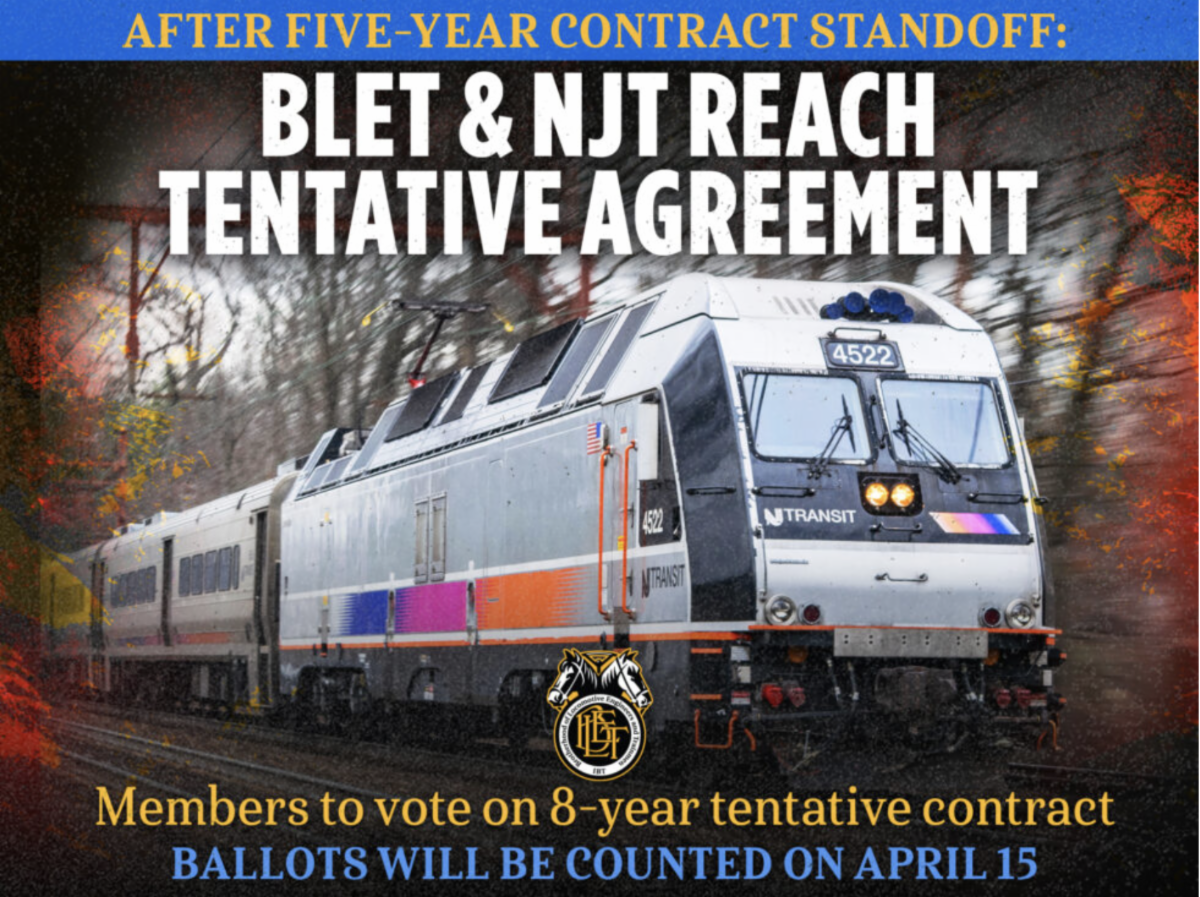
| | Weekly Digest Number 12 - March 18th, 2025 | | Welcome to the RWU Rail & Labor News! This news bulletin is produced and emailed out each Tuesday morning. We hope you find each week's news and information useful. If so, please share with co-workers, friends, and colleagues. If you like, you can sign them up to get all the news from RWU HERE. Or forward them the link. Got a hot tip? Please forward the article and a link to raillabornews@gmail.com. Note: If you read over this news bulletin each week, you will be sure to never miss the important news of what is going on in the railroad world from a worker's perspective! | | THIS WEEK'S RAIL AND LABOR NEWS | | Editor's Note: After five years of drawn-out negotiations, federal mediation, and two Presidential Emergency Boards, NJ Transit’s locomotive engineers have a tentative deal. Eight years’ worth of wages, bargained for in the shadow of an industry that fights tooth and nail to keep workers underpaid. If ratified, it will narrow the pay gap—but let’s not mistake delayed justice for generosity. This contract wasn’t given; it was wrestled from a system that only moves when workers stand together and demand what’s theirs. | | |
Brotherhood of Locomotive Engineers & Trainmen / March 10th
Locomotive Engineers represented by the Brotherhood of Locomotive Engineers and Trainmen for NJ Transit have reached a tentative agreement on a new contract.
If the engineers ratify the contract and NJ Transit’s board approves it, it will end five years of contract talks that, at times, involve federal mediation and recommendations by two Presidential Emergency Boards.
The tentative 8-year contract governs about 500 BLET members and covers the period from 2020 through 2027. If ratified, the total wage package will narrow the pay gap between NJ Transit engineers and those at other commuter railroads.
| | Editor's Note: Elon Musk, billionaire oracle of the free market, took a cheap shot at Amtrak with no evidence—because why let facts get in the way of corporate propaganda? Amtrak, despite decades of underfunding and sabotage-by-privatization schemes, is breaking ridership and revenue records. But the vultures still circle. Strip Amtrak of its public status, and freight railroads—already ruled by Wall Street—would lock passenger service out entirely. This isn’t about “efficiency” or “innovation.” It’s about gutting public infrastructure so a handful of investors can feast on the carcass. Privatization isn’t reform; it’s theft. | |
Jalopnik / March 13th
At a JPMorgan conference, Musk advised travelers visiting the country to stay away from Amtrak without any evidence.
Amtrak's response challenges Musk's comments. The railroad stated, "It is not clear what problem Amtrak privatization proposals are intended to solve." It added that it broke records in ridership and revenue over the 2024 fiscal year.
Privatization would make Amtrak's existing issues even worse. Freight railroads own the vast majority of the national rail network. If Amtrak was privatized, freight companies would no longer be legally required to allow Amtrak to operate on its tracks. It would quickly become far more expensive to run passenger trains on freight tracks.
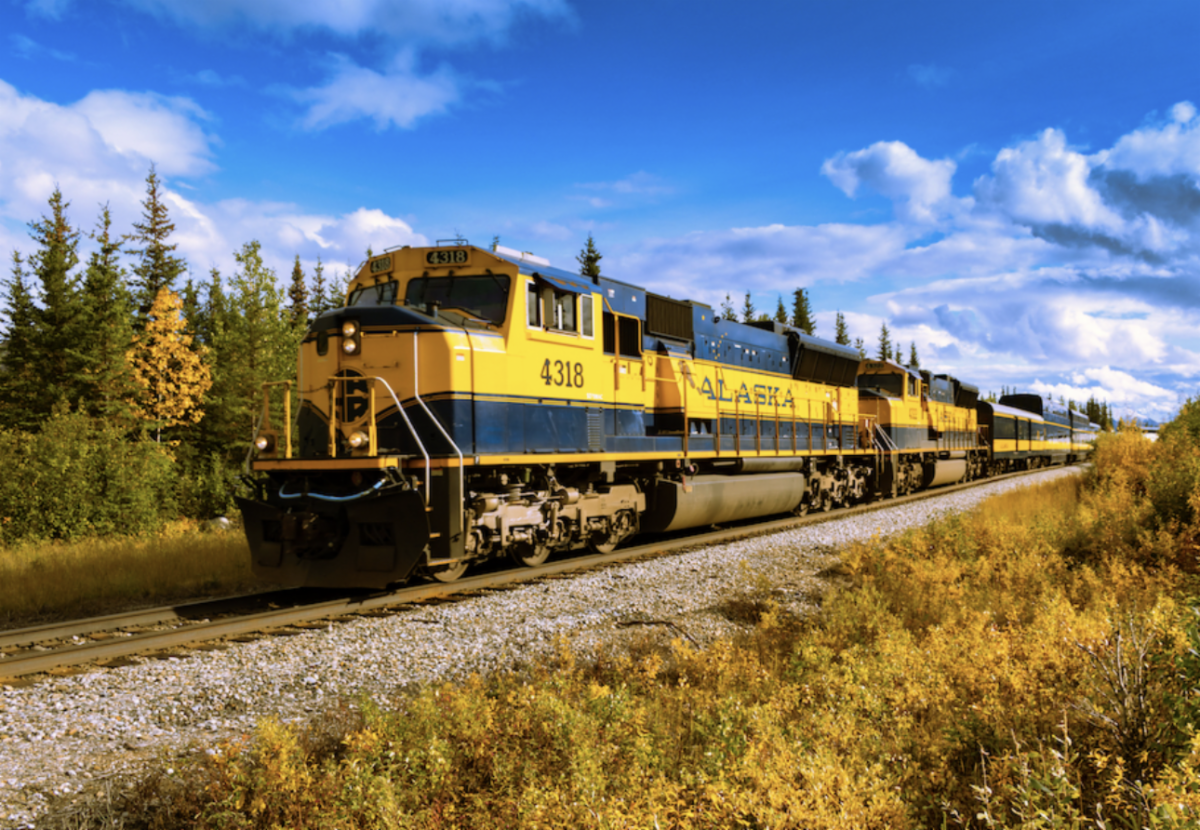
| | Editor's Note: Rep. Kevin McCabe wants to put the Alaska Railroad on the auction block—not because the law requires it, but because privatization is always the endgame for those who see public assets as cash cows for the few. Built with federal dollars and entrusted to the state in 1985, the railroad has served Alaskans for decades. Now, McCabe and his backers want to carve it up, sell it off, and call it progress. But we know how this story ends: higher costs, job cuts, and a railroad that serves profits instead of people. This isn’t reform—it’s a looting. | |
Trains Magazine / March 12th
An Alaska state legislator has reintroduced a bill that would require the state to sell the Alaska Railroad.
House Bill 120 was introduced late last month by Rep. Kevin McCabe (R-Big Lake). It would require the state’s governor to request proposals to purchase the railroad and related assets by June 15, 2026, with a sale to be finalized by Feb. 15, 2027. The railroad, completed by the federal government, was transferred to state ownership in 1985.
|
| Editor's Note: Donald Trump has nominated Robert Gleason, a former Pennsylvania GOP chair, to Amtrak’s board—a move that reminds us how political appointees often serve party loyalty before public good. While Gleason has supported rail expansion in Pennsylvania, the real question is whether he will fight for a strong, publicly funded Amtrak or bow to the privatization playbook that has long plagued passenger rail. If history is any guide, rail workers and riders should watch closely—because when corporate interests whisper in the ears of policymakers, it’s the public that gets left at the station. | |
Progressive Railroading / March 14th
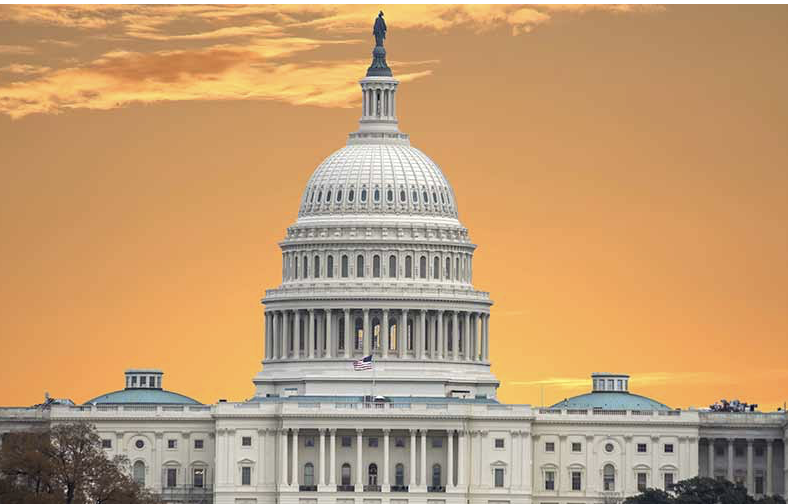
President Donald Trump earlier this week nominated Robert Gleason of Pennsylvania to serve a five-year term on Amtrak's board.
From 2006 to 2017, Gleason was the former chair of Pennsylvania's Republican Party. He has been an advocate for expanding passenger-rail service in Pennsylvania and supported a proposed project to expand Amtrak service between Harrisburg and Pittsburgh.
If approved by the U.S. Senate, Gleason would succeed Albert DiClemente, whose term on Amtrak's board has expired. Gleason's nomination has been referred to the Senate Committee on Commerce, Science and Transportation.
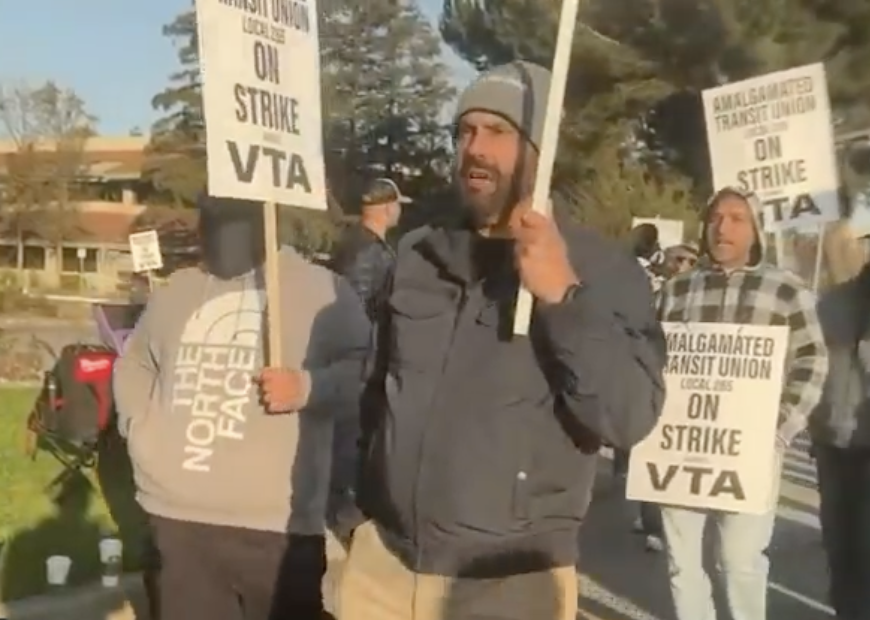
| | Editor's Note: Day two of the VTA strike, and management is already reaching for the legal hammer to break it. ATU Local 265 members are holding the line for fair wages and basic protections, but instead of negotiating in good faith, the transit authority is dragging them to court over a supposed “no strike” clause. Funny how contracts matter when workers stand up for themselves, but not when employers stall negotiations for months. The message is clear: bosses expect labor to sit down and take what they’re given. The workers’ response? Not this time. | |
ABC 7 News / March 11th
It's day two of a strike for VTA union employees from ATU Local 265. The two parties are not close to a deal; there's a 10% gap for wage increases and employees want other protections, including an arbitration agreement.
They maintain that they are not coming back until a deal is reached, but the transit authority announced they are taking legal action to force their hand. VTA filed a legal complaint against ATU Local 265. It alleges the union broke a "no strike" clause in their contract. ATU Local 265 President Raj Singh said earlier in the day the company is giving them mixed messages.
| | Editor's Note: Fifteen rail labor organizations are sounding the alarm: cutting Federal Railroad Administration staff isn’t just reckless—it’s dangerous. But in an era where deregulation is the gospel and corporate interests set the agenda, safety takes a back seat. Rail accidents remain a serious threat, yet the FRA—the agency tasked with enforcing rail safety—is on the chopping block. And who’s behind the cuts? None other than Elon Musk’s Department of Government Efficiency (DOGE), slashing jobs like a hedge fund gutting a company for parts. The message from rail labor is clear: fewer inspectors mean more derailments, more risk, and more workers left to clean up the mess. | |
Progressive Railroading / March 13th
Fifteen rail labor organizations expressed "deep concern" to U.S. Transportation Secretary Sean Duffy that sufficient staffing levels would not be maintained at the Federal Railroad Administration. Staffing cuts would have "devastating" safety consequences for rail workers and the general public.
"At a time when rail-related accidents continue to pose serious risks, any cuts to FRA personnel would undermine efforts to improve safety standards and enforcement," the unions wrote.
The unions' letter to Duffy was sent as presidential adviser Elon Musk and his Department of Government Efficiency (DOGE) continue to purge thousands of federal employees at agencies throughout the U.S. government.
| | Editor's Note: Canada has its fourth transport minister in less than two years—this time, Chrystia Freeland, a high-profile politician once considered a prime ministerial contender. But with a federal election looming, how much power will she actually wield before another political shuffle? Rail workers and industry leaders alike should take note: stability in transportation policy is hard to come by when ministers cycle through like passengers on a commuter train. If Freeland wants to make an impact, she’ll have to move fast—before the next election sends her portfolio back into limbo. | |
Trains Magazine / March 14th
Chrystia Freeland — who had been a candidate to become prime minister — is Canada’s new minister of transport.
Freeland is part of the 24-member cabinet of new Prime Minister Mark Carney sworn in today. Anita Anand, who had been transport minister, is now minister of innovation, science, and industry.
Freeland becomes the fourth transport minister in less than 21 months. She too, could have a relatively short term in the job. Canada is required to have a new federal election no later than Oct. 20, but Carney had indicated during his campaign for the party leadership that he would call an early election.
| | Editor's Note: Union Pacific is walking away from a 150-year-old jobs pact in Palestine, Texas, leaving workers and a community in the lurch—all because the courts gave them the green light to do so. For decades, Anderson County fought to hold UP to its word, but in the end, corporate interests prevailed over promises made. Now, dozens of jobs vanish, another rail town is hollowed out, and Wall Street pats itself on the back for cutting “inefficiencies.” Railroads were once the backbone of these communities—now, they discard them like yesterday’s cargo. | |
Chron / March 12th
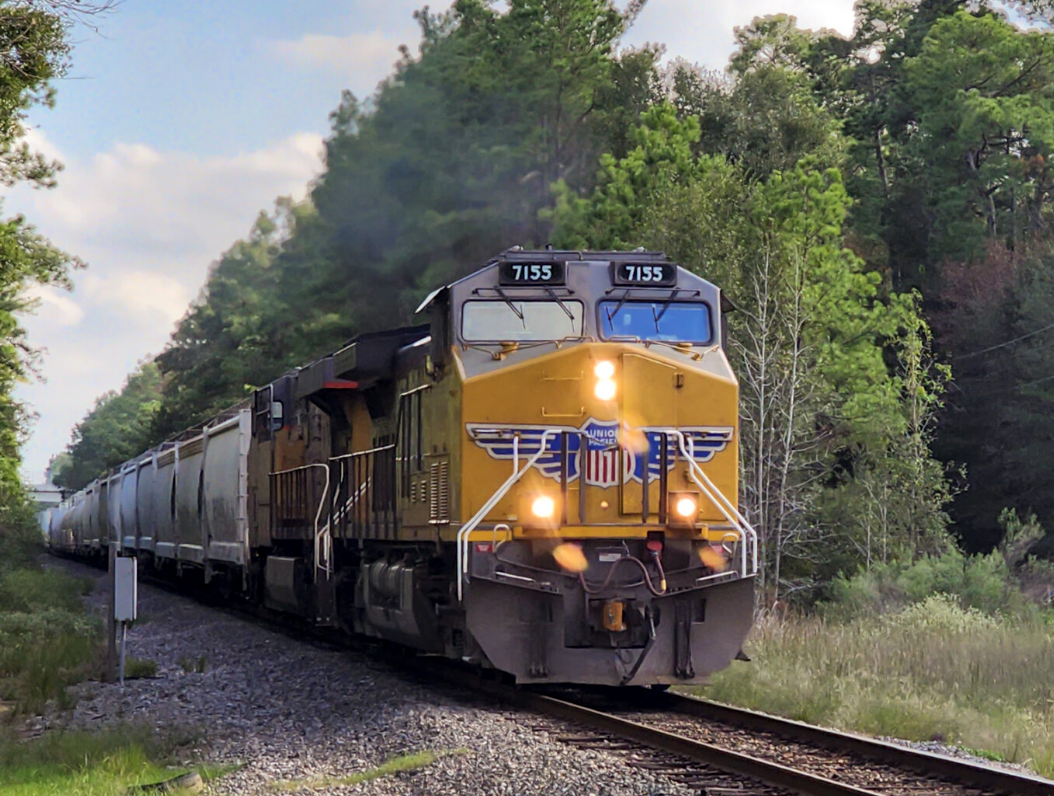
Union Pacific Railroad is shutting down its operations in Palestine, Texas after abandoning a 19th-century jobs pact, impacting dozens of jobs in the process.
The decision follows a Texas Supreme Court ruling declining to rehear a case, in which Anderson County and Union Pacific have clashed for decades over the railroad company's obligations to maintain operations in the area.
The long-standing legal battle over the railroad company's shop stems from an 1872 agreement that kept operations planted in the East Texas town.
| |
Anna Scott Farrell/Law 360 / March 12th
Retired railroad workers were incorrectly directed by the federal retirement board overseeing their funds to report millions of dollars in nontaxable benefits as taxable income in a scheme to line the board's pockets, a retiree said in a proposed class action in Texas federal court.
In a complaint Tuesday against the U.S. Railroad Retirement Board, James Logan said he contributed nearly $100,000 after taxes into a retirement fund over 47 years of service and that, for at least the last seven years, the board told him the money was taxable when it was not.
Additionally, the board, an independent federal agency, kept the unfairly collected taxes for itself, Logan said.
| | NEWS FROM AROUND THE LABOR MOVEMENT | | Each week, RWU includes a few articles about advances and developments in the larger labor movement that are of interest to railroad workers. Got an artcile to submit for possible inclusion next week? Email it along to raillabornews@gmail.com. Thank you! | |
AFGE Insider / March 10th
Transportation Security Officers (TSOs) in 2011 voted to join AFGE to improve their working conditions so that they could focus on protecting the flying public.
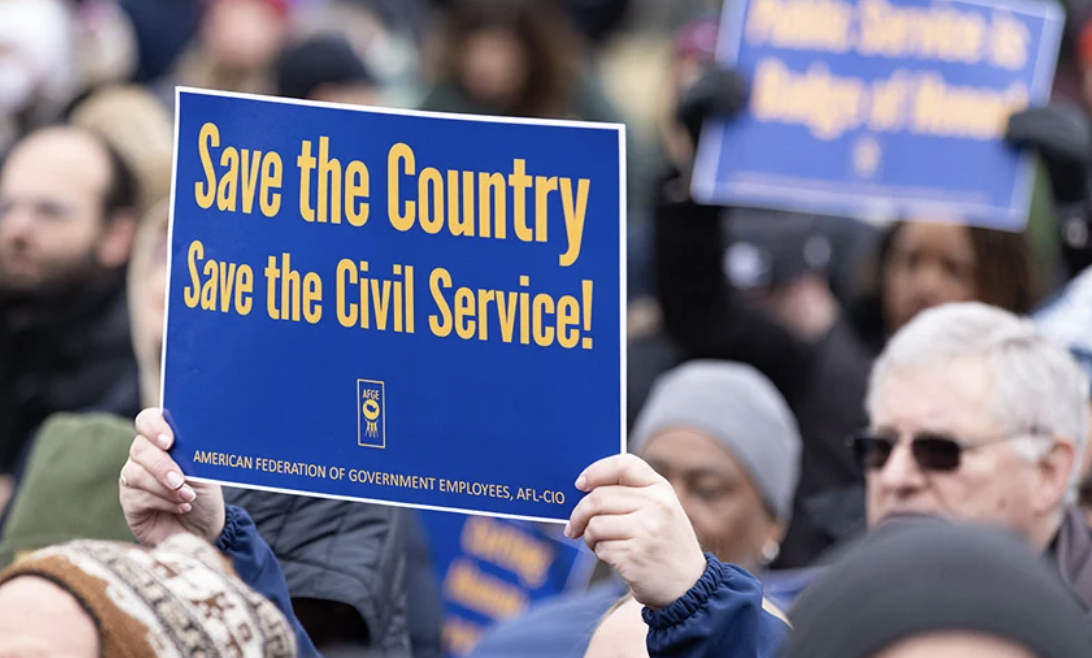
Fourteen years later, the Trump administration decided to take away their collective bargaining rights using fabricated claims about TSOs and union officials, making clear this action has nothing to do with efficiency, safety, or homeland security.
Clearly, this action is a retaliation against AFGE, which has been out in front challenging this administration’s unlawful actions targeting federal workers, both in the legal courts and in the court of public opinion.
“This is merely a pretext for attacking the rights of regular working Americans across the country because they happen to belong to a union,” said AFGE National President Everett Kelley.
| | WEEKLY DERAILMENT DEPARTMENT | | Each Tuesday in this news bulletin, RWU does our best to present a picture of what has been happening over the course of the previous week in terms of derailments in North America, and investigation determinations of previous accidents. NOTE: This list is by no means comprehensive. Smaller and less consequential mishaps are generally not reported here. If the wreck results in injury or fatality, or is especially damaging/extreme, a full article will appear as a feature in the dozen or so rail articles above. Know of a train wreck? Please feel free to forward a link to raillabornews@gmail.com for possible inclusion next week. Thanks! |
| | | |