Rail & Labor News from RWU
| | Weekly Digest Number 15 - April 8th, 2025 | | Welcome to the RWU Rail & Labor News! This news bulletin is produced and emailed out each Tuesday morning. We hope you find each week's news and information useful. If so, please share with co-workers, friends, and colleagues. If you like, you can sign them up to get all the news from RWU HERE. Or forward them the link. Got a hot tip? Please forward the article and a link to raillabornews@gmail.com. Note: If you read over this news bulletin each week, you will be sure to never miss the important news of what is going on in the railroad world from a worker's perspective! | | THIS WEEK'S RAIL AND LABOR NEWS | | Editor's Note: Keolis and MBTA reaching tentative five-year agreements with SMART-TD and the Dispatchers Association signals a rare moment of proactivity in a sector often defined by delay—just ask any commuter. While the agreements touch on key areas like paid sick leave and health benefits, the real test will be in ratification and implementation. For now, it’s a welcome reminder that collective bargaining, when done right, still has the power to deliver gains—albeit delayed, like the retroactive date suggests. | |
Progressive Railroading / April 2nd
Keolis Commuter Services, the MBTA’s operating and maintenance partner for its commuter railroad, has reached tentative five-year agreements with SMART-TD and the American Train Dispatchers Association.
The agreements, which are pending ratification by union members, are retroactive to July 1, 2023.
The agreements cover updates to paid sick leave, annual wage increases, health benefits, enhancements to the bereavement and vacation policy and one additional paid holiday.
| | Editor's Note: The tentative agreement between the NCCC and the IAM offers moderate gains—an 18.8% wage increase over five years, better health and welfare benefits, and expanded vacation access. While it marks a step forward, particularly compared to some recent deals, rail labor knows that sustained progress demands more than economic tweaks. As always, the outcome rests in member ratification—and in holding the line for deeper change in a system still tilted toward corporate priorities. | |
Reuters / March 31st
The National Carriers Conference Committee and the International Association of Machinists and Aerospace Workers announced they have reached a national tentative agreement, subject to member ratification
The NCCC tentative agreement covers about 4,900 rail workers and provides wage increases of 18.8% over five years, enhancements to health and welfare benefits, and access to more paid vacation time for employees.
| | Editor's Note: When the powerful try to chip away at federal workers’ rights, they’re not just targeting a single group—they’re testing the waters for gutting collective power everywhere. The Trump-era assault on public sector unions isn’t just a swipe at bureaucracy; it’s a calculated move to weaken the only thing standing between workers and unchecked authority. These workers keep the country running, often with fewer rights than their private sector counterparts. If we don’t hold the line here, the floodgates open for everyone else. Labor doesn’t survive in silos—we fight together, or we lose alone. | |
AFL-CIO: TTD / March 28th
“Collective bargaining is an American ideal. Federal workers who keep this country moving and keep Americans safe should not be used as pawns in a political game."
“Federal employees already abide by strict collective bargaining terms, and forfeit many of the rights that private sector employees maintain. The Trump Administration’s actions leave these workers powerless to employer retaliation and unfair labor practices."
“While today it is federal union workers who are harmed, there is no telling what this precedent could mean for every American worker. Labor is in this fight together, and we will stand strong behind the thousands of public employees who serve our nation.”
|
| Editor's Note: The push to strip funding from the Northern Lights Express isn’t about fiscal responsibility—it’s about sabotaging public transportation under the guise of highway maintenance. These bills represent the same old playbook: starve rail of resources, then blame it for not performing. Redirecting $194 million already set aside for passenger service is more than legislative meddling—it’s a message that working-class mobility and regional connectivity come second to the status quo of car dependence. | |
Trains Magazine / April 1st
Bills introduced in the Minnesota legislature are seeking to redirect to highway maintenance money the state has already set aside for a Twin Cities-Duluth passenger train.
HF 1167, introduced by Rep. Patti Anderson (R-Dellwood), and SF 250, introduced by five Senate Republicans, would block the spending of $194 million allotted by legislators in 2023 for the Northern Lights Express passenger train.
| | Editor's Note: When a court calls a strike “irreparable harm,” it’s really saying the workers were winning. ATU 265 stood up for fair wages, only to be dragged back by a system that protects service, not the people who provide it. An 11% offer in inflationary times isn’t progress—it’s an insult dressed in percentages. | |
Progressive Railroading / March 28th
Santa Clara County Superior Court Judge Daniel Nishigaya this week ordered 1,500 striking VTA front-line workers back to work. The judge ruled the union's 17-day strike caused irreparable harm to the community and violated a no-strike clause in the union's contract.
ATU Local 265 members, which include VTA bus and light-rail operators, had been on strike for the past 17 days at the California transit agency. VTA offered an 11% wage increase over three years, but the union is demanding an 18% wage increase over three years. VTA said that this would force the agency to make cuts.
| | Editor's Note: Texas Central’s high-speed dreams keep hitting political walls—this time in the form of subpoenas and suspicion. Lawmakers are demanding transparency, but let’s be clear: this isn’t just about accountability. It’s about power, control, and who gets to shape the future of rail in Texas. | |
Trains Magazine / April 4th
Texas Central is once again the subject of unwelcome attention from Texas legislators.
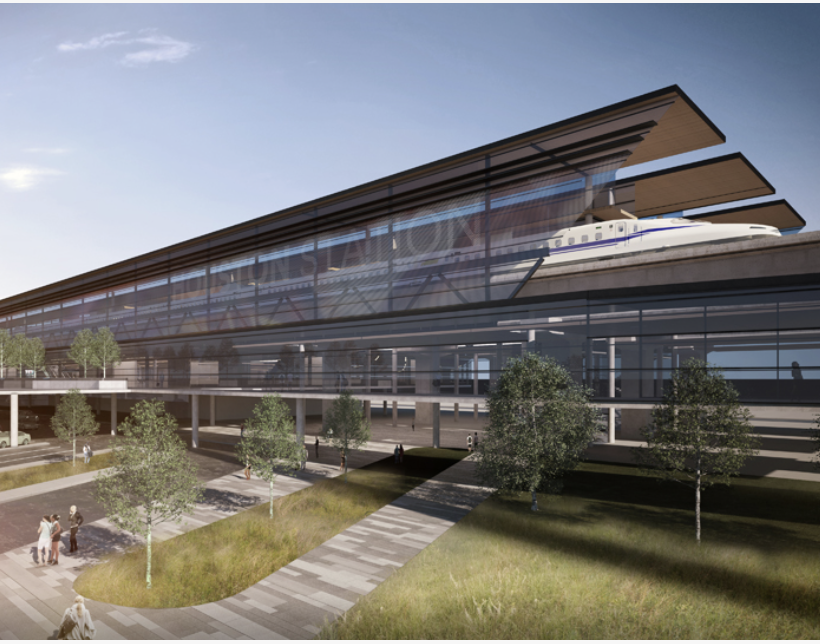
The House Transportation Committee on April 3rd voted to subpoena financial documents from the company, saying a Texas Central representative did not sufficiently answer questions about finances, management, and foreign backing for the proposed Dallas-Houston high-speed rail route.
The subpoena followed testimony from Andy Jent, who was representing the company in a hearing on House Bill 2003. That legislation would require companies to provide detailed information to the Texas Department of Transportation annually on finances, ridership, routes, organizational charts, and disclosure of current or planned foreign investment.
| | Editor's Note: H.R. 188 sells itself as a transparency bill, but like most things out of Congress, it’s transparency with exceptions—especially when it comes to labor. While sunlight on Amtrak’s board is welcome, shielding contract talks and collective bargaining from scrutiny keeps the real power dynamics in the dark. The public deserves to see not just the meetings, but who’s pulling the strings—and at whose expense. | |
Progressive Railroading / April 3rd
The U.S. House Transportation and Infrastructure Committee yesterday approved a bill to increase transparency and accountability at Amtrak
The committee approved H.R. 188, the Amtrak Transparency and Accountability for Passengers and Taxpayers Act. Introduced by U.S. Rep. Troy Nehls (R-Texas), the bill would increase transparency and accountability at Amtrak by applying requirements under the Government to Amtrak's board meetings.
Amtrak's board would have to comply with federal open meeting requirements under the Government in the Sunshine Act. Under the bill, certain open meeting requirements do not apply to contract negotiations, collective bargaining agreements or certain matters involving personnel.
| | Editor's Note: Montana’s HB 848 is a rare example of public policy that puts people before profit. By redirecting railroad car tax revenue to support the Big Sky Passenger Rail Authority, the state takes a meaningful step toward restoring long-lost passenger service. RWU stands firmly behind this effort—it’s exactly the kind of bold, common-sense investment railroading needs. After decades of cuts and corporate capture, it’s time the public saw rail as a right, not a relic. | |
Trains Magazine / March 28th
Montana’s legislature is considering a bill that would use a tax on railroad cars to help provide funding for the organization seeking to revive passenger service.
House Bill 848, introduced by state Rep. Denise Baum (D-Billings) earlier this month, initially sought to direct 25% of the funds from a tax on rental vehicles to a “Big Sky Rail Account” for use by regional rail agencies in the state. It was subsequently amended to substitute the state’s railroad car tax for the rental-car tax.
Currently, the state has just one such rail agency: the Big Sky Passenger Rail Authority, which is working to restore service last used in 1979. The Authority could use the funds for administration, providing matching funds for federal grants, and other purposes
| | Editor's Note: Allison Parker’s appointment as Labor Chair of the NRAB puts a battle-tested advocate in a seat that too often feels stacked against working people. With decades of experience defending rail workers in arbitration, she brings not just knowledge, but grit. Let’s hope her leadership shifts the balance toward fairness in a system where discipline is swift, but justice is slow. | |
IAM Union / April 4th
Effective April 1st, 2025, TCU/IAM Industry Relations Executive Director Allison Parker began serving as the Labor Chair for the National Railroad Adjustment Board.
The NRAB is an arm of the National Mediation Board (NMB) and is crucial in resolving discipline and rule grievances on practically every rail carrier in the United States.
Parker has more than 20 years of experience in the TCU/IAM Industry Relations department, responsible for assisting TCU/IAM representatives at every level with cases for arbitration. She also serves as an employee advocate on various Public Law Boards and Special Boards of Adjustment and has previously served as the employee member on both the third and fourth divisions of the NRAB.
| | Editor's Note: When a rail safety bill passes 63-0, it’s not just a win—it’s a warning shot. New Mexico’s unanimous support for HM 41 shows that blocked crossings are more than a nuisance—they’re a public safety crisis. The bill’s mandate to include both rail providers and unions in finding solutions is a rare moment of sanity in policymaking. Let’s hope it sparks more states to follow suit—and reminds carriers that communities and workers won’t stay silent while the crossings stay blocked. | |
BLET / April 4th
The New Mexico House of Representatives unanimously passed a rail safety bill designed to address the ongoing problem of blocked grade crossings.
House Memorial Bill 41 was passed by a vote of 63-0.
It requires:
-
The New Mexico Department Of Transportation to assess blocked train crossing times across the state and work with rail providers statewide to propose operational changes to limit blocked crossing times;
-
The N.M. DOT to confer with railroad services using each crossing and unions representing employees of those railroads; and
- The N.M. DOT to report its findings and conclusions to the appropriate interim committees that study transportation by September 1, 2025
| | Editor's Note: When Wall Street flinches at tariffs, it’s not out of sympathy for workers—it’s because the gravy train might slow down. Railroads thrive when goods move, and tariffs gum up the tracks. The market’s reaction is a reminder that economic nationalism, when driven by political showmanship, often hits the very supply chains working people depend on. | |
Trains Magazine / April 3rd
Railroad stocks tumbled in response to the Trump administration’s announcement of widespread tariffs on U.S. trading partners.
It was an indication that investors believe tariffs will raise prices and have a negative impact on consumer spending, which in turn will reduce demand for raw materials and finished products that railroads carry.
At the close of trading on Thursday, the S&P 500 was down 4.8%. Canadian railways fared better, perhaps because Canada and Mexico — which were early tariff targets — were exempt from the reciprocal tariffs announced at the White House yesterday.
| | Editor's Note: BNSF, NS, and the Northwest Seaport Alliance are selling speed, but let’s not forget—faster trains don’t mean better jobs or safer railroads. This three-day intermodal push may impress shippers and investors, but it’s the workers who’ll be expected to pick up the pace, often without the staffing or support to match. Efficiency without equity is just another version of the same old hustle. | |
Progressive Railroading / April 3rd
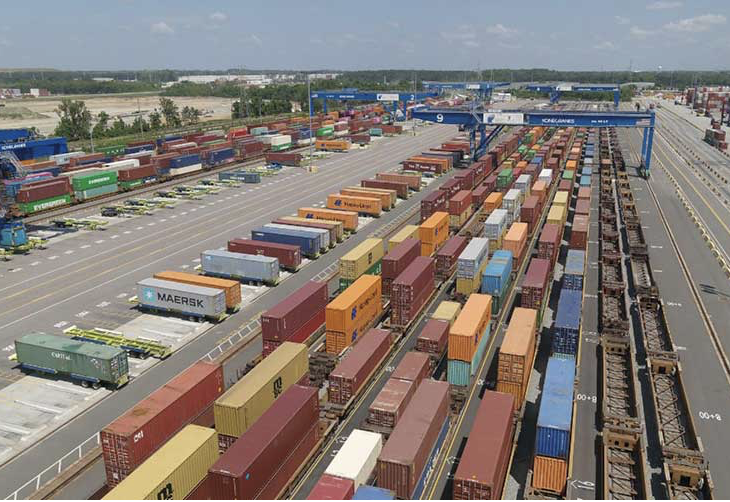
BNSF, NS, and the Northwest Seaport Alliance announced a collaboration to redesign and develop a three-day faster service product for inland point intermodal traffic from the Pacific N.W. to Chicago.
The redesigned plan will encompass the NWSA building trains in less than two days to dwell off the dock with the density to seamlessly connect to and through Chicago.
The seamless hand-off across BNSF’s Northern Transcon route enables faster transit and better consistency for cargo shippers, according to a joint press release issued by BNSF.
| | Editor's Note: Nearly 60 years after LBJ signed the High-Speed Ground Transportation Act, America still talks a big game while riding coach on century-old tracks. Meanwhile, the rest of the world laps us—literally. But there’s hope in the small stuff: regional projects that trade lofty promises for practical progress. It’s not the moonshot we were promised, but after decades of inertia, even a modest spark feels revolutionary. | |
New York Times / April 2nd
In 1965, President Lyndon B. Johnson signed a law — the High-Speed Ground Transportation Act — that seemed to pave the way for a national high-speed rail system in the United States.
Sixty years later, it still takes about three hours to travel between the two cities — a period about twice as long as a single orbit of the International Space Station.
High-speed rail in the United States is still years away. But projects across the country, from Washington State to Texas, suggest a growing enthusiasm for faster train service. These efforts are relatively modest in size, proposing to connect two or three cities at a time. But that may be precisely what makes them feasible.
| | NEWS FROM AROUND THE LABOR MOVEMENT | | Each week, RWU includes a few articles about advances and developments in the larger labor movement that are of interest to railroad workers. Got an artcile to submit for possible inclusion next week? Email it along to raillabornews@gmail.com. Thank you! | |
Portside Labor / April 6th
In its statement responding to Trump’s de-unionization of most federal workers, the International Union of Painters and Allied Trades lamely urges workers to “fight back.”
With similar cowardice, many unions are leaving themselves room to kiss the ring later on. After all, there were unions in Benito Mussolini’s Italy — they just had to toe the line when the Fascist representative in the workplace or the government ministry snapped their fingers.
Unions must provide that leadership; and the more militant and progressive unions must provide leadership to the rest of the labor “movement” — not through press releases, but through deeds that provide an example that others can follow.
| | |
Confined Space / April 2nd
Elon Musk’s DOGE team has announced that eleven OSHA offices will be closed, presumably to save money on the rent. DOGE will disrupt the functioning of already under-resourced offices, including the ones not closed.
In the name of efficiency, DOGE will cause a tremendous amount of inefficiency, reduce the effectiveness of the agency, and cost the taxpayer far more than is saved by canceling leases. More importantly, OSHA inspections save lives. Closing offices will result in more injuries, illnesses, and deaths. It is that simple.
| | |
Teamsters For A Democratic Union / April 1st
Tired of boring or poorly attended union meetings?
Bring the union to the members with parking lot meetings, Teamster Thursdays, social meet-ups, and more. Learn proven strategies, and mistakes to avoid, for informing members and getting them involved.
Sign up for the TDU webinar "Bringing the Union to the Members" on April 13th!
| | WEEKLY DERAILMENT DEPARTMENT | | Each Tuesday in this news bulletin, RWU does our best to present a picture of what has been happening over the course of the previous week in terms of derailments in North America, and investigation determinations of previous accidents. NOTE: This list is by no means comprehensive. Smaller and less consequential mishaps are generally not reported here. If the wreck results in injury or fatality, or is especially damaging/extreme, a full article will appear as a feature in the dozen or so rail articles above. Know of a train wreck? Please feel free to forward a link to raillabornews@gmail.com for possible inclusion next week. Thanks! |
| | | |