Rail & Labor News from RWU
| |
Weekly Digest Number 2 - January 7th, 2025 | |
Welcome to the RWU Rail & Labor News! This news bulletin is produced and emailed out each Tuesday morning. We hope you find each week's news and information useful. If so, please share with co-workers, friends, and colleagues. If you like, you can sign them up to get all the news from RWU HERE. Or forward them the link. Got a hot tip? Please forward the article and a link to raillabornews@gmail.com. Note: If you read over this news bulletin each week, you will be sure to never miss the important news of what is going on in the railroad world from a worker's perspective! | |
THIS WEEK'S RAIL AND LABOR NEWS | |
Editor's Note: The battle over NEPA is more than a legal skirmish—it’s a fight for the soul of environmental and labor protections. Born from the ashes of the 1969 Santa Barbara oil spill, NEPA has stood as a rare counterbalance to corporate recklessness, forcing transparency and accountability from industries that too often view communities and workers as collateral damage. If gutted, it will open the floodgates for unchecked fossil fuel exploitation, hitting working-class communities hardest. The stakes couldn’t be higher: this isn’t just about an oil train; it’s about whether the public has any say in how corporations treat the planet we all share. | |
Rolling Stone / December 27, 2024
The case, over a planned oil train, could end up determining the fate of one of the nation’s bedrock laws: the National Environmental Policy Act, or NEPA. Signed into law by President Richard Nixon in 1970, it was enacted in part as a response to the 1969 Santa Barbara oil spill, one of the nation’s worst environmental disasters. The law requires the federal government to consider, analyze, and publicly disclose potential environmental and climate impacts of new projects or actions.
The fossil fuel industry hopes that conservatives on the high court will use this case to fundamentally rewrite or even gut the landmark law.
The National Environmental Policy Act “is probably the most important tool in the work that I do,” Lisa Jordan, a clinical professor of law and director of the Tulane Law School Environmental Law Clinic in New Orleans, tells me. The clinic regularly represents the residents of communities in Louisiana’s Cancer Alley against the fossil fuel industry. “Our clients are ground zero” in this case, she says.
| |
Editor's Note: California’s high-speed rail project in the Central Valley is a beacon of what’s possible when public infrastructure serves the many, not the few. Once viewed with suspicion by rural workers, it’s now proving that bold investments can bring dignity and opportunity to forgotten communities. The synergy between modern rail and agricultural job training reminds us that progress is not the enemy of tradition but its natural ally. This is the kind of future we must demand—one where workers and their communities are at the center of progress, not sacrificed in its name. | |
Farmonaut / December 28, 2024
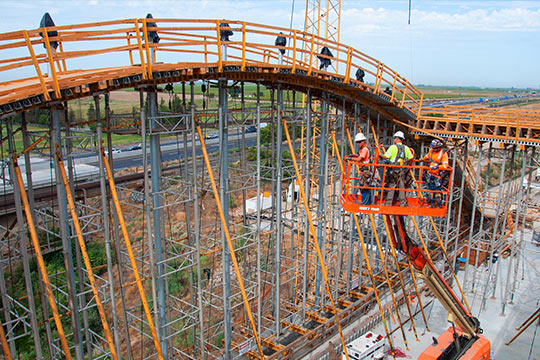
In the heart of California’s agricultural heartland, an unexpected catalyst for change is reshaping lives and revitalizing rural communities. The Central Valley, long known for its vast farmlands and agricultural prowess, is experiencing a renaissance thanks to an unlikely source: the state’s ambitious high-speed rail project. We’re witnessing a remarkable transformation as this infrastructure initiative paves the way for innovative agricultural job training programs and drives Central Valley economic development.
When the high-speed rail project was first proposed, many Central Valley residents, including Teresa Bynum, were skeptical. The prospect of trains zipping through farmland raised concerns about the displacement of agricultural companies and the loss of precious arable land. However, as the project unfolded, an unexpected synergy emerged between this modern infrastructure and the region’s agricultural roots.
| |
Editor's Note: Trains once united America, stitching together towns and cities with the promise of mobility for all. But a century of misplaced priorities—propping up highways and airlines at the expense of rail—left us stranded in a sea of car dependency and crumbling infrastructure. This is not just a story of neglect but of deliberate choices made to prioritize profits over people. Reviving passenger rail is more than nostalgia; it’s a call to reclaim what was stolen—a transportation system that serves communities, not corporations. The rails are still there, waiting. The question is, do we have the vision and the will to put them back to work? | |
Solutionary Rail / December 31, 2024
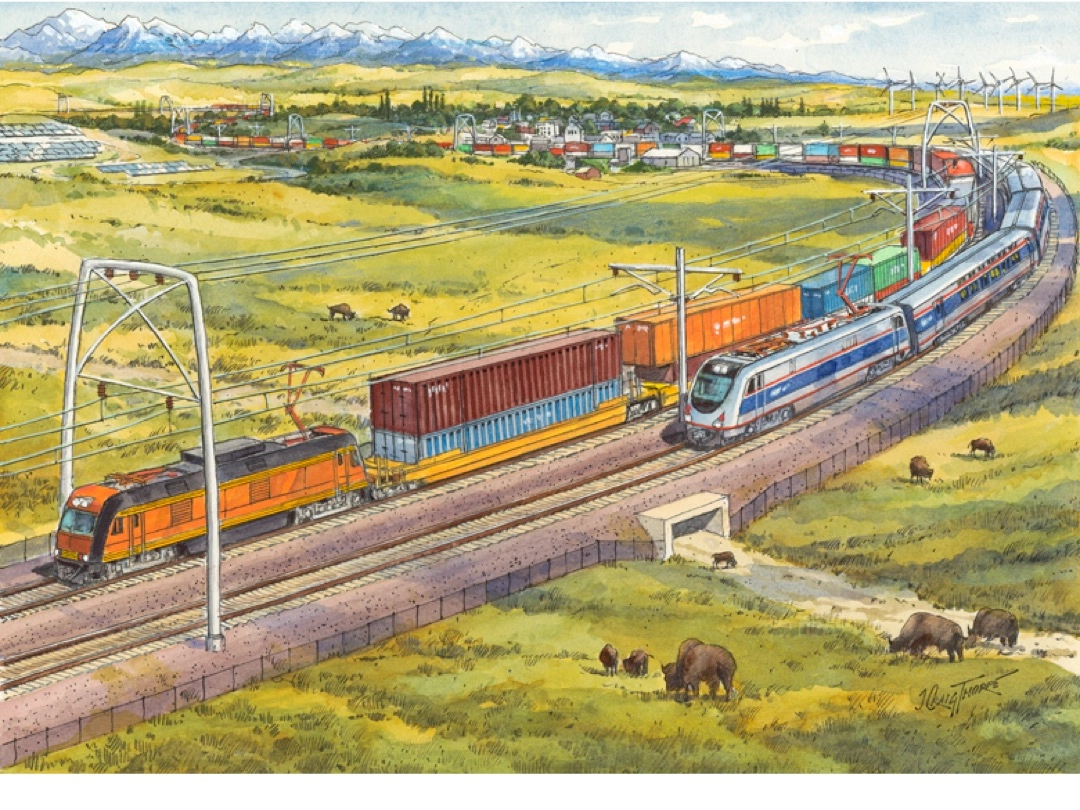
Before there were cars, planes, cybertrucks, and electric unicycles—there were trains. People rode trains to get just about everywhere, from work, school, and daily errands, to holiday getaways at the national parks. As Meredith Richards, one of our guests in this episode, puts it, “Trains were simply the way people traveled.”
So what happened to our once-great passenger rail system? How did the U.S. become so car-dependent that many Americans today ride trains for the first time when they travel abroad? In this first of two episodes on passenger rail, we learn about how railroads once connected us all, how public investment in other modes of transportation—but not in railroads—gradually undermined rail travel, and why in 1971 the government eventually took passenger service off the hands of the privately-owned railroads.
|
|
Editor's Note: The people of Curtis Bay are standing where the working class always stands—at the intersection of corporate greed and government indifference. Their march to the Governor’s mansion is more than a protest; it’s a demand for dignity, for a life free from the poison of coal dust that has plagued their homes and bodies for generations. CSX’s denial of responsibility is as predictable as it is shameful, a reminder that corporations will sacrifice communities for profit until they are forced to stop. The fight in Curtis Bay is a fight for all of us—because no community should bear the weight of corporate pollution alone. | |
The Real News / December 23, 2024
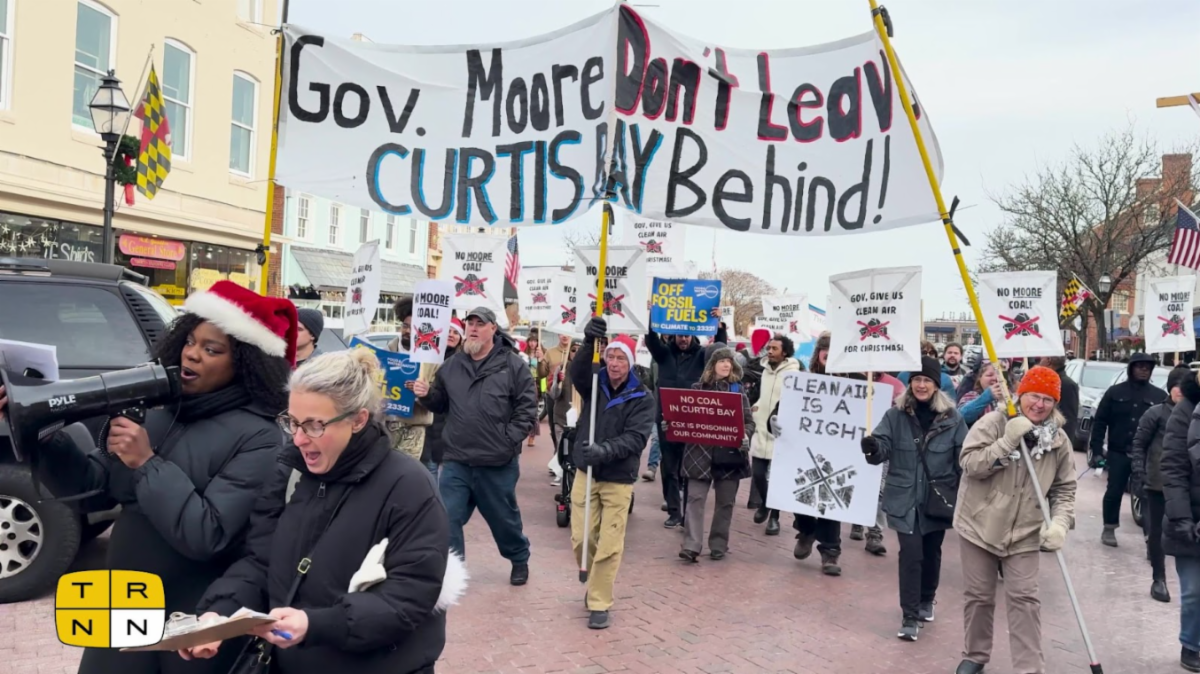
On Dec. 7, working-class residents of Curtis Bay and other South Baltimore neighborhoods marched through the streets of Annapolis and delivered a giant stocking full of coal to the Governor’s mansion.
They are demanding Gov. Wes Moore intervene in a generations-long struggle to stop rail giant CSX transportation from polluting their bodies, homes, and communities with toxic coal dust.
A recent air quality study confirmed what residents have been complaining about for generations: Coal dust from the CSX Transportation coal export terminal is present all over Curtis Bay. CSX has denied culpability and called the study “materially flawed.” Residents say they’re fed up with the company refusing to take responsibility for the coal dust, and with the city government for ignoring their cries for help for years.
| |
Editor's Note: The unanimous vote by Utah Central Railway workers to join the BLET is a testament to the unyielding power of collective action. In an industry built on the backs of workers, they’ve chosen to stand together for fair pay, better conditions, and the respect they deserve. This isn’t just a victory—it’s a declaration that the working class will no longer accept crumbs when it’s their labor that keeps the rails running. | |
Progressive Railroading / January 3rd, 2025
Utah Central Railway workers on Dec. 18 voted unanimously to join the Brotherhood of Locomotive Engineers and Trainmen. The Utah Central vote marks BLET's seventh successful short-line organizing effort since 2023, union officials said in a press release.
Utah Central is owned and operated by Patriot Rail and interchanges with Union Pacific Railroad and BNSF Railway Co. in Ogden, Harrisville and Little Mountain, Utah. It is the first Patriot Rail property to be organized by the BLET.
Utah Central train and engine service workers cited improved pay and job scheduling, stronger discipline protection and better working conditions as reasons for joining BLET, according to National Vice President Randy Fannon, who heads the BLET’s organizing department.
| |
Editor's Note: The unanimous ratification of the B&E contract is a resounding victory for workers who refused to settle for less. With wage increases, better rest cycles, and no concessions, this agreement is a reminder that when workers stand firm, progress follows. Solidarity wins again. | |
Progressive Railroading / January 3rd, 2025
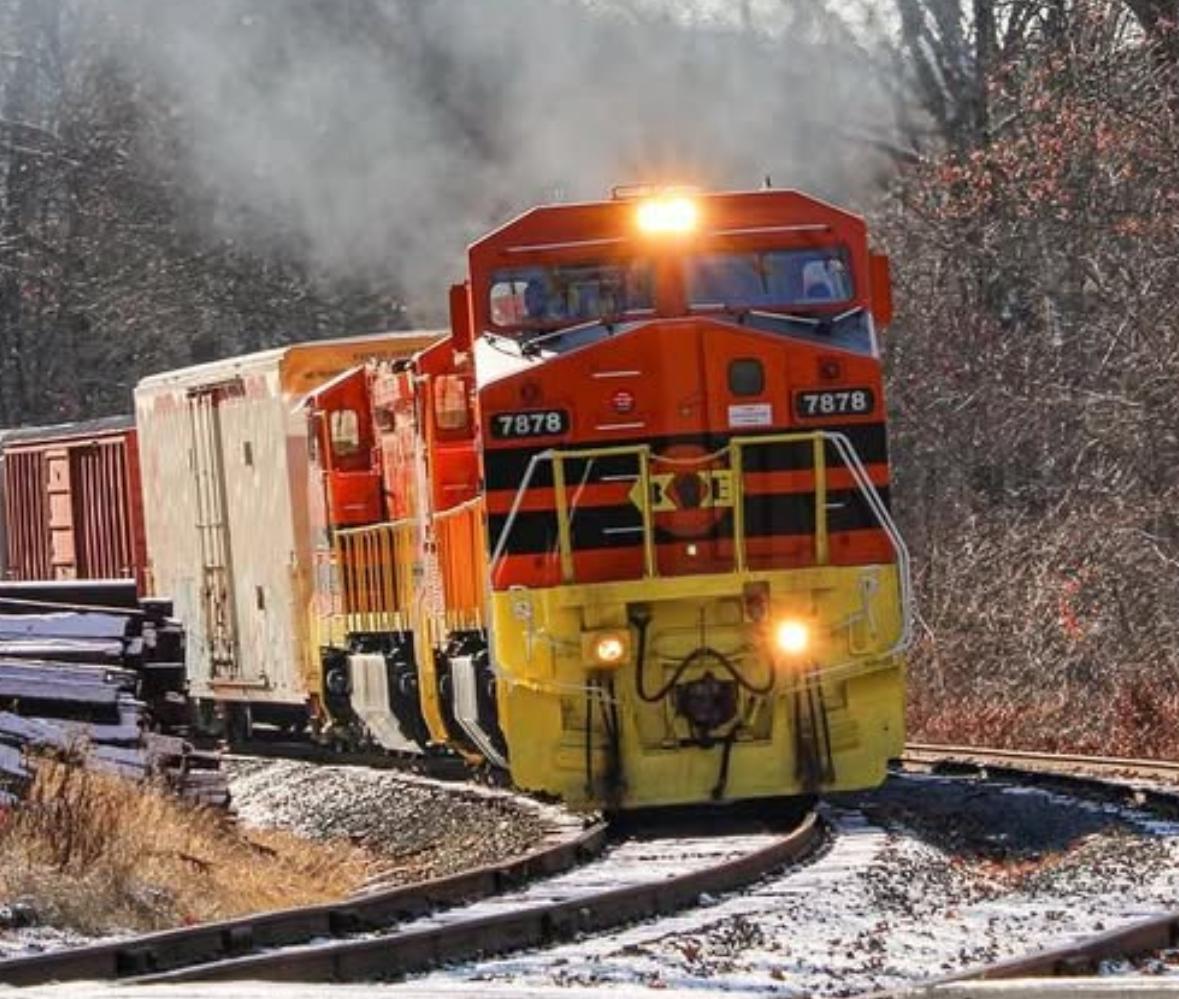
Brotherhood of Locomotive Engineers and Trainmen members who work for Berkshire & Eastern Railroad (B&E) have unanimously ratified a new five-year contract.
The agreement governs rates of pay, benefits, and work rules for 32 members. The contract calls for general wage increases of 22.5% over the five years, BLET officials said in a press release.
General Chairman Ben Martin said the union made no concessions in the new deal. The agreement also outlines a 24-hour rest cycle for extra board employees, a new feature for those employees; eliminates supplemental spare rules, and increases meal allowances.
| |
Trains Magazine / January 4th, 2024
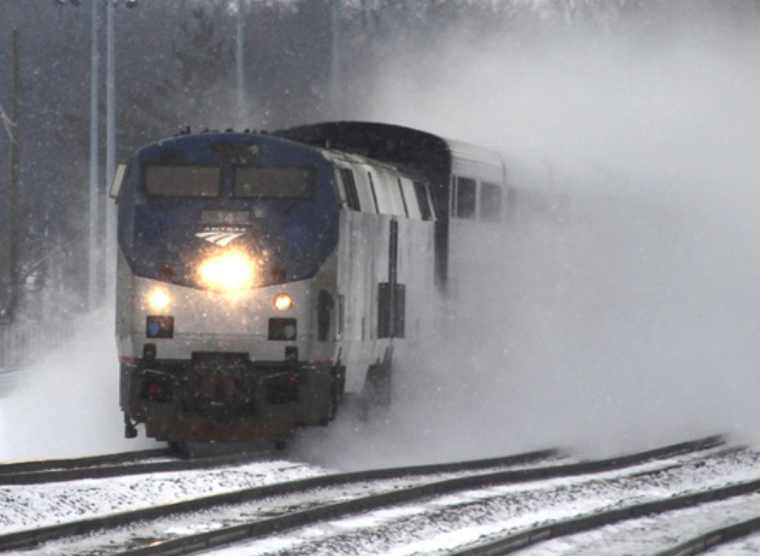
Amtrak has announced an extensive list of train cancellations as of Saturday, Jan. 4th, extending into Tuesday, Jan. 7th. Operations from coast to coast are affected as a result of the winter storm currently moving through the center of the country.
The cancellations began with Friday’s scheduled departure of the eastbound Southwest Chief from Los Angeles. Its opposite number, westbound No. 3 from Chicago, has been canceled today (Saturday, Jan. 4). Also canceled today are No. 22, the northbound San Antonio-Chicago Texas Eagle, and No. 50, the eastbound Chicago-Cincinnati-Washington-New York Cardinal.
| |
Editor's Note: The $122 million FRA grant to the Valley Rail program is more than an investment in infrastructure—it’s an investment in the future of rail workers and the communities they serve. From double tracks to a new school for rail education, this funding lays the groundwork for a transportation system that prioritizes people over profits. Progress like this is proof that rail can—and must—be a cornerstone of a just and connected society. | |
Progressive Railroading / January 3rd, 2025
The San Joaquin Joint Powers Authority (SJJPA) and San Joaquin Regional Rail Commission (SJRRC) will use a $122 million grant from the Federal Railroad Administration (FRA) to support the Valley Rail program and help fund the launch of a school to educate future rail workers.
Awarded through the FRA's Consolidated Rail Infrastructure and Safety Improvements (CRISI) program, the grant funds include $120 million to help fund a network of capital improvements between Stockton and Sacramento, California.
The projects include the construction of the Cabral track extension, Hammer Lane Siding, Thornton siding, Elk Grove double track, Pollock to South Sacramento Yard, the South Sacramento crossover, South Sacramento Yard rehabilitation, City College Station, and Old North Sacramento Station, authority and commission officials said in a press release.
| |
NEWS FROM AROUND THE LABOR MOVEMENT | |
Each week, RWU includes a few articles about advances and developments in the larger labor movement that are of interest to railroad workers. Got an artcile to submit for possible inclusion next week? Email it along to raillabornews@gmail.com. Thank you! | |
Editor's Note: This article was originally published in the Wake of the Trump victory in January of 2017. The author. a long-term labor leader From the Pittsburgh area, notes that his words ring as true today after the more recent electoral debacle as they did 8 years ago after the last one. | |
|
That's Pittsburgh...with an 'H' / January 2nd, 2017
Union leaders face a huge, embarrassing question: Why, after unions spent more than $100 million to defeat Donald J. Trump, did Mrs. Clinton win only narrowly among voters from union households, by 51 percent to 43 percent according to exit polls? Clinton even lost to Trump among union households in Ohio, 49 percent to 44 percent.
How can labor’s top leadership be so insulated from the reality of falling wages, rising health care costs, mounting debts, and endless wars that they were clueless to see the frustration of workers exploding right before their eyes? Are these same top leaders capable of organizing and leading the type of popular campaign to protect workers in the upcoming period?
Rather than offer popular solutions that would address these and other issues related to the economic crisis affecting the vast majority, Clinton and the Democrats pursued a losing strategy of attempting to win over the more “moderate Republicans.” They arrogantly assumed that workers had nowhere to go but vote Democratic.
| |
Northwest Labor Press / January 2nd, 2025
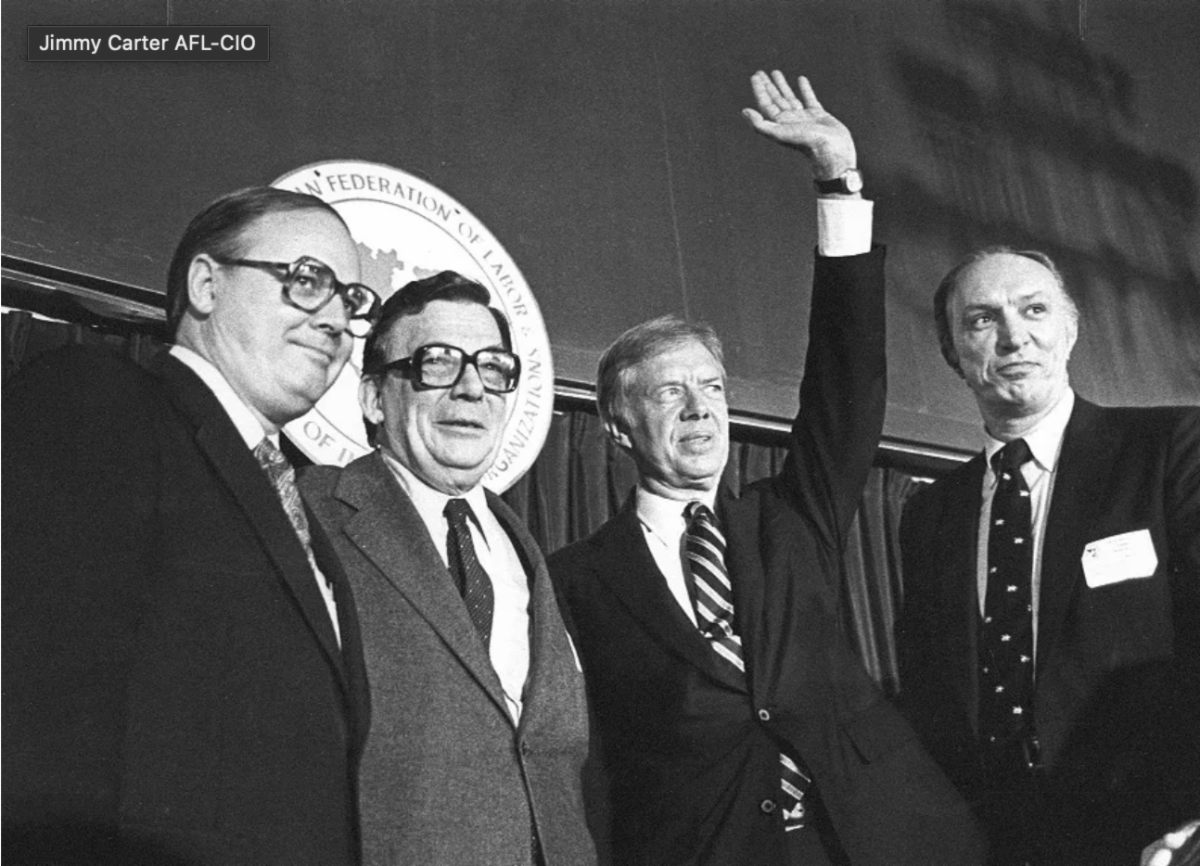
“He was a genuinely good man whose post-presidency focus on humanitarian work and championing human rights worldwide was deeply inspiring.” So said the AFL-CIO on news on Dec. 29 of the death of former U.S. president Jimmy Carter at the age of 100. It was about all the labor federation could say and not commit sins against historical memory.
Carter did lead a distinguished life post-presidency. His work brokering peace and monitoring overseas elections for fairness earned him the 2002 Nobel Peace Prize. And his nonprofit Carter Center did more than any other to eradicate preventable tropical diseases like Guinea worm. But when it mattered most, when he occupied the White House from 1977 to 1980, Carter was a great disappointment to American working people and their labor movement.
“Carter was the first neoliberal president,” says Marcus Widenor, emeritus labor studies professor at the University of Oregon. Neoliberalism is the name for the economic and political philosophy that began to gain momentum in the Carter years — the idea that government shouldn’t “interfere” in the economy but should “get out of the way” and let “the market” work its magic.
| |
Editor's Note: Please consider entering a public comment on OSHA's proposed heat safety rule by the deadline of Jan. 14th. Your stories and experiences are valuable. Comments can be entered on behalf of a group or anonymously. Also, you can search to see what others have already commented. | |
|
OSHA / September 3rd, 2024
Heat is a leading cause of death among all weather-related phenomena in the United States. And it’s a serious occupational hazard for many workers, both indoors and out. That’s why the Occupational Safety and Health Administration has proposed a new standard that would protect approximately 36 million workers from heat hazards.
Anyone working outdoors or indoors in general industry, construction, maritime, and agricultural sectors where OSHA has jurisdiction will have coverage. That includes many occupations where we know workers are at high risk of heat hazards, such as farmworkers, restaurant workers, construction workers, delivery drivers, and many more.
| |
WEEKLY DERAILMENT DEPARTMENT | |
Each Tuesday in this news bulletin, RWU does our best to present a picture of what has been happening over the course of the previous week in terms of derailments in North America, and investigation determinations of previous accidents. NOTE: This list is by no means comprehensive. Smaller and less consequential mishaps are generally not reported here. If the wreck results in injury or fatality, or is especially damaging/extreme, a full article will appear as a feature in the dozen or so rail articles above. Know of a train wreck? Please feel free to forward a link to raillabornews@gmail.com for possible inclusion next week. Thanks! |
| | | |