Rail & Labor News from RWU
| | Weekly Digest Number 45 - November 4, 2025 | | Welcome to the RWU Rail & Labor News! This news bulletin is produced and emailed out each Tuesday morning. We hope you find each week's news and information useful. If so, please share with co-workers, friends, and colleagues. If you like, you can sign them up to get all the news from RWU HERE. Or forward them the link. Got a hot tip? Please forward the article and a link to raillabornews@gmail.com. Note: If you read over this news bulletin each week, you will be sure to never miss the important news of what is going on in the railroad world from a worker's perspective! | | THIS WEEK'S RAIL AND LABOR NEWS | | Editor's Note: It is ironic that shippers and rail carriers are ramping up opposition to the UP-NS merger, the rail unions - whose members probably have the most to lose from this amalgamation - are confused and flailing, all over the place in terms of what position to take. Once again - just like for the last 150 years - the divided nature of the rail craft unions is wreaking havoc upon our members' ability to speak with a unified and progressive voice. | |
Progressive Railroading / October 31
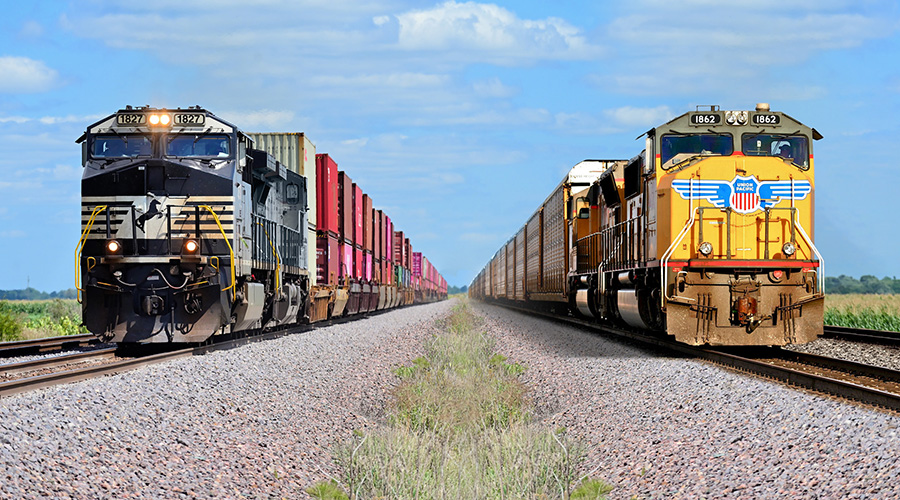
Two additional Class Is have joined BNSF Railway in voicing opposition to Union Pacific Railroad's proposed acquisition of Norfolk Southern Railway.
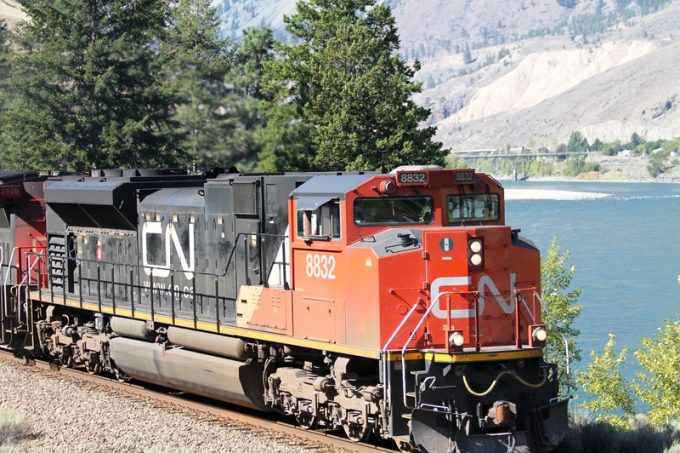
Canadian Pacific Kansas City and CN recently launched pages on their website in which they outline their concerns about the proposed $85 billion merger deal, which will require approval by the Surface Transportation Board. UP and NS reportedly expect to file their application with the STB sometime this fall.
CPKC said on its webpage that the mega-merger is not in the public's interests, is unnecessary, would limit shippers' options and permanently alter the freight-rail transportation market. The company opposes the UP-NS deal despite completing its own acquisition of Kansas City Southern Railway in 2023.
"On its own, the combination of UP and NS at this time would pose unprecedented and far-reaching risks to customers, rail employees and the broader supply chain," CPKC officials stated. "A UP Transcon would control approximately 40% of the U.S. freight-rail traffic and have unrivaled leverage that would reduce the bargaining power of rail customers."
| | Editor's Note: While rail workers fight for rest days and basic dignity, the companies built on their labor pour millions into ballrooms for the powerful. A railroad once forged from grit and steel now polishes marble floors for the wealthy. The same carrier that pleads poverty at the bargaining table finds endless cash for chandeliers in Washington. Those who built the rails aren’t invited to the party.. they’re just expected to keep the freight rolling while the music plays. It’s a reminder that the real divide isn’t between crafts or carriers, but between those who work and those who live off the work of others. | |
| |
Stuart Chirls / October 26
Not only is Union Pacific Chief Executive Jim Vena a former locomotive engineer who literally built his career from the track up, he’s also a former hockey player who often boasts publicly about mixing it up along the boards in order to move the puck.
So it came as little surprise when it was revealed that UP was on a list of 37 donors who have contributed toward construction of President Donald Trump’s $300 million White House ballroom.
No details including the amounts of the donations were disclosed from donors that include Amazon, Apple, Google, Microsoft and T-Mobile. Trump has said that the project would be privately funded.
Contractors last week demolished most of the White House’s historic East Wing to clear the way for the 90,000-square foot President Donald J. Trump Ballroom.
A Union Pacific spokesperson told FreightWaves that the company had no comment.
| |
| Editor's Note: The railroads speak of “competition” the way a fox speaks of “henhouse security.” When two giants like UP and NS announce a merger, the rest of us know what that really means: fewer jobs, longer trains, and more power in fewer hands. They’ll promise efficiency; we’ll see the same old story.. cost-cutting disguised as progress, profit dressed up as innovation. The STB may hold hearings, but it’s the rail labor families on the ground who live with the consequences. If there’s to be any talk of fairness, it must begin not in the boardroom or the ballroom, but in the cab, the yard, and the section house.. where the real railroad still lives. | |
|
CN / November 2
"Advocating for Increased Competition: Union Pacific (UP) and Norfolk Southern (NS) have announced their intent to merge and will submit their full application to the U.S. Surface Transportation Board (STB) this Fall.
This transaction could have far-reaching implications for rail competition, supply chains, and service reliability in North America. CN will be actively participating in the STB review of this proposed merger.
What You Can Do to Strengthen the Case for Fair Competition and Safeguards: The STB allows customers and stakeholders like you to formally participate in the review. By filing a notice of intent to participate, you secure your right to be part of the record, voice your concerns, and help shape the conditions imposed on this merger."
| |
| Editor's Note: The newly merged CPKC now warns that a UP-NS merger would “radically change” the rail network.. as if it hadn’t just done the same thing two years ago. Every carrier preaches competition until they’ve swallowed their rival; then it’s time to call the preacher. Rail labor knows better. Each merger cuts crews, stretches territory, and chokes the system until profit gasps where service once lived. They call it progress. We call it consolidation.. and we’re the ones left holding the brake. | |
| |
To express its concerns about the proposed UP+NS merger, CPKC has established a web page warning of the impact of the possible combination and also argues that CP+KCS to form CPKC was a necessary merger. The CPKC web page expressing opposition to the merger begins with this opening salvo:
“Union Pacific and Norfolk Southern propose to merge the largest Class 1 railroad in America with the fourth largest. The two merging railroads already have extensive access to vast markets. The two railroads propose to combine to form the Union Pacific Transcontinental Railroad, or UP Transcon.
“The UP-NS mega-merger is unnecessary and will dominate rail transportation markets, reducing rail customer optionality in ways that cannot be undone. A UP Transcon will radically and permanently change the nation’s rail network.
| |
| Editor's Note: The professors call it “peak carload,” the executives call it “synergy,” and the rest of us call it what it is.. fewer trains, fewer jobs, and more spin. Every merger comes with the same promise: faster, better, stronger. But the only thing that moves quicker is the money leaving the craft ranks for the corner office. The railroads can stitch together a transcontinental empire, but they can’t haul freight that no longer exists.. not when they’ve spent decades driving customers away with short-term thinking. The truth is simple: it isn’t interchange friction that’s slowing the industry, it’s executive friction.. men polishing balance sheets while the rails beneath them rust. | |
| |
Bill Stephens / October 28
The Union Pacific-Norfolk Southern merger is unlikely to revive carload traffic — and it’s an open question whether it can unlock intermodal growth because of broader economic trends that are beyond railroads’ control, a Michigan State University supply chain management professor said during a webcast today.
UP says its proposed $85 billion acquisition of NS will improve service, create faster transit times, and lead to volume growth by eliminating interchange friction. The railroads also say that new single-line service will enable them to effectively tap the growth potential of the so-called watershed area in the country’s midsection. In all, they project $2 billion in net synergies.
But Jason Miller, the Eli Broad Endowed Professor of Supply Chain Management at MSU, questioned whether even a transcontinental railroad can reverse the declining fortunes of carload traffic.
“We have passed peak carload. We will not get to 17 million car loads a year. That number is long gone. We can essentially forever forget about that,” Miller says.
| |
|
Progressive Railroading / October 30
Freight-rail traffic in the United States for the week ending Oct. 25 totaled 499,688 carloads and intermodal units, down 3.8% compared with the same week in 2024.
The railroads hauled 226,748 carloads during the week, down 0.9%, while intermodal volume totaled 272,940 containers and trailers, down 6.1%, according to the weekly rail traffic report from the Association of American Railroads.
Meanwhile, Canadian railroads reported 92,109 carloads for the week, down 5.3%, and 71,508 intermodal units, down 0.2%. Mexican railroads hauled 12,393 carloads for the week, up 14.7%, and 14,843 intermodal units, up 33%.
| | Editor's Note: The railroads have made an art of turning public trust into private profit, and now even the regulators meant to keep them honest are being sidelined. An “independent” Surface Transportation Board means nothing if independence itself can be bought or removed. Every day that Wall Street dictates the schedule, workers, shippers, and towns along the line pay the cost. The fight isn’t just over a merger.. it’s over whether railroads serve the nation or the investors who treat it like a slot machine. Until the board is restored to serve the public, every hearing is just another stop on the fast track to monopoly. | |
|
Solutionary Rail / October 31
A strong and independent Surface Transport Board is crucial for protecting US communities, producers and manufacturers from Wall Street attempts to extract excessive short term profits from US railroads at the expense of US workers, businesses and communities. With the largest railroad merger in US history being proposed, a clear lack of standards for rail service undermining US shippers, and a plague of communities and businesses being left behind in order to maximize short term profits, it has never been more important that the Surface Transportation Board (STB) be a strong and independent adjudicatory body.
Instruct those members of Congress to demand that Surface Transportation Board proceedings remain paused - regardless of the status of the government shutdown - until its independence is re-established by the reinstatement of Robert Primus to his rightful position on the board, or the courts resolve this issue.
| |
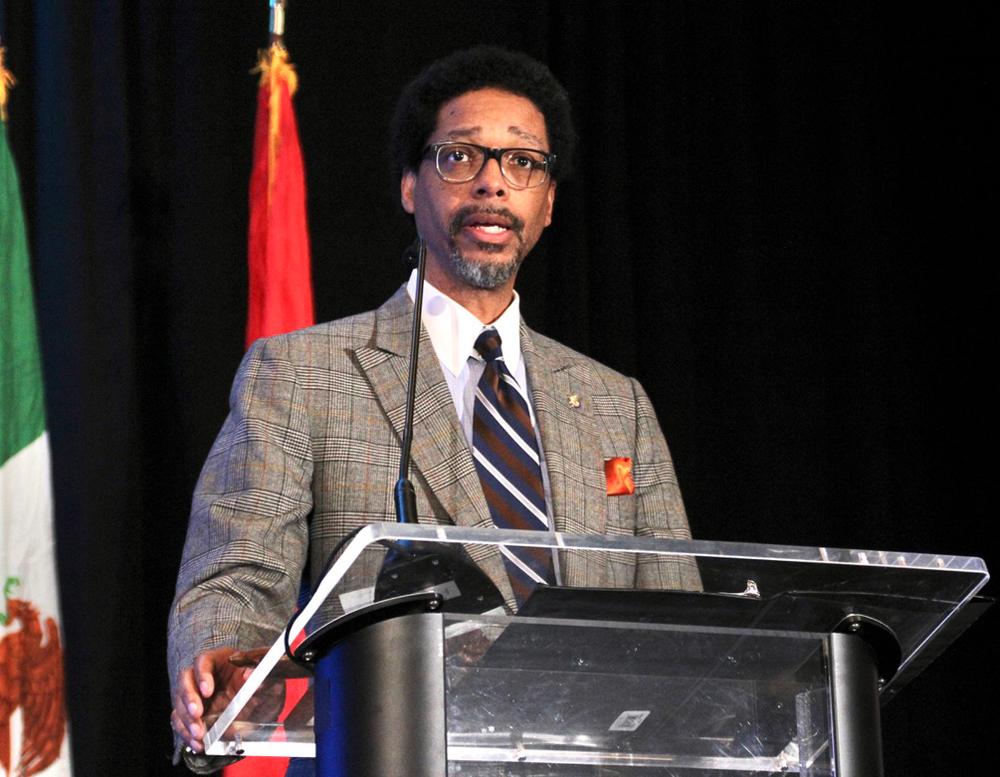
| Editor's Note: All railroad workers are invited to attend the Rail Users Network Conference on November 14th. Railroad Workers United (RWU) is a dues paying organizational affiliate member of RUN. RWU Trustee Ron Kaminkow will take part in a panel discussion about the nature of the Union Pacific - Norfolk Southern proposed merger. Please join in! The fee is $25 for non-RUN members. | | |
Rail Users Network
The Rail Users Network is holding its FALL 2025 Virtual Conference on Friday, November 14, 2025 from 12:45-5 pm est. The conference will focus on new passenger rail and transit rail starts that are already happening or will take place within the next decade. The program also includes a panel presentation on the proposed merger of Union Pacific and Norfolk Southern.
The conference is designed not only for passenger rail / transit advocates, but also for civic and business leaders, environmentalists, planners, real estate developers and members of the general public who are interested in knowing more about passenger rail and rail transit in America. Please note this is a free event for RUN members, but registration is required. A registration fee for nonmembers is $25, which includes RUN membership through 2026.
Be sure to register by November 8.
| | NEWS FROM AROUND THE LABOR MOVEMENT | | Each week, RWU includes a few articles about advances and developments in the larger labor movement that are of interest to railroad workers. Got an artcile to submit for possible inclusion next week? Email it along to raillabornews@gmail.com. Thank you! | |
Progressive Railroading / October 31
Sheet Metal, Air, Rail and Transportation Workers - Transportation Division (SMART-TD) members have ratified two five-year collective bargaining agreements with the National Carriers Conference Committee (NCCC).
The agreements cover more than 18,000 freight-rail employees. Approximately 75% of union-represented freight-rail employees at railroads participating in national handling are now covered by a collective bargaining agreement that follows the industry pattern, NCCC officials said in a press release.
The ratified agreements provide employees with wage increases of 18.8% compounded over five years, enhancements to health and welfare benefits with no increase to the employee contribution rate and access to more paid vacation time for employees earlier in their careers.
SMART-TD and the NCCC reached the tentative agreement in September. SMART-TD is the 10th major union to ratify agreements with the NCCC in the national collective bargaining round, which began Nov. 1, 2024. Through its NCCC, the National Railway Labor Conference leads national negotiations with the 12 major rail labor organizations.
| |
The Peoples Forum
Throughout history, organized workers have been the motor behind every progressive change in society. From the general strike of enslaved workers that dealt the final blow to the system of slavery, to the sit-down strikes that led to the organization of millions of workers, history demonstrates the power of the working class: when we are organized, bold, and united, we drive forward the fight for a better future. As the Trump administration is waging an intensified war on workers and all those rights won through decades of struggle, building a fighting labor movement to overcome these assaults is more urgent than ever. But it requires organizing and empowering millions of workers to transform that potential into real power.
| | |
In this special crossover edition of Working People and The Marc Steiner Show, hosts Maximillian Alvarez and Marc Steiner examine how the “artificial intelligence” (AI) boom is shaping the economy and the impact it is already having—and will continue to have—on working people’s lives, livelihoods, and jobs. Alvarez and Steiner speak with two members of a new mutual aid and advocacy group called Stop Gen AI, which formed this year out of the critical need to provide material support for creatives, knowledge workers, and anyone else impacted by generative AI.
| |
LaborNotes
With an emboldened Trump in the White House for a second term, the ground has shifted dramatically for unions. The labor movement, like many institutions, is scrambling to devise strategies to build power—or even just survive—during these challenging times.
This authoritarian consolidation of power is testing unions. What can unions do to survive in the second Trump presidency? What tactics and strategies can help organize more new members and best survive an all-out assault on labor and other rights?
As a contribution to the discussion and debate that’s needed at all levels of the labor movement, Labor Notes is soliciting contributions from organizers and scholars on what unions can do besides hide or try to curry favor. Our goal is to help organizers think about the moment that we’re in and reflect critically on strategies and tactics relied on over the past several years. What can unions do over the next few years that will help both stop the MAGA agenda and best position the labor movement for the future?
| | |
Michael Sainato / November 1
The Teamsters International president, Sean O’Brien, is putting the “working class in jeopardy” by allying with Donald Trump, according to a prominent labor activist challenging his leadership of the powerful union.
O’Brien has “no business being a labor leader” and “shouldn’t be trusted”, Richard Hooker Jr – who is running against O’Brien’s re-election next year – told the Guardian.
Hooker has emerged as a leading critic of O’Brien, who described Trump as “our enemy” during his first term in the White House, while criticizing the Teamsters leadership at the time for lack of opposition to Trump, and said it was “unfortunate” so many Teamsters members voted for Trump during his victorious campaign to lead the union in 2021.
| | |
Association for Union Democracy
Do you know you have free speech rights within your union? The Labor-Management Reporting and Disclosure Act, which applies to any union that has members in the private sector or at the post office, guarantees certain free speech rights for union members. This workshop will go over what your speech rights are, how to know if they have been violated, and how to enforce your rights.
When: Wednesday, November 5
Time: 7:30 p.m. to 9:30 p.m. Eastern / 4:30 p.m. to 6:30 p.m. Pacific
Cost: $10 No one will be turned away due to lack of funds.
If you have any questions about the training or registration, email AUD staffer Joshua Soffler at jsoffler@uniondemocracy.org.
| | |
Earth Justice
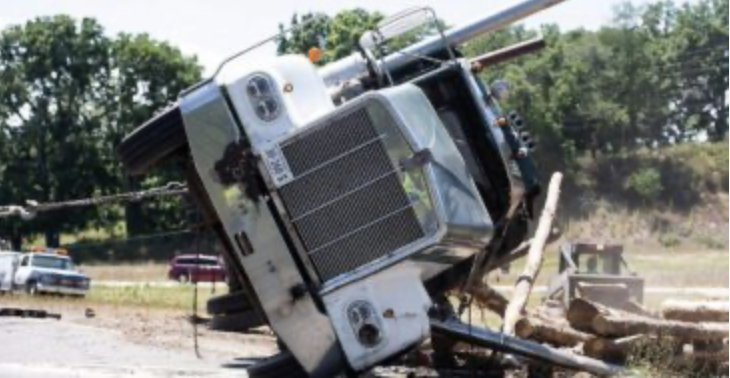
Every day, oil and gas companies haul potentially hazardous materials from oilfields onto our highways without following adequate safety rules, thanks to lack of federal enforcement.
This is putting truckers and communities at greater risk of catastrophe.
Join Earthjustice and our client, Truckers Movement for Justice, to demand that Department of Transportation (DOT) agencies enforce existing hazardous material rules when it comes to hauling oilfield waste.
| | WEEKLY DERAILMENT DEPARTMENT | | Each Tuesday in this news bulletin, RWU does our best to present a picture of what has been happening over the course of the previous week in terms of derailments in North America, and investigation determinations of previous accidents. NOTE: This list is by no means comprehensive. Smaller and less consequential mishaps are generally not reported here. If the wreck results in injury or fatality, or is especially damaging/extreme, a full article will appear as a feature in the dozen or so rail articles above. Know of a train wreck? Please feel free to forward a link to raillabornews@gmail.com for possible inclusion next week. Thanks! |
| | | |