Rail & Labor News from RWU
| |
Weekly Digest Number 5 - January 28th, 2025 | |
Welcome to the RWU Rail & Labor News! This news bulletin is produced and emailed out each Tuesday morning. We hope you find each week's news and information useful. If so, please share with co-workers, friends, and colleagues. If you like, you can sign them up to get all the news from RWU HERE. Or forward them the link. Got a hot tip? Please forward the article and a link to raillabornews@gmail.com. Note: If you read over this news bulletin each week, you will be sure to never miss the important news of what is going on in the railroad world from a worker's perspective! | |
THIS WEEK'S RAIL AND LABOR NEWS | |
Editor's Note: As automation seeps deeper into America’s critical infrastructure, workers are being cast aside in favor of cost-cutting “modernization” initiatives that prioritize profit over safety. The push to automate locks, dams, and even trains poses catastrophic risks to our supply chain, public safety, and cybersecurity, yet worker voices remain silenced in the decision-making process. This is not resistance to progress—this is resistance to reckless negligence. Technology must be a tool to enhance safety and efficiency, not a mechanism for replacing skilled labor at the expense of communities, workers, and the nation’s infrastructure. | |
Bloomberg Law / January 16
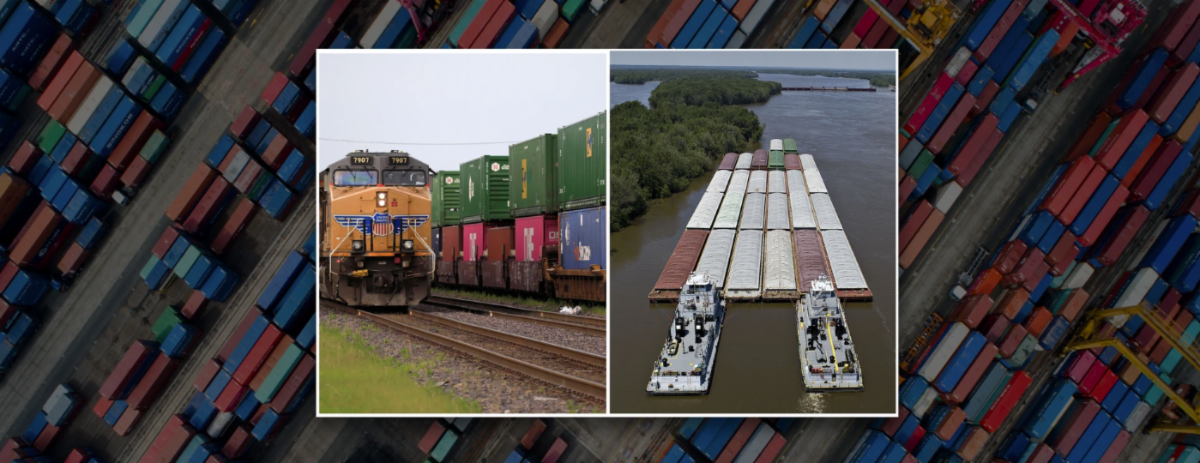
While economists and policymakers have sounded alarms that workers will someday be replaced by artificial intelligence and automation technology, it’s already well underway in critical pieces of infrastructure essential to the US supply chain.
The technology will replace Michael Arendt, who guides thousands of tons of goods each year through the large metal gates he pulls open and shut during his 12-hour shifts at the Howell Heflin Lock and Dam near Gainesville, Ala. Items that businesses need, such as shipping fertilizer and dry goods, move via the rivers and dams connected by the navigational locks like the ones operated by Arendt.
| |
Editor's Note: The Presidential Emergency Board’s decision in favor of NJ Transit highlights a troubling pattern where labor’s voice is diminished in the name of expedience. While NJ Transit celebrates “fairness,” the reality is that 494 BLET members, unanimously rejecting the board’s recommendations, are fighting for a contract that reflects their value and contributions to public transit. As the 60-day countdown begins, the pressure is on for NJ Transit to engage in genuine negotiations rather than gambling with the livelihoods of workers and the commuters who rely on their skill and dedication. | |
Progressive Railroading / January 22
The Presidential Emergency Board has declared New Jersey Transit's final offer as the most reasonable in its labor negotiations with the Brotherhood of Locomotive Engineers and Trainmen , but the union has rejected the PEB decision.
The BLET's decision to turn down the PEB decision now sets off a 60-day cooling off period before a strike can occur at NJ Transit.
Then-President Joe Biden formed the first PEB in July 2024 to provide an impartial review during a dispute between NJ Transit and the union. The board's recommendations were not accepted, and the board dissolved. A second PEB was appointed in November 2024, and presently found in favor of NJ Transit, agency officials said yesterday in a press release.
| |
Editor's Note: As the rail freight market surges toward a projected $522.4 billion by 2032, it becomes clear that this industry is both a cornerstone of global trade and a battleground for competing priorities. While sustainability, efficiency, and technology are driving its growth, the challenges—such as funding, regulatory barriers, and competition—cannot be ignored. Rail freight holds the promise of a greener, more interconnected future, but it will take strong advocacy and worker-driven innovation to ensure this growth doesn’t leave labor or safety behind. For those navigating this rapidly evolving landscape, the stakes have never been higher. | |
Global Trade Magazine / January 19
Rail freight has long been a backbone of industrial economies, offering a reliable means of transporting goods across vast distances. It is particularly favored for bulk commodities like coal, minerals, and agricultural products, but recent trends indicate its increasing role in intermodal transportation, where goods are shipped in containers that can move seamlessly between trucks, ships, and trains.
In 2022, the global rail freight market was already a robust sector, benefiting from growing globalization and the need for efficient supply chain solutions. Governments and private stakeholders alike have recognized the sector’s potential, investing heavily in infrastructure, technology, and policies to optimize its performance.
|
|
Editor's Note: The FRA’s approval of Parallel Systems’ autonomous flatcar pilot program reveals a troubling disconnect between the push for automation and the harsh realities of the rail industry. Railroads are already failing to maintain their rolling stock and ensure safe operations, as recent derailments and system failures have shown. Now, they propose handing control over to machines, bypassing the skilled workers who have long ensured the safety and efficiency of rail transport. Automation without accountability, oversight, and proven safety measures is not progress—it’s a shortcut to disaster. The railroads must first fix their existing failures before venturing into untested and risky technologies that put workers, communities, and supply chains at greater risk. See RWU's Resolution Against Autonomous “Pod Trains”. | |
Trains / January 20
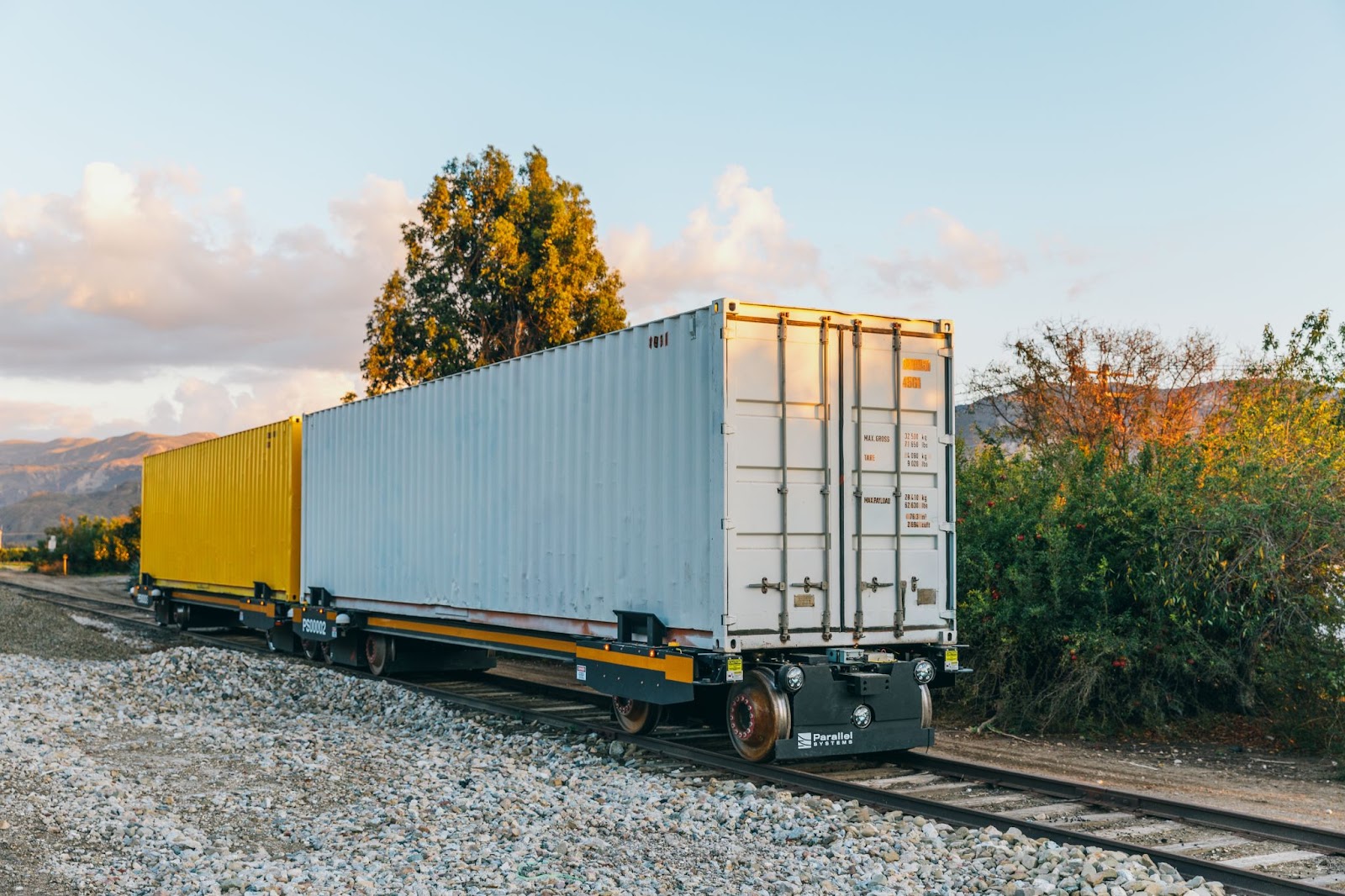
The Federal Railroad Administration will allow Parallel Systems to test its autonomous, self-propelled flatcar system on a pair of Genesee & Wyoming short lines in Georgia.
The FRA last week approved the request from Parallel, Georgia Central Railway, and Heart of Georgia Railroad. In August 2023 the Los Angeles-based Parallel and the G&W railroads sought FRA permission to test the battery-electric container cars, which take aim at short-haul intermodal markets.
The agency’s Railroad Safety Board reviewed the waiver petition and supporting documentation, attended a demonstration at the MxV Rail test facility in Pueblo, Colo., and conducted a public hearing.
| |
Editor's Note: The proposed five-year agreement between BLET and Keolis Commuter Services offers much-needed wage increases and long-overdue benefits for the engineers who keep Boston’s commuter trains running. A 31.9% wage hike, paid sick days, and expanded leave policies are steps in the right direction, but let’s not forget: these gains didn’t come from corporate generosity—they’re the result of workers standing together. Solidarity is the engine of progress, and this agreement shows what can be achieved when labor refuses to settle for less. | |
Progressive Railroading / January 21
The Brotherhood of Locomotive Engineers and Trainmen (BLET) has reached a five-year tentative agreement with Keolis Commuter Services for locomotive engineers at the Massachusetts Bay Transportation Authority (MBTA).
If ratified, the contract would govern rates of pay, benefits and work rules for 194 members. Ballots are due Jan. 29.
The contract would be retroactive to July 1, 2023, BLET officials said in a press release. It would provide general wage increases of 25% over the five years and an additional $2 per hour on top of the 5% general wage increase in 2027, totaling a compound general wage increase of 31.9% through the term of the agreement.
| |
High Speed Rail Alliance / January 17
From the late-1990s to the mid-2000s, the Capitol Corridor line transformed from a barely functioning system to one of most successful and reliable passenger-rail lines in the US. Ridership spiked from about 500,000 to more than 1 million people from 1998 to 2002, even as the train cost per passenger mile fell from 33 cents to 25 cents.
Three elements drove the Capitol Corridor’s rapid ascent: a good relationship with the freight carrier Union Pacific; a steady increase in the frequency of service; and a creative, collaborative approach to improving the line. (See Part 1 for an overview of the Capitol Corridor’s history.)
| |
FRA Long Distance Service Study
Section 22214 of the Infrastructure Investment and Jobs Act of 2021 (IIJA) directed the Federal Railroad Administration (FRA) to conduct an Amtrak Daily Long-Distance Service Study to evaluate the restoration of daily intercity rail passenger service along (1) any Amtrak long-distance routes that, as of the date of enactment of the IIJA, were discontinued, and (2) any Amtrak long-distance routes that, as of the date of enactment of the IIJA, occur on a non-daily basis.
The legislation stated that the FRA may also evaluate potential new Amtrak long-distance routes, with specific attention provided to routes in service as of April 1971 but not continued by Amtrak.
| |
Progressive Railroading / January 24
The National Carriers Conference Committee (NCCC) and the Brotherhood of Maintenance of Way Employes Division (BMWED) of the Teamsters Rail Conference have reached a tentative five-year national labor agreement.
Announced yesterday, the agreement reflects terms consistent with a pattern established by more than 50 other national and local agreements since the national bargaining round began in November, 2024, NCCC officials said in a press release.
The deal is now subject to ratification by nearly 8,000 BMWED-represented employees.
If ratified, employees' benefits would include wage increases of 18.8% over five years, enhancements to health and welfare benefits with no increase to employee contribution rate, and access to more paid vacation time for newer employees.
| |
Freight Waves / January 21
A federal court has struck down a Department of Transportation rule on transportation of liquefied natural gas enacted in 2020, saying the Pipeline and Hazardous Materials Safety Administration did not sufficiently consider the safety risks involved.
Specifically, the decision by a three-judge panel of the Court of Appeals for the District of Columbia agreed with a group of state attorneys general, environmental groups, and the Puyallup Tribe of Indians, who challenged the rule on the grounds that the PHMSA was, “arbitrary and capricious,” in its decision not to require an environmental impact statement as part of the rulemaking process. The court therefore vacated the rule and sent it back to the agency for further proceedings.
| |
Editor's Note: Fuchs has been enthusiastic about using railroad right of way for running high voltage electric transmission lines, as championed by our friends at Solutionary Rail and the Rail Electrification Coalition. Let's hope he is as progressive in the rest of his work at SRB. | |
Freight Waves / January 21
Republican Patrick J. Fuchs on Monday was designated by President Donald Trump as chairman of the five-member Surface Transportation Board.
Fuchs was confirmed to his second five-year term on the board in May 2024. Prior to his appointment to the STB in 2019, Fuchs was senior professional staff member working on surface transportation and maritime issues for the Senate Committee on Commerce, Science and Transportation. He reported to Chairman John Thune, R-S.D., who is now Senate majority leader.
| |
High Speed Rail Alliance / January 17
While literal and political firestorms rage over Southern California, new hope for a better future has emerged. On January 7, California released its new State Rail Plan. Years in the making, the Plan aims to connect California with fast, frequent trains and transit by 2050, using a statewide fleet of vehicles that produce zero emissions.
Why is this so important, especially now?
California has proposed giving its residents and visitors world-class train and transit service, by making these options more convenient and more appealing than driving or flying. That finally provides a real alternative to the transportation choices that help drive climate-change disasters.
| |
NEWS FROM AROUND THE LABOR MOVEMENT | |
Each week, RWU includes a few articles about advances and developments in the larger labor movement that are of interest to railroad workers. Got an artcile to submit for possible inclusion next week? Email it along to raillabornews@gmail.com. Thank you! | |
Editor's Note: One of the nation's most progressive union leaders - Sarah Nelson of the Flight Attendants Association - speaks out about what airline and rail workers and all workers need to do to resist the coming attacks by industry and government. | |
The Real News Network / January 13
The lessons of workers’ victories from [Donald Trump's] past administration provides an important roadmap to the fight ahead. In 2019, flight attendants organized to end a government shutdown that threw airports around the country into chaos. Sara Nelson, international president of the Association of Flight Attendants-CWA, AFL-CIO, joins The Real News for a look back at the 2019 shutdown fight and how unions can give workers the tools they need to fight back over the next four years.
| |
Labor Notes / January 24
Hundreds of thousands of auto jobs have disappeared from the U.S. since the North American Free Trade Agreement in 1994 and its successor, the U.S.-Mexico-Canada Agreement (USMCA), often known as NAFTA 2.0. Wages plummeted as bosses threatened to close plants and move work south of the border.
Many U.S. auto workers resent Mexican workers. “A lot of the spin on NAFTA is just like, ‘It screwed the U.S.,’” Hinsey said. “But not really; it screwed over the workers everywhere.
President Trump recently announced he wants to renegotiate the USMCA now, well ahead of the required review in 2026.
| |
|
Portside / January 25
Amazon on Wednesday said it was closing all of its warehouse and logistics operations in Quebec, the Canadian province where unions gained a foothold in one of its facilities, and would lay off 1,700 employees.
The closures represent a U-turn from Amazon’s recent investments in the province. The company opened three delivery stations in 2021, and one last year. It also had a small fulfillment center in Quebec and two warehouses that sorted packages.
All told, the investments totaled about 2 million square feet of operations, according to an estimate by Marc Wulfraat, a warehousing industry consultant based in Montreal who has long researched Amazon’s logistics network.
| |
WEEKLY DERAILMENT DEPARTMENT | |
Each Tuesday in this news bulletin, RWU does our best to present a picture of what has been happening over the course of the previous week in terms of derailments in North America, and investigation determinations of previous accidents. NOTE: This list is by no means comprehensive. Smaller and less consequential mishaps are generally not reported here. If the wreck results in injury or fatality, or is especially damaging/extreme, a full article will appear as a feature in the dozen or so rail articles above. Know of a train wreck? Please feel free to forward a link to raillabornews@gmail.com for possible inclusion next week. Thanks! |
| | | |